

Brilliant Classics has reissued a maxi, 3-CD box set of Philip Glass’s minimalist piano music, originally recorded in 2006 by Dutch contemporary music advocate Jeroen van Veen.

- Classical Music 101: What Does A Conductor Do? - June 17, 2019
- Classical Music 101 | What Does Period Instrument Mean? - May 6, 2019
- CLASSICAL MUSIC 101 | What Does It Mean To Be In Tune? - April 23, 2019
Here we have three-plus hours of repeated chords and arpeggios, culled from movie soundtracks (The Hours and The Truman Show), opera scores (Einstein on the Beach, Satyagraha and Akhnaten) as well a solo and cycle programmes, including Metamorphoses and Glassworks.
There is slow repetition and fast repetition, the minimalist mirror of classical slow movement, fast movement layering.
Listening to three hours in one sitting is at once exhilarating, mesmerizing, intensely annoying and powerfully soothing. This is music, but it’s also pattern. It is human but also robotic.
It follows patterns but also defies them — in fact this is how Glass achieves the tension that makes this music worth listening to. We hear recognizable chords that steadfastly, dumbly refuse to resolve into patterns familiar to us from previous musical eras.
What makes this box set worth buying are Jeroen van Veen’s interpretations, which, however subtly, bring the human dimension into play with careful shading of the repeated patterns.
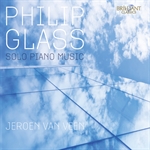 Like it or not, this music is brilliant in both conception and execution. Glass’s aesthetic is now pervasive on screen and in art pop — it is a part of our culture. And this is where it all started.
For all the details on this album, click here.
Here is van Veen playing Mad Rush, which is on the first of the three CDs:
John Terauds
- Classical Music 101: What Does A Conductor Do? - June 17, 2019
- Classical Music 101 | What Does Period Instrument Mean? - May 6, 2019
- CLASSICAL MUSIC 101 | What Does It Mean To Be In Tune? - April 23, 2019