
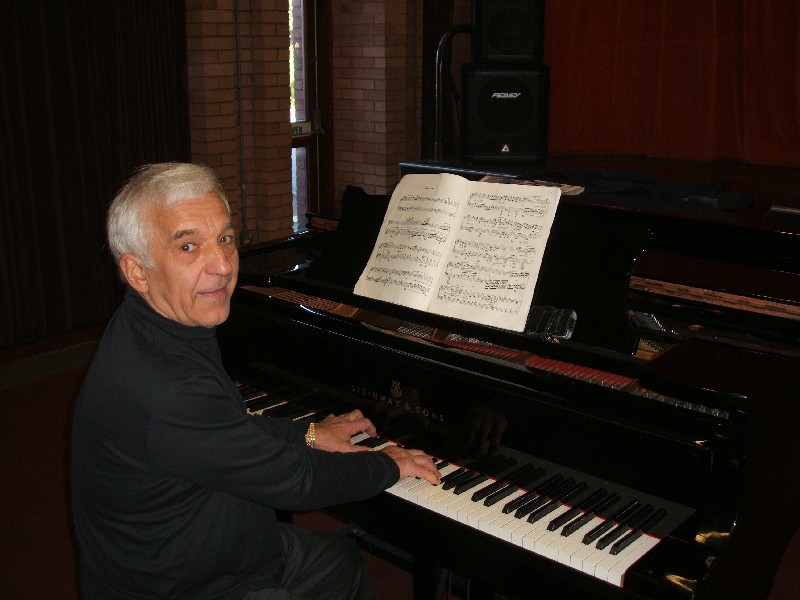
So many people are obsessed with completeness that they overlook the possibility of diminishing returns as they pick up every last crumb from a painter, author or composer. Such is the case with the great pianist Vladimir Ashkenazy’s quest to record everything Sergei Rachmaninov wrote for solo piano.

- Classical Music 101: What Does A Conductor Do? - June 17, 2019
- Classical Music 101 | What Does Period Instrument Mean? - May 6, 2019
- CLASSICAL MUSIC 101 | What Does It Mean To Be In Tune? - April 23, 2019
 On this new Decca album, we’re down to the last bits of not-first-choice manuscript paper Rachmaninov stuffed into his suitcase as the family fled the Russian Revolution in 1917.
Russian-born Icelander Ashkenazy, who is 75 now, has already left a remarkable legacy of recordings and fond concert memories as a pianist and conductor. This album, his final one of solo piano works by Rachmaninov, is as much by an obsessive personality as for an obsessive personality.
Many of the pieces on this disc, which includes world premeire recordings of two transcriptions (his song “Sad is the night,” arranged by Ashkenazy, and the Nunc dimittis from the All-Night Vigil, transcribed by the composer), are really only of interest to people who need to have every piece by the Russian composer in their music collection.
Having been seduced by Alessio Bax’s Rachmaninov miniatures not too long ago, I find Ashkenazy’s approach a bit too hard-edged in the salon pieces. The final Nunc dimittis (Old Simeon asking God to please take him quietly, now that a prophecy has been fulfilled) also sounds too metrical at Ashkenazy’s percussive piano.
I prefer the flow of voices to the reminder that here are hammers hitting strings.
You can find out more about the album here.
John Terauds
- Classical Music 101: What Does A Conductor Do? - June 17, 2019
- Classical Music 101 | What Does Period Instrument Mean? - May 6, 2019
- CLASSICAL MUSIC 101 | What Does It Mean To Be In Tune? - April 23, 2019