
It warms my heart every time I see the two great Canadian singers Karina Gauvin and Marie-Nicole Lemieux paired up — as they are to glorious effect in this new recording by Alan Curtis of the complete Giulio Cesare by Geroge Frideric Handel.

- Classical Music 101: What Does A Conductor Do? - June 17, 2019
- Classical Music 101 | What Does Period Instrument Mean? - May 6, 2019
- CLASSICAL MUSIC 101 | What Does It Mean To Be In Tune? - April 23, 2019
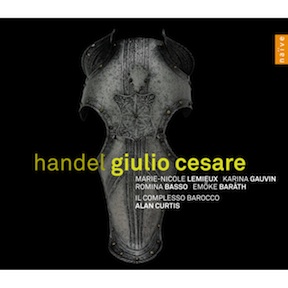 Although recorded in Italy last year, this new Naïve release has the feel of the first big period-performance recordings of the mid-1980s, where the music suddenly sounded so much more fleet, fast and textured.
Curtis has kept his period-instrument orchestra Il complesso barocco small and lithe. His singers — all excellent — are encouraged to embellish freely, but also move along briskly. Although it’s still not a short opera, this three-act Italian drama from 1724 moves along briskly.
In the booklet that comes with the three-CD box (a booklet that includes the full libretto), period-performance master Curtis makes the point that we continue to misunderstand Handel’s tempo markings in order to justify his speediness.
Curtis has also added little bits of instrumental embellishment and cadenzas where appropriate.
And, best of all, we’re given plenty of opportunity to savour the joys of Gauvin as Cleopatra (her lament, “Piangero,” and stormy “Da tempeste” in act III are especial treats) and Lemieux as Caesar.
For all the details on this album, click here.
John Terauds

- Classical Music 101: What Does A Conductor Do? - June 17, 2019
- Classical Music 101 | What Does Period Instrument Mean? - May 6, 2019
- CLASSICAL MUSIC 101 | What Does It Mean To Be In Tune? - April 23, 2019