

In Toronto, not many orchestral experiences open with a DJ and emcee who hype the crowd before the live show begins.
Nigerian Afropop star Adekunle Gold shared the stage with 51 musicians at Toronto’s Meridian Hall on July 2, part of his Live with Orchestra tour. It’s a move he’s making with purpose — using the power of the orchestra to enhance his music, and his live shows.
“These orchestra performances are about expanding how African music is experienced. I want audiences to hear the stories differently, with more depth, more emotion, and more intention,” he said in a statement.
Add to that a dance troupe that enhanced some of the songs, and you’ll get an idea of the scope of the show. You can check out a glimpse of their rehearsals here.
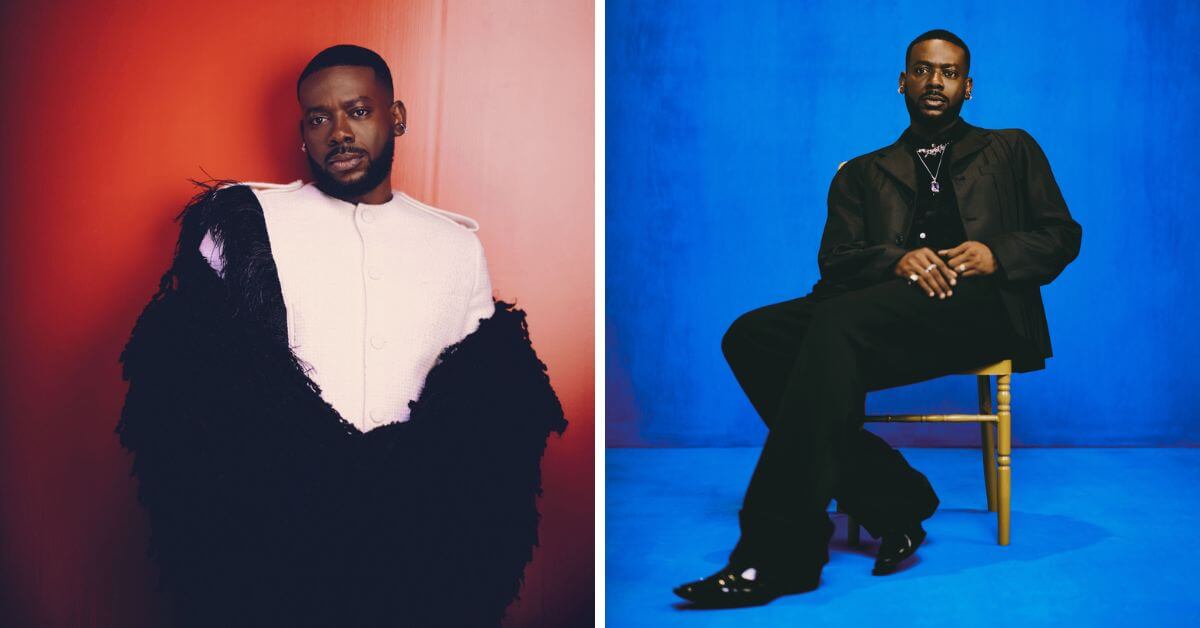
Adekunle Gold
AG Baby, as he’s also called, or Big Fish, aka Eja Nla in Yoruba, takes the narrative traditions of Nigerian music, and puts it in a thoroughly contemporary context while honouring its roots. The current tour also places it firmly in the hallowed concert halls of the world.
Adekunle Gold has emerged as more than a pop star. He’s become a global ambassador for contemporary African music as a whole. His sound blends Yoruba tradition with contemporary pop, RnB, folk, Fuji, Afrobeats and other sounds.
He’s got millions of followers on social media, and has racked up more than 2.5 billion career streams of his music globally.
The Tour
The tour represents the North American debut of his symphonic show after its sold-out premiere on the closing night of the EFG London Jazz Festival on November 23, 2025. Gold became the first Nigerian artist to headline an orchestral concert at London’s Royal Festival Hall. On December 26, 2025, he took the show to the newly reopened National Theatre in Lagos, which also sold out.
He’ll be at the New Jersey Performing Arts Center on July 3, and then takes the orchestra on tour to the NN North Sea Jazz Festival in the Netherlands on July 11.
It’s a groundbreaking move for Nigerian music, giving it a new live format that combines the majestic scale of orchestral music with the superb musicianship of modern Afropop, and its storytelling basis.
The Performance
The sold out — and immaculately dressed — Toronto crowd was on its feet from the first notes.
Music from the African continent, in general, does not want you to sit down. It’s the opposite of the traditional Western classical music experience. The rhythms are not meant for silent, passive listening. Along with moving to the music, the crowd sang along, sometimes so loudly you could barely hear what was coming from the stage. It was a love in where the energy both on and off stage never flagged.
While Western music, as a whole, emphasizes harmonic and melodic complexity, music from the African continent, generally speaking, builds complexity from the bottom up via layers of percussion and rhythm. Along with the string, woodwind, and brass sections of his orchestra, his usual band includes no less than three percussionists, two back-up singers, two keyboard players, saxophone, and electric bass and guitar.
Adekunle went through polished versions of his hits, including a run through of his current album, Fuji, and even the debut of a brand new song, Karma. His music is thoughtful and often spiritually oriented, carrying messages of positivity, connection, and family. He takes a varied approach with each song that never felt repeated or overdone.
He’s a consummate showman with a gift for connecting with his audience, and a relatable and even humble onstage persona.
The Orchestra
The orchestra sat at the back of the stage, with its own conductor, while the rest of the band followed the Nigerian artist’s lead from the centre of the stage.
The arrangements used orchestral colours and tones in some creative ways. In some sections, and quieter ballads, they were at the forefront of the sound. Even in the bouncier, rhythmically driven songs, though, they still played a role in supporting the harmonies and melodies.
The strings were most prominent, but the brass and woodwinds also had their moments. The flute soloist was given a number of lovely solos to play, and in one song, had a gorgeous duet with the saxophone.
In bass and drum sections, where many of the other instruments were silent, the lower strings, including cello and bass, added their gravitas to the mix. It produced a very interesting, and highly effective, augmentation to the complex and driving rhythms.
Final Thoughts
While touring with a 51-piece orchestra is necessarily prohibitive, it’s to be hoped that Adekunle Gold and others like him will persist in presenting this compelling mix of tones, colours, and musical traditions.
The idea for orchestral shows, as Adekunle Gold told the audience, came to him about six years ago. “It would be incredible to hear my songs with an orchestra,” he told his team. The idea grew into the show that seems to be hitting the zeitgeist at the right time.
The idea of using orchestra instruments and ensembles to perform pop hits has been making the rounds of social media and pop culture for a few years now. The success of the Bridgerton soundtrack series is more than proof of its popularity.
Toronto audiences have already experienced the multicultural orchestral concert events like Rushil Ranjan’s Orchestral Qawwali Project, and AR Rahman & Rushil Ranjan’s spectacular Rangreza रंगरेज़ा show, but the orchestral sound has become part of the club scene too.
Symphonic rave concerts have become incredibly popular across the UK. Classical orchestras perform dance club hits, blending live strings and brass with powerful beats, laser shows, and more. They’ve taken place at many major venues, including both arenas and in some of the UK’s stately manor homes. There are three or four major tours and event organizations already.
Superstar Anna Lapwood has taken the venerable pipe organ and added it to the club mix in both the Ministry of Sound orchestral rave shows, and her own concert tours.
There’s no need to throw out the old to make way for the new, but what all these projects have in common is having found that magic elixir that orchestras worldwide are looking for — the key to drawing in younger and more diverse audiences. Give them music they love, and add the depth and power of the orchestra.
Adekunle Gold’s sold out Toronto show is just another example that proves that the orchestral tradition can be appreciated in a thoroughly modern context, even well outside its European roots. This is how orchestras — and orchestral musicians — will not only survive but thrive in our brave new world.
Are you looking to promote an event? Have a news tip? Need to know the best events happening this weekend? Send us a note.
#LUDWIGVAN
Get the daily arts news straight to your inbox.