
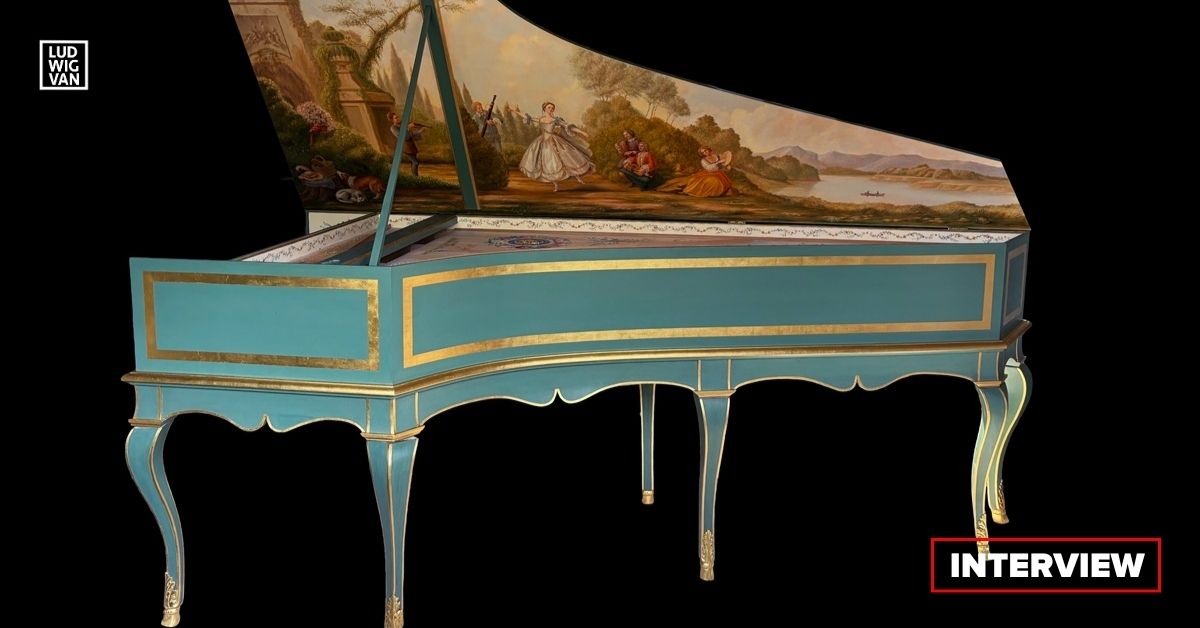
Céleste Music, in partnership with the Town of Newmarket, is presenting the Early Keyboard Festival that will take over the Serpa Galleries in Old Town Hall for the month of June 2026. Céleste Music’s collection of rare early keyboards, both originals and reproductions, will be on view in a living, interactive exhibit.
People will have multiple opportunities to experience the instruments as both music students and audience members from performances to free public masterclasses and lectures.
Five concerts will be performed by a roster of professional Canadian and international performers, including members of Tafelmusik Baroque Orchestra, and faculty members of The Juilliard School, McGill University, University of Toronto, and Western University.
LV spoke to Céleste Music’s Andrea Botticelli about the festival.
Festival Events
Along with the professional concerts, masterclasses and lectures, there will be an adjoining student competition and festival, which opens up the rare keyboard collection for performance by young, aspiring musicians.
There will be five concerts, including:
- Beethoven @ 1800 (Friday, June 5 at 7:00 p.m.)
- Elegy and Fantasy (Sunday, June 14 at 2:00 p.m.)
- In Illustrious Company at the Graf Piano (Sunday, June 21 at 2:00 p.m.)
- Céleste Music Academy Festival Showcase Concert (Saturday, June 27 at 2:00 p.m.)
- Voyage to Versailles (Sunday, June 28 at 2:00 p.m.)
Other events:
- June 6, 7, 26: Masterclasses with Andrea Botticelli, Charlotte Nediger
- June 18, 19: Céleste Music Academy Festival Competition Classes
- June 20: Piano Technician’s Workshop
- June 26: Adult Performance Class
All events take place in the Serpa Galleries at Old Town Hall in Newmarket, Ontario.
The Instruments
The instruments from the Céleste Music collection that are featured in concert include:
- A newly commissioned French double-manual Hemsch harpsichord;
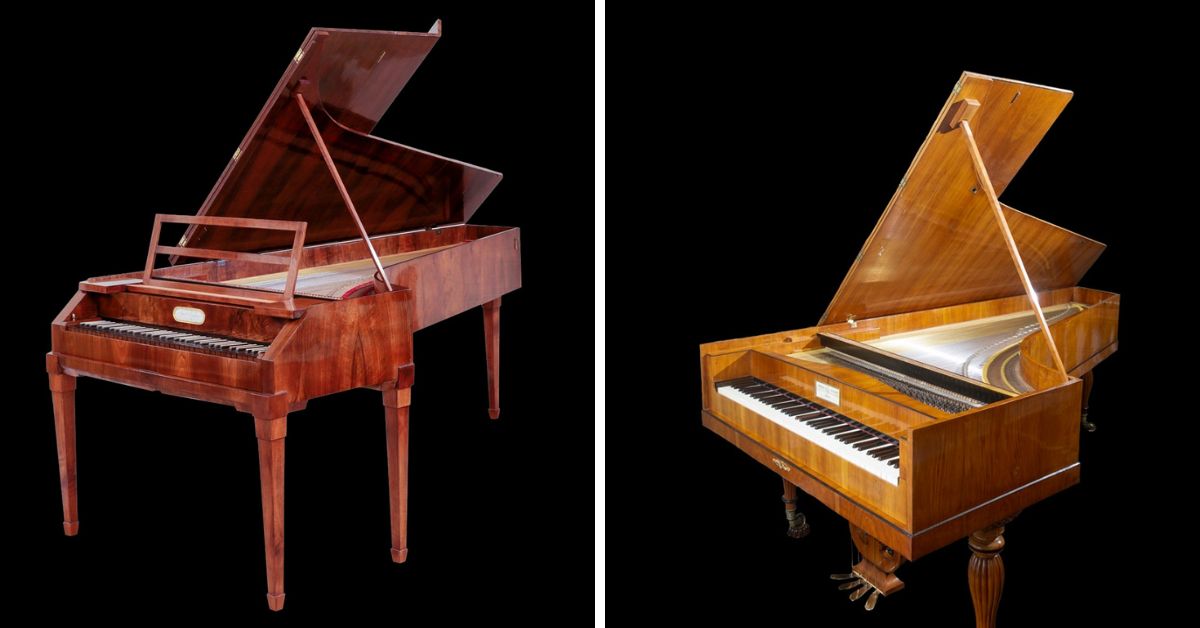
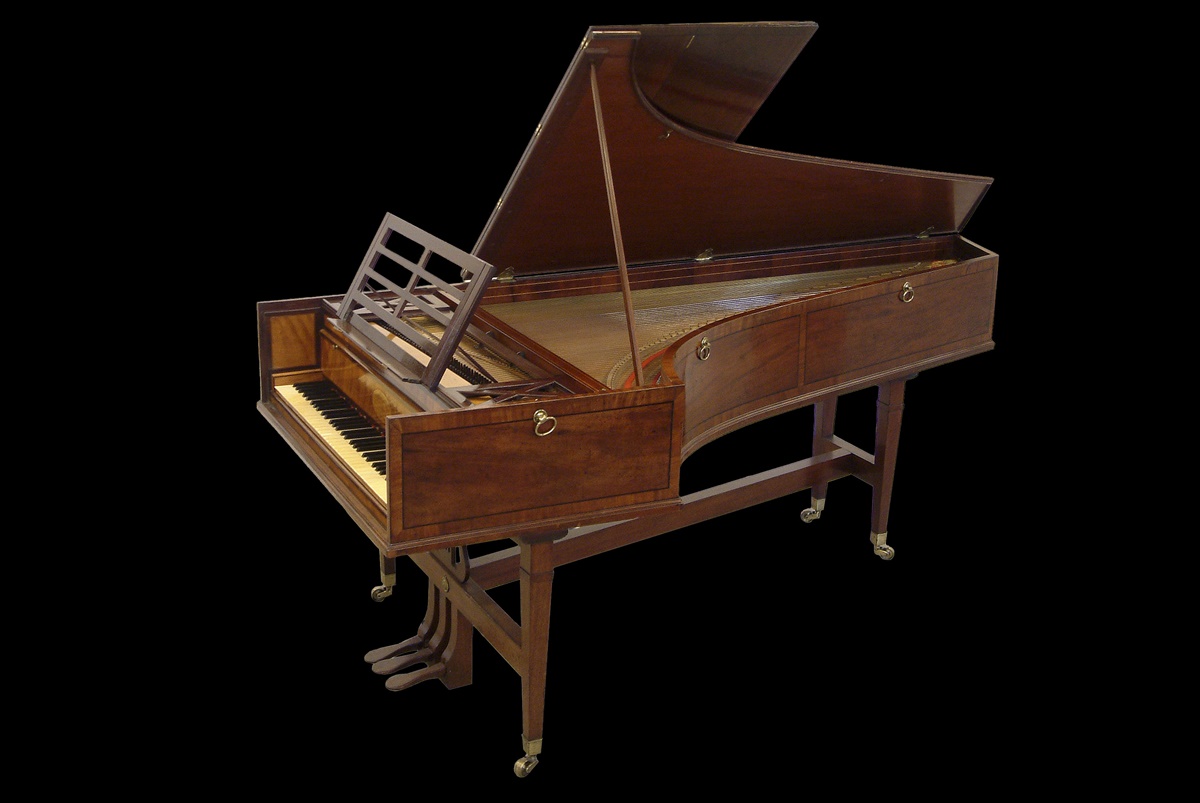
- An original English Broadwood fortepiano (1807);
- An original Viennese Rosenberger fortepiano (ca. 1800);
- An original Viennese Graf fortepiano (1835).
Along with the instruments that you’ll be able to hear in performance, the entire Céleste Music historical keyboard collection will be on display for the public.
Andrea Botticelli performs on the fortepiano:

Andrea Botticelli: The Interview
“This is the first time that we’re attempting a festival of this magnitude,” Botticelli explains. In 2025, Céleste Music presented one concert in kind of a trial run. “It’s coming off the heels of last year’s event, [where it] was really, really heartening to see the interest in these kind of concerts.”
The event not only sold out, but organizers had to add extra chairs to accommodate everyone interested. She reports there was a wide variety of music lovers among the audience.
“Since then, we’ve given more informal, doors open type events.”
Feedback has told her that there is an ongoing fascination with these instruments. For musicians and classical music aficionados, performance is also a big draw.
“I can speak personally as a musician, the appeal of the instrument is hearing the repertoire that you thought you knew really well […] in a fresh way.” There are specific elements that was written into the music of the 18th and 19th centuries that you may be able to hear for the first time. While it’s looking back to previous centuries, the experience nonetheless offers up a new way of thinking for modern listeners.
“It is kind of a novel way of hearing this music for us nowadays,” Andrea says. “It kind of opens up more of a spirit of experimentation.”
As she points out, it also offers a version of a piece that is closer to the composer’s own conception of the music.
“When these pieces first premiered, I think it was that same kind of excitement.”

Performance on Period Instruments
The Céleste Music collection offers a diverse variety of beautifully crafted instruments. “You can get an idea of how pivotal these pieces of technology were in their time,” she says. Many influenced trends in music composition of their era by reason of their capabilities.
As Botticelli points out, working with a modern piano which can play everything from Rachmaninoff to Gershwin, Bach to Hania Rani is a different experience. “When you play the music on this kind of instrument, where it’s really all it can manage, you get an appreciation of how revolutionary the music was.” Much of the music of the time pushes the limits of the instrument, as she points out.
Other elements speak to the physical layout of the modern piano vs its predecessors. “An example of that is the pedal,” she explains. “What we call the pedal nowadays, on the earlier fortepiano was a knee lever.” Its use quite likely differed significantly from the way pedals are employed today. “The kind of syncopation and ease we are now used to, it’s not necessarily as possible,” Andrea adds.
The instruments’ overall colour of sound, and performance techniques, leave an impression — even on non-keyboard players. “I’ve heard comments like wow, it sounds so fresh. Earlier keyboard instruments have a little more lightness, a little more clarity, even a sparkling quality,” she says.
The interplay between the older keyboards and other instruments in concert is a little more equal in terms of volume; the older instruments aren’t as loud as the modern piano.
“They felt that it was more of an equal conversation.”
Fortepianist Riko Fukuda performs Franz Schubert’s Adagio from the Sonate in c minor, D 958:

Concerts
The performances look to emulate the intimate ambience of the salon concerts of the 18th and 19th centuries, where there was ongoing communication between the artists and audience.
The performers in concert are all specialists in period instruments and music. From Tafelmusik, there will be Artistic Co-Director and Principal Bassoon Dominic Teresi and oboist Daniel Ramírez Escudero. They are jointed by Andrea Botticelli, Quebec’s Jean-François Normand on clarinet, and natural horn player/physicist Yoni Kahn for the Beethoven concert that opens the Festival.
Japanese-Dutch fortepianist Riko Fukuda will perform in the Elegy and Fantasy concert on the English Broadwood fortepiano. She’ll be playing Dussek’s Élégie harmonique, Op. 61 and Le Retour à Paris, Op. 64, along with Schubert’s Grand Rondo, D. 951. Fukuda is sharing the bill with Toronto’s Charlotte Tang, who’ll play a Schumann fantasy on the Conrad Graf fortepiano.
Patricia Garcia Gil, the current Postdoctoral Associate and Artist in Residence at the Cornell Center for Historical Keyboards at Cornell University, will perform a recital of music on the Graf fortepiano by little known and women composers, including pieces by Clara Schumann and Delphine von Schauroth, along with music by Beethoven and Liszt.
Borys Medicky of the Don Wright Faculty of Music at Western University performs at the Festival’s closing concert, Voyage to Versailles, on the newly built French double-manual Hemsch harpsichord. He’ll be joined by flautist Alison Melville, viola da gambist Felix Deák, and violinist Cristina Prats Costa in a program of French Baroque that includes music by Jacquet de La Guerre, François Couperin, Joseph Bodin de Boismortier, Jacques Duphly, and Jean-Philippe Rameau
Tafelmusik’s keyboardist Charlotte Nediger will conduct the harpsichord workshop, and Dutch fortepiano restorer and technician Edwin Beunk will give the Piano Technician’s Workshop.
“It’s really exciting that we’ve been getting a lot of positive interest,” Andrea says. “We really feel like it’s a very special event that’s going on for the month of June.”
Details
Céleste Music is a charitable organization. Note that seating is limited.
Are you looking to promote an event? Have a news tip? Need to know the best events happening this weekend? Send us a note.
#LUDWIGVAN
Get the daily arts news straight to your inbox.