Anyone who thinks that playing a bit of Mozart is just the ticket for calming down an anxious dog or hyperactive child hasn’t heard the full dynamic and dramatic possibilities of his music as expressed by Tafelmusik at Trinity-St. Paul’s Centre on Thursday night.
Despite playing on period instruments that have a narrower dynamic range than modern ones, the orchestra managed robust, variegated interpretations of two pieces by a young Mozart, the “Turkish” Violin Concerto, K.219, and the Symphony No. 10, KV. 74. The soloist and leader for this week’s performances is Gottfried von der Goltz, founder of the Freiburg Baroque Orchestra of Germany.
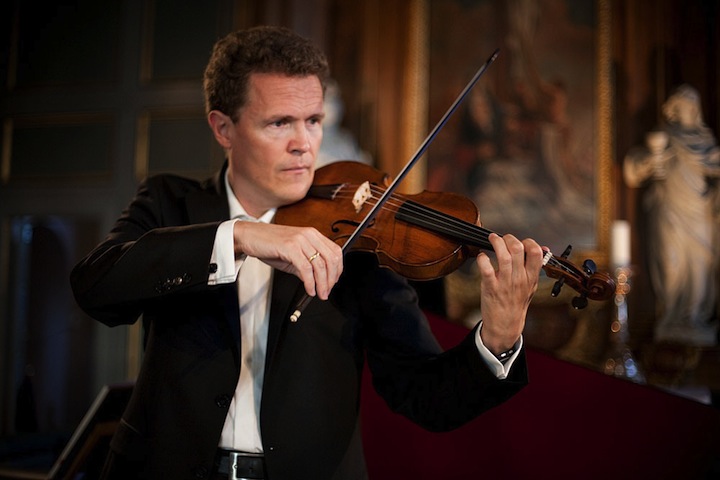
Goltz revealed himself a master of adding up the right inflections, accents, crescendos to make the well-known Mozart pieces sound vibrant and fresh. His turns as soloist were marked by a steely control of the bow, overlaid with an elegant turn of phrase. He also proved to be an effective communicator with the orchestra.
While the Mozart pieces likely were there to point audiences to something familiar and well-loved, the rest of the programme revealed the evening’s real drama. The first clue was that all three of the other pieces were written in minor keys and informed by the spirit of Germany’s Sturm und Drang aesthetic of the mid-to-late 18th century, which would give birth to the Romantic movement.
Joseph Haydn, the master of juggling order with dashes of the unexpected, was represented by his Symphony No. 52, where even the Minuet movement is written in an unexpectedly sombre minor key, completely changing the sound and feel of this courtly dance (the companion Trio is a nice contrast, in a major key).
The darkest and most adventurous music, which used the full resources of the period orchestra that leaves behind the Baroque-era continuo players in favour of integrating horns, oboes and the bassoon with the strings, came from two less-known composers.
Franz Ignaz Beck was represented by the Overture to a ballet, La Mort d’Orphée. The collection of interesting themes and instrument combinations made me want to hear the whole score to more fully appreciate this composer’s craft. But that music is, unfortunately, lost.
More substantial was Joseph Martin Kraus’s Symphony in C minor, VB 142, where each of the three movements demonstrated a different way to creatively build tension in sound.
The orchestra overall was in great form, making the most of a programme perfect for showcasing the storms and shadows that are as much a part of the neat-and-tidy Classical-era as the sweet sound that music marketers so cherish.
For more information on this programme, which continues at Trinity-St. Paul’s Centre until Sunday afternoon, click here.
John Terauds