
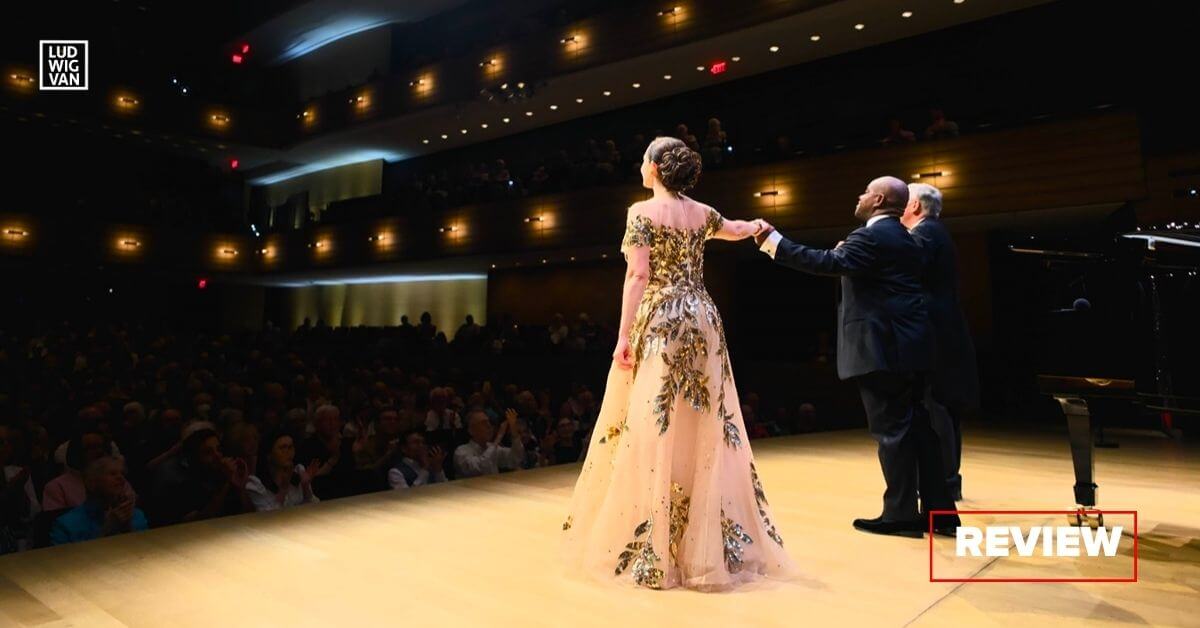
Toronto Summer Music: Golden Age: Erin Morley & Lawrence Brownlee. Rossini: “Ah, quel respect… Ce téméraire qui croit nous plaire,” from Le Comte Ory: Verdi: “Gualtier Maldè! … Caro nome,” from Rigoletto: Bizet: “À cette voix quel trouble … Je crois entendre encore,” from Les Pêcheurs de Perles; Debussy: “Clair de lune” from Suite Bergamasque, L. 75, No. 3; Delibes: “D’où viens-tu? … C’est le dieu de la jeunesse,” from Lakmé; Bizet: “Ils verront si je mens!,” from La Jolie Fille de Perth; Bizet: “Chanson Bohème” for Four Hands, from Carmen; Verdi: “Ella mi fu rapita … Parmi veder le lagrime” from Rigoletto; Delibes: “Où va la jeune Indoue,” from Lakmé; Donizetti: “Quoi? Vous m’aimez? … De cet aveu si tendre,” from La Fille du Régiment. Erin Morley, soprano; Lawrence Brownlee, tenor; Malcolm Martineau, piano. Koernere Hall, July 16, 2026.
While wildfire smoke blanketed Toronto last night, Koerner Hall was smoking with vocal fireworks by two celebrated opera stars.
Soprano Erin Morley and tenor Lawrence Brownlee are today’s leading voices at the Metropolitan Opera and other international houses. Together, they collaborated on the recording “Golden Age,” featuring a curated collection of 19th century operatic gems from the French and Italian bel canto repertoire, for which both are renowned interpreters.
Last night’s performance at the Toronto Summer Music Festival was part of their Golden Age Tour. While Brownlee has appeared in Toronto before, notably with the Canadian Opera Company, Morley is making her Canadian debut.
The program of arias by Gaetano Donizetti, Gioachino Rossini, Georges Bizet, Léo Delibes and Giuseppe Verdi arias was mostly drawn from their best-selling album. While there were a few familiar numbers, it was most exciting to discover rarely performed operatic gems from these famous composers.
Brownlee and Morley have voices that magically complement each other, and electrifying stage chemistry. They are no strangers to performing together, having sung the lead roles of the Met’s productions of Mozart’s The Magic Flute and Donizetti’s La Fille du Régiment.

Duets
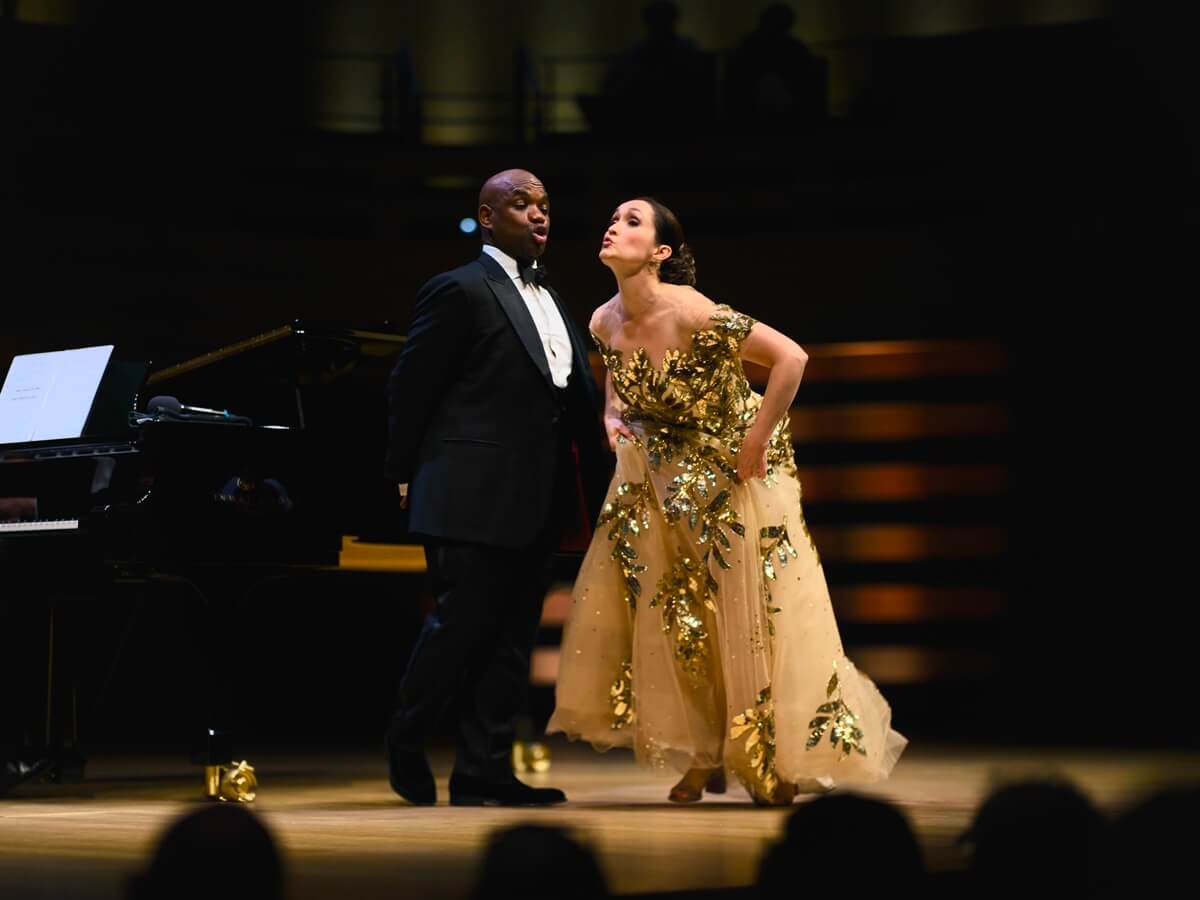
Many of their duets are playful games of seduction and cat-and-mouse lovers’ chases. In “Ah, quel respect … Ce téméraire qui croit nous plaire” (Rossini’s Le Comte Ory,) the intricate vocal interplay between the tenor and soprano captured the comedic tension between the lovers.
“Quoi! Vous m’aimez? … De cet aveu si tendre” (Donizetti’s La Fille du Régiment) had a similarly playful energy, with the two young lovers eagerly confessing their mutual attraction. The duet ended with a series of bright, ringing high notes, mirroring the pure euphoria of the two characters.
By contrast, “D’où viens-tu? … C’est le Dieu de la jeunesse” (Delibes’s Lakmé) is a slow-burning romance. There was a tender blend of vocal colors and expressive artistry between the singers.
My favourite, however, was “Ils verront si je mens!” from Bizet’s lesser-known opera La Jolie Fille de Perth. This performance of the two lovers swearing their true devotion to one another was a masterclass in lyricism and seamless vocal weaving.
Solo
Each artist also performed two solo pieces. Brownlee’s choice of “À cette voix quel trouble … Je crois entendre encore” (Bizet’s Les Pêcheurs de Perles) showed his luminous top notes and effortless use of head voice which created a hauntingly dreamlike atmosphere.
Brownlee joked that at the young age of 53, he finally made his first career jump into the Verdi repertoire, when he recently debuted the role of the Duke in Verdi’s Rigoletto in Japan. His “Ella mi fu rapita!… Parmi veder le lagrime” again showcased his vocal agility and lyrical finesse, with a gorgeous high D.
Morley’s first solo was another showstopper from Rigoletto. “Gualtier Maldè! … Caro nome” showed her stunning breath control and sparkling tops, embellished with many ornamental flourishes. My only small lament was I wished she sang this piece with less powerful vibratos to yield a less mature voice that is more suited to a young Gilda.
She pulled out all the stops with “Où va la jeune Indoue,” the legendary “Bell Song” from Delibes’ Lakmé. This was a showcase of Morley’s pyrotechnics — powerful coloratura, high staccatos, trills, and precise octave jumps. Her highly ornamented rendition also showed her stratospheric range, with a rarely-heard fleeting high G-sharp and a sustained high E to end the piece.
Piano
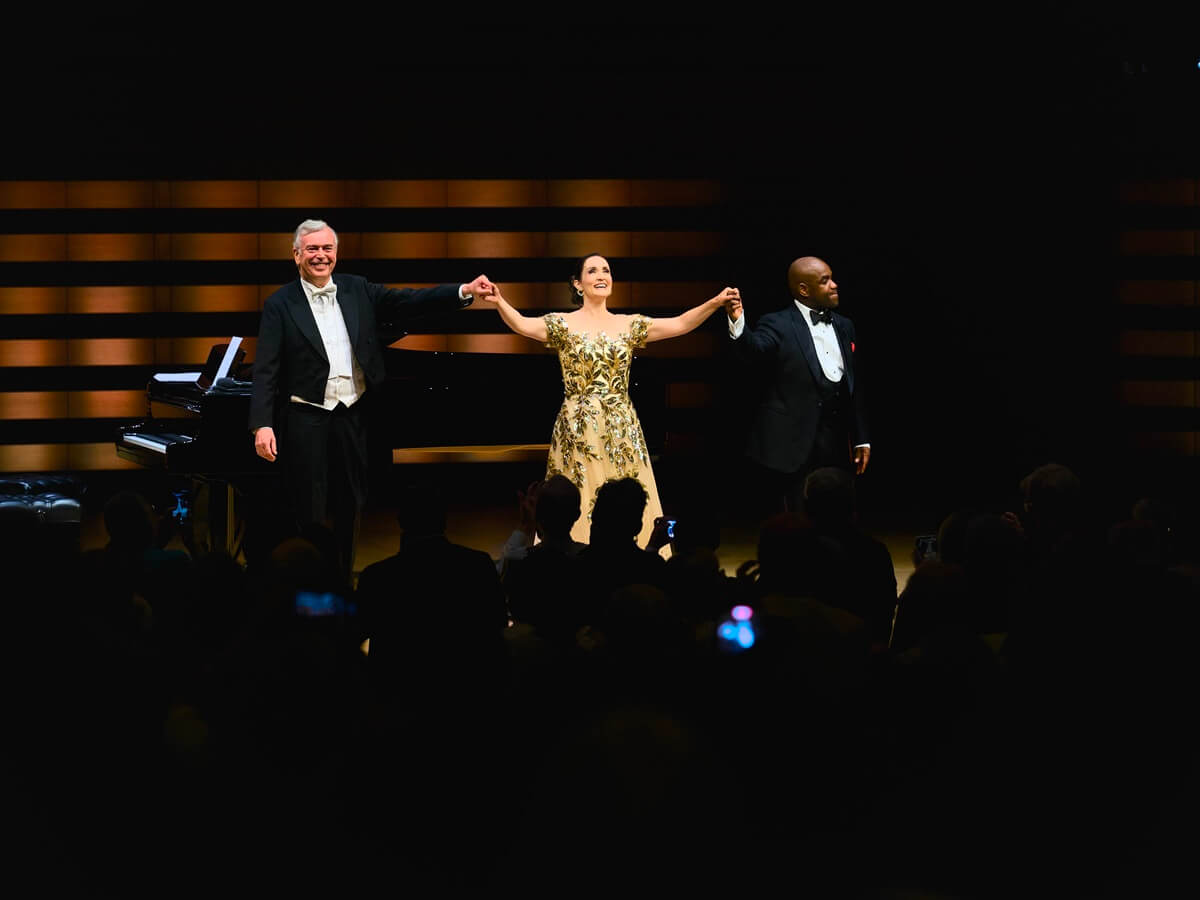
The duo was accompanied by pianist Malcolm Martineau, who is gifted with immense flexibility and lightness of touch. His accompaniment was an outstanding stand-in for a full orchestra that was hardly missed. Martineau also performed a solo of Debussy’s iconic “Clair de lune,” which he painted with vivid Impressionistic colours.
As a surprise performance, Morley also dazzled with her piano chops. Together with Martineau, they amused us with a four-hand duet of “Chanson Bohème” from Bizet’s Carmen. I would be remiss not to mention that even in a floor-length resplendent gold gown that matched the concert’s theme of Golden Age, Morley executed impressively clean pedaling!
Encore
After rounds of well-deserved standing ovations, Morley joked that “We’re not going to pretend we didn’t prepare an encore!”
Morley and Brownlee gave us the most sublime parting gift, delighting us with “Tornami a dir che m’ami” from Donizetti’s Don Pasquale.
It was a sweet and tender end to an evening of unforgettable vocal virtuosity.
Are you looking to promote an event? Have a news tip? Need to know the best events happening this weekend? Send us a note.
#LUDWIGVAN
Get the daily arts news straight to your inbox.