
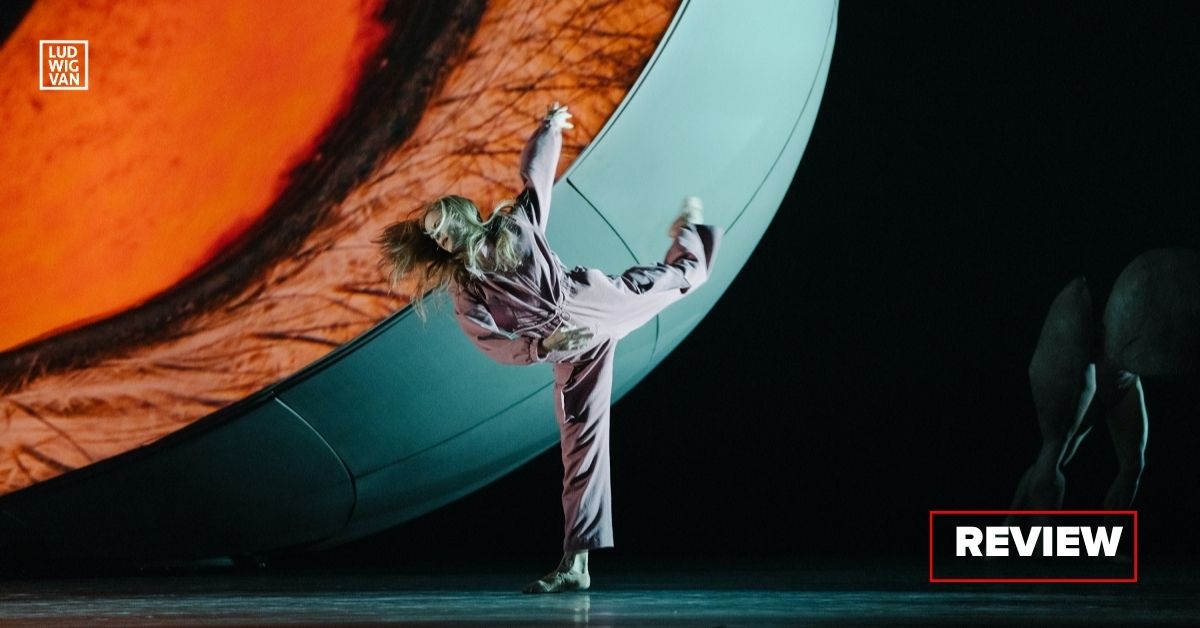
The National Ballet of Canada/MADDADDAM, inspired by Margaret Atwood’s MaddAddam Trilogy,
choreographed by Wayne McGregor, Four Seasons Centre, closes Jun. 21. Tickets here.
When Wayne McGregor’s epic MADDADDAM for the National Ballet premiered in 2022, I found myself grappling with the enormity of the undertaking from a critical point of view.
Based on Margaret Atwood’s dystopian trilogy, the ballet sought to distill a vast literary universe into movement, music, and image, a Herculean task if ever there was.
Pity the poor reviewer.
My 2022 Review
After seeing the work for a second time, I was curious to go back to see how I had handled the challenge of McGregor’s ballet monster.
After rereading my 2022 review, I was struck by how much still held true: McGregor’s audacious vision, Max Richter’s compelling score, the choreographer’s gift for making dancers look extraordinary, and the sheer scale of a production that remains one of the most ambitious in the company’s history.
My first instinct was simply to direct readers to that piece and call it a day. After all, I had already wrestled with the ballet’s immense scale, untangled its dystopian narrative, and attempted to identify the legion of characters embodied by the dancers.
Better still, I found myself thinking, rather immodestly, that I had done a pretty good job. “This is a neat bit of writing,” I thought. It was, however, a fleeting moment of self-congratulation, quickly followed by the realization that a revival deserves more than a rerun of an old review — so back to the drawingboard.

Background — Ballet v. Trilogy
It is worth noting that McGregor’s three acts do not correspond neatly to Atwood’s three novels. This is a distillation rather than a recreation, a choreographic response to Atwood’s dystopian universe rather than a literal retelling of it.
In the opening act, we encounter the survivors struggling in the aftermath of catastrophe. The second act rewinds time to explore the world before disaster struck the human race. The third act then moves beyond Atwood’s ending altogether, carrying us into McGregor’s imagined future.
How Atwood Destroys the World
At the centre of Atwood’s story is Crake, the scientist who concludes that humankind has forfeited its right to inhabit the planet due to humanity’s greed and environmental destruction. He devises the BlyssPluss pill, a drug which induces euphoria, but really unleashes a global pandemic that brings about the near-eradication of the human race.
Yet Crake is not interested in leaving the Earth empty. He has already engineered a new species of gentle, genetically designed humanoids intended to live in harmony with one another and with nature, free from the flaws that, in his view, doomed humanity.
What Are My Responsibilities to the Reader in a Revival Review?
I have at this point dutifully given you the background to the ballet and McGregor’s dramatic arc. You’ve got the synopsis of the three acts in the program. You can also seek out my 2022 review where I made a valiant effort to untangle the characters and explain who was doing what to whom.
Upon reflection, where on the first go round I got bogged down in details, I’m now going to do everyone a favour — Citron’s Shortcut Guide to MADDADDAM.
What to Watch for in the First Act — Castaway
This is the act of the survivors in a post-apocalyptic world and all their stories are happening simultaneously and each is choreographically different. Note: McGregor loves when different things are happening on stage at the same time.
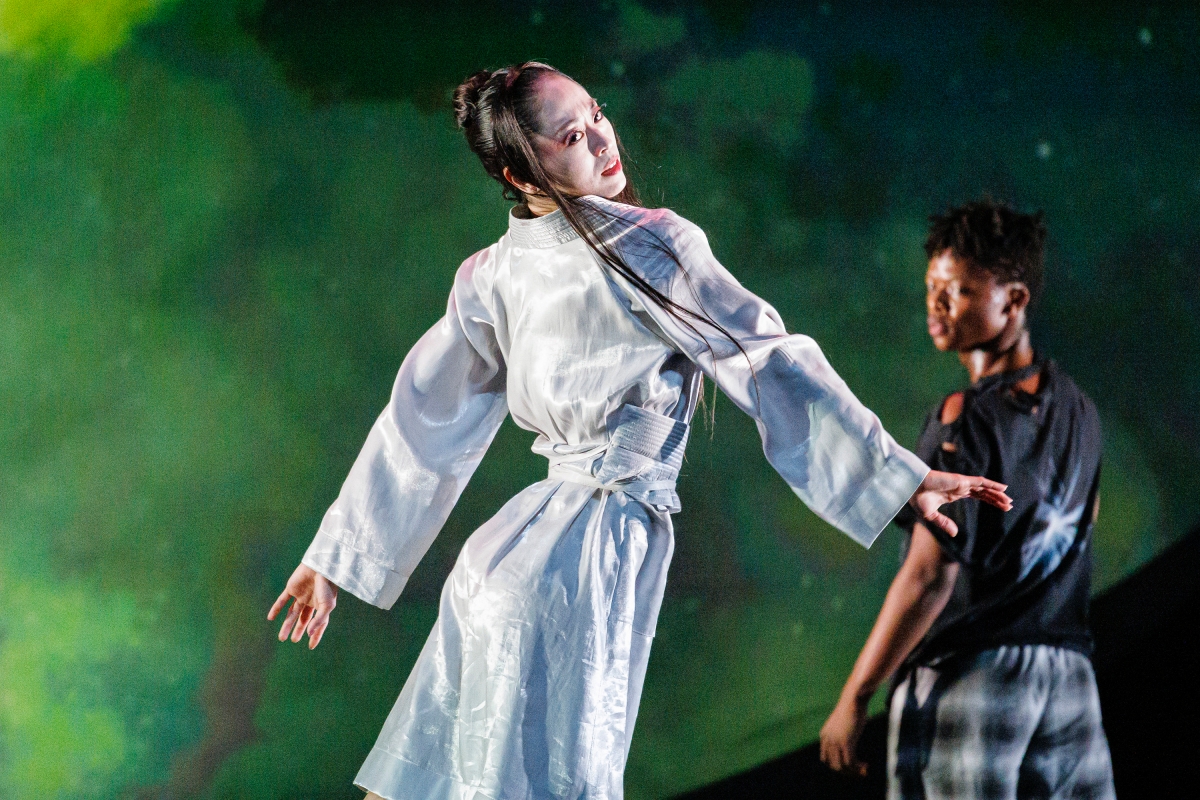
Jimmy (Siphesihle November) believes he may be the last human left alive, but his mind drifts back to the past. Watch for the central triangle involving Jimmy, his friend Crake (Harrison James) and Oryx (Koto Ishihara), the woman loved by both men, and the great love of Jimmy’s life.
Toby (Heather Ogden), one of God’s Gardeners, dreams of her remembered love Zeb (Christopher Gerty).
Other survivors are friends Ren (Tirion Law) and Amanda (Jenna Savella). Keep an eye on Blanco (Larkin Miller) and his Painballers (Peng-Fei Jiang and Spencer Hack), whose brutality have devastating consequences for the girls.
For local colour, there are the Crakers, Crake’s gentle genetically engineered humanoids, and the wonderfully bizarre Pigoons, giant bioengineered pigs originally created as organ donors.
What to Watch For in Act Two — Extinctathon
This act takes place before the apocalypse.
McGregor gives the audience a helping hand because as the action flashes backward and forward through time, projections identify both the year and the character or characters in the focus..
McGregor’s genius here is choreography of personality and relationships. The younger person is not the same as their older self. A relationship changes over time. If we could watch this act in slow motion we could see these subtle choreographic differences more clearly.
Joining the eight named characters from the first act, we now meet Adam (Ben Rudisin), the founder of God’s Gardners, and brother of Zeb.
As well as watching further personality and relationship development among the named characters, McGregor has an ensemble of dancers populating the background being caring and abusive, oppressive and resistant in turn.
And of course there are Crakers, Child Crakers (from the National Ballet School) and the Pigoons.
One particularly memorable sequence features a dancer standing behind a microphone reciting everything humanity believes it deserves — respect, success, perfect children, and endless fulfilment. The scene is darkly funny, but it also exposes the arrogance and entitlement that fuels Crake’s worldview.
Above all, watch Crake. He is the gravitational centre of the act. McGregor gives him distinctive choreography that increasingly isolates him from those around him. As his conviction grows that humankind has become irredeemable, his movement takes on an intensity and torment all its own.
Which Bring Us to Act Three — Dawn
In my obsession with trying to come to grips with the scope of MADDADDAM in 2022, I completely overlooked the true artistry of this act.
Here’s an important note to the National’s artistic director Hope Muir.
If you’re ever in need of a piece of glorious abstract dance, you can detach the third act of MADDADDAM as a stand alone ballet called Dawn, underscored by composer Max Richter at his most majestic. In fact, Richter’s music had the National Ballet Orchestra in full flight with maestro David Briskin pulling out all the stops.
In 2022, there were children from the NBS as child Descendants, but McGregor seems to have dispensed with them in the act, and now there are only National dancers populating the choreographer’s future.
There are two important dance elements at the heart of Dawn — the Crakers and the Ancestors.
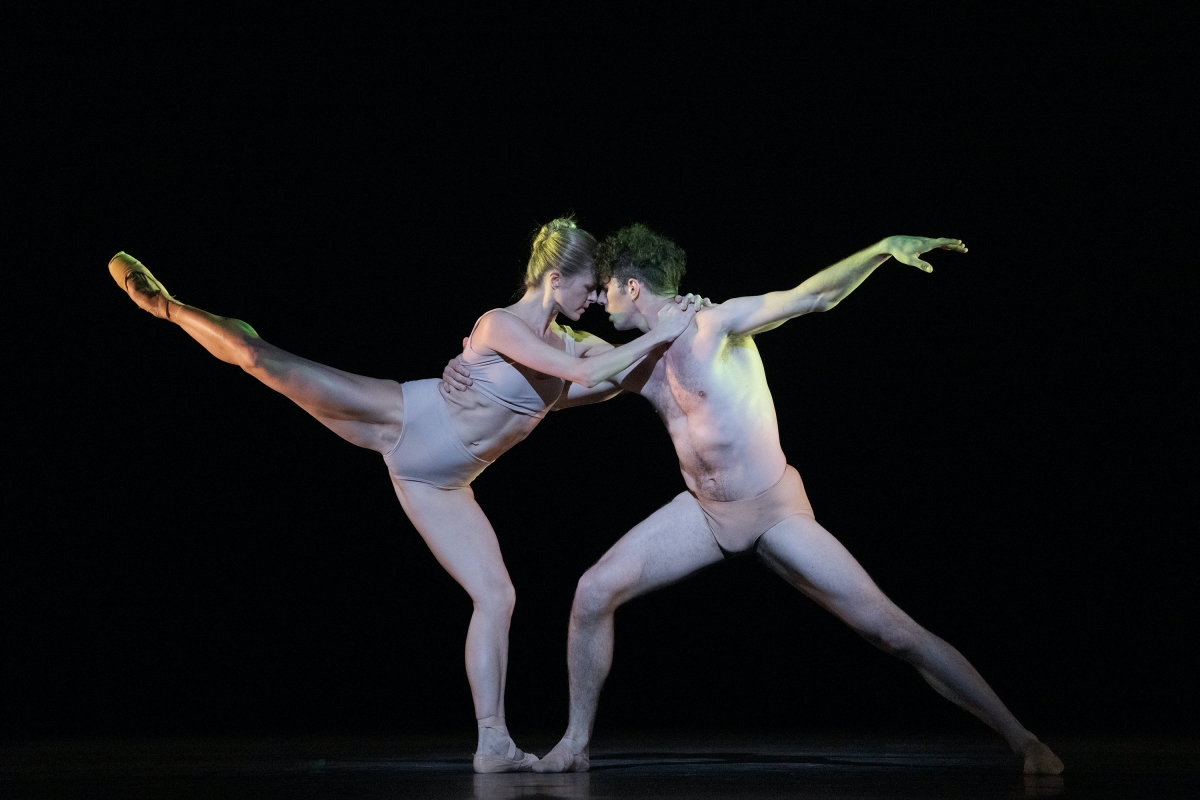
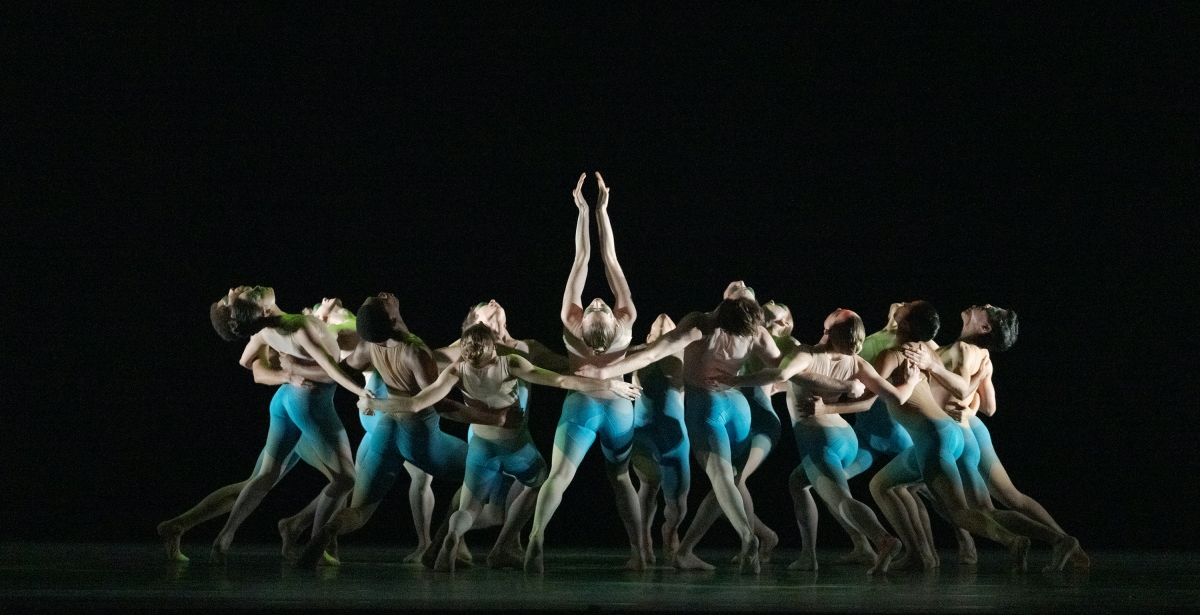
It starts off with an utterly beautiful dance by the Crakers, an ensemble of 24. The movement resembles a circle dance, a weaving in and out, a gentle gathering of fairies, like something out of A Midsummer Night’s Dream.
In contrast to the 24 Crakers, are the eight Ancestors, Toby, Oryx, Ren, Amanda, Jimmy, Crake, Zeb, and Adam.
These eight dance amidst the 24, with each group interacting with each other, yet staying within their own universes, and it is an absolutely stunning symbiosis of two groups that meet and part and come together and separate in a most wonderfully ravishing choreographic display,.
And that is why I’m saying that you could take this sublime third act, Hope, and detach it as a masterpiece ballet on its own. No Crakers, no Ancestors, just two dance elements that have been imaginatively put together by a master creator.
I was literally overwhelmed, a reaction that eluded me on my first viewing.
Oh, and the religious ceremony could be cut.
There is a Prologue?
Revisiting MADDADDAM certainly brought a surprise.
My 2022 review does not mention a Prologue, but there must have been one. The 2026 program only gives the synopses of the three acts and yet, in retrospect, the Prologue is important.
Presented behind a scrim, it introduces the principal factions of Atwood’s world through a series of simultaneous choreographic tableaux.
Here, one encounters the environmentally minded God’s Gardeners, the privileged Compounders, the marginalized Pleeblanders and the brutal CorpseCorps who are the enforcers of the social order. McGregor gives each group its own physical vocabulary. The scene is further enriched by an extraordinary tapestry of projected imagery that evokes the fractured society these groups inhabit.
Against this backdrop appears the elegant Ren (Tirion Law), one of the trilogy’s major characters, weaving gracefully among the competing worlds, a reminder that it will be individuals who will be impacted when this universe implodes. Her incongruous presence represents the nameless masses.
In Praise of the Visual
One aspect of MADDADDAM that I failed to appreciate fully at the premiere was the extraordinary visual design by We Not I. Understandably, I was then preoccupied with untangling characters, relationships and narrative threads.
Returning to the ballet four years later, I was struck by how each of the three acts inhabits a distinct visual world.
In Castaway, a gigantic orb, at once eye, planet and memory bank, dominates the stage. Filled with endlessly shifting projections, it conjures worlds lost, worlds imagined and worlds yet to come.
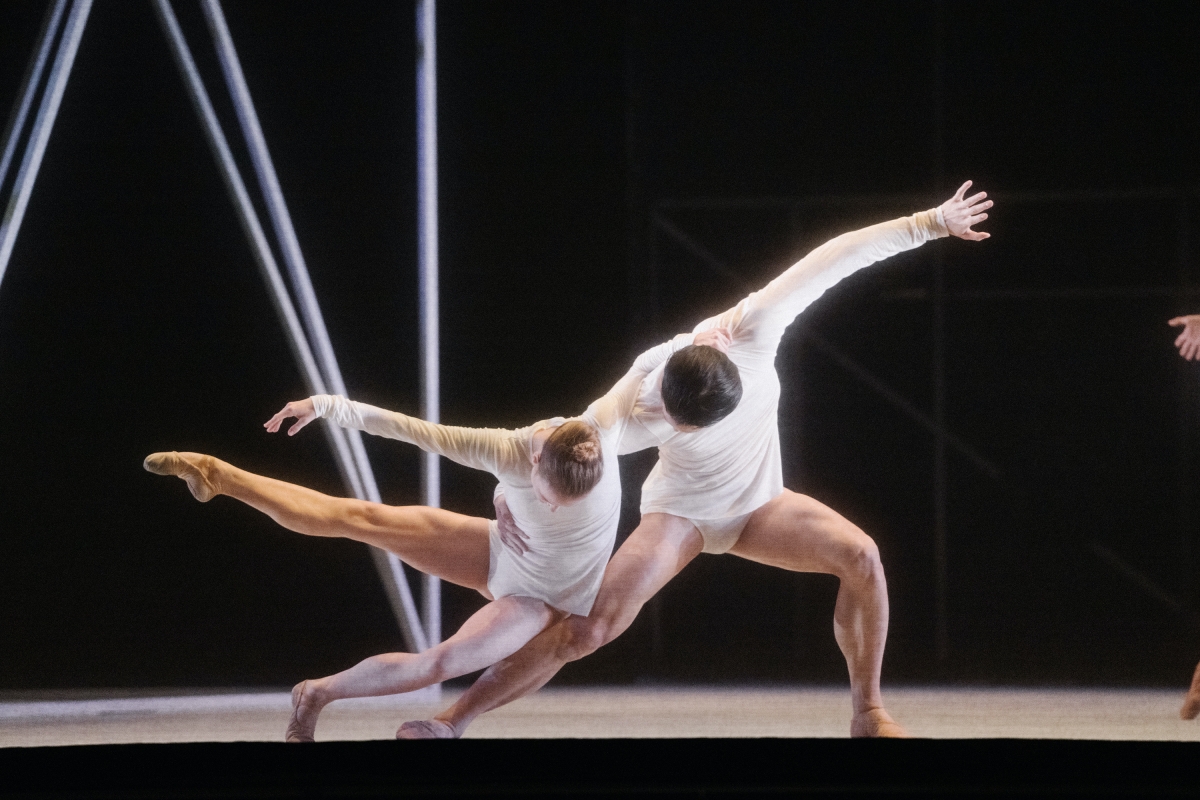
By contrast, the second act presents a harsh industrial landscape of scaffolding, fencing and suspended steel-like structures. It is intentionally devoid of visual comfort, reflecting a society corroded by corporate power and environmental neglect.
Then comes Dawn. Here the scenery all but disappears. The stage seems defined by light, shadow and atmosphere rather than physical structures. Architectural elements recede into the background, leaving the moving dancers and Max Richter’s luminous score to create the world before our eyes.
Ravi Deepres‘ film design is outstanding throughout the ballet aided and abetted by Lucy Carter‘s atmospheric lighting. Happily Gareth Pugh keeps the costumes simple to avoid visual clutter, but his Pigoon outfits are a hoot.

One Final Piece of Advice
Do not let the music become background.
Listen to how Max Richter’s extraordinary score intertwines with every aspect of the choreography, from vast orchestral passages to electronic textures, from choral writing to driving percussion, from live performance to recorded sound.
The music is not an accompaniment but an equal partner in the storytelling.
End Note
Sir Wayne McGregor, as he is now, is a visionary and future viewings of MADDADDAM can only reveal more of the ballet’s many riches.
Are you looking to promote an event? Have a news tip? Need to know the best events happening this weekend? Send us a note.
#LUDWIGVAN
Get the daily arts news straight to your inbox.