
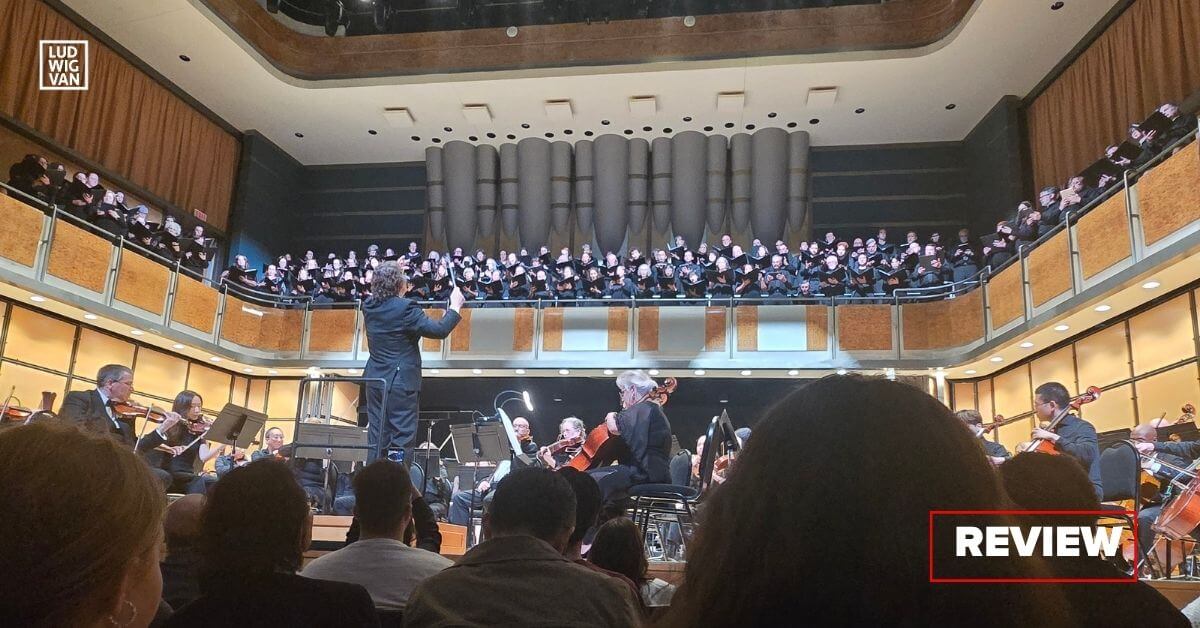
Orchestra Toronto: Mahler: Symphony No. 2 “Resurrection”, Michael Newnham, conductor, with Leslie Ann Bradley, Soprano; Simona Genga, Mezzo Soprano; Orpheus Choir of Toronto; RESOUND Choir. June 6, 2026 at the George Weston Recital Hall, Meridian Arts Centre.
Orchestra Toronto concluded its 2025/26 season with the ambitious programming of Mahler’s Symphony No. 2, “Resurrection”. The orchestra swelled to more than 100 musicians, and another 100+ choristers assembling on the balcony behind them, including the Orpheus Choir of Toronto and RESOUND Choir, with two vocal soloists.
From the time that the audience was first assembling in the fine acoustics of the George Weston Recital Hall to the opening remarks by Melissa Cavelti, CFA, Chair, and also a double bass player in the orchestra, the tone of the evening was set. The multi-ethnic audience ranged from children and teens through to the over 60 set in about equal numbers for each demographic.
It was a family-style atmosphere of friends who gathered to listen to friends make music. Set against the weighty themes of Mahler’s Symphony, it offered a unique kind of contrast.
That’s the beauty of a community orchestra concert — with an emphasis on community.

The Symphony
In the audience, as Cavelti remarked, there was a group of veterans from the Sunnybrook Veterans Program. The concert, as she pointed out, took place on the 82nd anniversary of D Day, and what better way to mark the occasion than with Mahler’s Resurrection Symphony?
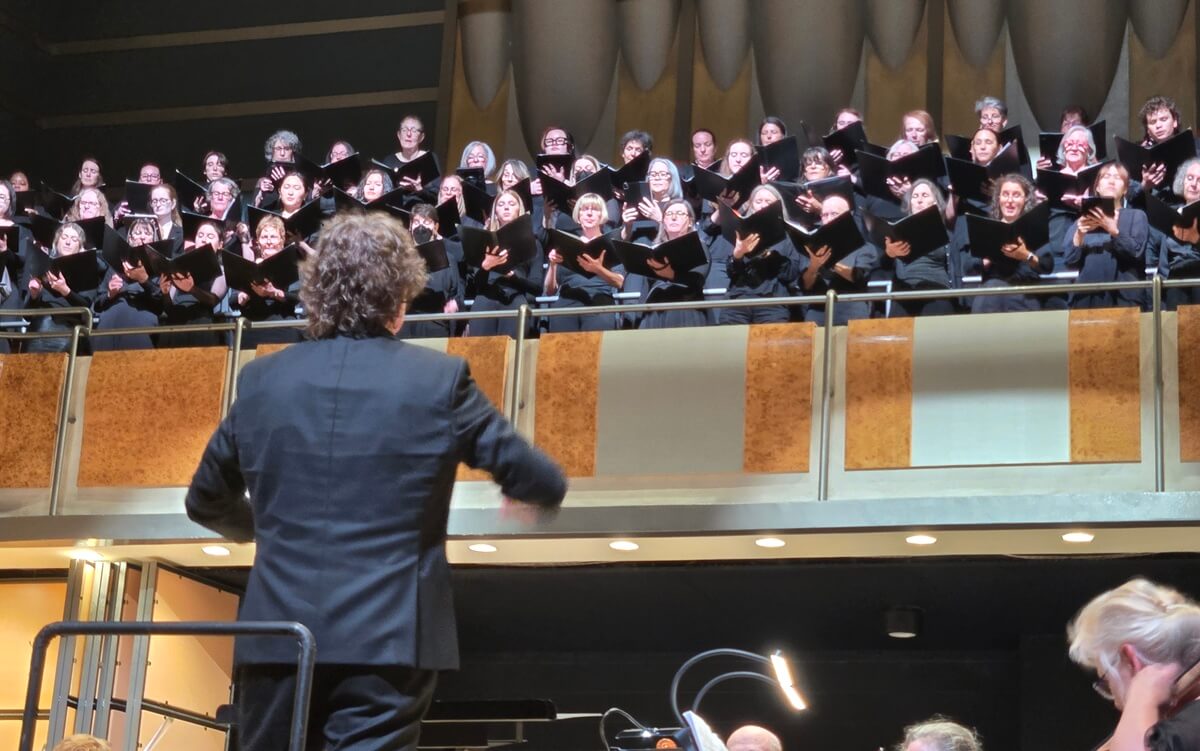
The symphony, the only work on the program, incorporates five movements and spans about 90 minutes, performed by Orchestra Toronto without an intermission. It’s Mahler’s meditation on death, the meaning of life, and the possibility of redemption.
“You have to just let this piece roll,” said Music Director Michael Newnham, in opening comments he called rare. “You have to let it take over you.”
Mahler offers up a roller coaster of emotion in the sprawling work, from the funerary grief at the death of someone close to memories of happier times, desolation and the end of all things, finishing with a glorious call to renew life once again.
Its length is no indulgence; there is not a case to be made for a single extraneous or unnecessary note.
The Orchestra
The orchestra includes a major component of amateur players, along with students and a sprinkling of professional musicians, such as violinist and concertmaster Corey Gemmell. They played with unflagging passion through all five movements, including the composer dictated pause of a few minutes between the first and second.
There were notable moments throughout the performance. The lower strings provide the backbone for the first movement, establishing the rhythmic drama throughout its 20+ minutes. The woodwinds and brass added lovely colours to the mix, including the gorgeous dark brass tones of the third movement, and during the fifth movement, when they play off stage.
Unlike many symphonies, Mahler 2 takes some of the emphasis away from the violins, who often play rhythmic and accompanying passages rather than melodic leads. Their performance was impeccable, and their textures integral to the overall sound. When the time came for melody, the section, and concertmaster Corey Gemmell, in particular, rose to the occasion with wonderful tone and lyricism.
Also of note was the percussion section, whose contributions nicely ramped up the drama at key moments.
Overall, the orchestra had a firm grip on all the dynamic and emotional ranges of the symphony, accomplished without losing the momentum of the work as a whole, and there was a good balance between the sections of the inflated ensemble. There was a nice feel for both the uber-dramatic and lighter, lyrical passages of the piece.
It was a polished performance delivered with the kind of enthusiasm that a community orchestra can muster.
Soloists & Choir
Soloists Simona Genga and Leslie Ann Bradley added their vocal sparkle to the work. Mahler wrote one of the most beautiful solos for any vocal type in the fourth movement, titled “Urlicht” (Primeval Light). The text is taken from a collection of German folk poems, titled Des Knaben Wunderhorn, with the composer’s instruction that it is to be delivered simply as an expression of devout faith, and without sentimentality.
Genga, a mezzo-soprano, offered a gorgeous, rich vocal tone to the passage. Her voice is lovely in all ranges, including the lower register. Soprano Leslie Ann Bradley has a soaring voice that floated above the massed choir nicely.
There was a good balance between the soloists and the orchestra.
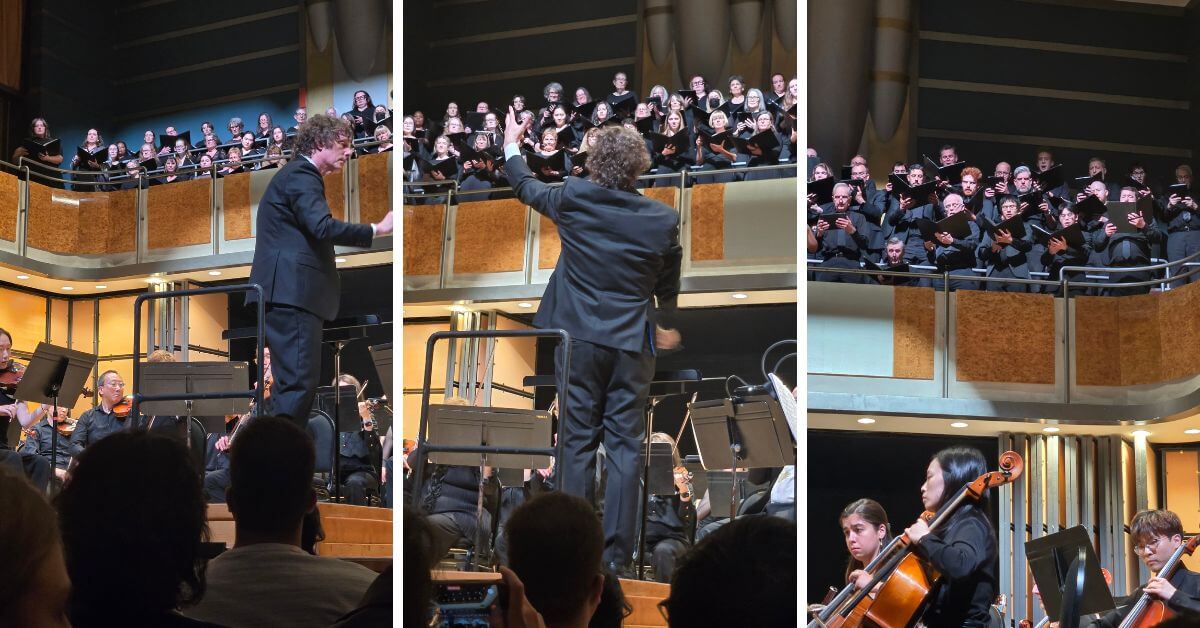
The two combined choirs delivered a wonderfully moving performance, adding to the spectacular lows and highs of the symphony’s final movement. There were truly spine chilling moments that captured the epic nature of both the work and its redemptive message.
Final Thoughts
Toronto certainly has an appetite for Mahler, and for his Symphony No. 2 in particular, with no less than three orchestras taking on the monumental work within a matter of weeks.
For the duration of the long work, the audience was rapt and attentive — even silent during the first to second movement pause. When the orchestra, choirs, and vocal soloists reached the symphony’s thrilling finale, there was immediate and spontaneous applause that reached a thunderous peak, and called Maestro Newnham, who was as impassioned as the musicians throughout the performance, back to the stage with its insistent appreciation.
That’s the magic of Orchestra Toronto — fine music, delivered with an inspiring community spirit.
Are you looking to promote an event? Have a news tip? Need to know the best events happening this weekend? Send us a note.
#LUDWIGVAN
Get the daily arts news straight to your inbox.