
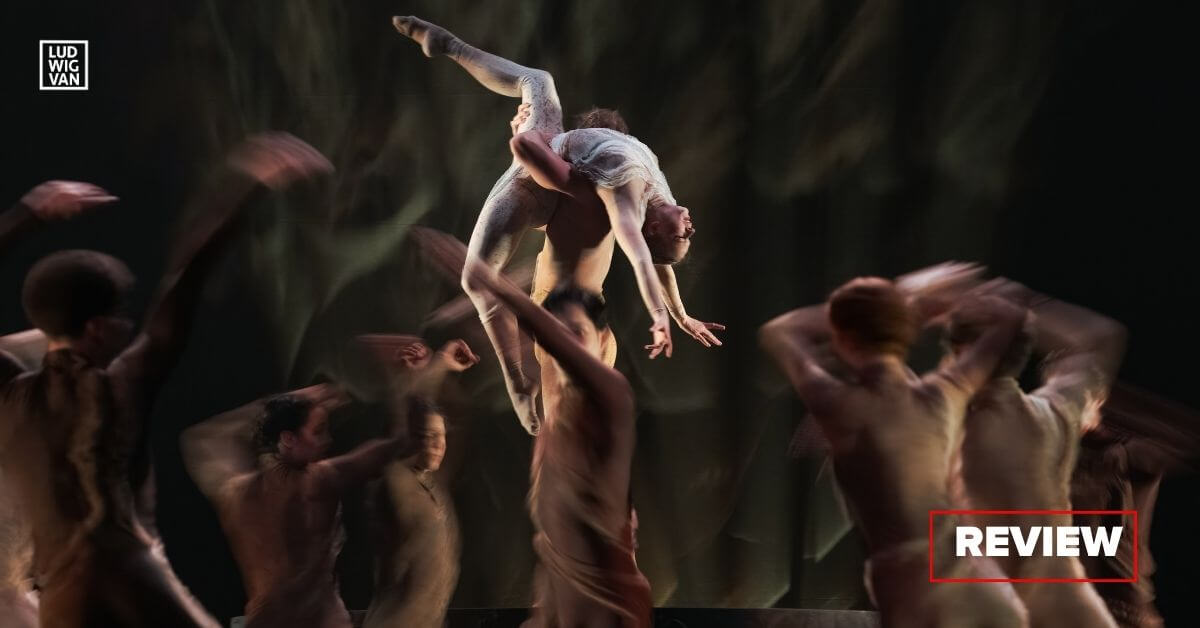
The National Ballet of Canada: Kismet choreographed by Jera Wolfe and Emma Bovary choreographed by Helen Pickett. May 30, 2026, Four Seasons Centre, closes June 4. Tickets here.
Kismet
Jera Wolfe’s world premiere Kismet for the National Ballet of Canada is a triumph.
The standing ovation at the Four Seasons Centre was instantaneous, tumultuous, and among the most enthusiastic responses I have ever witnessed in that theatre.
Art in the Public Arena
I am reminded of a remark once made to me by American choreographer Garth Fagan.
After reading my review of one of his works, he observed that my interpretation had little to do with what he had intended, yet he could understand exactly how I had arrived at it.
It was a reminder that once an artwork enters the world, it acquires a life beyond its creator’s intentions.
Wolfe has described Kismet as a journey through fate, transformation, and the natural world. Yet the ballet that unfolded onstage seemed far larger than that description.

What I Saw
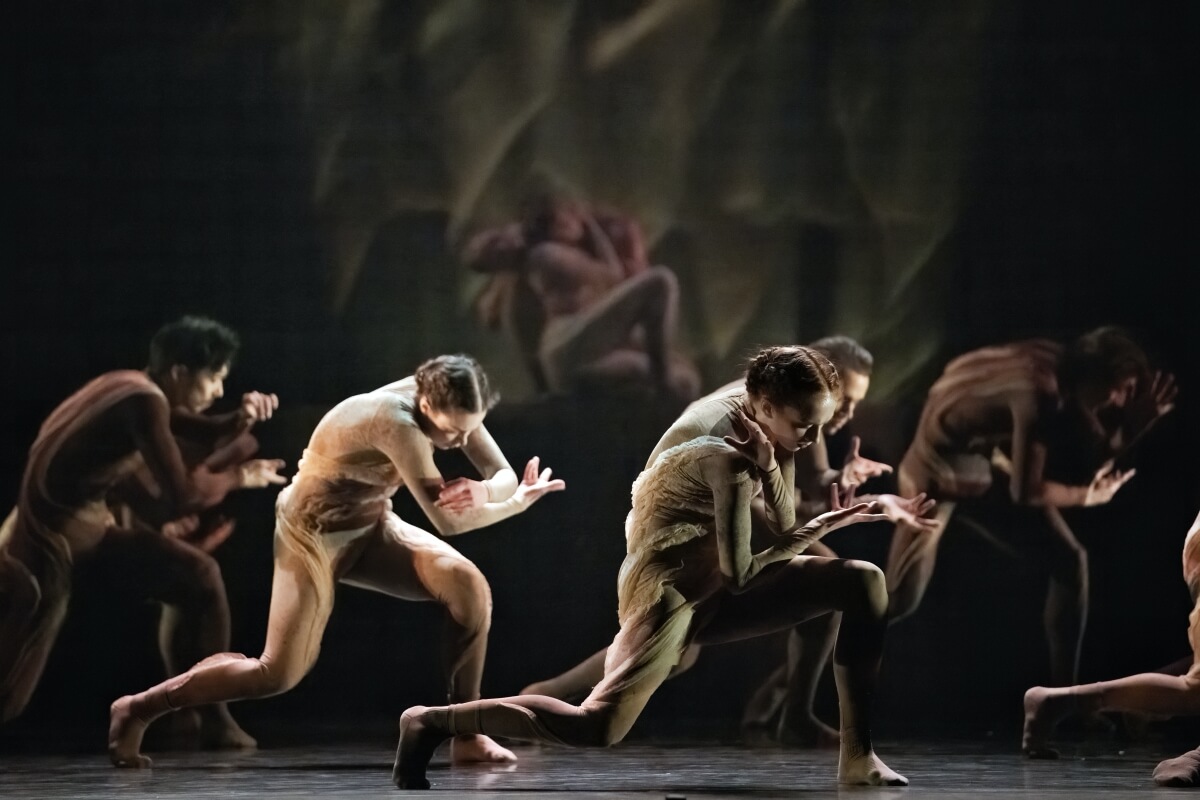
Wolfe has always had a gift for the pas de deux, and Kismet begins with one of striking beauty.
A couple (Genevieve Penn Nabity and Ben Rudisin) emerges in the light, only to be joined by another pair mirroring their movements. Then another.
Gradually, figures materialize from the darkness until what began as a duet expands into a stage filled with duets. Throughout the ballet, movements echo, repeat, and multiply as though reflected through a hall of mirrors.
Much of the effect depends on Simon Rossiter’s exquisite lighting design, which creates vast pools of darkness from which dancers appear almost magically before dissolving back into shadows.
The Human Tower
The other recurring visual motif erupting out of the darkness is even more astonishing.
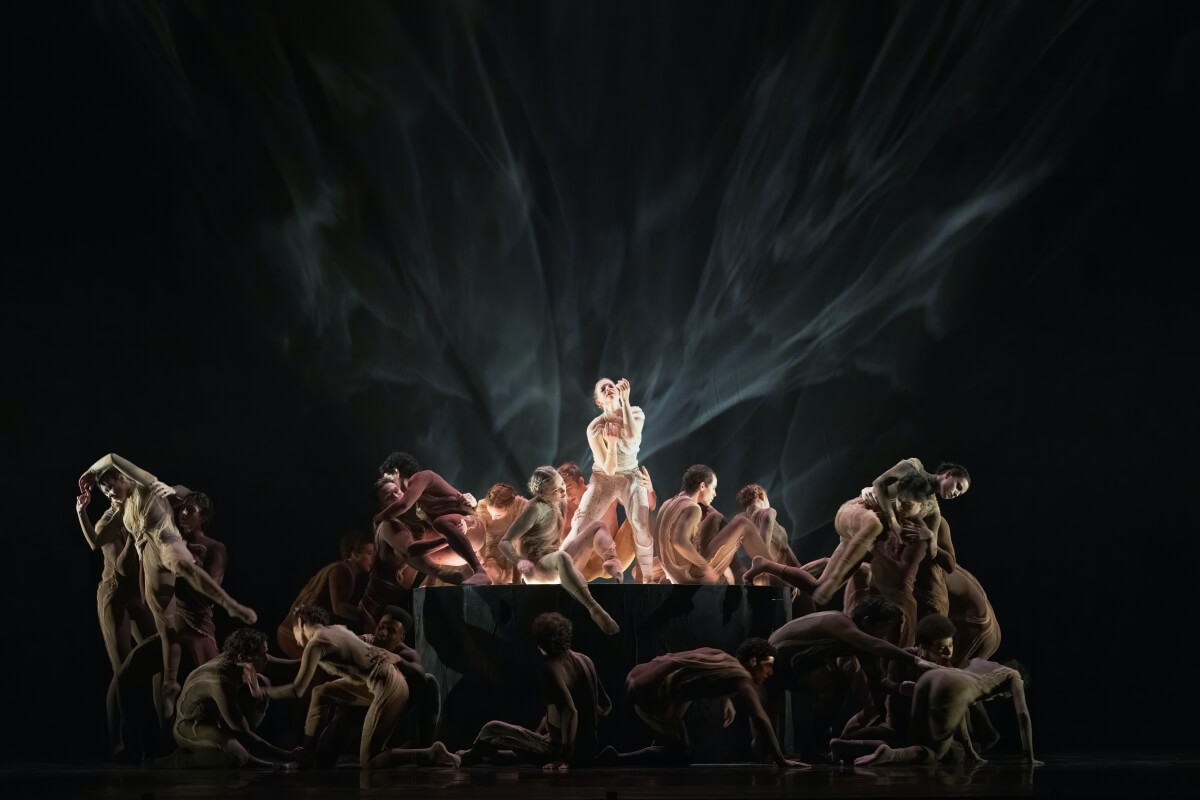
Wolfe gathers the dancers into a massive human structure that rises from both the stage floor and an elevated platform.
Bodies cluster together, supporting, lifting, and balancing one another. At its centre, the principal couple is elevated high above the ensemble. At one remarkable moment, dancers are actually thrown upward and caught by their colleagues. Wolfe called it a tree, but as a metaphor it is much more.
This structure does not remain intact. The human tower collapses, communal harmony fractures, and the dancers separate into individuals, and as individuals, their movements become sharper and more confrontational, even menacing.
Gradually the cycle begins anew. Duets reform. The mirroring patterns return. The great tower structure is rebuilt. Kismet moves through cycles of creation and destruction, unity and division, collapse and renewal.
The Music
Much of the ballet’s power derives from Italian composer Ezio Bosso’s score, Symphony No. 2.
Minimalist in construction yet surprisingly lyrical, it begins almost tentatively before expanding into rich waves of strings. There are moments that recall Philip Glass in their repetitive structures, but Bosso’s music is warmer, more melodic, and more emotionally direct.
The score builds steadily in intensity, creating an atmosphere of tension, urgency, and restless anticipation that perfectly complements Wolfe’s emotionally charged choreography.
Maestro David Briskin and the National Ballet Orchestra plays Bosso’s haunting score divinely, with just the right amount of build. You actually feel the music coursing through your body.
The Meaning
So what does it all mean?
Wolfe has spoken of fate, transformation, and a symbolic journey. Certainly those ideas are present.
Yet what I experienced was something larger.
The recurring duets, the multiplication of dancers through the mirroring effect, the construction and collapse of the great human structure, and the endless cycles of destruction and renewal suggested a vision of humanity itself.
Time and again individuals come together to build something greater than themselves, only to see it fracture into individuals who are lost and angry, and then come together to rebuild.
Wolfe’s own explanation feels almost reductive when compared with the magnitude of what unfolds onstage.
He may have begun with one idea, a lone female with an unseen partner on a cyclical journey of destruction and renewal, but he has created a ballet that transcends its origins and speaks with a larger, richer voice of its own.
Wolfe has unwittingly created far more than one person’s journey.
Kismet is a masterpiece that embraces the human soul.
Emma Bovary 2026
If Kismet left the audience feeling exhilarated, Emma Bovary brought the evening to a more sober reflection.
Revisiting my review of the ballet’s 2023 premiere, I was reminded that I had not been especially fond of it then, and a second viewing did nothing to change my mind.
The Great Flaw
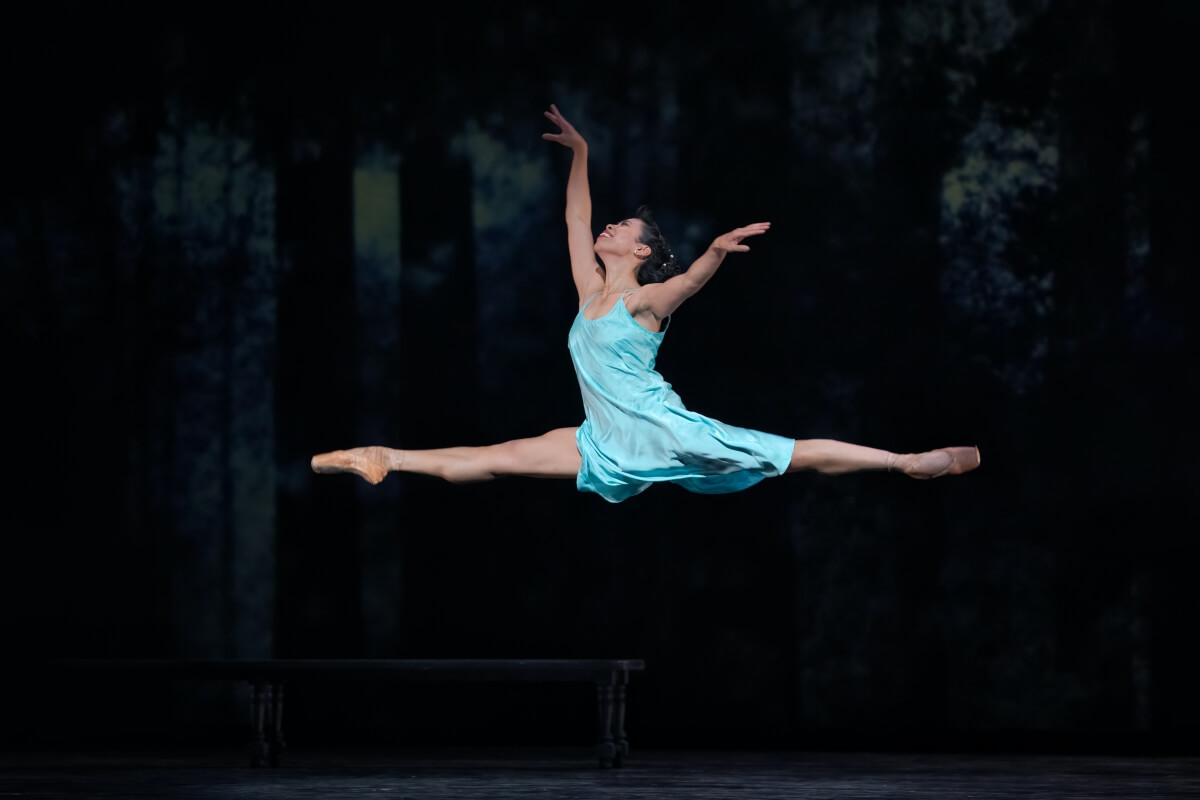
Based on Gustave Flaubert’s 1857 novel, Madame Bovary, choreographer Helen Pickett and director James Bonas set out to focus on the inner life of Emma Bovary (Jenna Savella), the restless and dissatisfied wife of a provincial doctor.
The frustration is that this focus is repeatedly undermined by unnecessary episodes, superfluous characters, and a stop-start dramatic structure that dissipates the ballet’s emotional impact.
The New Character
The greatest miscalculation is the addition of Homais (Isaac Wright), the town pharmacist.
A sequence involving Homais with Charles Bovary’s failed operation on a patient does little more than reinforce points the audience already understands: Emma’s disappointment in her husband and her dissatisfaction with provincial life.
Dramatically, the scene feels redundant, slowing the action in a ballet that already struggles to sustain momentum.
The Music
Peter Salem’s score serves the individual scenes effectively, but the musical structure works against the dramatic arc.
Repeated pauses between episodes bring the action to a halt, creating stretches of dead space that dissipate tension just when it should be building.
The music needs connectors between the scenes and never stop.
What Works
Pickett is particularly effective at conveying Emma’s suffocating boredom within her marriage, her inability to connect with her daughter Berthe, her tempestuous affair with Rodolphe Boulanger, and her seduction into reckless spending by the manipulative merchant Lheureux.
The swirling choreography of the ball remains one of the ballet’s highlights, while the final scenes of Emma’s downfall possess genuine dramatic force.
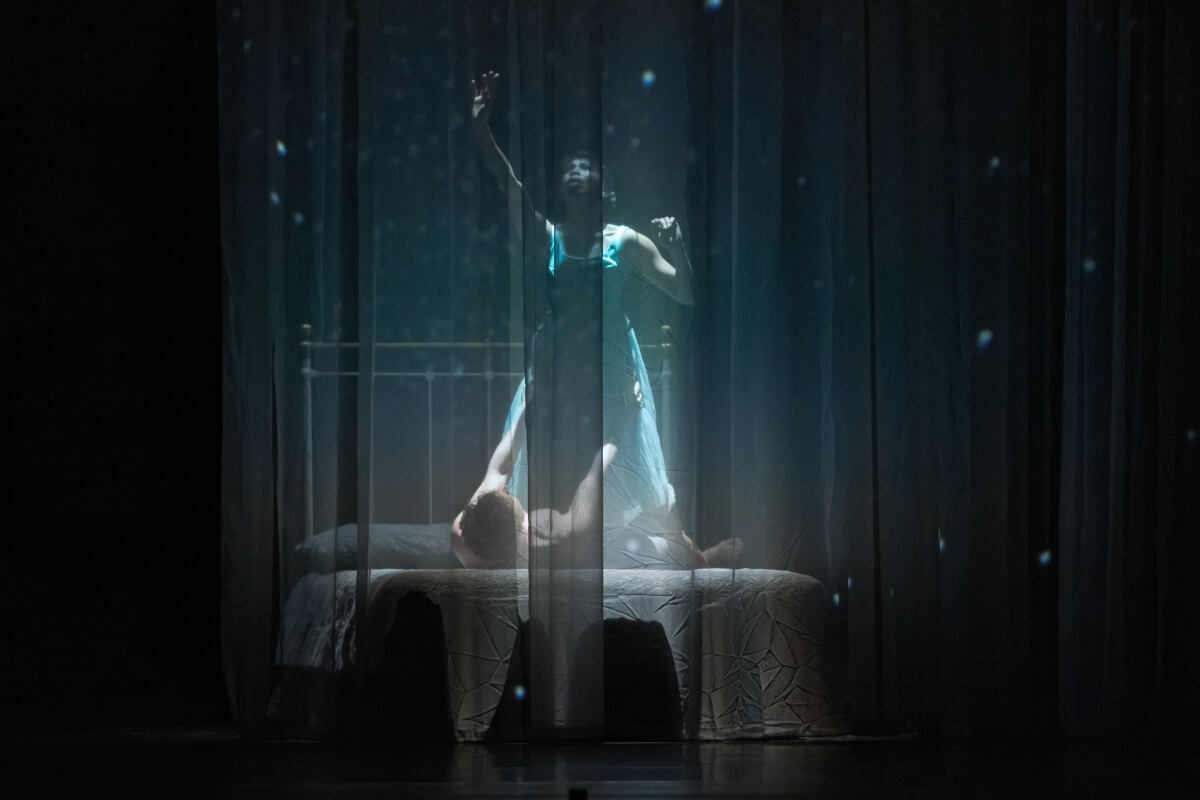
Having Berthe, Emma’s young daughter as an awkward puppet is a masterstroke. It takes three handlers (Ana Zamora, Emma Ouellet and Albjon Gjorllaku) to manoeuvre the small skeletal frame and one can understand why Emma would be repelled by the child.
Visually, the ballet looks good. Michael Gianfrancesco‘s set and period costumes are lavish, aided by Bonnie Beecher’s lighting, Grégoire Pont‘s animations and Anouar Brissel‘s projections.
The Dancers
Whatever reservations I have about the ballet itself, the dancing is first rate, and to give credit where credit is due, Pickett can certainly create character in choreography.
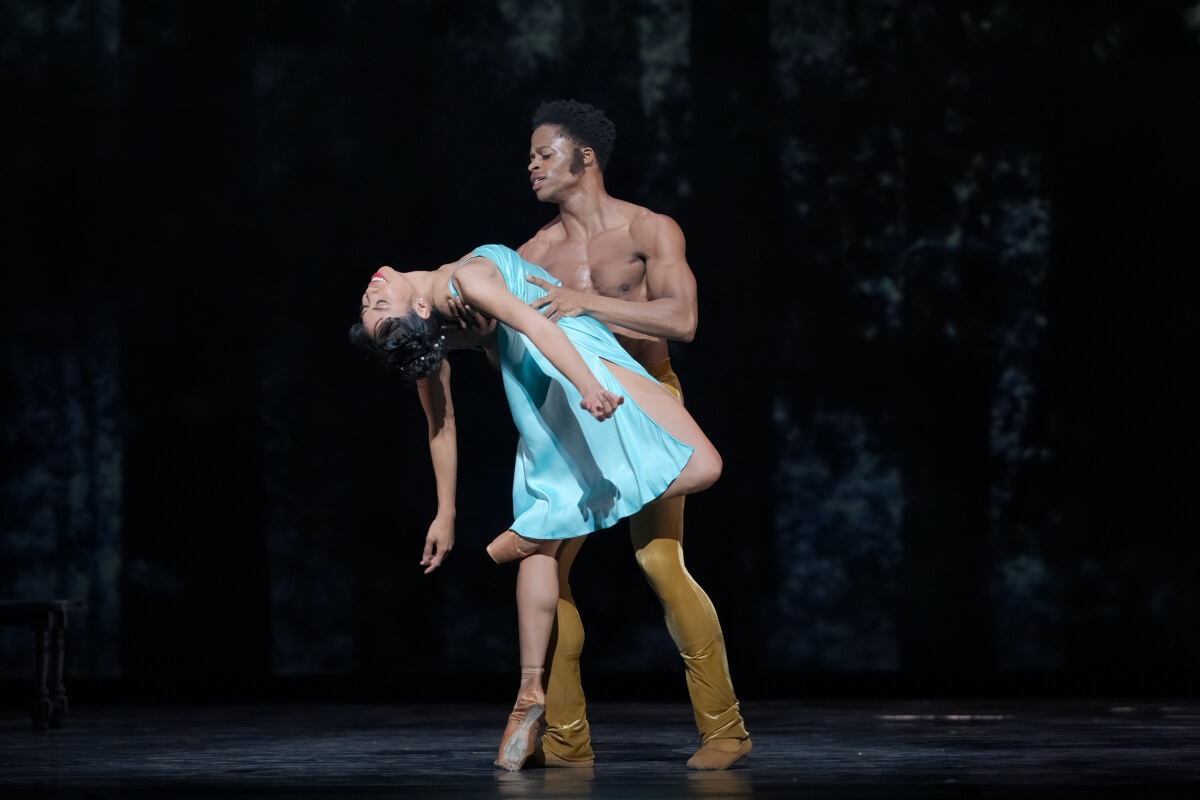
Savella gives a superb performance as Emma, capturing her dissatisfaction, restlessness, emotional detachment, and eventual downward spiral with complete conviction.
Donald Thom is equally effective as the oblivious Charles Bovary who really is a stick, while Alexandra MacDonald is wonderfully icy as his disapproving mother.
Shaakir Muhammad shows the right amount of both passion and coldness as Emma’s lover, Rodolphe Boulanger. He and Savella sizzle in their lust-filled pas de deux. David Preciado‘s L’Abbé can certainly dance up a storm.
Arielle Miralles is perfect as the pert and saucy maid Felicité. Alexander Skinner has fun as Felicité’s mischievous boyfriend Justino (although I don’t know why he’s in the ballet).
Perhaps most memorable is Spencer Hack as the manipulative merchant L’Heureux, who slithers through the ballet with the charm and menace of a born confidence man.
Final Words
In the final analysis, there is a compelling ballet buried within Emma Bovary.
Pickett’s strongest choreography reveals Emma’s emotional imprisonment, her doomed search for fulfilment, and the social forces closing in around her.
Yet too often those strengths are obscured by distractions that blunt the ballet’s impact. Strip these away and a stronger work emerges.
Are you looking to promote an event? Have a news tip? Need to know the best events happening this weekend? Send us a note.
#LUDWIGVAN
Get the daily arts news straight to your inbox.