
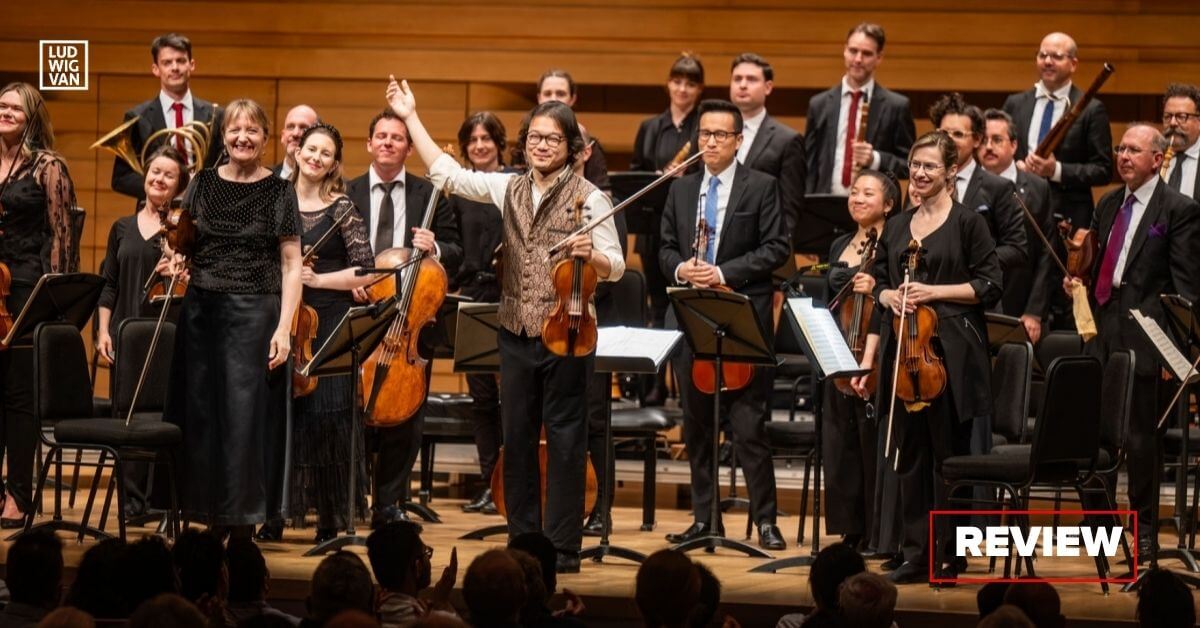
Tafelmusik presents Beethoven Eroica and Bologne: The Winds of Change, directed by Shunske Sato. Gossec, Le triomphe de la République; Bologne, Violin Concerto op.3 no. 2 (Sato, violin soloist); Beethoven, Finale from Creatures of Prometheus, op. 43; Beethoven, Symphony no. 3, “Eroica.” May 29 – May 31 at Koerner Hall.
Distinguished violinist and conductor Shunske Sato proved triumphant last weekend in directing three powerful performances of the Tafelmusik Baroque Orchestra in a concert devoted to the French Revolution.
Performing pieces by Francois-Joseph Gossec, Joseph Bologne, le Chevalier de Saint-Georges, and Ludwig van Beethoven composed between 1774 and 1804, Tafelmusik’s use of mainly period instruments played with precise acumen evoked the high spirits of a time still remembered for the phrase “liberty, equality, fraternity.”
Certainly, that’s what inspired both Beethoven to write the Eroica Symphony, and the concert directed by Sato for Tafelmusik. The immensely gifted Sato harnessed the energy of all of the compositions in the program to create a lustrous dynamism, which stimulated the orchestra to heights of musical creativity.

Great Gossec
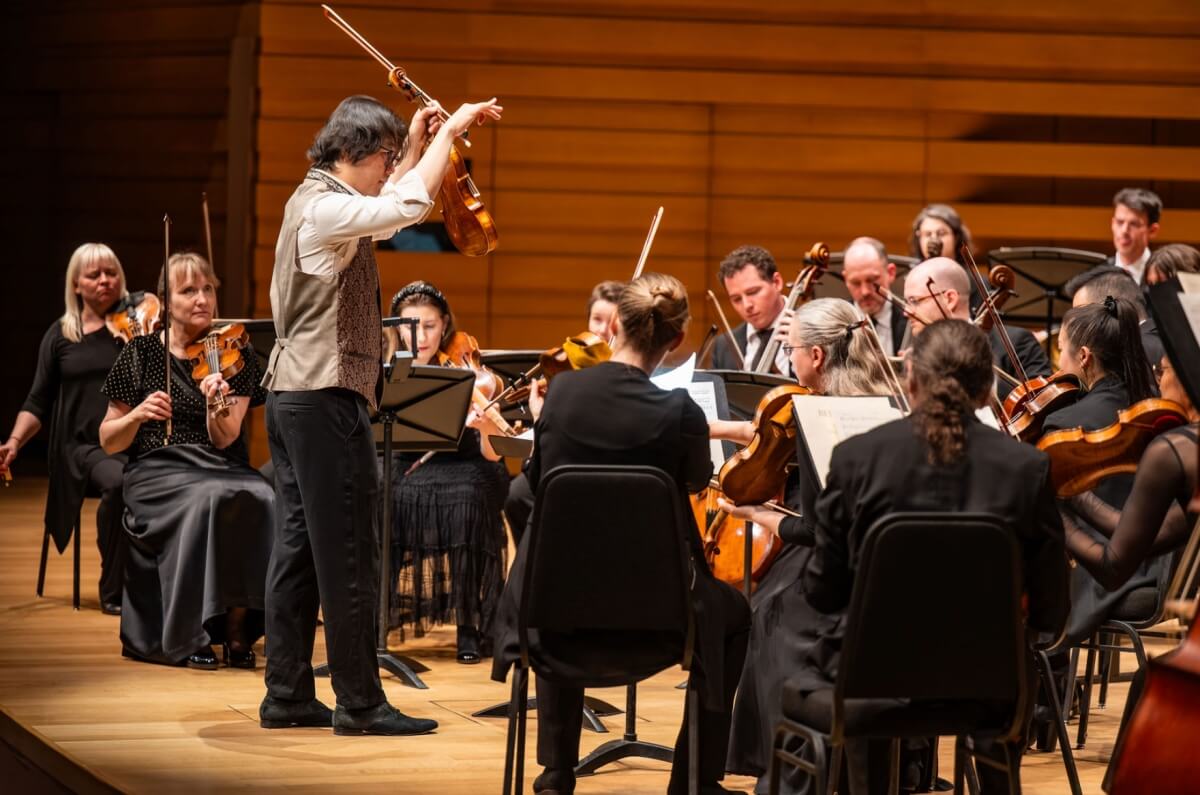
The first piece, Le triomphe de la Republique, introduced the evening spectacularly. Featuring wind instruments, particularly the bassoons, trumpets and, at just the right moments, the piccolo, it is a rousing composition, one that was written in response to a battlefield victory fought by the French forces against the Duke of Brunswick during the height of the Revolution.
Sato and Tafelmusik cannily excerpted the introductory section of an hour-long piece that includes a choir to provide an instrumental evocation of the period’s revolutionary spirit.
Gossec is a key musical figure of the era, one who went from being a court composer under the Bourbons to become the leading musical figure during the time of the French Revolution.
Not only did he write many popular pieces during the turbulent decade of the 1790s, but he also became the first professor of composition at the new Conservatoire de Musique. Although he turned down a position as the imperial composer under Napoleon, Gossec accepted becoming a Chevalier of the Legion d’honneur in Bonapartist France.
Brilliant Bologne
The concert’s second piece, and first major work, was composed by another Chevalier, of Saint-Georges, who was given his honour thanks to Marie Antoinette in a regime far different from that of Bonaparte. This Chevalier was born as Joseph Bologne, and he is one of the key rediscoveries of the past couple of decades.
Bologne was a brilliant Black violinist, composer and swordsmen, an iconic figure of late Bourbon France, whose work has been neglected for way too long. Now, his compositions are being highlighted in concert stages around the world with this performance being a welcoming one.
Bologne’s Violin Concerto in C Major op. 3 no. 2 was first premiered with him playing and his mentor Gossec conducting in a concert des amateurs in 1772. In this Tafelmusik highlight performance with the horn section dismissed, Shunske Sato showed his virtuosity with a performance of dexterity and almost amused confidence, using his violin as a dual weapon of strength and romantic pallor.
Sato effortlessly glided over the piece’s allegro, became more sombre and ardent in the adagio before creating an emotional closure with a lovely rondeau.
Beethoven’s Ballet
As a precursor and charming bait for the upcoming Eroica, Tafelmusik performed the finale from Beethoven’s ballet, Creatures of Prometheus, which is rarely played. The music is acknowledged as being borrowed from the Eroica.
Its placement at the end of the first half of the concert is deliberate: a prelude to the grand piece itself, which consumes the rest of the performance.
Sato brought back the wind instruments, so crucial to Beethoven, to the Creatures of Prometheus. Here, he showed the energetic assertive style, which manifested itself for the rest of concert, with the orchestra playing at a brisk attractive pace.
An Excellent Eroica
The key composition in Tafelmusik’s final performance of the season, the Eroica is one of Beethoven’s most important pieces. It is universally acknowledged as the work that introduced Romantic conceptions and forms into symphonies, shattering a structure that had reached its finest expression in the Classical compositions of Haydn and Mozart.
For Tafelmusik, an orchestra that espouses Baroque and Classical forms, the Eroica looms as a revolutionary composition, one that challenged previous approaches that Beethoven appreciated but wanted to move beyond — into the 19th century.
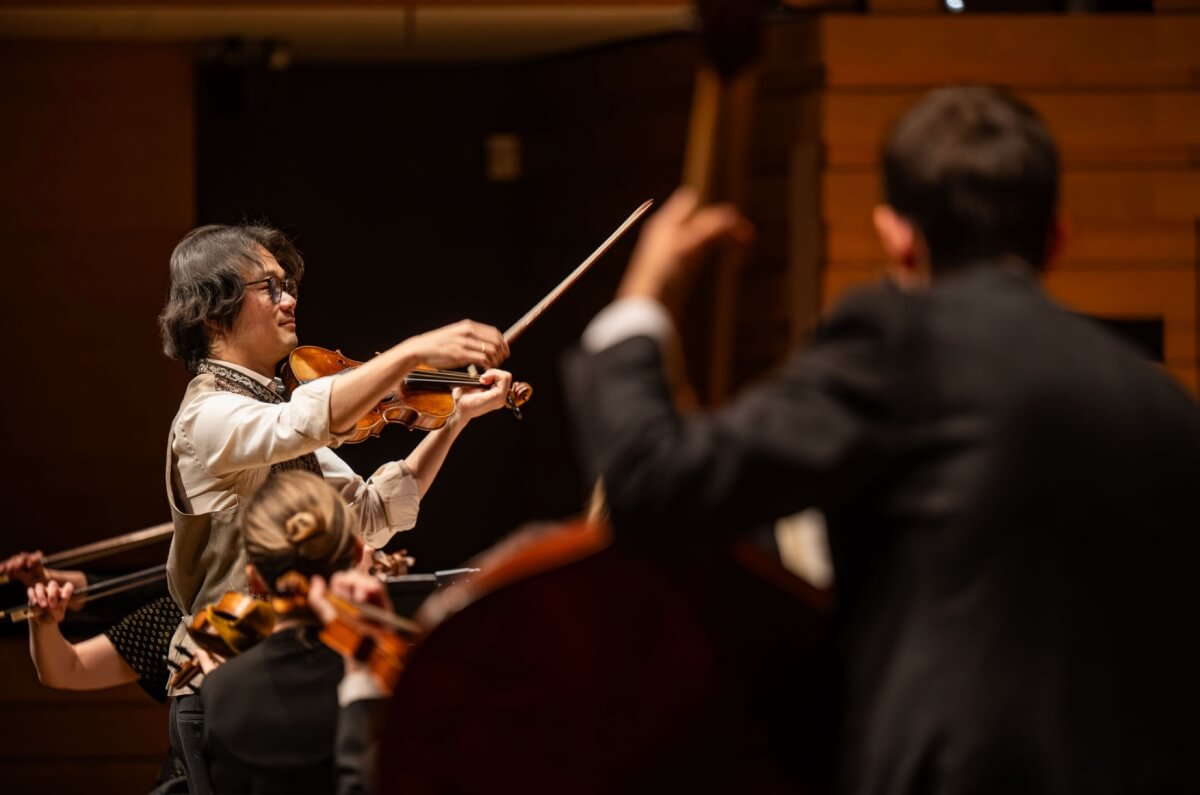
Dressed resplendently in a waistcoast fit for the 19th and 20th centuries and displaying an air of artistic aplomb, the charismatic Sato inspired the Tafelmusik orchestra to musical heights in their rendition of the Eroica. The wind instruments played crucial parts in the composition that has at its core a vast rhythmic and melodic coherence brought on by the strings. At its lead, as conductor and instrumentalist, Sato brought the best out of the orchestra.
Quite frankly, what can be sludgy and imprecise became coherent and inspiring under Sato’s leadership. This was truly a brilliant Eroica.
From the Bourbons to Bonaparte
There is an extra-musical element in the Eroica. Beethoven had intended his symphony to be a tribute to Napoleon until he became disenchanted when Bonaparte declared himself Emperor and made his family royal. The egalitarian spirit that Beethoven admired was destroyed and the composition became a universal proclamation for the heroic human spirit.
It must be pointed out that Joseph Bologne’s musical and military contributions were dismissed by Napoleon who reinstated slavery in the French colonies in 1802 in a shocking move that reversed the politics of post 1789 period.
Tafelmusik’s tribute to the French Revolution has to include a critique of Napoleon if only for those who explore the period in its complexities from the Bourbons to the Jacobins to the Bonapartists. What is clear is that Shunske Sato has brought out the best in the orchestra, creating a wonderful musical evening.
By Marc Glassman for Ludwig-Van.
Are you looking to promote an event? Have a news tip? Need to know the best events happening this weekend? Send us a note.
#LUDWIGVAN
Get the daily arts news straight to your inbox.