
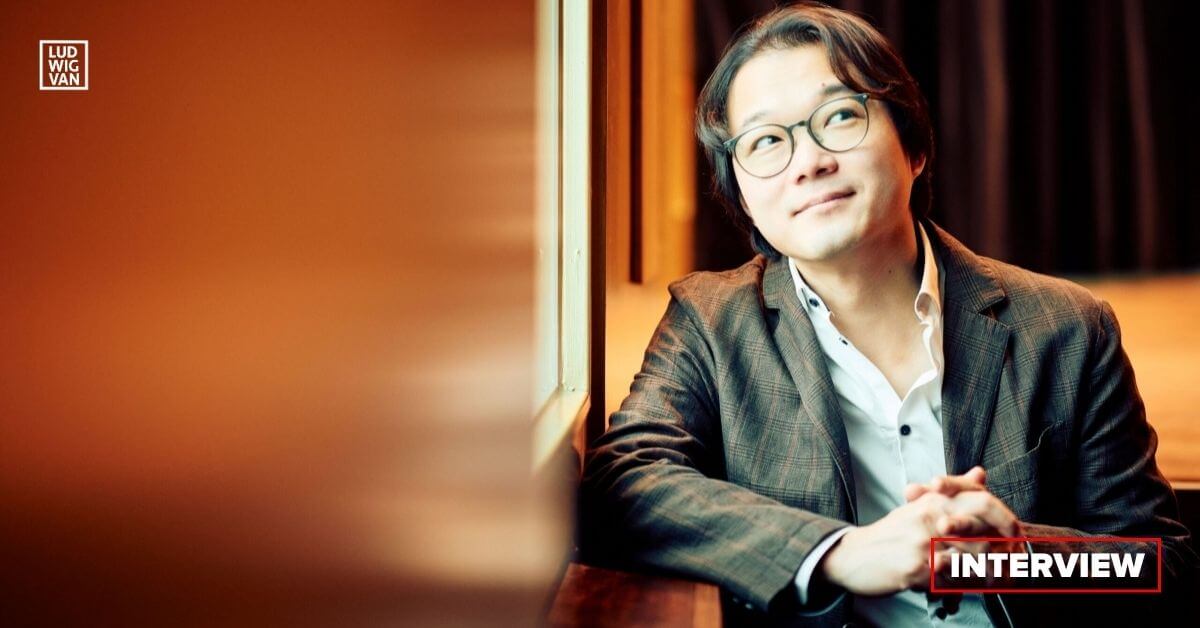
For its final presentation for the 2025-2026 season, Tafelmusik is featuring the distinguished violinist Shunske Sato in a concert devoted to the French Revolution. Sato will conduct Beethoven’s “Eroica” Symphony No. 3, inspired by France’s newly embraced democratic ideals, and perform as a soloist on the acclaimed 18th century French Black composer Joseph Bologne’s Violin Concerto. The program will begin with Gossec’s historic piece Le triomphe de la République.
Ludwig Van’s correspondent Marc Glassman interviewed Sato via Zoom in San Francisco, where he was appearing in a masterclass for upcoming Baroque musicians.
Shunske Sato
Shunske Sato, now in his early 40s, is one of the most acclaimed musicians of his generation. Trained at Juilliard, Curtis and the Ecole Normale de Musique de Paris, Sato departed his native Tokyo when he was three and has dedicated his life to music.
The winner of the Young Concert Artists Prize when he was 12, Sato has played with such prestigious ensembles as the NHK Symphony Orchestra, State Academic Symphony Orchestra of the Russian Federation, Mariinsky Theatre Orchestra, Omsk Academy Symphony Orchestra, Orchestre philharmonique de Radio France, Gulbenkian Orchestra and the Baltimore Symphony.
Sato has achieved his greatest acclaim thus far with the Netherlands Bach Society orchestra, where he appointed concertmaster in January 2013. In May 2017, he became the artistic director of the Society, a position he maintained until May 2023. During that decade, he recorded Bach’s Violin Partitas, Sonatas and Concertos with notable success. The Bach Society has praised Sato’s work for its distillation of the great composer’s “genuine, authentic, human, and divine…” musical powers.
Though his appreciation for Bach is undiminished, Sato’s repertoire includes Beethoven, Telemann, Haydn, Mozart, Vivaldi — and even goes as far as Grieg and Poulenc. A self-described nerd, he is clearly a thoughtful and informed individual.

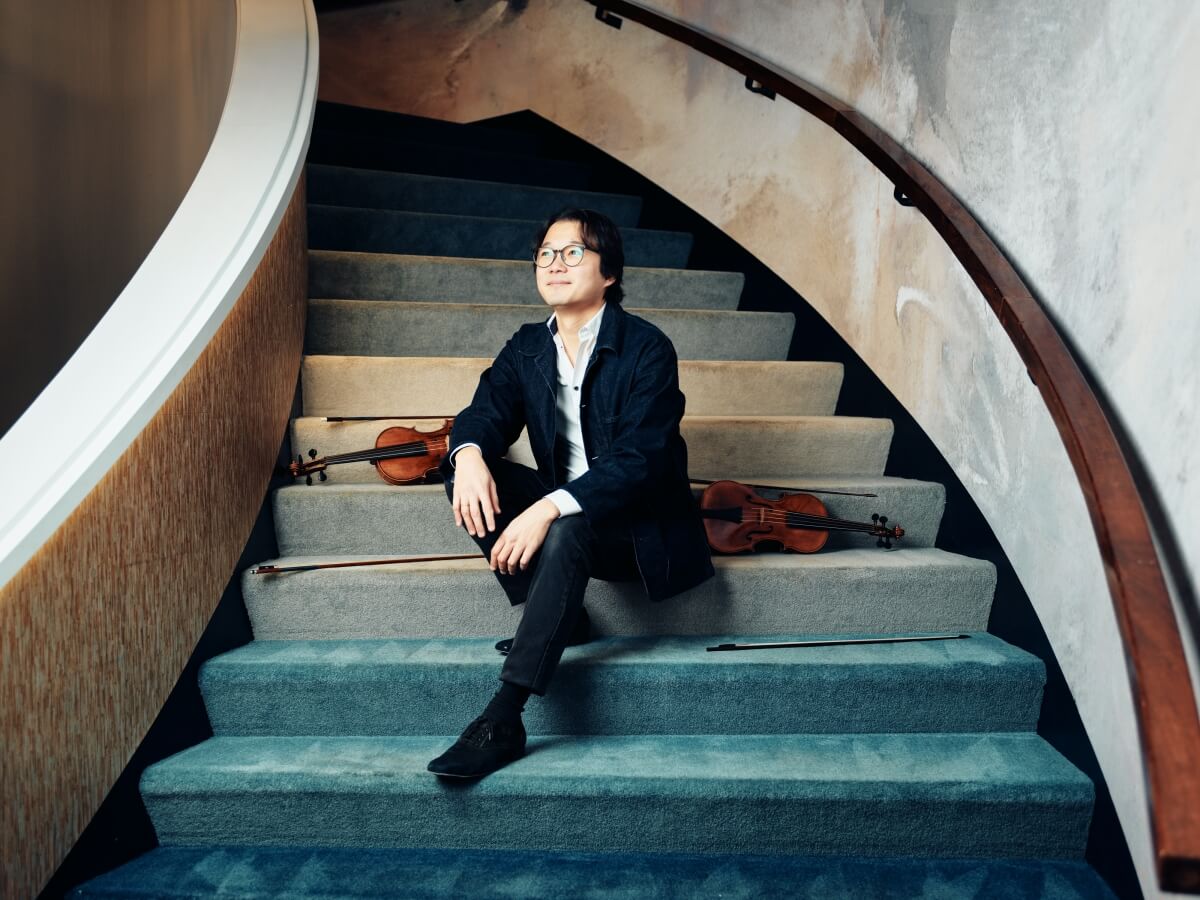
Shunske Sato: The Interview
LV: Marc Glassman for Ludwig Van
SS: Shunske Sato
On Being a Soloist and a Conductor
LV: You’re a violinist but you also conduct. How can you divide your attention between being a soloist and leading an orchestra?
SS: More and more I’m seeing it as simply pieces of the same fabric. If I’m going to be playing a violin concerto, it is very satisfying when I know my part in the context of the whole piece. I mean, right down to the lesser parts, the viola or the second bassoon. There’s always something to be found which enriches your experience of playing the solo part. It’s also really fun when you can share the whole thing with everybody, not just delivering your part.
Beethoven Violin Sonata 9, op. 47, ‘Kreutzer’ | Shunske Sato, violin; Shuann Chai, fortepiano, 2024:

Thoughts on Beethoven and Eroica
LV: What are your thoughts on the Eroica and its position in Beethoven’s work?
SS: I’ve had the fortune of playing Eroica quite a number of times. The last time I remember was actually here in San Francisco working with Philharmonia Baroque Orchestra with Richard Egarr conducting. I have been doing a lot of Beethoven lately, with the violin sonatas and the symphonies — at least three this year.
I have been doing research on what Beethoven expected from musicians, for example, tempo modification. You can see his language in the Eroica evolving from the first and second symphonies. There is certainly a difference in length and emotional scale. You see he is becoming unafraid to go into very, very dark emotions. You might say that there is a beast in there that isn’t like Haydn or Mozart. It is far beyond.
He was already who he was from the start. I think, Haydn, Mozart and maybe some of the others in the previous generation of composers were reflective of a classical structure in society as a whole. There were these rules that needed to be abided. Of course there were exceptions. You could bend the rules, and Haydn and Mozart knew that. They were very eloquent and even slick and cunning in getting around the rules. But Beethoven just spat in the face of all of it, you know, from the get-go. I think the Eroica is not so much of a break in tradition, but a putting out of what was already there (in the culture).
LV: The Eroica is a piece that straddles the Classical and Romantic eras. What instructions do you give musicians regarding the use of historical instruments?
SS: I basically say, play what you’re comfortable with. If you have a later, more modern, bow that works, play it. If it’s an earlier one that you really like, just play that. I’m sure that’s what people did back then. It’s just like now, when people still use iPhone 7s and drive 30-year-old cars because they work. I think people need to understand that the instrument is really just there to help whatever you have inside you to get out.
On Joseph Bologne, the Chevalier de Saint-Georges
LV: You’re playing Joseph Bologne’s Violin Concerto Op.3 No. 2, as part of the program. What do you think of the Chevalier de Saint-Georges? He seems to have become much more of a prominent figure just in the last few years. How often have you ended up playing his music?
SS: This is only my second time actually. I played the Concerto just last month with a symphonic orchestra in Norway. And we really enjoyed it. It’s just so original. He had a military background and was great at fencing. Bologne wasn’t born and bred as a musician. And I think that might explain the fearless innovation you find in this concerto, which sometimes has three different ideas happening at the same time.
From the biographical point of view, Bologne really gets really caught up in the political situation during the French Revolution, where his former ties to the Royalty became used against him. He was imprisoned and was asked to fight for his country, which he did. He wasn’t treated well because of racial considerations. What a life.
Creating a Thoughtful Program
LV: As we know, the Eroica was originally intended to be dedicated by Beethoven for Napoleon. He felt betrayed when Napoleon declared himself Emperor and changed the. Symphony to its present title. And although Bologne never met Napoleon, it’s clear that they wouldn’t have gotten along; after all, the Emperor brought back slavery and suppressed the Chevalier’s compositions. Do you like that the program you’re performing in Toronto is consciously reflecting on the Revolution and Napoleon’s legacy?
SS: I always make my programs like this. I like drawing connections. We function as humans because we categorize. We differentiate things on a very primordial level, deciding what is dangerous to us and what is friendly to us. That’s how the species survives.

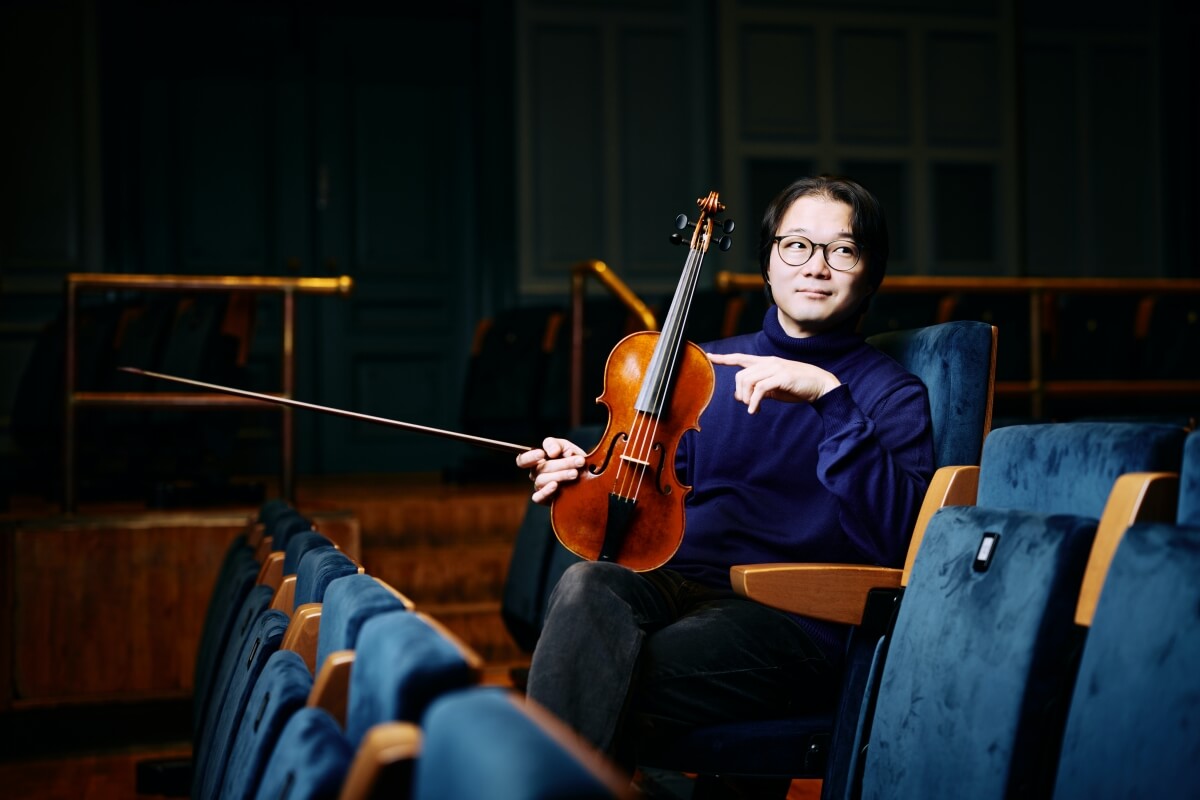
Racism and Sexism in the Community
LV: Are conditions changing in classical music? What thoughts do you have about racism and sexism in the community?
SS: These are changing times for sure. Let’s start with female conductors, female leaders of musical ensembles, right? This really has gained a wonderful momentum.
Now, I think in terms of race, progress may be slower. If you zoom out, I’m sure there are social and economic reasons that may slow things down. It does take a lot of financial means to buy a violin and get into having music lessons. You exclude a lot of people regardless of race. There are financial situations that affect certain demographics and we end up excluding too many people.
LV: Do you see a change over the last 20 years? Do you see more diversity in symphony orchestras?
SS: It may be different for me because I live in Europe. When I look at a photo of an orchestra, of an ensemble in North America, I might see more racial diversity. As I’m getting a little older, maybe the times have changed.
When I was younger, I experienced isolated instances of me being non-white, playing somewhere in Europe. And I would get questions like, “How is it that a person who is not born into European culture can understand the music so well?” You can react to something like that in many, many ways. My short circuiting of the problem — and getting on with my life — was to think, it tells me more about that person than about me. I’m doing my best here. If they want to put me into a category, that’s their business.
LV: Now that you’ve had a chance to start looking at Joseph Bologne’s work, do you feel that in the next decade or so that some of his works will start entering into the repertoire in a major way?
SS: I hope so. I mean, it is happening already, isn’t it? Look at Florence Price. I’ve seen her work become quite popular now. Whether her popularity grows, grows roots and develops into something deeper, we don’t know yet.
Bach’s Violin Sonata no. 1 in G minor BWV 1001 performed by Shunske Sato for All of Bach in 2019:

On Bach
LV: You spent a decade working with the Netherlands Bach Society as the concert master, soloist and artistic director. That’s a very long time in one’s career to be devoted to one composer, even Bach. Can you share a bit of what you learned from the experience?
SS: Well, I think as with anything, it has two sides. On the one hand, it is quite rare as a performing musician, or even a scholar to go so deep into one composer. That is really quite exceptional.
I’ve learned many things through the lens of Bach. One thing I really appreciated about Bach is how diverse his understanding of music was despite rarely traveling. He never really stepped out of central Germany, but he appreciated music of Italy and France and distilled it into his own. It was amazing how he looked outward as well as he could.
For me, I enjoyed being able to thoroughly see behind the work. You could look at a cantata and ask, “what was the liturgical feast or the sermon of the day? What was the text?” It was great to really peel back the layers of Bach’s work and see the process involved in creating the music.
LV: How is it for you getting out of that period of being so immersed in Bach and moving into other composers?
SS: It had been a hermetic time for me, but I am now able to transfer what I know that to other areas. It’s great to meet other ensembles like Tafelmusik and symphonic orchestras who might have played Shostakovich last week and now are working with me. I feel as if the doors have to been flung open all of a sudden.
The Concert
Tafelmusik presents Beethoven Eroica and Bologne: The Winds of Change, directed by Shunske Sato. May 29 to May 31. Program: Gossec, Le triomphe de la République; Bologne, Violin Concerto op.3 no. 2 (Sato, violin soloist); Beethoven, Symphony no. 3, “Eroica” at Koerner Hall.
- Find tickets and concert details for Tafelmusik’s Beethoven Eroica & Bologne: The Winds of Change [HERE].
By Marc Glassman for Ludwig Van
Are you looking to promote an event? Have a news tip? Need to know the best events happening this weekend? Send us a note.
#LUDWIGVAN
Get the daily arts news straight to your inbox.