
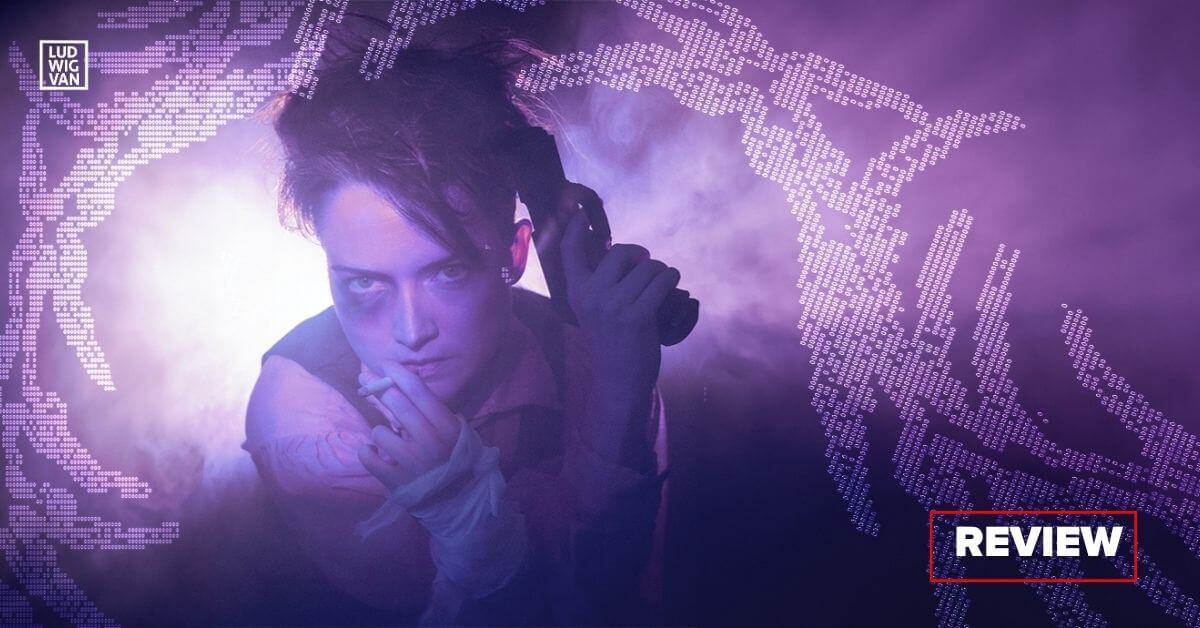
The Howland Company in partnership with Buddies in Bad Times: Take Rimbaud, by Susanna Fournier, ted witzel, director; Ting – Huan 挺歡 Christine Urquhart: set + costume designer; Darren Shaen: lighting designer; Nicole Eun-Ju Bell: projection designer; Dasha Plett: composer + sound designer. With: Thomas Mitchell Barnet, actor, R; Julian De Zotti: actor, Paul; Ruth Goodwin: actor, Sylv; Rose Tuong: actor, Sapph; Breton Lalama: actor, 1; Hallie Seline: actor, 2; Courtney Ch’ng Lancaster: actor, 3; Cameron Laurie: actor, 4. May 9, 2026 at Buddies in Bad Times Theatre, continues until May 23; tickets here.
The first time I heard of the French poet Arthur Rimbaud was in Patti Smith’s 2010 biography Just Kids. “He possessed an irreverent intelligence that ignited me, and I embraced him as a compatriot, kin and even secret love,” she writes. “Rimbaud held the keys to a mystical language that I devoured even as I could not fully decipher it…he became my archangel.”
That admiring perspective, anarchist sense of inspiration, as well as the “archangel” invocation, courses through Take Rimbaud, a world premiere by The Howland Company in partnership with Buddies in Bad Times, written by Susanna Fournier and directed by ted witzel.
The Play
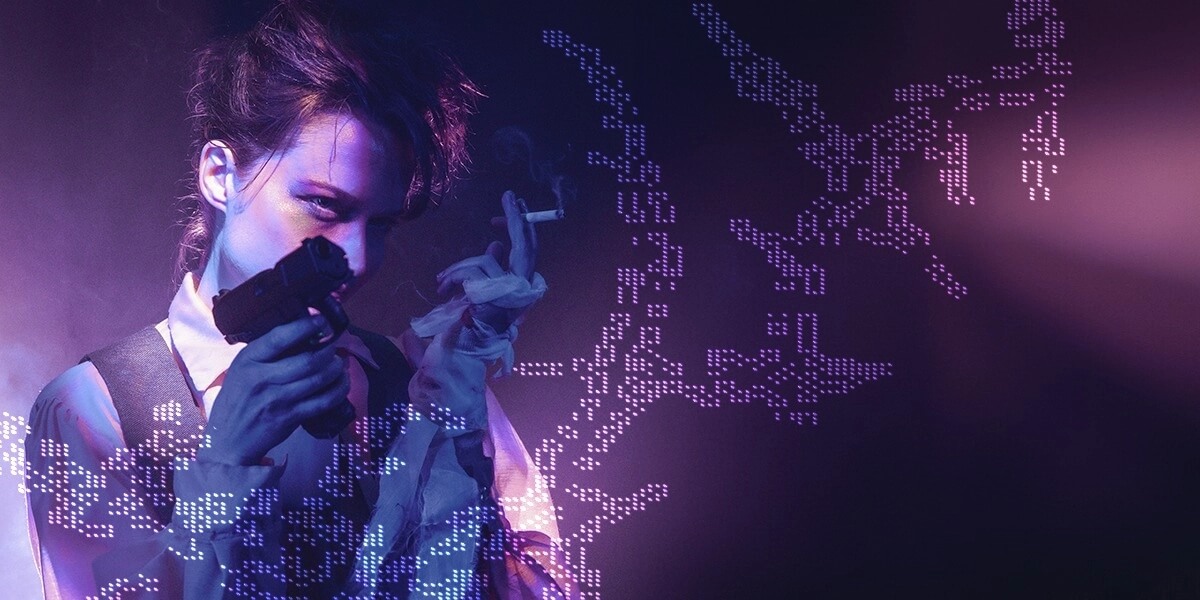
The play, at 120 minutes without an intermission, is a wildly ambitious and unabashedly queer theatrical odyssey that takes the mythology of famous poets — Rimbaud, Sappho and Sylvia Plath — and suffuses them with modern sensibilities, where late-stage capitalism, artificial intelligence and Jean Baudrillard’s philosophies tumble out of their mouths with ease.
With so many moving parts, a bevy of characters and time jumps that — according to its wordy projections — range between 1871 and 2014, it is necessarily a difficult play to pin down, to simplify its complex and insanely intelligent vision, but, in any case, let us make an attempt.
Making Art
As soon as you enter Buddies’ The Chamber, in a Brechtian flourish, four actors dressed in all black — who will form a chorus of sorts — make final adjustments to the set that designer Ting-Huan 挺歡 Christine Urquhart brings to life using industrial materials: an L-shaped wooden platform, a climbable steel structure, ladders, and a bas-relief portrait of Sappho hanging above.
After a prologue, in which Breton Lalama reads a passage from Rimbaud’s A Season In Hell, a crate is opened up and R (Thomas Mitchell Barnet) emerges from within, slinging a backpack and showing up at the doorstep of his hunky, older lover Paul (Julian De Zotti).
Their sexual chemistry is instantaneous and they fall into bed, where they lose themselves in a haze of substances, leading to the idea of making a film that weds Paul’s academic sensibility and R’s renegade artistic spirit. That the film will never get made — or be very good — is obvious from the outset; but, it offers an opportunity for them to talk about what it means to make art, of the importance of suffering to the whole endeavour, and the risk they each take believing in it.
Making Art II
An adjacent plot begins with Sapph (a remarkable Rose Tuong) finding Sylv (a hilarious Ruth Goodwin) attempting to commit suicide with her head in an electric oven. Sylv is an emerging writer whose early success appears to have been a fluke that paralyzes her, whereas Sapph has had an early career success (prompted by a Reddit thread no less) that has left her jaded about the industry and at a standstill in her creative process.
These two are broken, lonely souls whose friendship becomes a lifeline in a world that seems to be continually severing them.
Along the way, the actors from the chorus assume a variety of roles that allow the script’s comedic powers to shine, whether that be Hallie Seline’s dynamite scene with Sapph as a marketing manager, or Courtney Ch’ng Lancaster (who also performs an unexpected yet awesome flute) as Sylv’s cool, collected therapist drawing the biggest laughs from the audience.
The play frenetically alternates between these plots that, more talk than action, quickly becomes exhausting to keep up without a solid emotional anchor, or narrative, to hold onto.
Highly self-referential and self-aware, it appears Fournier has a lot on her mind about being a working artist, but it means that the characters are mouthpieces for her thoughts rather than become actual characters who almost never come out from under the anxiety of their historical influences.

Playwright And Play
At times, when the chorus speaks of artists who died young, or one is supplied with a bevy of information about Rimbaud and Paul Verlaine’s love affair, or a late-in-show monologue that views the semi-colon as a metaphor, Fournier’s writing often verges on a stylized Wikipedia entry or a lofty academic lecture trying to encompass all the aspects of the zeitgeist.
The play, post-modern as it is, incessantly tells you what it thinks and what you should think and the issue, I think, is Fournier is more intelligent than her audience, and that the text reads better on the page.
But, the work of a playwright as ambitious as this is to find a way to sublimate their desires into the work itself if they want their messages to be received, rather than inundate the audience with reams of interpretation, losing us in its tall grasses.
Direction And Performance
witzel has blocked the play in such a way that everything seamlessly moves along, drawing our eyes, for instance, to a heart-shaped key chain at the top of the show sent up to the rafters, only to return later on, but there’s nothing to be done about the fact that it does not land, that its revolutionary provocations quickly lose their luster.
Barnet, whose line-readings are killer, fails to access R’s vulnerability for us to connect to his angst, and pull off a pivotal meta-fictional moment at the end that illuminates the invocation of the title.
Whereas Zotti’s Paul is all vulnerability that renders the character’s intellectuality and inner conflict hollow.
A convincing voice emerging from the fray is Sapph, whose impassioned monologues Tuong delivers with such teeth-grinding, genuine feeling that you hang onto every word, for she seems to have found a way to craft a character out of these garrulous caricatures.
Final Thoughts
Take Rimbaud wishes to be many things at once, which is its right, but, rather than be the change it seeks — to make art that feels like leaping off a cliff, that does better, that addresses what love and hell and art can be in our ever-changing — it is merely about all of these things.
It is, as one character says, “too smart, too strange,” too lost in itself.
By Nirris Nagendrarajah for Ludwig-Van.
Are you looking to promote an event? Have a news tip? Need to know the best events happening this weekend? Send us a note.
#LUDWIGVAN
Get the daily arts news straight to your inbox.