
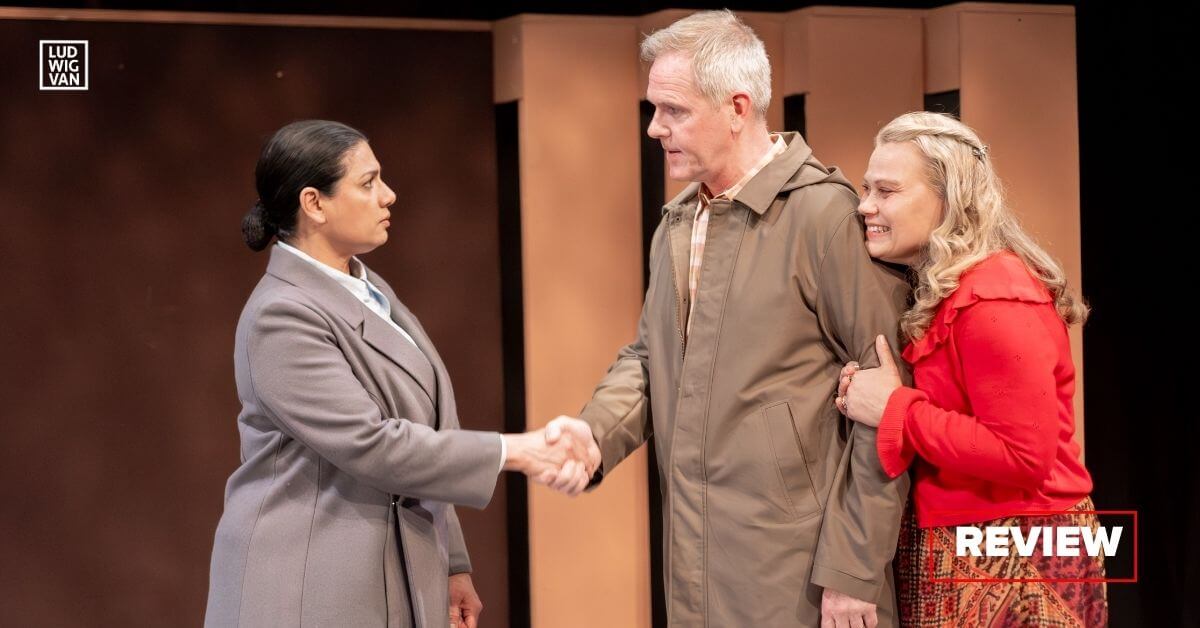
Tarragon Theatre and NAC English Theatre Co-Production in association with fu-GEN Asian Canadian Theatre Company: Cicadas, created by Chris Thornborrow and David Yee. Directed by Nina Lee Aquino, with Monica Dottor (Janie); Ryan Hollyman (Trim); Ellora Patnaik (Adeline and others). Vicki Stroich, Climate Dramaturg; Jawon Kang, Set & Costume Designer; Michelle Ramsay, Lighting Designer; John Gzowski, Sound Designer; Monica Dottor, Movement Designer. Musicians: Amahl Arulanandam, Cello; Marc Blouin, Clarinet/Bass Clarinet; Nathan Petitpas, Percussion; Wesley Shen, Piano. May 7, 2026, Tarragon Theatre Mainspace. Continues until May 24; tickets here.
The Play
A couple buys a fixer upper in Toronto’s Trinity-Bellwoods neighbourhood, and laughs ensue. That’s the kernel from which grows the story of Cicadas. But, it’s not too long before the laughs, while they continue to punctuate the story, turn into something else.
There are ominous details that develop from the outset — the real estate agent reluctantly informs them about a couple who went missing, and warns against entering the basement. Said basement floods, but then dries out more quickly than it possibly could.
And the cicadas chirp, and fly into the window on a continuous basis.
Math and cicadas are running, and sometimes intersecting, threads that run through the story. Trim (Ryan Hollyman), the husband of the Vonnegut couple (and yes, the names are almost always significant in some way), is a construction contractor with a background in math. He was taught, as it happens by wife Janie’s mother Adeline, played by Monica Dottor and Ellora Patnaik respectively.
Adeline, who jumped off the Leaside bridge into the Don River years ago.
The story unfolds in scenes of the couple together and their ups and downs, interwoven with lectures on math and/or cicadas. It accumulates as a background of ideas and concepts that inform the dilemmas that confront the couple.
The music, composed by Chris Thornborrow, was written in tandem with David Yee‘s script, an unusual process. Typically musical scores, whether for films or stage works, are written after the script is complete.
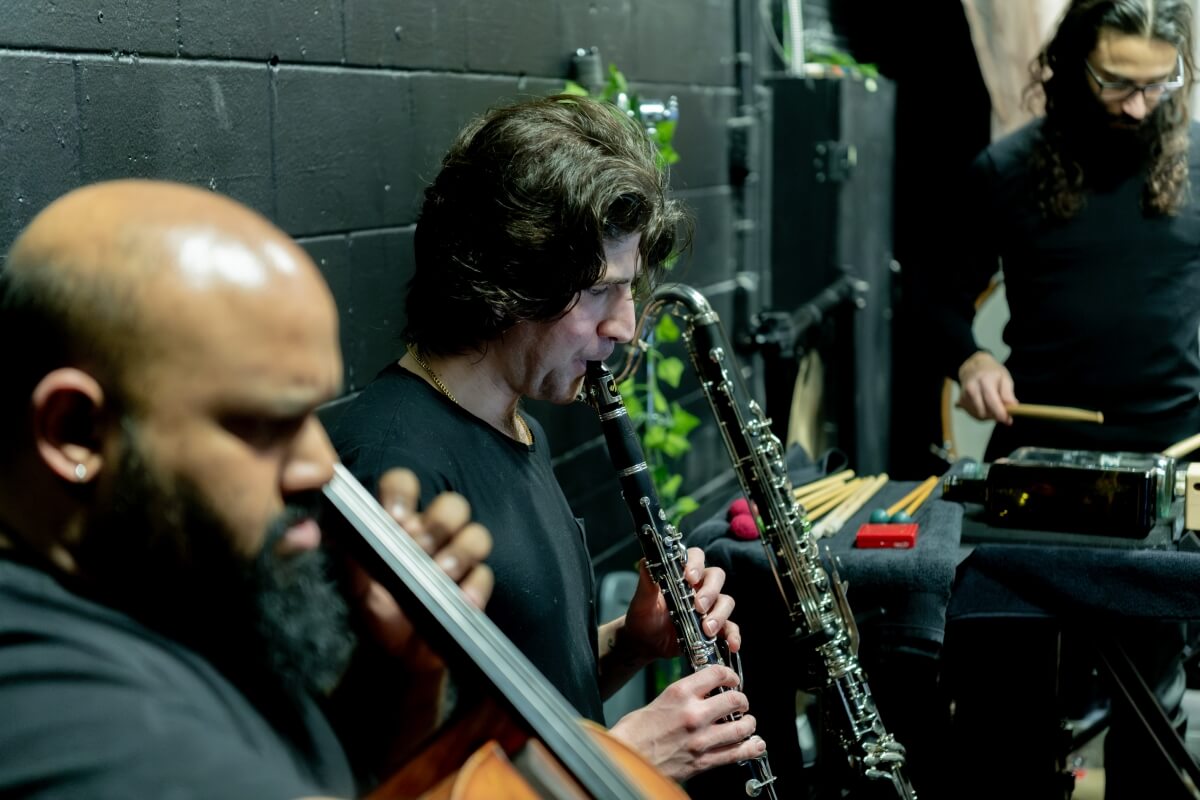
In this case, it results in a live musical underpinning to the play, serving to tell the story from an emotional perspective. It’s superbly played by some of the city’s upper echelon of contemporary music performers: Amahl Arulanandam, cello, Marc Blouin, clarinet and bass clarinet, Nathan Petitpas, percussion, and Wesley Shen, piano.
As the play opens, it’s a couple comedy about buying a house, but the eerie and sinister elements begin to pile up, evolving into a supernatural-esque mystery/thriller, and beyond that, a philosophical and emotional drama.
It’s such a unique production that I asked creators Chris Thornborrow and David Yee a few questions to dive into its background.
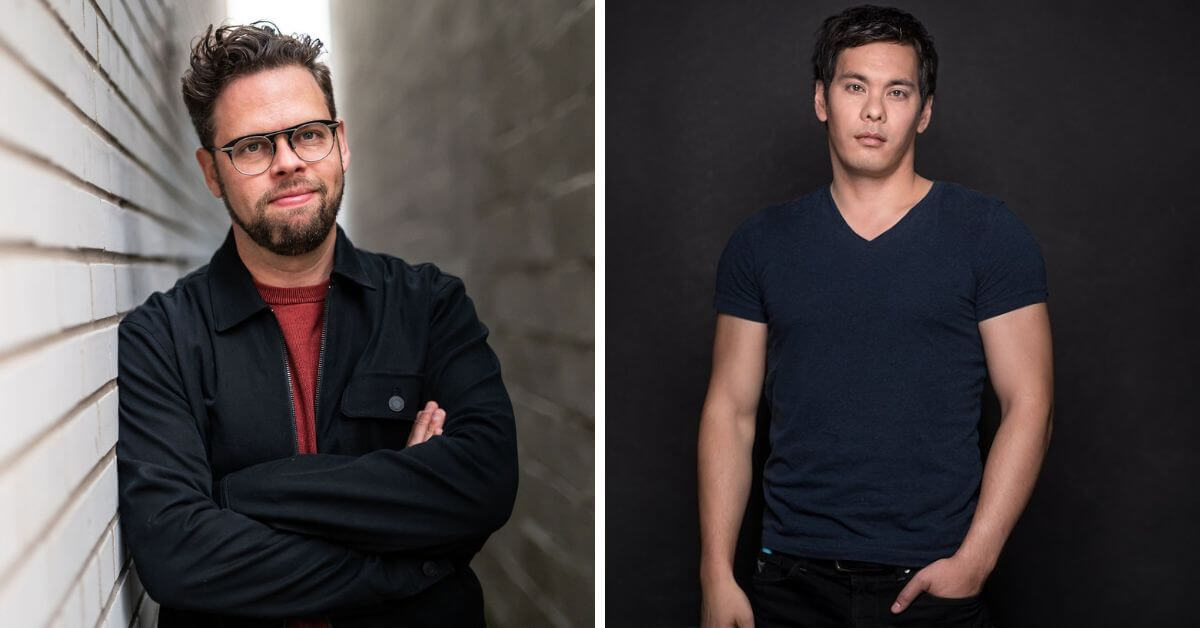
Cicadas: Chris Thornborrow (CT) and David Yee (DY) Q&A
Chris Thornborrow’s music is contemporary, melodic, and by turns lyrical, unsettling, even chaotic as the David Yee’s insightful script requires. Yee’s language ranges from cleverly comedic to poetic and philosophical. The pair met at one of Tapestry Opera’s LIBLAB collaborative workshops.
LV: How did the play come about?
DY: It started as a commission from NAC English Theatre and NAC Orchestra to create a new play, in collaboration with a composer, on a climate-focused theme which — for that project — was ‘water’.
Chris and I spent a week in Ottawa with climate dramaturg Vicki Stroich and dramaturg Ric Knowles, along with a team of creatives and experts in the field, in a sort of orientation on climate dramturgy.
From there, we were left to our own devices, collaborating however we saw fit. As Chris says, we created it in tandem, which was a completely novel process for both of us: it was like a creative relay race, constantly handing the baton back and forth to one another, until we had this piece of work that is equal parts both of us.
CT: We were encouraged by our team to write in tandem, and so I composed five or six sketches — 20 minutes of music — before I had even read a scene from David. I sent him midi-mockups of the work I’d done, and he responded by “composing” scenes inspired by my music, which allowed the music to fall into place.
As we progressed, it felt like we were collaborating on some complex origami that gradually revealed itself as we continued to work. Broad strokes gave way to detailed shaping of moment-to-moment gestures, such that the musical score is inextricably enmeshed with the play.
Working with David in this way was the most singular and creatively satisfying collaborations I’ve ever experienced.
LV: What can you tell us about the story?
DY: On the surface, it’s a play about a married couple who move into a house in Trinity-Bellwoods, only to find that there are hidden secrets within which threaten to dismantle their otherwise peaceful lives.
But, just as the house has its hidden depths, the story winds through its own funhouse of themes: from dealing with grief and loss, to finding balance between the material and natural worlds. We’ve been calling it an “eco-horror”, but the terror of it is really a matter of perspective: an invitation to view the world we’ve built through another lens.

LV: How does the ensemble and music figure into the play as it unfolds?
CT: While the music serves several functions throughout the show, the North Star of my process was to strive for music that was essential to the story. It couldn’t just sound cool; it needed to add meaning to David’s brilliant script.
Sometimes that meant amplifying the emotional undercurrent of a scene. More often, the music expresses emotions unspoken or adds subtext to the story. In some places, it embodies the landscapes, wildlife, and the creaking groans of the house, with the intention of blurring the lines between the musical score and sound effects.
This convention is often used in sci-fi and horror movies, Jerry Goldsmith’s film score for Alien (1979), and Ben Salisbury and Geoff Barrow’s brilliant score for Annihilation (2018) being two formative examples.
In other places, the music functions with thematic structures found in opera, musical theatre, and symphonies. I use melodic motifs and sound textures to represent story elements and characters that recur and transform as the tale unfolds.
Finally, there are moments where the music embodies characters, forces, and hauntings in the literal sense. When I’m working on a film score or an opera, I’m usually hesitant to describe my music as another character in a show, believing that music serves a purpose to evoke and amplify the emotional meaning of the story. But in the case of cicadas, the music really does take on several roles in the story in subliminal and surprising ways.
LV: What sort of sounds/music have you created for the play — how would you describe it in terms of style? What instrumentation do you use?
CT: The play is scored for clarinet/bass clarinet (Marc Blouin), cello (Amahl Arulanandam), piano (Wesley Shen), and percussion (Nathan Petitpas). Instruments are often called upon to play in unconventional ways. For example, the piano, which is an upright, has had the front panelling removed, so that Wesley can pluck the strings, strum them, bow them like a string instrument, and knock on the soundboard. Spooky vibes!
Nathan has a significant setup for his percussion, about the size of a small car. Included in his instrumentation is a concert bass drum for stomach churning rumbles, a wind chime that he’s custom-built with piano pegs that creates an ethereal shimmer, and a glockenspiel, which is often bowed, creating an otherworldly “halo” of sound.
Stylistically, the music covers a lot of ground, with influences of orchestral soundtracks from thrillers, horror, scifi movies and — surprisingly — animations. There are awe-inspiring gestures that we’ve affectionately nick-named the “Ghibli moments”, referencing movies like Spirited Away (2001). You’ll also hear eerie lullabies, tectonic evocations, urgently unfolding minimalism, burbling, brooding moments of tension, truly horror-inspired dissonances, and even a few sonic jump scares.
The Production
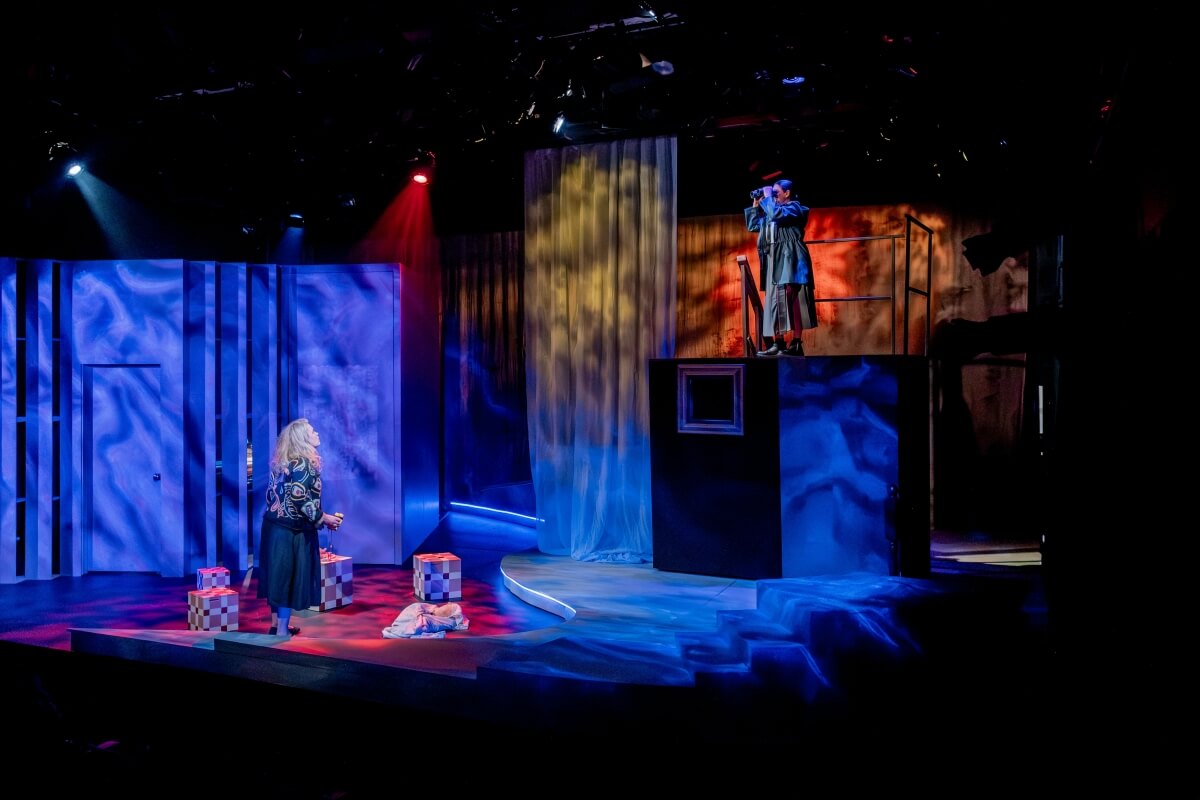
Blocks in various orientations create multiple areas within the stage, including a side room with a door — most often closed — where the musicians perform, and a raised area that serves as bedroom, balcony, overlook area, and more.
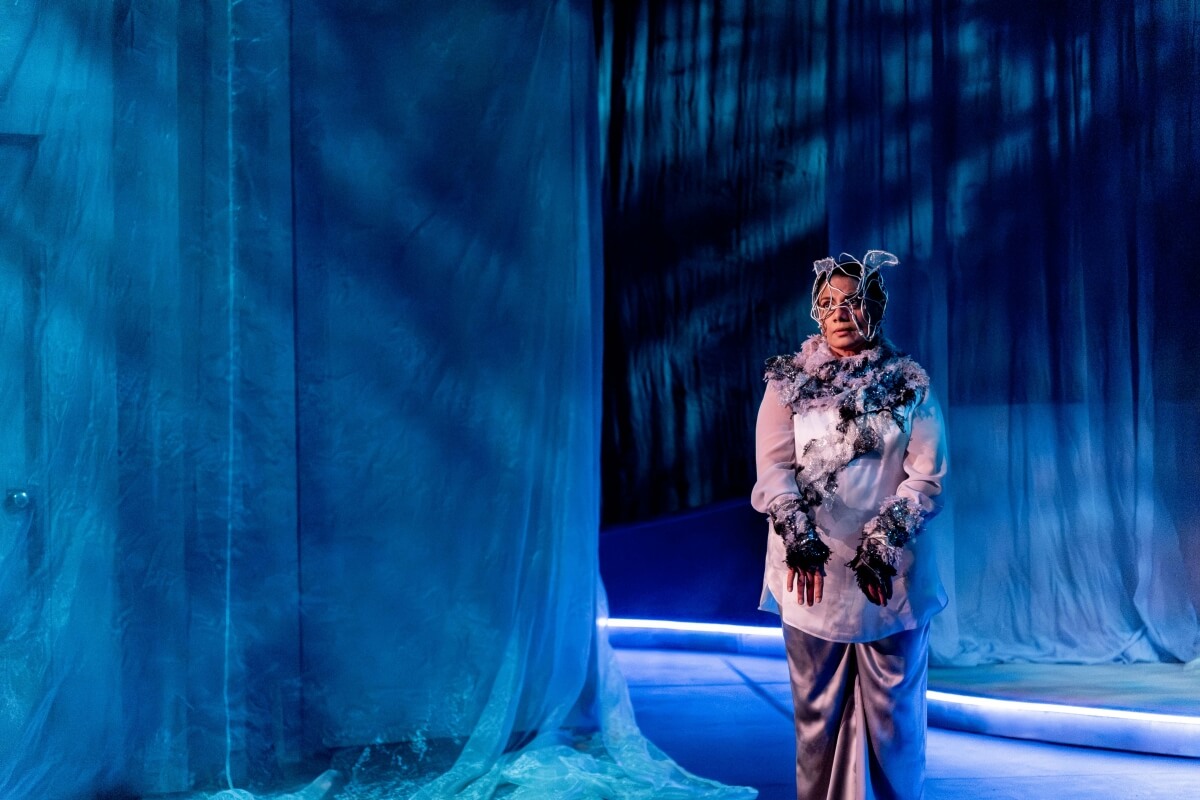
From the very first moment of the play, when, completely in darkness, a single light illuminates a strip of the translucent curtains that drape over the block that serves as a wall, creating the illusion of a waterfall, lighting, ingeniously designed by Michelle Ramsay, plays a crucial role in the production. From spotlights through hazy gloom to bright emphasis, it plays a large part in the creation of an eerie atmosphere that is cast over the couple’s story.
The translucent drapes cover Jawon Kang’s set as the play opens. They vanish fairly quickly (and I won’t spoil how for future audience members), but insert themselves into the story at various points as an element of menace. Kang creates a very clever set that serves all its requisite functions beautifully.
Performances
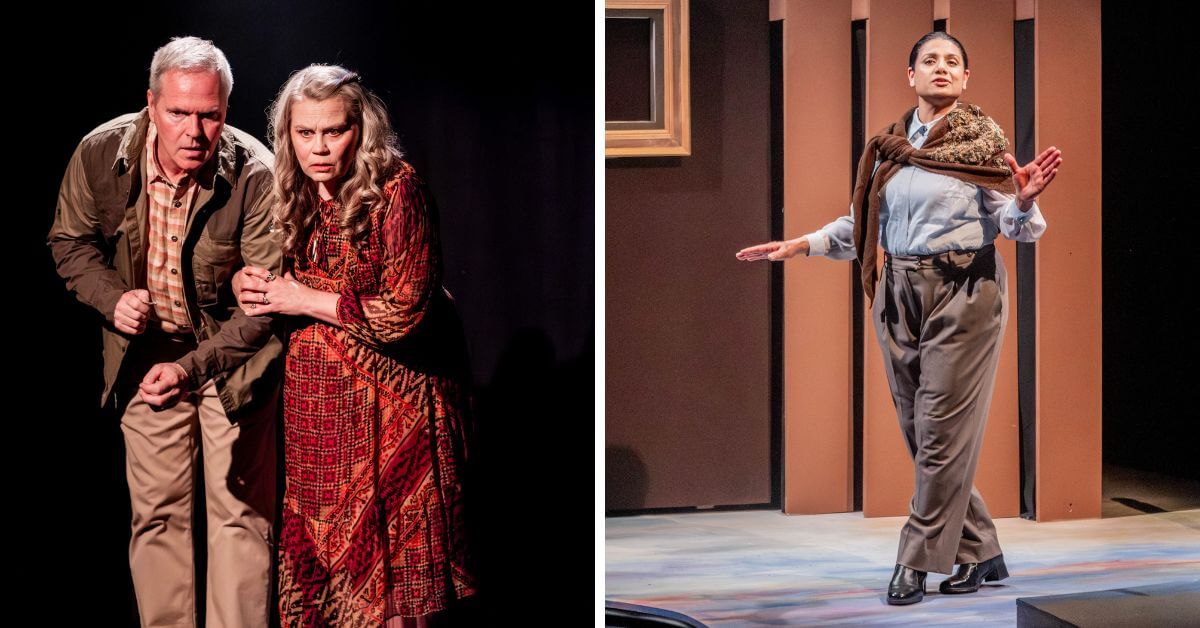
Monica Dottor as Janie and Ryan Hollyman as Trim create a believable couple chemistry — that combination of intimacy and irritation, affection and annoyance, even bitterness, that underlies any long term alliance of romantic partners.
As the story progresses, and their initial optimism about the house degenerates into helplessness and tragedy, Dottor becomes the story’s emotional heart while Hollyman plays a true to life husband who’s trying to help, but just doesn’t know how. Both actors embody their roles with a physical presence that carries the play through its more esoteric moments of mathematical and cicada philosophy.
Ellora Patnaik is a delightful chameleon who takes on a variety of roles from Adeline, Janie’s mother, to a pragmatic real estate agent, city inspector, Flower the birthing doula, and even a cicada. She’s convincing in all of them without sending any into caricature territory.
The humour comes from the recognizable and relatable qualities of both the dialogue and performances.
Nina Lee Aquino’s direction is judicious, balancing the myriad elements of the work into a coherent and affecting whole.
Remarkably, Monica Dottor also serves as movement designer. There are segments of the play that unfold as a kind of dance directly in sync with the music, with movements that lean to naturalistic rather than the stylized choreography of formal dance. They are quite effective in pushing along the narrative of the play, along with its ideology.
Final Thoughts
Cicadas is a brilliant mosaic of elements that come together to deliver a message, and take audiences from laughs to poignant moments, and even a few frissons of suspense and horror along the way.
It’s a Toronto-centric story where Trinity-Bellwoods and the two creeks that still flow beneath its surface play a key role, serving to remind us that, no matter how we may try, you can’t bury the natural world and its truth forever.
Are you looking to promote an event? Have a news tip? Need to know the best events happening this weekend? Send us a note.
#LUDWIGVAN
Get the daily arts news straight to your inbox.