
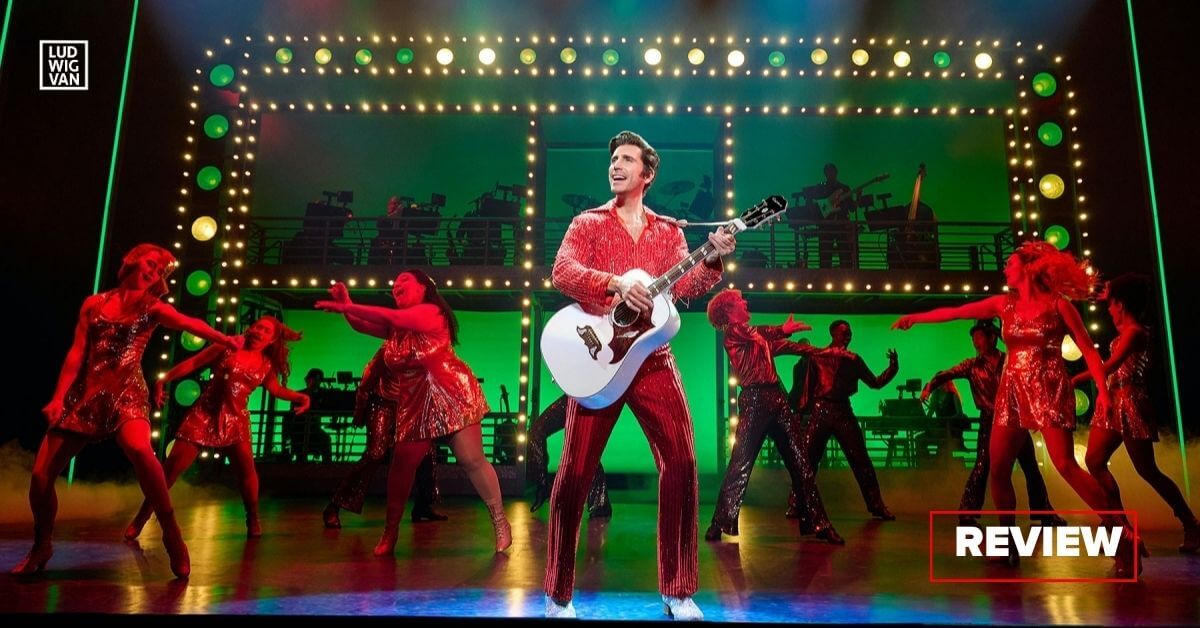
David & Hannah Mirvish and Networks Presentations & Associates/The Neil Diamond Musical: A Beautiful Noise, book by Anthony McCarten, music and lyrics by Neil Diamond, music direction by Sonny Paladino, choreographed by Steven Hoggett, directed by Michael Mayer, Princess of Wales Theatre, closes Jun. 7. Tickets here.
Another jukebox musical has come to town — this time drawn from the catalogue of Neil Diamond. The jukebox format, now a Broadway staple, builds a theatrical score from the canon of a well-known songwriter, and a biographical jukebox musical inevitably centres its draw on the artist.
In this case, that means Neil Diamond.
Unless one knows and loves the music, the audience pool narrows accordingly. And yet, in his prime, Diamond was no niche figure. In his day, he was bigger than Elvis.
The Tony Snub
The show opened on Broadway in 2022 and ran for nearly two years, proving a solid commercial success.
And yet, when the 2023 Tony nominations were announced, A Beautiful Noise received not a single nod — an unmistakable snub. This despite a pedigree that would seem to invite awards attention: a book by four-time Oscar nominee Anthony McCarten, direction by Tony Award winner Michael Mayer, and choreography by Olivier Award winner Steven Hoggett.
The prevailing industry sentiment at the time was that the musical simply did not break new ground dramatically, nor did it reshape the jukebox form in a way that felt theatrically daring.
Sitting in the theatre now, one can understand that assessment. The evening is thoroughly enjoyable. It entertains; it delivers the hits; it pleases its audience. There is craft here, certainly. What there is less of is risk.

The Inspiration and Structure
It was Diamond, after all, who was the wellspring of the project.
Following his diagnosis with Parkinson’s disease, which forced him to stop touring, the musical became, in a sense, an extension of the concert stage he could no longer inhabit.
The framing device of the show — Diamond in conversation with his psychiatrist, with musical numbers erupting from those sessions — reportedly grew from his own idea.
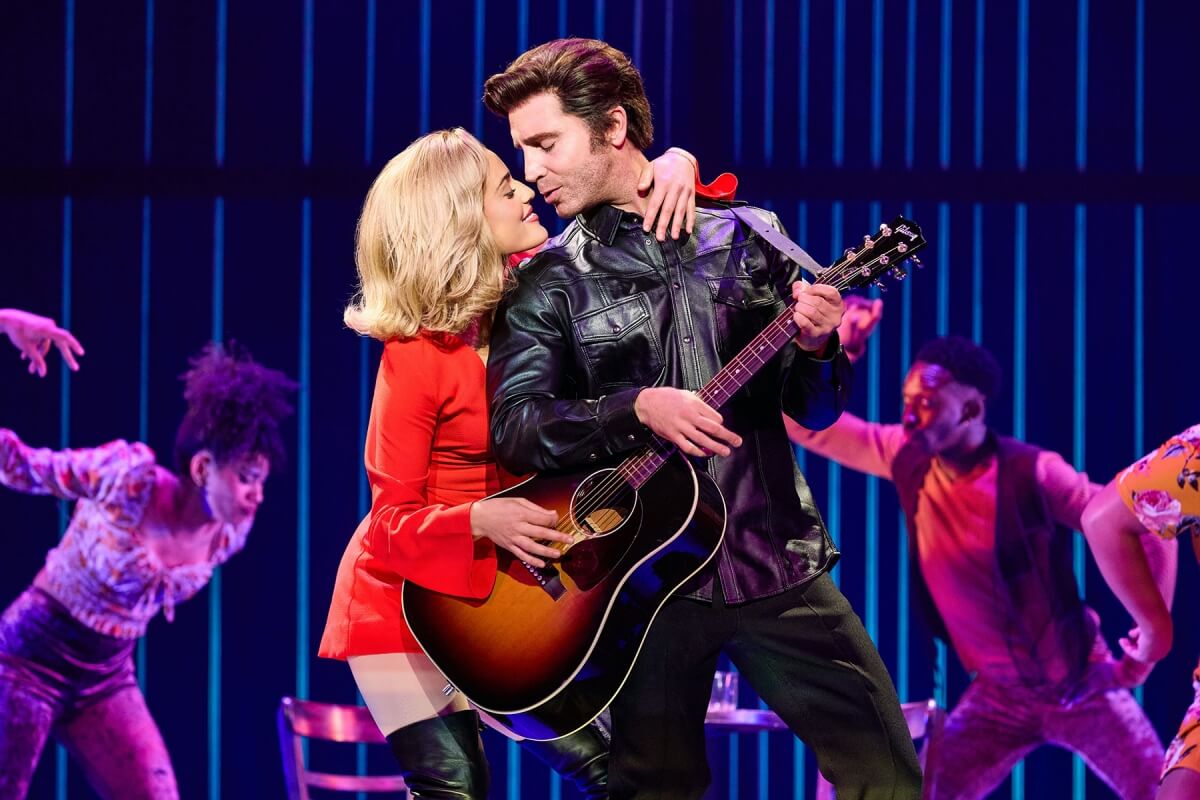
In these therapy encounters with the doctor (Lisa Renée Pitts), we see two Neils: the older man reflecting (Robert Westenberg), and the younger artist (Nick Fradiani) rising through the stages of his career.
Through these therapy sessions, we come to understand Diamond beyond the stage persona. The portrait presented is of a shy man who began as a shy boy, shaped in part by the anxieties of his immigrant Jewish parents.
The show traces his early success writing hits for other performers, the turning point when he realized he could step forward as his own interpreter, and sadly, his two failed marriages.

The Songbook
The songs function on multiple levels.
They emerge as recording sessions, concert performances, and emotional punctuation within the therapy narrative. They are not merely inserted; they are woven into the biography.
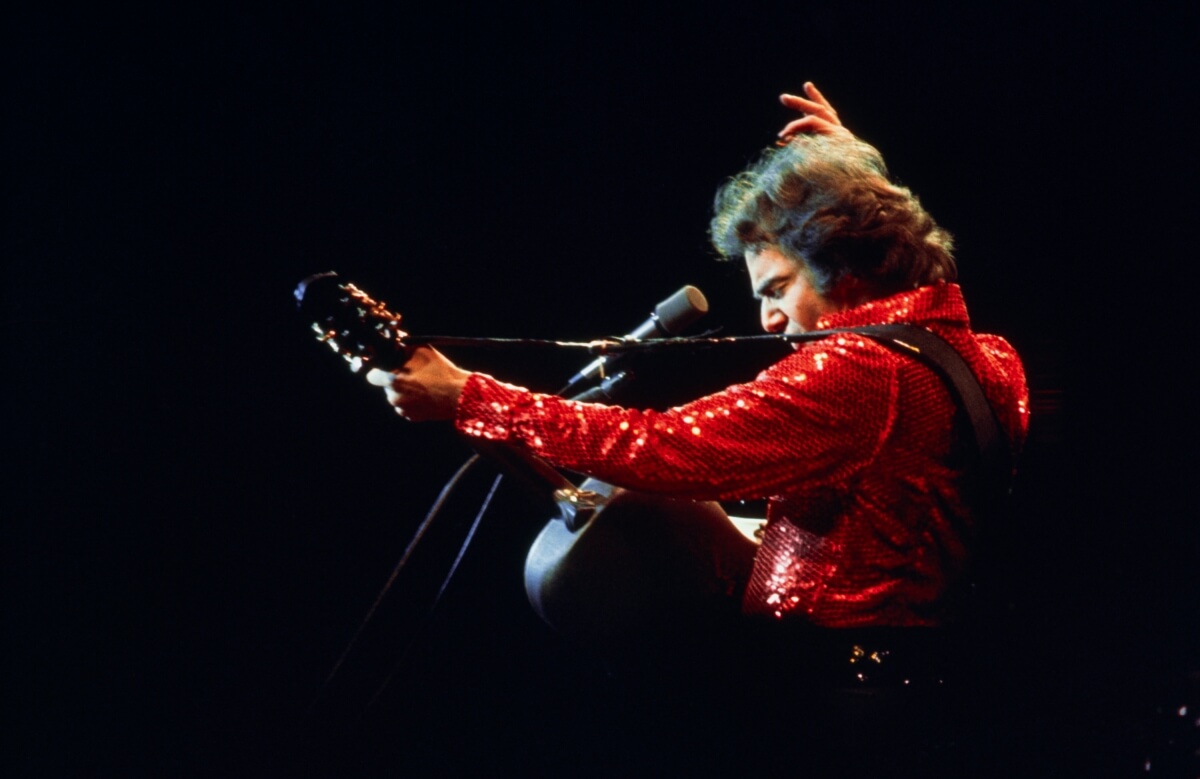
Nearly two dozen numbers are featured, encompassing both the hits he wrote for others and the signature songs that defined him as a performer. The catalogue, as expected, is the show’s greatest asset.
If one reduces the narrative structure to a single throughline, it lies in the psychiatrist’s copy of Diamond’s own lyric book. She selects lines that intrigue her, pressing him to confront the emotional truths embedded within them. Those lyrics then unlock specific chapters of his life.
For example, when he recalls the painful overlap between the end of his first marriage and the beginning of his second, she seizes upon a line — “I love you both” — forcing him to reckon with the ambiguity of his own feelings. In that sense, the lyric book becomes more than a prop; it becomes a diagnostic tool, a mirror held up to the man behind the hits.
By the musical’s end, she asks him to sign the book. He does so simply: “Neil from Flatbush.” The moment is modest, almost disarming — a return to origins after a life of stadiums and spotlights.
The Cast
The cast is streamlined to its essential trio: the older Neil, the younger Neil, and the psychiatrist. Everything rests on the strength of those three performances.
Westenberg embodies the reflective, older Diamond with quiet gravity and an acute sense of angst, while Pitts as the psychiatrist provides steady intelligence and emotional grounding.
Fradiani, as the younger Neil, carries the musical weight of the evening. He not only possesses an uncanny vocal resemblance to Diamond, but he delivers the songs with conviction and theatrical presence. He is more than an impersonator; he inhabits the material.
What emerges most clearly through Westenberg’s performance is that Diamond was not, at heart, a sunny figure. Beneath the anthem-like hits lies a man of clouds — introspective, restless, prone to melancholy. The show makes plain that even the songs that soar are often tinged with blue.
The supporting cast fills in the biographical arc with clarity and colour.
His first wife, Jaye Posner, portrayed with gentle reserve by Tiffany Tatreau, represents his high school beginnings and early stability. In contrast, Marcia Murphy (Mary Page Nance), his second wife, brings a more flamboyant energy, marking the turbulence of his rising fame. The emotional shifts between those relationships underline the personal cost of ambition.
Ellie Greenwich (Heidi Kettenring), his sharp-witted song agent, provides a welcome comic spark.
There is also charm in the depiction of the early club scene. Fred Weintraub, (Gene Weygandt) the owner of The Bitter End — where Diamond first found his footing as a performer — is given some of the evening’s lighter lines.
The darker turn comes with Bang Records and its founder Bert Berns (Michael Accardo), whose dealings and alliance with mob figure Tommy O’Rourke (Weygandt again) inject a genuine note of tension to the narrative.
The Production
In the final analysis, the staging is clean and functional. David Rockwell’s scenic design is spare, and Emilio Sosa’s costumes are logical and period-appropriate. Kevin Adams’ lighting shows some imagination playing with spotlights.
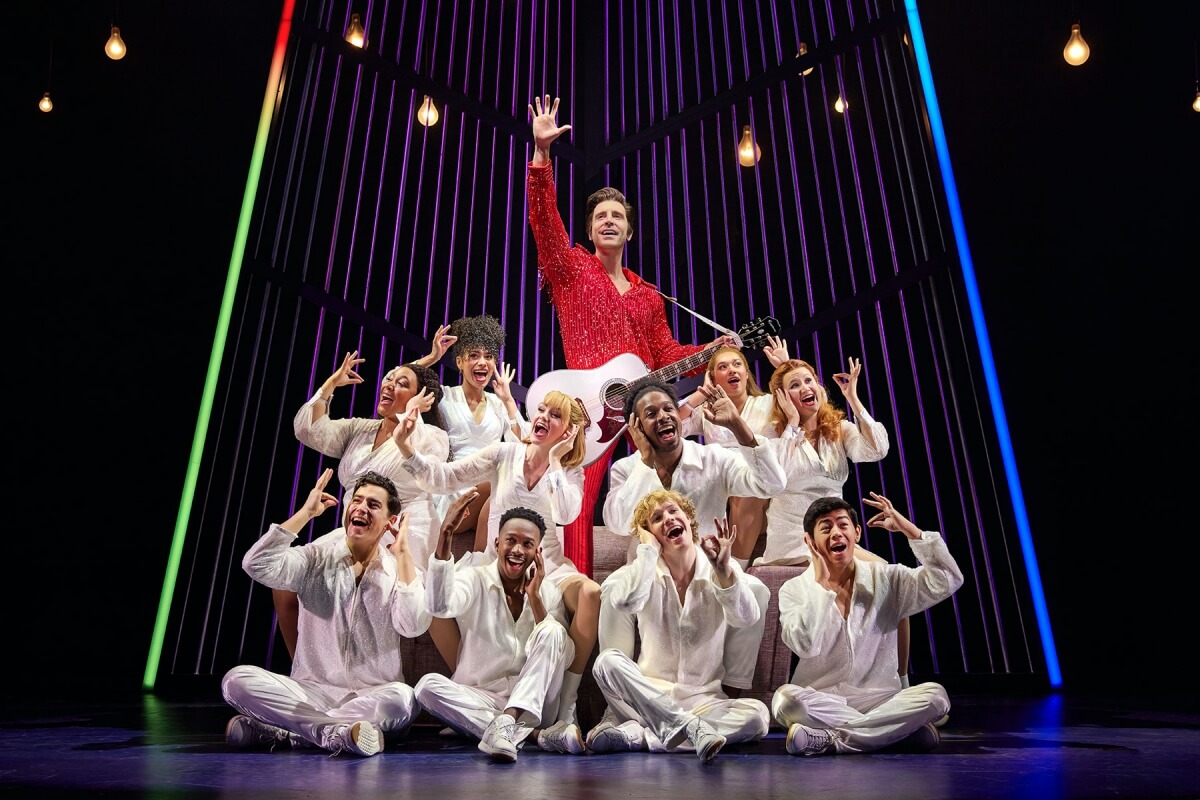
The ensemble, aptly named The Beautiful Noise, serves as both chorus and memory machine.
Frequently, they emerge from behind the chair where the older Neil sits in therapy, stepping out of
recollection and into performance as lyrics spark remembrance. It is a clever visual device, even if used in familiar ways.
Chorus members also get to perform song solos and are credited in the program.
End Note
Ultimately, the show’s chief asset remains the Neil Diamond songbook.
The audience waits, of course, for “Sweet Caroline,” which arrives as the Act Two showstopper and returns as the encore — proof that some anthems are too powerful to resist.
The theatre on this evening was filled with devoted fans, singing and clapping along.
If you are a Neil Diamond admirer, this musical delivers exactly what you have come to hear.
Are you looking to promote an event? Have a news tip? Need to know the best events happening this weekend? Send us a note.
#LUDWIGVAN
Get the daily arts news straight to your inbox.