
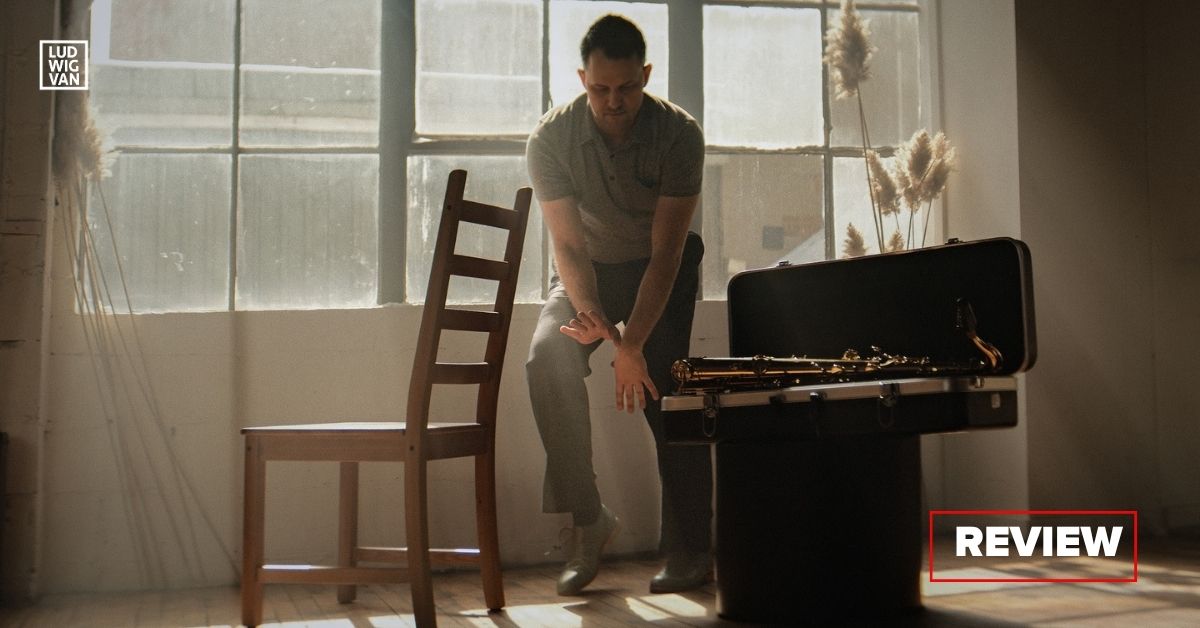
DanceWorks and Toronto Dance Theatre/Holla Jazz’s The Room Upstairs, choreographed by Natasha Powell (in collaboration with the dancers), music direction by Jacob Gorzhaltsan, Winchester Street Theatre, closes May 2. Tickets here.
Let’s do the bad new first: The Upstairs Room has been sold out for weeks. There is a waiting list, but your chances of securing a ticket are slim.
And the good news: the production is an utterly fabulous evening of dance and music.
The Choreographer
Natasha Powell founded her company, Holla Jazz, a decade ago and has since become one of the most compelling voices in Black vernacular and jazz dance within the Canadian landscape. Her works draws deeply from the lineage of jazz — from its social roots to its theatrical evolution — and she has built a reputation for muscular musicality, precision, and stylistic integrity.
The Inspiration: John Coltrane
For The Room Upstairs, Powell draws her inspiration from legendary jazz saxophonist John Coltrane, whose music was a relentless search for meaning.
Born in 1926 and dead at just 40, Coltrane compressed into a short life an extraordinary artistic evolution, moving from hard bop into increasingly spiritual terrain.
In this centenary year of his birth, for Powell, his influence feels undiminished.
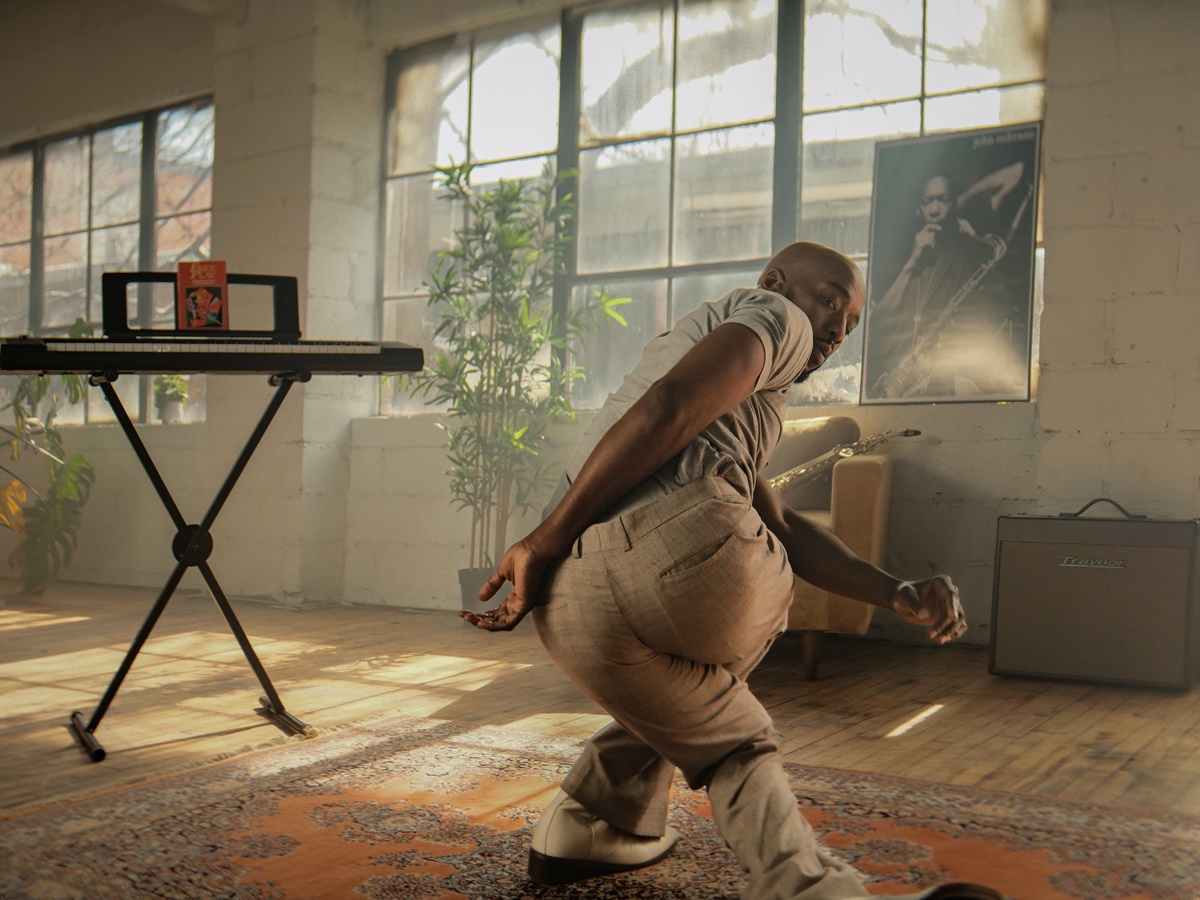
Transformative in scope, Coltrane elevated the role of the jazz soloist, pushing improvisation beyond decorative flourish into something architectural, a form capable of carrying philosophical weight. He prioritized spiritual practice alongside deep collaboration, and famously carved out a private creative sanctuary — an upstairs room in his home where he practised, composed, and pursued his experimental inquiries into sound.
That room and his creative process become the conceptual setting for this dance work.

The Music
The embodiment of Coltrane’s restless artistry is a talented six-member jazz ensemble under the musical direction of Jacob Gorzhaltsan who, one assumes, arranged Coltrane’s rich repertoire for the score for The Room Upstairs, drawing from some of the saxophonist’s most celebrated works — “Giant Steps”, “Naima”, “Aisha”, and the wild reimagining of “My Favorite Things”.
The musicians – saxophone, Colleen Allen; trombone, Tom Richards; trumpet, Rebecca Hennessy; bass, Scott Hunter; drums, Eric West; and piano, Thompson T. Egbo-Egbo – form a jazz combo of astonishing vitality.
Theirs is not just background accompaniment. It is symbiosis.
The musicians and dancers move as if made of the same skin. When the dancers fractured over a movement phrase, the band sputtered and searched for tonal footing, mirroring the choreographic tension. In quieter passages, the ensemble softened into lyrical warmth, underscoring moments of melancholy with restraint and grace.
When they were given their own entr’acte spotlight, individual solos surged forward in bold, near-dissonant improvisations that echoed Coltrane’s own fearless expansion of the jazz solo into something exploratory. In turn, the audience offered the musicians applause fully earned in their own right.
The Choreographic Structure
Powell structures the work as a series of sharply etched vignettes unfolding within the imagined upstairs room.
It begins in near stillness. Raoul Wilke enters alone, lays down a mat, and moves through what appears to be a sequence of warm-up exercises — slow stretches and articulated isolations that gradually awaken the body. Jazz dance lives in impulse, and here each gesture seems sparked from within. The bass follows him, then the drums, then the piano.
The upstairs room quite literally takes shape. Wilke hangs pictures on the walls, sets out coloured boxes. When fellow dancers Miha Matevzic, Hollywood Jade, and Carolyn Lady C’ Fraser join him, the energy shifts, catches fire, and the room fills with a stylistic jazz dance display.
From there, Powell’s choreography moves fluidly between ensemble interplay and individual showcase.
In one sharply observed vignette, the dancers crowd around a computer screen, studying choreography, attempting to replicate it, arguing over phrasing, rewinding, trying again — a witty commentary on process itself.
There are theatrical flourishes, too: a suitcase opens and suddenly the quartet is outfitted in uptown finery — mink stole, hat, coat — strutting in high-style glamour.
And there are deeply introspective passages, most memorably Lady C’s aching, melancholy solo, her body dripping with fatigue and sorrow, and Matevzic’s striking wall-bound study.
And of course, there are moments of playful one-upmanship, as the dancers try to outdo each other in technical jazz bravura, all underscored by the persistent pulse of the live jazz combo.
The Choreographic Style
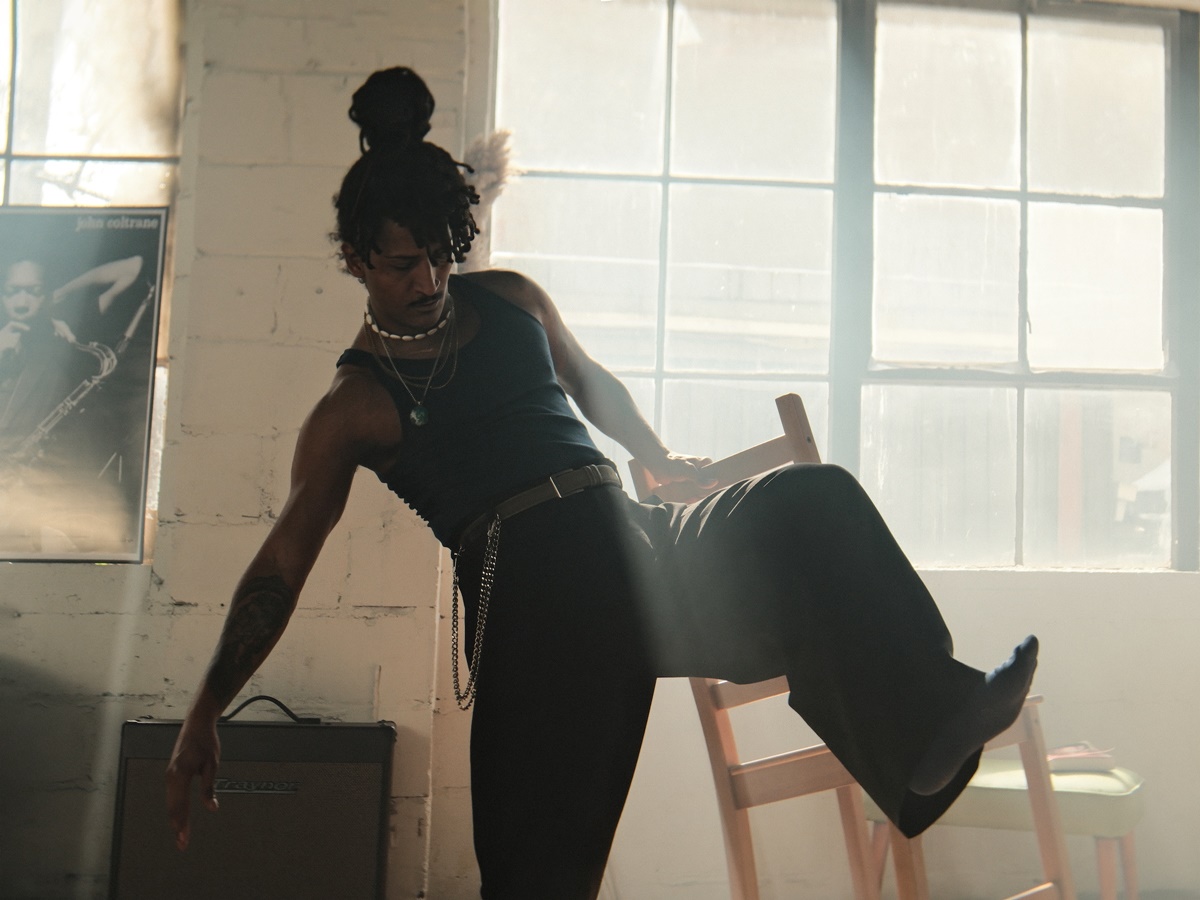
In The Room Upstairs, you have four astonishing dancers who quite literally leave you breathless.
When they fully ignite, they use every inch of the sprung hardwood floor at the Winchester Street Theatre to perform long heel slides, backward glides, and skimming runs that travel with fearless velocity.
Think of the Nicholas Brothers. Think of early Fred Astaire with his sister Adele. Think of Buddy and Vilma Ebsen in vaudeville. Think of ballroom lineage — the Lindy Hop, jitterbug, Charleston, swing, jive — and then fold in the muscular vocabulary of contemporary theatrical jazz dance without forgetting the all-pervading influence of the vernacular Black culture that was the well-spring.
Powell’s Holla Jazz company is the real McCoy jazz dance: impulse-driven movement, razor-sharp isolations, syncopated footwork that stops on a dime, swivels and hip spirals that seem to liquefy the spine. The body appears elastic, almost boneless, capable of bending backward, forward, sideways, covering space with both velocity and grace, whether moving at blistering speed, or in a suspended slow burn, or in rhythmic precision.
And A Final Reflection
What is most thrilling about Powell’s choreography is the layering of history.
Shades of the 1930s and 1940s flicker through the movement — echoes of Harlem swing and the Big Band era — yet nothing feels nostalgic. It is not quotation; it is lineage made present.
Social dance tradition, mid-century jazz theatricality, and today’s vernacular vocabulary coexist seamlessly in a single, exuberant evening. It is, quite simply, electrifying.
The Room Upstairs is a triumph — for Powell, for her musicians and dancers, and for John Coltrane, whose music proves once again that true innovation never ages.
Are you looking to promote an event? Have a news tip? Need to know the best events happening this weekend? Send us a note.
#LUDWIGVAN
Get the daily arts news straight to your inbox.