
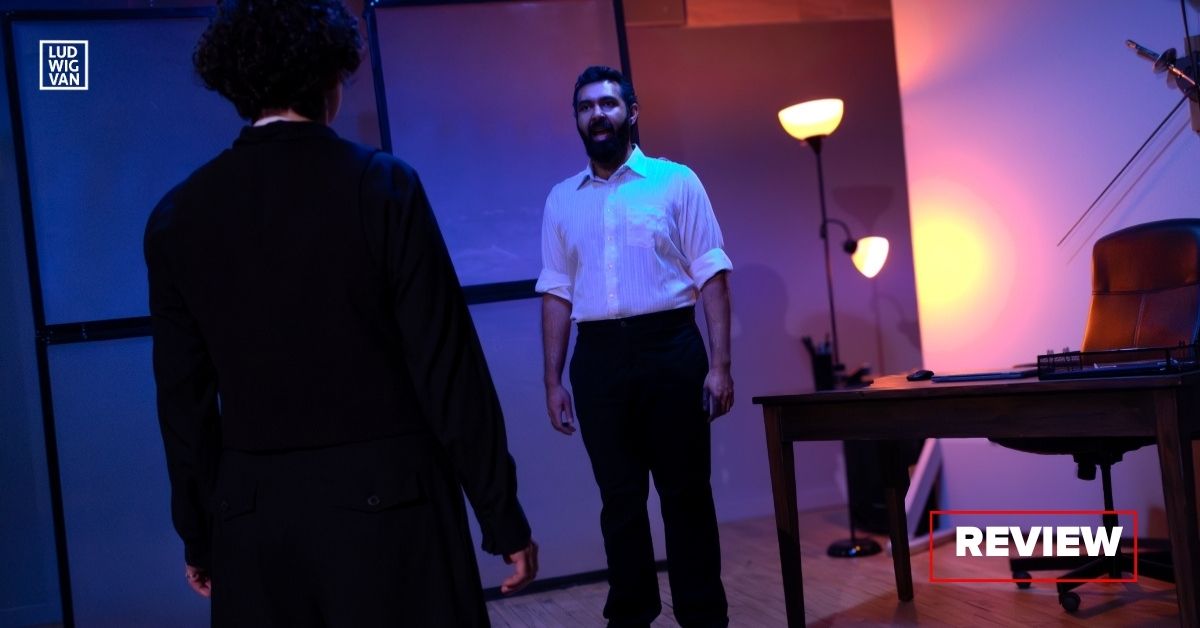
The Rest Is Silent Society: Hamlet, Sweet Prince, director Alex Jodi Verge. With: Gabbi Kosmidis as Hamlet; Paul Stafford as Claudius; Ashlie White as Gertrude; Andrew Pawarroo as Ghost / Player; Jonnie Lombard as Ophelia; Callan Forrester as Horatio; Liam Brett as Laertes; HannaH Sunley-Paisley as Polonius; Madeleine Storms as Rosencrantz; Hope Goudsward as Guildenstern; Cayne Kitagawa as Bernardo / Player; Lizzie Song as Marcellus / Player; Sydney Marion as Swing; Jameson Mosher as Swing. Set Design by Kenzia Dalie; Lighting Design by Franco Pang; Sound Design by Lucy Ellis, April 17, 2026 at The Rehearsal Hall, 1110 Dupont Avenue. Continues until April 25; tickets here.
Hamlet with a queer lens, modern dress, and the original Shakespearean language — That Art’s Group’s mindful reinterpretation of the play points up the dark humour while adding a different focus for its lead.
Claudius and Gertrude remain male and female, but many of the other characters are gender mixed in this production. Polonius is a woman, while Ophelia is trans. It makes the point that corporate flunkies and romantic leads can come in many different variations, among other things.
Dressed in contemporary clothes, the Elizabethan language flows naturally from the cast, who offer nuanced interpretations of its oft-quoted poetry.

Performances
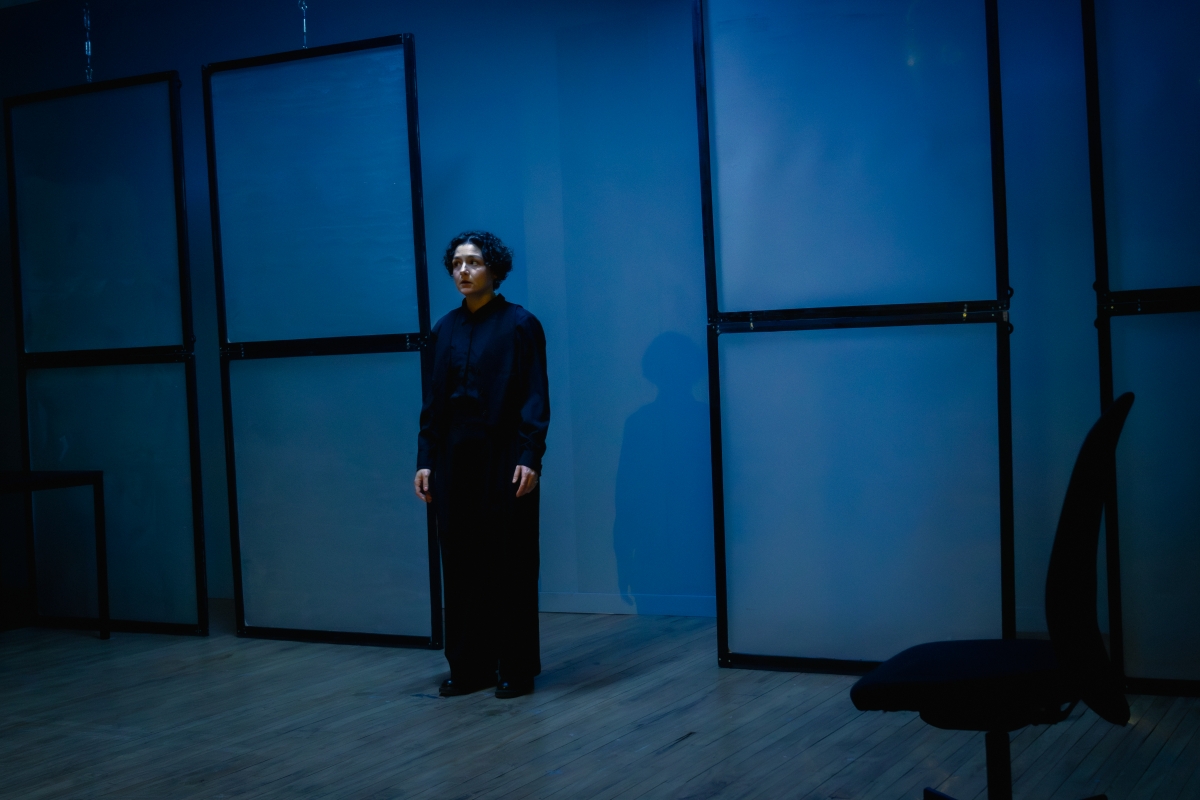
Gabbi Kosmidis naturally sits at the centre of the story, even though there are scenes where Hamlet is not on stage. Shakespeare’s original intent was to focus on Hamlet as a victim of his own indecisive nature. The producers have indicated in their notes that they wanted to shift from indecision to the weight of being required to commit violence. The play itself, however, builds Hamlet’s waffling back and forth into the dialogue.
Kosimidis plays it as more moody than indecisive, as someone who’s gradually losing control over their emotions after the truth of the King’s death has been revealed, and the ghost (Andrew Pawarroo, played with a nice sense of atmosphere) has burdened them with the task of revenge. It works well to propel the dramatic momentum of the play — and also to create genuinely funny moments in the dark story. Gabbi has a wonderful sense of delivery that creates a sly sense of poignancy out of Shakespeare’s eloquent lines.
In many ways, Hamlet’s a difficult character to like, especially once the bodies start to pile up, but Kosmidis manages to maintain a certain wit and charm to the end.
Director Alex Jodi Verge has Gabbi beginning the play in an elegant all-black suit with buttoned up shirt, trousers, vest, and knee-length top coat. Gradually, as Hamlet’s state of mind deteriorates, the costume does so in sympathy — losing first the coat, then the vest, and finishing with an unbuttoned shirt and rumpled look. It’s a clever visual mirror to the character’s inner turmoil.
Paul Stafford has a strong stage presence as Claudius, the murderous new king/company head, depicted as an obfuscating corporate titan, and Ashlie White manages some sympathetic moments in the role of Gertrude, the queen who so quickly forgot her dead king.
There were some particularly strong performances in smaller roles. Jonnie Lombard was a happy innocent who turns brittle as Ophelia, and Callan Forrester a convincingly stalwart friend as Horatio. HannaH Sunley-Paisley played Polonius as a corporate sycophant.
Liam Brett is strong as Laertes, brother to Ophelia, and son to Polonius. Brett gets limited time on stage to portray a wide emotional range, and they sell it effectively.
Set & Design
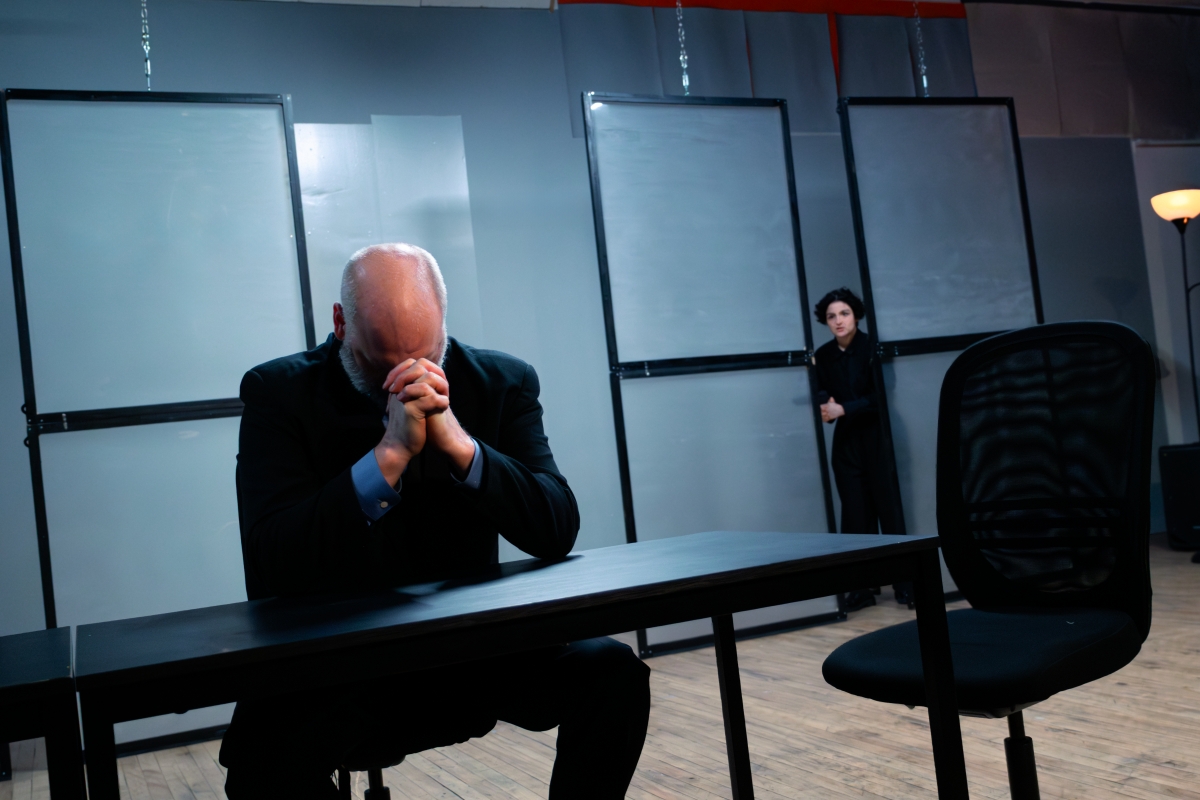
The set is designed more or less as a corporate boardroom, although the action takes place in multiple locations. The overall design by Kenzia Dalie is in white (glass light shades, frosted glass screens, framed degrees), black (the tables, chairs, light fixture, and the frames of the screens that cover the back wall), and grey (primarily the walls).
It’s an appropriately neutral corporate-style colour scheme, and adds a kind of underlying drama to the story. Two tables are set in the middle, initially like a boardroom table, and they’re separated and set up in various configurations as needed throughout the story. They serve as boardroom table, family dining table, and more. A dark wooden desk sits at one end of the room, with the framed degrees on the wall behind it, and three swords in a decorative configuration. There are various shelves at both ends holding books and such.
A slanted wall behind the desk offers an entry/exit point, and a row of large rectangular screens supported at the back wall create a translucent hallway behind it. Another wall is set up at the other end of the room, offering another point of entry. The actors also come in from the aisle that divides audience seating.
In short, there’s been a creative and resourceful use of the space, which serves as boardroom, private office, bedchamber, balcony and more.
Lighting design by Franco Pang, and Lucy Ellis’s sound design, add depth and texture to the production. The lights dim or go on and off with the action on stage. Ominous electronic music enters into the mix when the ghost is present, and at specific key moments.
All in all, it’s a thoughtful production.
Final Thoughts
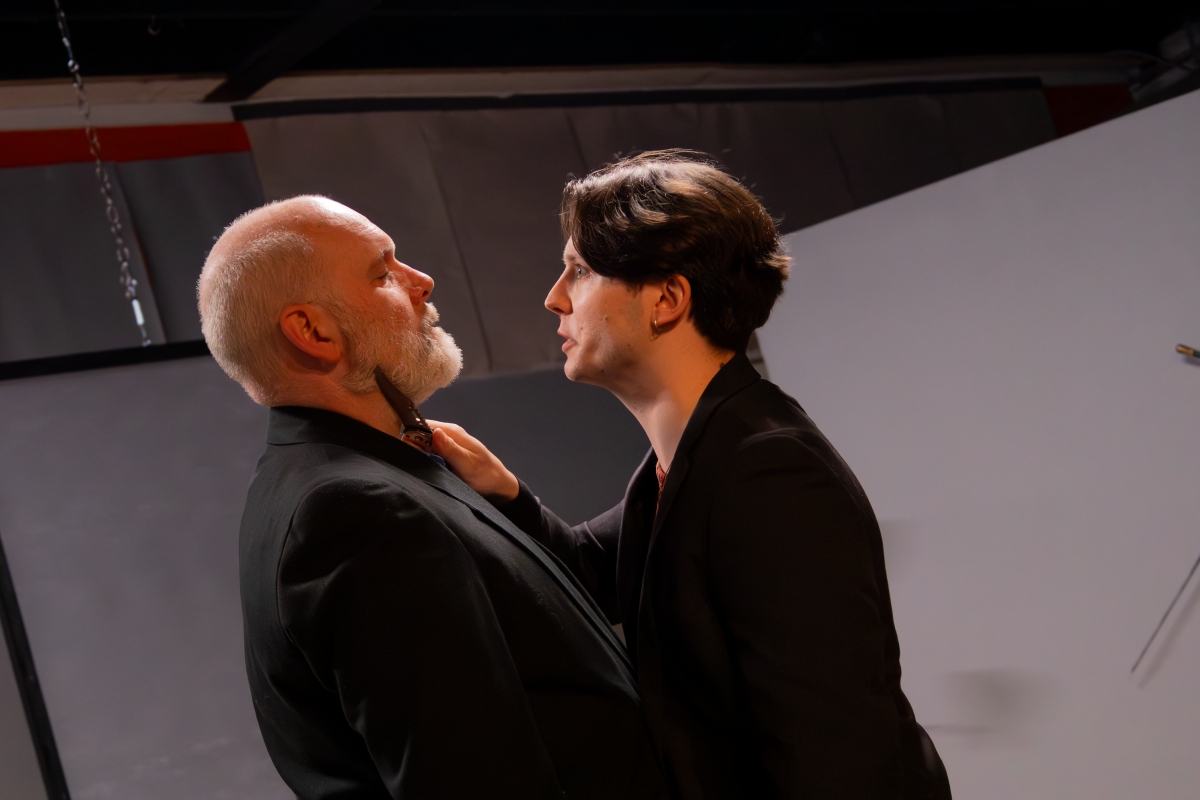
Shakespeare’s long and winding plot gradually ramps up the tension to the story’s bloody climax, effectively paced by Verge and company. The gender swapping and realignment of the drama add different dimensions to the story, and a focus on the violence that adds a modernity to the story, despite the original language dialogue.
We all know how Hamlet ends; it’s the getting there that’s interesting.
Note: The venue is located on the second floor of the building up, with stairs and no elevator. If you are unable to access the venue, please visit this link for virtual tickets.
Are you looking to promote an event? Have a news tip? Need to know the best events happening this weekend? Send us a note.
#LUDWIGVAN
Get the daily arts news straight to your inbox.