
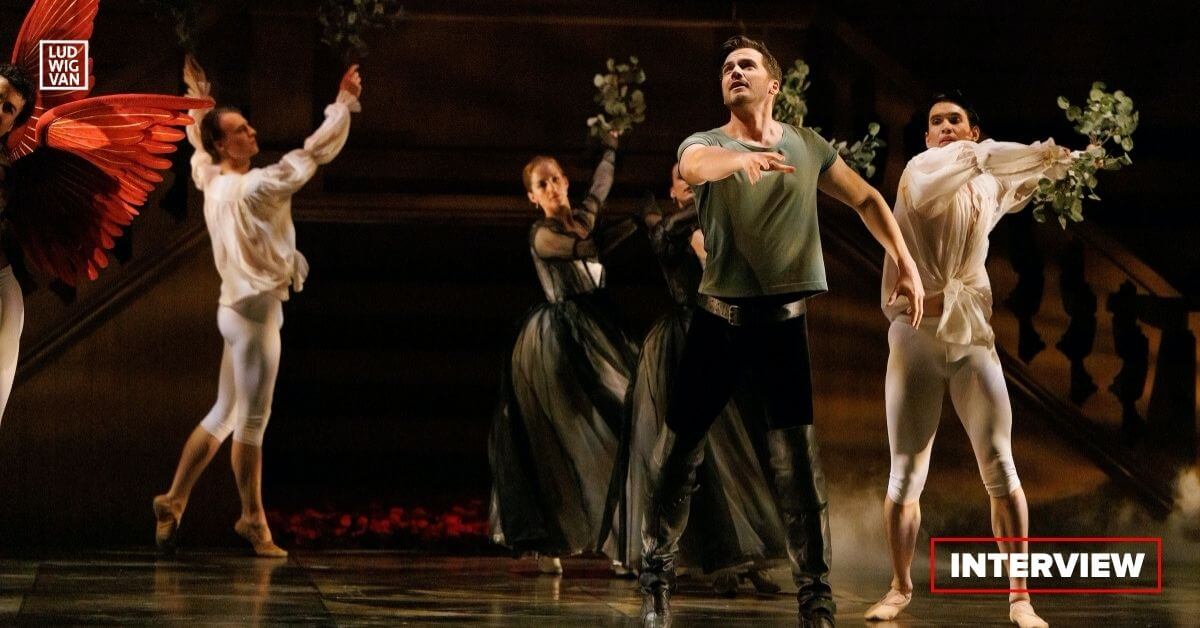
For Opera Atelier’s spring production, the company presents the premiere of Claude Debussy’s Pelléas et Mélisande. Performances take place at Toronto’s Koerner Hall from April 15 to 19, 2026.
The production serves as a significant milestone for the company. The 20th century opera represents the most recent work staged in the company’s 40-year history. It redefines the notion of period performance.
Pelléas et Mélisande was the only opera Debussy would composer. It’s based on a play by Maurice Maeterlinck, and the story revolves around a prince who is lost in a forest. He discovers a beautiful woman who’s weeping beside a pool of water.
She draws him into a supernatural world that he cannot escape.
The work is rich in symbolism and dream-like imagery. LV caught up with Co-Artistic Directors Marshall Pynkoski and Jeannette Lajeunesse Zingg to talk about the production.
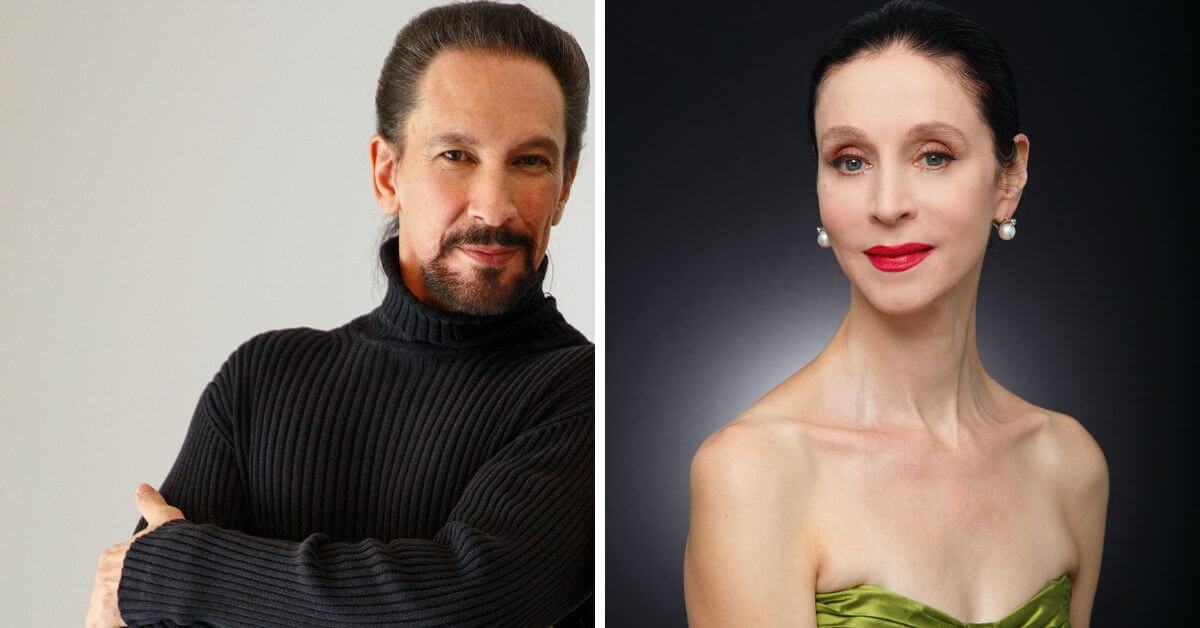
Co-Artistic Directors Marshall Pynkoski and Jeannette Lajeunesse Zingg: The Interview
While the company has performed the music of Debussy at prior events, his Pelléas et Mélisande will be Opera Atelier’s first full production of the composer’s only opera.
“We’ve been drawn to it for a very, very long time,” says Marshall Pynkoski.
The company has built a reputation for presenting largely Baroque and Classical operas, but their definition of “period production” has developed over the years. “Historically informed” would be a better description of their current approach.
Their audience initially had a mixed reaction as their repertoire expanded, even going back to their production of Mozart’s The Magic Flute back in 1991.
“Some people were furious, some were delighted,” Pynkoski recalls. The company got the same kind of feedback after their 2012 production of Der Freischütz by C.M. Weber, whose career straddled the late Classical and early Romantic periods.
Both Pynkosky and Lajeunesse Zingg were drawn to French repertoire.
“We were fascinated by French style,” he adds. Both Pynkoski and Lajeunesse Zingg talk about the music, “the wonderful feathered ends”, and other aspects of Debussy’s Impressionist oeuvre.
Several years ago, the pair consulted with Jeanne Lamon, then Artistic Director of Tafelmusik, about the possibility of presenting Debussy. The musicians of Tafelmusik, Baroque and period music specialists, perform the accompaniment to OA’s productions.
Pynkoski recalls her response: “Who would be better equipped to interpret Debussy than an orchestra steeped in French Baroque repertoire?”
Debussy himself was strongly influenced by the music of French Baroque composers like Couperin and Rameau, it’s true.
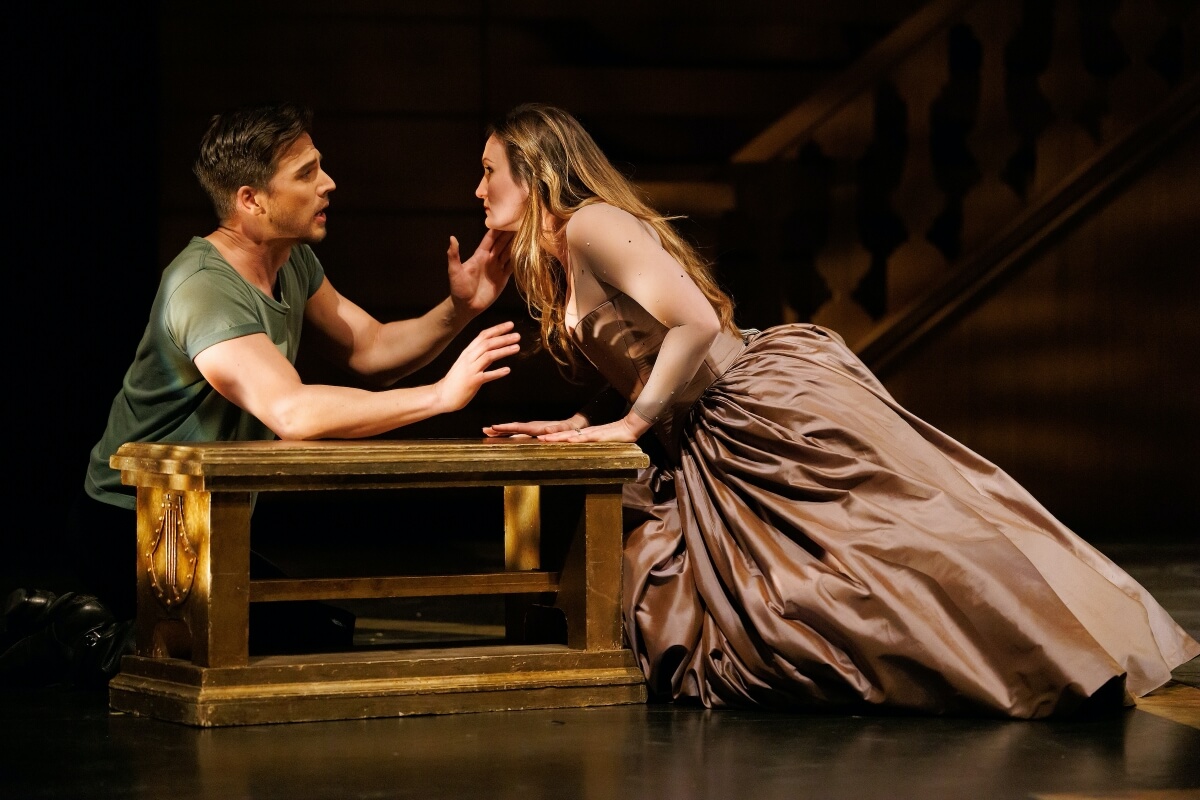
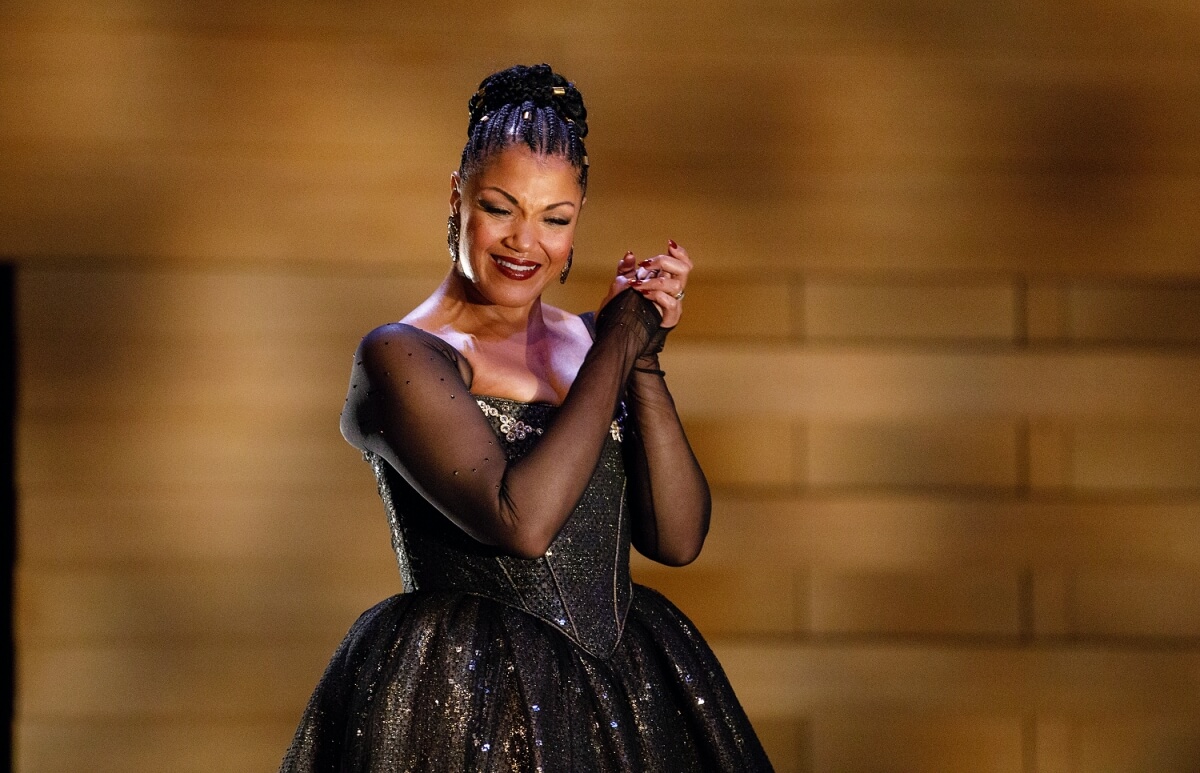
Their vision of Debussy’s opera took some years to put together, including finding the right cast members. Pelléas et Mélisande will star French tenor Antonin Rondpierre as Pelléas, soprano Meghan Lindsay as Mélisande, baritone Douglas Williams as Golaud, Measha Brueggergosman-Lee as Geneviève, and soprano Cynthia Akemi-Smithers as Yniold. Canadian bass baritone Philippe Sly makes his OA debut as Arkel.
Marshall doesn’t see OA’s historically informed approach as being at odds with Debussy’s music. “He has somewhat suffered from people saying […] we must look forward with Debussy,” he says. “But what are the building blocks of Debussy’s music — French Baroque.”
“He was a big fan of Charpentier,” notes Lajeunesse Zingg.
That doesn’t mean downplaying any elements of the music, which is firmly situated in the 20th century. “You’re in love with the music. People decide that it’s strange — let’s make it even stranger.”
Looking at the roots of Debussy’s music also includes acknowledging that it was originally played on instruments with gut strings, among other details. “Things start to come into focus in a different way,” Pynkoski says. “It just feels like the right time to do it.”
Pynkoski says OA slipped a juxtaposition of Charpentier and Debussy into their All Is Love program. “We opened with the Charpentier, La Nuit,” he recalls. It merged musically into the opening scene of Debussy’s Pelléas et Mélisande. “We put it into the program, but we didn’t tell anyone. Not a single person said, wait a minute, what was that before the Debussy?” he says. “They felt like it was an overture.”
Creatively presenting the music of the past is the core of their mandate. “This is what has driven us in everything,” Marshall says. “We don’t want to be a museum — we don’t want to step back in time.”
Audiences want context, and they want to explore the artistry of the work, he says, likening the process of taking Debussy back to its roots to unveiling Michelangelo’s original colours and brushstrokes via restoration. “Ultimately, we can look at Michelangelo the same way when we look at, uncovered, what was his original intent.”

A New Arrangement
The production features a brand new arrangement of Debussy’s score by Opera Atelier Music Director Dr. Christopher Bagan.
“It brings a transparency to the music,” explains Lajeunesse Zingg. “Marshall and I have always felt that the most brilliant way to listen to Debussy is to listen to his piano music.”
As she points out, most modern audiences are probably more familiar with orchestral arrangements of Debussy which, however sympathetic to the music, were not created by the composer himself.
“The sheer wall of sound that comes at you, I personally feel that [it can] distort,” she adds. “Chris Bagan is a great Baroque expert,” she says. He’s also enamoured of modern works, she explains. “He scored Pelléas for 14 instruments.” Opera Atelier Resident Music Director David Fallis will lead the ensemble made up of 14 members of the Tafelmusik Baroque Orchestra.
Lajeunesse Zingg recalls their first production of All Is Love back in 2022, with its inclusion of the first scene of Pelléas. “It was amazing, the response.”
Pynkoski mentions Paula Citron’s review in LV at the time. “I heard Debussy’s impressionistic score as I had never heard it before.”
“It’s a revelation,” he states. It also allows the vocalists to perform with more subtlety. “We have singers that we don’t need to push over a 60 to 80 piece orchestra.”
As such, the production can focus on the story and characters along with the music.

The Production
The dancers take up a unique role in the performance.
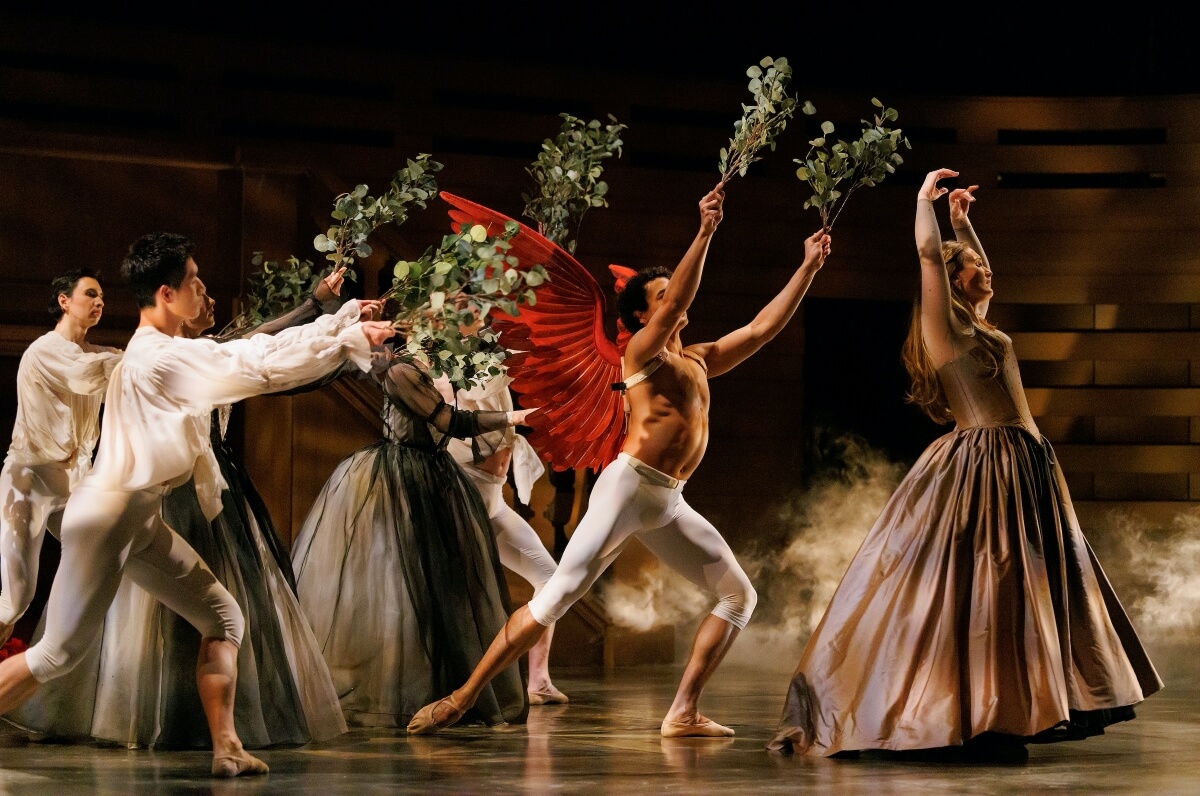
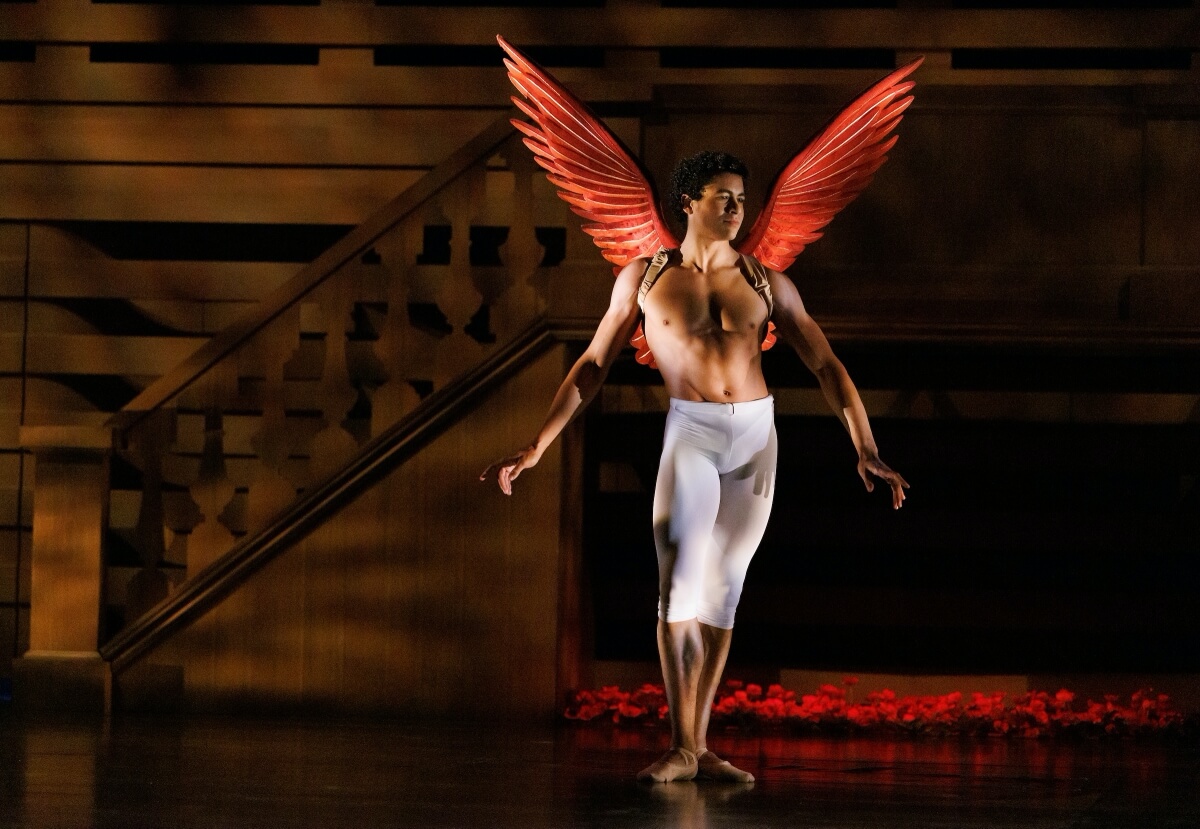
“Because it’s a symbolist opera, the dancers are very symbolic,” Jeannette says. One will represent Eros, who pushes the action of the main characters. The others appear more as metaphorical ideas.
It goes to the heart of the work.
“The idea that fate or destiny drives everything,” Pynkoski says. “There’s something wonderfully heroic seeing them struggle against it,” he says of the main characters. The dancers flesh out their dream-like state.
“No one on stage can see the dancers, only the audience,” he adds.
Along with Debussy’s score, OA interpolates about a few pieces of Baroque music
into the mix. “I think for the most part they are integrated seamlessly,” Lajeunesse Zingg says.
It allows the dancers to explore both Baroque and modern, impressionistic dance techniques.
“We want people to feel as though what they see is a dream,” Pynkoski says. As he points out, symbolists deal with interior life. The development of modern symbolism coincided with the rising popularity of Freud and his notions of the unconscious. “Inevitably they, and wisely, thought, the only place we can go is inward. “
In the opera, the forest is a kind of representation of the unconscious. “That is really truly what we’re trying to do,” he continues. “We do Debussy’s opera a huge disservice when we turn it into a domestic opera.”
He advises audiences not to look for logic or the usual elements of linear story in the work. “Let it float over you as a dream,” he says. “There’s no dramatic arc,” he adds.
“We play the scene. We don’t look for a dramatic arc any more than we look for a dramatic arc in our dreams,” he says.
As such, multiple interpretations and impressions are not only possible, but encouraged.
“That’s what symbolism is supposed to be,” Lajeunesse Zingg explains. The libretto goes along with the music. “It has that feeling that we have when we hear a story and we only understand it a little bit, and our imaginations fill in the rest,” she adds.
“It will look very beautiful and it will sound very beautiful. It has to have the real feeling of being in a fairytale,” she says.
While the cast is made up of experienced singers, they’ll bring a fresh approach. “Every singer is singing it for the first time,” Pynkoski notes.

Leave Logic Behind
Pynkoski quotes French writer Colette. “How I love things I only half understand,” he says.
“Your imagination can take it and expand it for yourself,” Zingg adds.
“If you’re tying loose ends, you’re imposing your own logic on it,” Pynkoski says. “It’s nothing but red herrings, for want of a better word.”
Characters will act in surprising ways, and seemingly contradict what they’ve expressed previously.
“There are those moments when you think, what??” he laughs. “You think you’re [seeing] something about people, and then something supernatural happens, and then the story continues as usual. We still have to force ourselves to trust it,” he adds.
The opera unfolds scene by scene. “That’s just how it is,” he says. “Debussy didn’t make a mistake.”
“I think they were very influenced by fairytales,” adds Lajeunesse Zingg.
“They wanted to go somewhere else,” Pynkoski says. “There’s no use in saying trees aren’t purple. Do we really have to go there and explain? Let’s not, let’s just let them be.”
“Stop thinking. Don’t think — just let yourself feel,” Jeannette says. “We’ve decided to go with the flow.”
As she points out, that flow does include some funny moments.
“Mélisande — I’m not sure she’s a person,” Lajeunesse Zingg says. “She’s an idea.” As she points out, after appearing in the story, she’s disoriented, and can’t explain where she’s from. Then, she has a baby out of nowhere.
“We never have her explain it,” she says. “It’s outrageous.”

Final Thoughts
The production creates a dreamscape out of Koerner Hall’s stage.
“We are transforming Koerner Hall,” Lajeunesse Zingg explains. It includes staircases that add multiple dimensions to the set.
“We’re celebrating the fact that it is a huge, open space, but people will see that space transformed in a really remarkable way.”
- Find tickets and show details for Opera Atelier’s Pelléas et Mélisande, April 15 to 19 at Koerner Hall, [HERE].
Are you looking to promote an event? Have a news tip? Need to know the best events happening this weekend? Send us a note.
#LUDWIGVAN
Get the daily arts news straight to your inbox.