
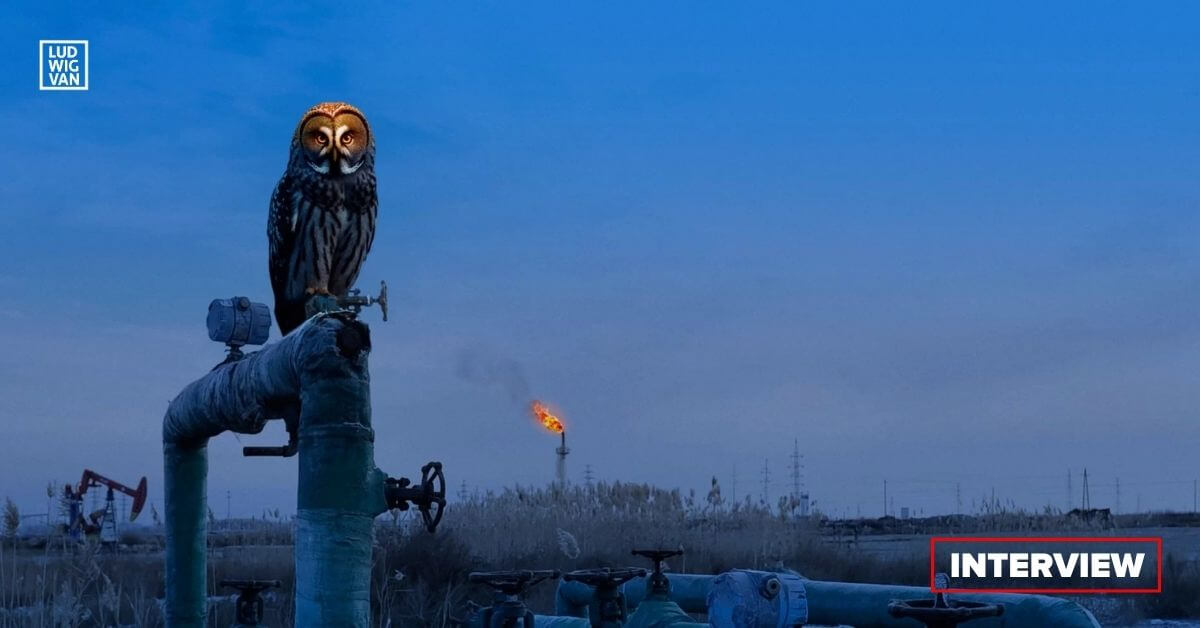
Strife, A Punctuate! Theatre Production in Association with Tarragon Theatre, is a world premiere presentation. Written by Matthew MacKenzie and directed by Yvette Nolan, the play revolves around issues of identity and legacy, and takes the stage in Tarragon’s Extraspace from April 7 to 26, 2026.
The play revolves around issues of identity, power, and the politics of representation, and features an all-Indigenous cast, along with key members of the creative team.
After Nathan, an Indigenous climate activist, is brutally murdered, the play asks the question: who can speak for him? Monique is his sister, and she’s haunted by grief. She has visions that link back to her heritage.
But Monique, and her husband Eddie, work in Alberta’s oil patch, and have little to do with the climate activism that Nathan held dear. Sarah, Nathan’s partner, is a fellow activist, and Eleanor, his mentor, is a university lecturer on Indigenous rights and history.
All of them love Nathan. But, who gets to speak for him?
Matthew MacKenzie
Acclaimed playwright Matthew MacKenzie is a two-time Dora Award winner. Toronto theatre lovers will remember him from his First Métis Man of Odesa and Bears. He founded Punctuate! Theatre to explore Indigenous stories and identity.
The Canadian playwright is a citizen of the Métis Nation of Alberta, and a graduate of the playwriting program at the National Theatre School of Canada. He launched he Pyretic Productions theatre company in 2008, and staged productions in Edmonton. He premiered his play Sia at Toronto’s Factory Theatre in 2012. MacKenzie began to explore his identity as a Métis man, which had been previously hidden by his family, with Bears in 2015. It was subsequently presented in Toronto, where it won two Dora Awards, and later toured to Vancouver.
The First Métis Man of Odesa tells the true story of meeting his relationship with Ukrainian actress Mariya Khomutova. The play premiered at Toronto’s The Theatre Centre in 2023, and went on to tour to Edmonton, Vancouver, Saskatoon, and Winnipeg.
Along with his work as a playwright, MacKenzie is also a member of the faculty of Dramatic Arts at Brock University.
Yvette Nolan
Playwright, director and dramaturg Yvette Nolan works across Turtle Island. She served as Artistic Director of Native Earth Performing Arts from 2003 until 2011, and was one of ten writers on Gabriel Dumont’s Wild West Show. As a playwright, she has written Annie Mae’s Movement, The Unplugging, The Birds, the dance-opera Bearing, the libretto Shawnadithit, and the short play-for-film Katharsis, among others.
Yvette is the author of two books, Medicine Shows (2015), and Performing Indegeneity (2016). She is working towards her Masters in Public Policy at Johnson Shoyama Graduate School of Public Policy.
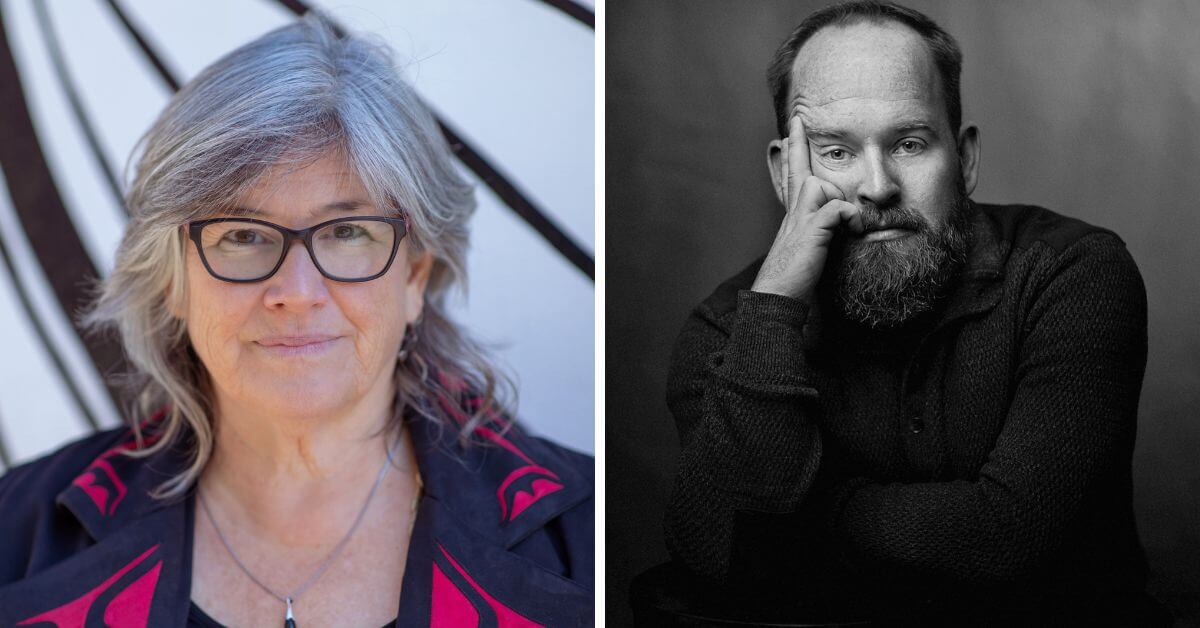
Matthew MacKenzie & Yvette Nolan: The Interview
One of the issues central to the play is the acknowledgment of how complex and nuanced Indigenous identity is in reality — as opposed to how mainstream discourse tends to lump them all together into a monolithic concept. That complexity is built into the production.
“I think that, you have an all-star cast of Indigenous actors, six Indigenous actors, and when you get them on stage, they don’t look the same. They don’t sound the same,” Matthew MacKenzie points out.
“I think that that is something that I’ve tried to capture with the characters in the play,” MacKenzie says, “regardless of different politics, different backgrounds, different connections to community, different connections to lived experience as an Indigenous person, and just tried to bring some conversations that I think happen often times in private with Indigenous folks, but seemingly, more and more, are being kind of had on social media in this sort of weird public forum by Indigenous people and non-Indigenous people. I had a really strong desire to bring these conversations back into a space where it’s Indigenous folks speaking with Indigenous folks.”
Characters
Monique, Nathan’s sister, is central to the story. In her grief, she’s visited by recurring dreams where the Owl figures prominently. The Owl is both a symbol of sudden change and a conduit of spirits with unfinished business.
“Monique raised her brother from the time that he was ten by herself,” explains Yvette Nolan. She was busy with the day to day tasks of raising her sibling, and keeping a roof over their heads. “One of the things that fell by the wayside was cultural teachings.”
After his death, Monique begins to realize he was connected to different kinds of Knowledge Keepers in the characters of Sarah and Eleanor. Monique is struck with the realization that she has work to do in that regard herself.
“There’s a reawakening in her of her teachings and her knowledge from her people, and a kind of a guilt about not having done that work with her brother, but she was so busy keeping them alive,” Nolan says.
“And, who are our teachers? That’s a big question in the play.”
Contemporary Indigenous people in North America, through the disruption of colonization, may have a variety of connections to their own heritage.
“We live in different places,” she says. The experience of urban Indigenous people is vastly different than someone who was raised on the land within their own culture.
As Matthew points out, the characters themselves represent some of that complexity.
“The young man who we don’t meet, who is killed, he was a climate activist, and Monique who is our main focus, she works in the oil patch up in Fort Mac, as does her partner Eddie,” MacKenzie explains.
“They are sort of on the opposite political side as her brother,” he adds. “But, Monique doesn’t regard herself as a political person.”
The stark realities of Nathan’s death highlight that division.
“They’re navigating talking about a death and a murder that is politicized, and is very easy politicized by media, but they are speaking from a place of not having been in or shared those politics, so that creates some major tension,” Matthew says.
“And then on the other side of things, is the fellow who’s been killed, is his mentor, Eleanor, who is a professor, a Métis professor, and his partner, who is also also a Master’s student, who is also a climate activist, Sarah,” he adds.
“Everyone in the play is Indigenous, but those two, the professor and Sarah, very much occupy that climate activist [space],” he says. “They’ve been branded the radical left by some,” he laughs.
“So you have these two groups if you will, some see them as being from different camps, and they have to navigate this person who they all equally loved. Their loss,” MacKenzie says.
“And Eleanor, his mentor, his professor, is exactly that kind of Indigenous person who has had to reassemble her culture from teachers,” Nolan says. “She talks about being at Standing Rock, she talks about Sioux elders, she kind of acquires teachings all over the place in order to find her way back to culture. And that was the teacher of the young man who was killed,” she continues.
“So that’s where he was getting his culture, so the question becomes about whose teachings are these? What culture is this?” she asks.
Piecing together your heritage from many sources is often a reality. “Which is kind of how a lot of Indigenous folks have to live,” Nolan adds.
“It’s all very complicated, and Eleanor, his teacher, his mentor, is an academic, so she’s also teaching it to students, she’s teaching it in an institution. She holds a position of power, of status,” she notes.
“And who gets to say what authentic is? What does that mean even?
” Yvette asks.
The Production
Strife had several workshops and community consultations in Amiskwacîwâskahikan (Edmonton), at the Jim Omeasoo Cultural Centre in Maskwacîs, Alberta and in Aanmitaagzi’s Big Medicine Studio in Lake Nipissing First Nation, Ontario. Punctuate! Theatre’s Resident Elder, Jo-Ann Saddleback, has also helped guide the project throughout its development.
“We had an interesting response from a woman who runs the Dreamspeakers community in Edmonton,” MacKenzie says. “[She said,] ‘Edmonton is an Indigenous community. I’m from an indigenous community’.”
“It’s very much an Edmonton based story,” Nolan notes. “The bridges are part of the story.” The low level and high level bridges in the city, and the North Saskatchewan River are all represented in the play. “Lots of references to Edmonton.”
At one of the text workshops back in November, the company used Toronto’s Citadel dance space. The various risers came to represents the different levels of Edmonton’s many bridges.
In the play, the stage itself takes on different dimensions. Some of the action takes place in the present, but some stems from Monique’s dreams and memories.
“It’s very much memory,” Nolan explains. “Monique, whose grappling with her brother’s death, slips in and out of memory.”
It means quick scene changes, and a space that expands and shatters, as she describes it. “The set is changing all the time to mimic the journey of her character.”
It makes the most of Tarragon’s space. “We’re in a tiny little space at Tarragon,” she says. “You can make a whole little world in there.”
Final Thoughts
It’s something of a challenge to condense the play to a short description online. MacKenzie points out that it goes in many varying directions.
“There’s humour and there’s hope in the play,” he says. “The focus on the play is not on the perpetrators of the crime, it’s on those who are left in the wake and have to put the pieces back together.”
While Monique’s situation is tragic, that’s not all there is to her as a character.
“Monique — she’s often comic relief,” Matthew says. “She’s hilarious.” He says that the workshop audiences have responded in kind.
“I think it’s a really important play, and it’s a really relevant play right now,” Nolan adds.
It’s a time, after all, when the question of Indigenous identity is often commented on and debated in the public forum, including Canada’s so-called two generation cutoff rule.
Legislation ignores the complicated web of identities that Indigenous people occupy in contemporary Canada.
“All of this is true at once,” Nolan says. It’s a question that concerns not only Indigenous people, as she points out. “It’s not just about Indigenous identity.” People whose identities are marginalized and underrepresented will also see themselves in the debate.
“[It’s about] identity, and who gets to say what they are,” she says.
“More makes more. There’s room for all of these stories.”
Performances
The World Premiere of Strife plays in Tarragon’s Extraspace from April 7 to 26, 2026, opening April 9 and 10.
Credits:
- Written by Matthew MacKenzie (he/him)
- Directed by Yvette Nolan (she/her) (Algonquin) (Women of the Fur Trade/Stratford)
- Resident Elder Jo-Ann Saddleback (she/her)
- Assistant Director Michaela Washburn (she/her/they)
- Set, Costume & Prop design by Jackie Chau (she/her)
- Assistant Costume & Prop design by Skye Grinde (they/them)
- Composition & Sound design by Richard Feren (he/him)
- Assistant Sound design by Daniel Tessy (he/him)
- Lighting design by Za Hughes (they/them)
- Produced by Andy Cohen (he/him)
- Production Management & Technical Direction by Trent Crosby (he/him)
- Stage management by May Nemat Allah (she/her) & Andraya Diogo (she/her)
- With performances by Jesse Gervais (he/him, “Eddy”) (Cree/Métis) (Tarragon debut, After the Fire/Punctuate!), Grace Lamarche (she/her, “Sarah”) (Cree/Métis) (Tarragon & Punctuate! debut, Women of the Fur Trade/Magnus Theatre), Tracey Nepinak (she/her, “Great Grey Owl”) (Cree) (Tarragon debut, Bears/Punctuate!), Valerie Planche (she/her/elle, “Eleanor”) (Métis) (Tarragon & Punctuate! debut, Where the Blood Mixes/Soulpepper), Michaela Washburn (she/her/they, “Andrea”) (Cree/Métis) (Guarded Girls/Tarragon, Takwahiminana/Punctuate!), Teneil Whiskeyjack (she/her, “Monique”) (Cree) (Tarragon debut, Bear Grease/LightningCloud).
Find show details and tickets [HERE].
Are you looking to promote an event? Have a news tip? Need to know the best events happening this weekend? Send us a note.
#LUDWIGVAN
Get the daily arts news straight to your inbox.