
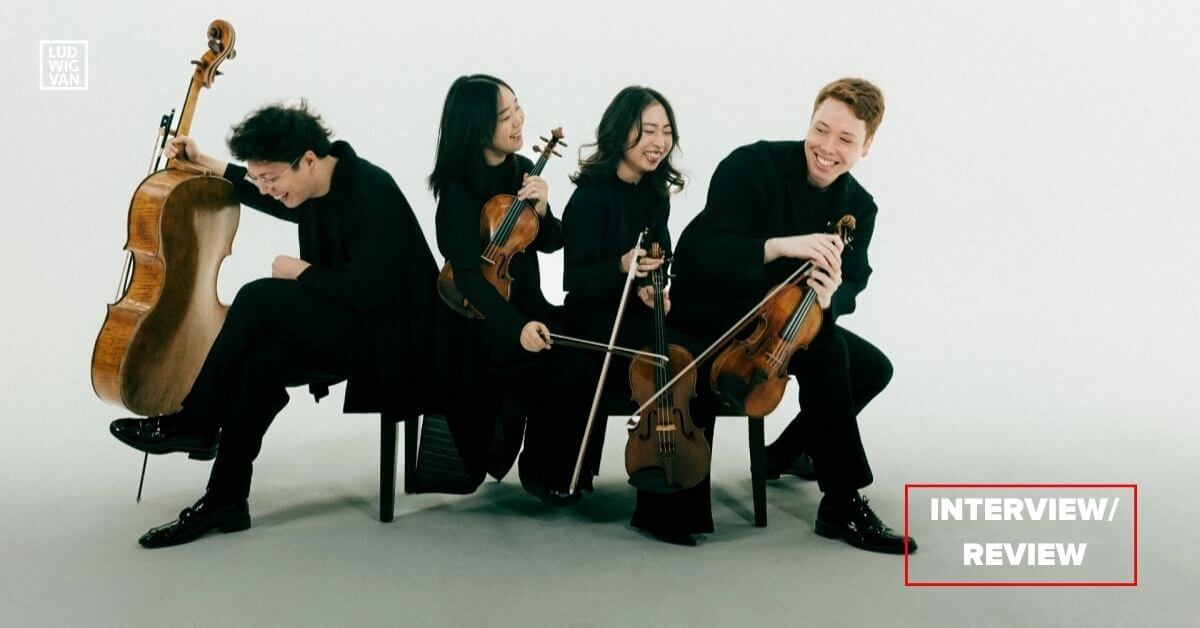
Music Toronto: The Leonkoro Quartet. Joseph Haydn’s String Quartet in D, Op. 20, No. 4; Henriette Bosmans’s String Quartet; Franz Schubert’s Death and the Maiden (String Quartet in D Minor, D. 810). March 5, 2026, at the Jane Mallett Theatre, St. Lawrence Centre for the Arts.
The young award-winning German ensemble The Leonkoro Quartet acquitted themselves exceedingly well, performing a varied selection of chamber pieces from the 18th, 19th and 20th centuries — Haydn, Schubert and the lesser-known Bosmans — with style and ardor. It was a triumphal debut for the group in Toronto.
Who are the Leonkoro Quartet?
The quartet, whose name means “lionheart” in Esperanto, are a brilliant group who have garnered an astonishing number of accolades in less than a decade. Formed in Berlin in 2019, they announced themselves to the world when they won the International String Quartet Competition plus nine special prizes at London’s Wigmore Hall in 2022.
Since then, they have won first prize at the Concours International de Quatuor à Bordeaux, the Young Talent Award of the Concertgebouw Amsterdam and the prestigious Borletti-Buitoni Trust Award, were chosen to be part of the BBC Radio 3 New Generation Artists 2022-2024 program and have recently been designated as performers and curators for a cycle called string. at Austria’s Wiener Konzerthaus.
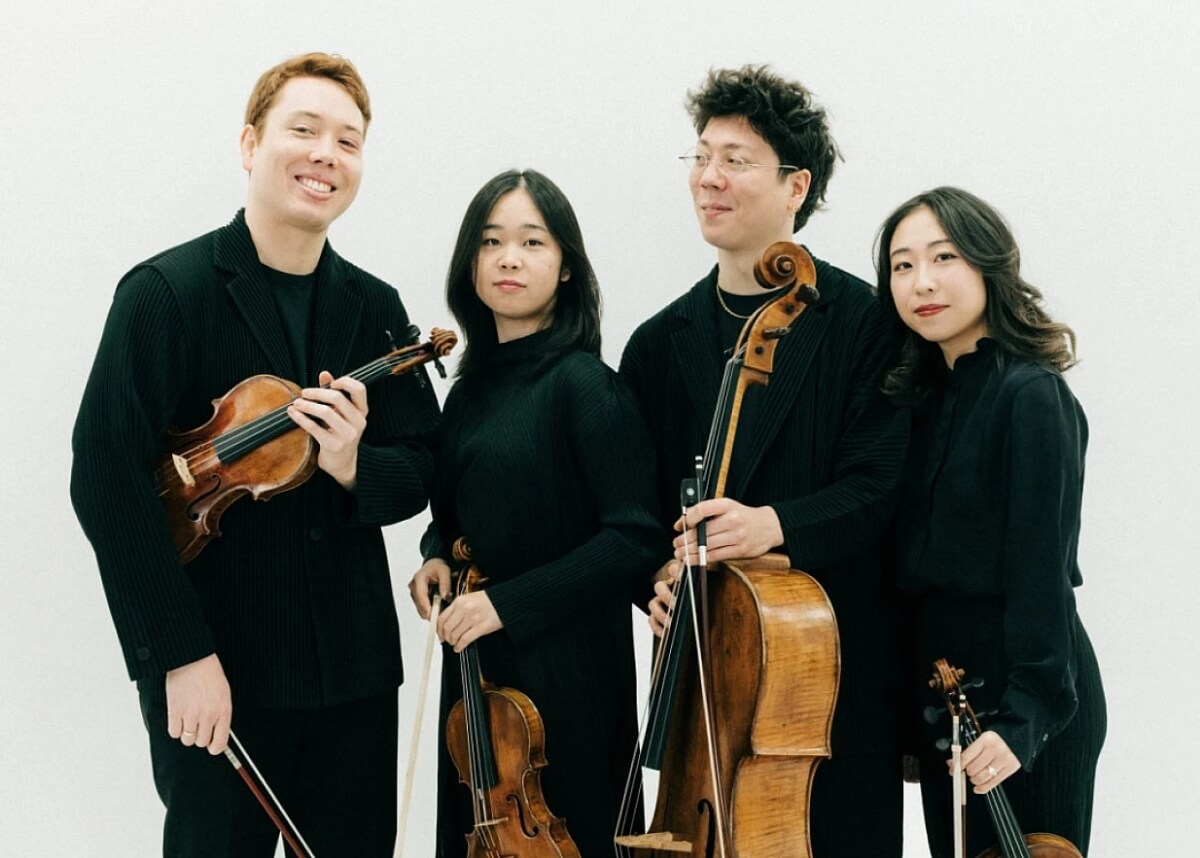
The Leonkoro Quartet is made up of brothers Jonathan and Lukas Schwarz, who play respectively first violin and cello, violist Mayu Konoe, and second violinist Emiri Kakiuchi. Their unique name derives from a European classic children’s fantasy novel The Brothers Leonkoro by Swedish author Astrid Lindgren — most famous for Pippi Longstocking — in which two boys fight dragons and tyrants, with a true do or die attitude.
In an exclusive interview with Ludwig Van, cellist Lukas Schwarz recalled that, “The Brothers Leonkoro particularly touched Jonathan and me when we were kids. Finding a name for an ensemble was really difficult. We thought about the quartet and that it was a journey we would all take together. And in the Lindgren book, the brothers went on many journeys. It’s really hard to find a name that doesn’t sound like a cliché or isn’t serious enough or is too serious.”
What’s their style?
The quartet is garnering a reputation for bright, thoughtful accounts of pieces ranging from Haydn and Beethoven to the Schoenberg influenced Second Viennese School of composers.
Their new CD Out of Vienna was recently praised in The Guardian for its “blazing exploration” of its musical selections, going on to state that it was “a fiercely alert account of Berg, Webern and Schulhoff — beautifully capturing prewar Vienna’s musical fault lines.”
Lukas Schwarz says, “Our style is very much influenced by quartets like the Alban Berg and the Artemis Quartets who are also our mentors. We try to achieve a warmth in our sound that some people might call old fashioned. We are aiming for clearness and youthfulness but also for earthiness and a hugging sound that is intimate.”
Perhaps that’s the secret recipe for the success of the quartet. Though they are virtuosos who play with verve and distinction in a wide range of styles, the Leonkoro Quartet strive for a human connection with their audiences. Noticing that this Ludwig Van correspondent has a record player at home — we Zoomed — Lukas praised analog sound for its depth and warmth. This is a group that misses very little in its urge to communicate their passion for music.
How did they adjust with the recent addition of a new violinist?
The Leonkoros embody the wisdom of remaining serious students while playing startlingly original interpretations of important chamber work. In the past few months, the original second violinist for the group Amelie Wallner left and has been replaced by Emiri Kakiuchi.
Lukas Schwarz was clear about how that process was handled. “We consulted many of our mentors but also our colleagues in other string quartets because we will not be the last string quartet who will have changes. It’s an emotional challenge. With our former second violinist we had won competitions together. So, it’s not an easy thing to part from that. It’s a big change in the group dynamic if one person leaves because you not only have a relationship with all four people, but you also have a series of two person connections.
“A quartet has to fit together in a way that can be productive and positive. It was a really big challenge but we’re extremely happy with our new violinist Emiri Kakiuchi. We tried other violinists but with Emiri, we just knew she was right for the group. She really knows how we are playing and fitted in well but still has her own touch that has enhanced what we are doing.”

The Concert
The performance began surprisingly for those of us who have been watching the Leonkoro Quartet in Europe or on YouTube. The Quartet are famous and even controversial for having everyone except the cellist playing standing up.
Lukas explains that, “You have a different kind of freedom in your movement. It’s better for your back to stand than to sit with the violin or the viola. You’re not dependent on the chairs in the venue. It’s often hard to find four chairs that don’t squeak and that are at all the right height. I love the dynamic of the standing quartet — the ability to turn left and right to see each other.”
However, for their first appearance in Toronto, the Quartet performed sitting down. It seems that a decision was made to try something different on this North American tour. Says Lukas, “I sometimes see standing quartets where I think maybe they should try sitting and I sometimes see sitting quartets where I think maybe they should try standing. That’s why we are at the moment trying out playing seated. Maybe it will make us more grounded.”
Seated and with a new second violinist, the Leonkoro Quartet were still delightful, though a bit more restrained. Haydn’s String Quartet in D, Op. 20, No. 4 is an extraordinary work, filled with melody and enjoyable variations on the piece’s main themes. It’s a great composition and the Quartet handled it very well with violinist Jonathan Schwarz leading the group through his virtuoso playing.
They followed the Haydn with Henriette Bosmans’s String Quartet, which is a wistful, haunting work. Lukas points out that Bosmans was a Dutch composer and the group’s violist Mayu Konoe was born in the Netherlands.
“She’s an amazing composer. Her piece is in three movements and is very influenced by French Impressionism like Debussy and Ravel. It’s really good music, which was forbidden during the Nazi regime in Germany.” (Bosmans was half-Jewish by birth.) “I think it’s really important to bring this music back to the stage.”
The Leonkoro Quartet wrapped their debut Toronto concert with one of chamber music’s acknowledged masterpieces, Schubert’s Death and the Maiden. Here, the Quartet was at its best, playing with dynamism and youthful power. At times, Jonathan Schwarz could be seen rising from his chair as he played sublime parts of Death’s seductive voicings to the Maiden.
While all of the players truly made this a confident ensemble performance, it is a piece that calls on the cello to manifest Schubert’s most glorious passages. Lukas Schwarz was more than up for the task as the Leonkoro Quartet ended its performance in a bravura style.
One can only hope that this entrancing debut will bring on an encore appearance in the not-too-distant future for the Leonkoro Quartet in Toronto.
By Marc Glassman for Ludwig-Van.
Are you looking to promote an event? Have a news tip? Need to know the best events happening this weekend? Send us a note.
#LUDWIGVAN
Get the daily arts news straight to your inbox.