
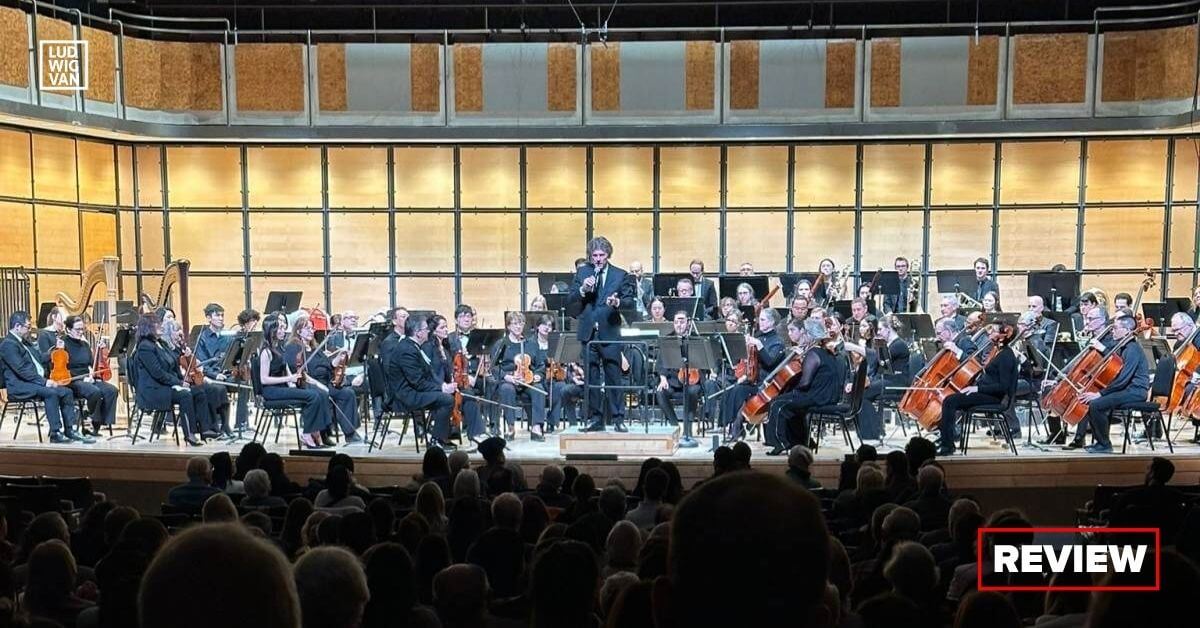
Orchestra Toronto: Exploration of the Soul: Tchaikovsky and Adler. Adler (world premiere): Four Attributes of the Soul; Tchaikovsky: Manfred Symphony, op. 58. Michael Newnham, conductor; Lauren Margison, Soprano; Scott Rumble, Tenor; Modern Sound Collective, Choir. March 1, 2026, George Weston Recital Hall.
It is rare that a community orchestra gets the honour of performing a world premiere. Orchestra Toronto did just that on Sunday afternoon, and paired it with a rare gem in the classical repertoire.

Adler: World Premiere
Orchestra Toronto has a special connection with Russian-Canadian composer Yefim Adler. The composer’s son Serge is the orchestra’s timpanist and principal percussion.
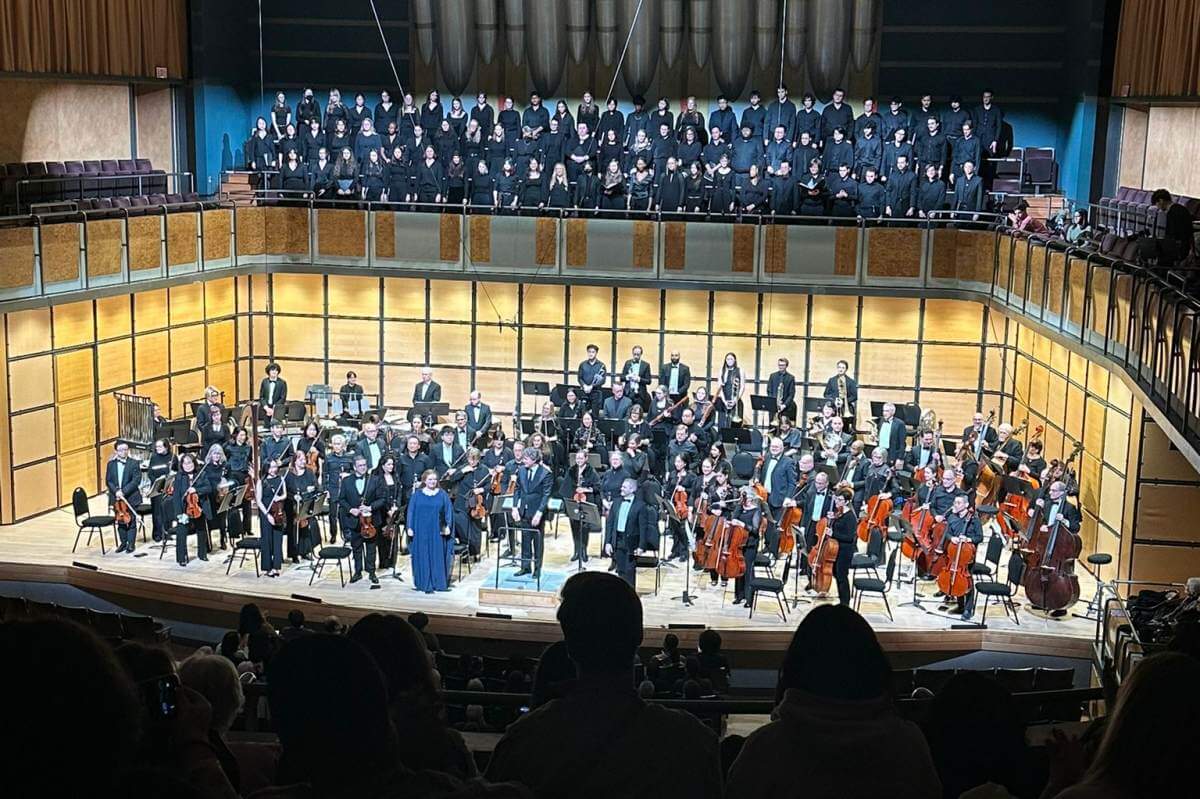
Four Attributes of the Soul was Adler’s final work. Unfortunately, Adler passed away in 2021 and did not live to see its premiere, when plans to perform it a few years ago were sidelined by the pandemic. It was especially touching that Adler’s family was in the audience for Sunday’s premiere.
Although just 25 minutes long, Four Attributes of the Soul is a massive piece scored for a large choir, along with soprano and tenor solos. The four movements, sung primarily in Hebrew with some English, are bound by the theme of love.
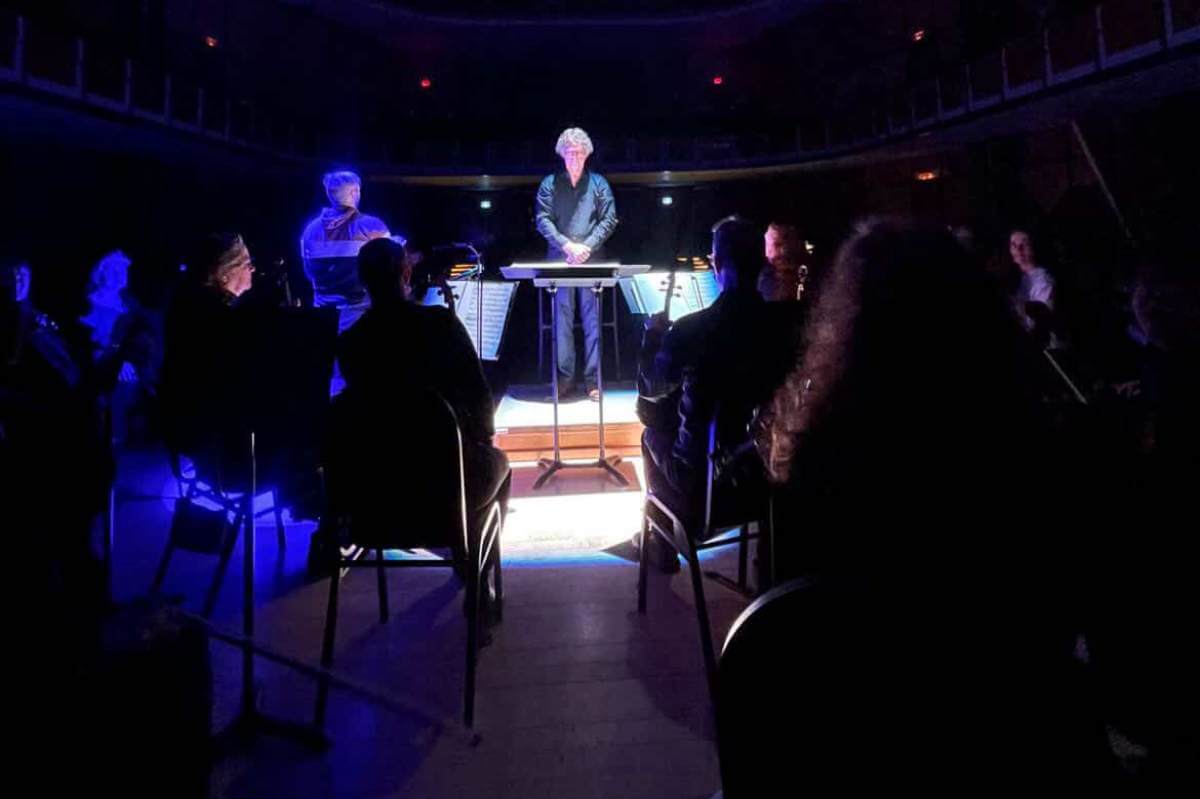
The first movement “Poetical” opened dramatically with the hall in complete darkness. A single light shone on the tenor in his opening Hebrew chant, with the gradual illumination of the soprano and choir as their parts emerged. Together, the purple aura from the lighting and the simple, a cappella vocals created an ethereal, supernatural effect.
The choir was the work’s centrepiece. Its part alternated between humming, hushed spoken words and a cappella voices, and it carried the most joyful melodies. The chorus part was expertly prepared by Modern Sound Collective, a by-youth-for-youth organization dedicated to contemporary choral music.
Lauren Margison lent her crystalline tone to the soprano solos, whereas tenor Scott Rumble had a more sizeable part that required him to sometimes sing almost in the baritone range. The soloists, however, strained to be heard amidst the very busy orchestration. The imbalance between the orchestra and vocal solos unfortunately could not be saved even by the fine acoustics of George Weston Recital Hall.
The orchestration was rich and the percussion was especially colourful. The piece ended as dramatically as it began, with church bells tolling and fading into the distance.
Tchaikovsky: Manfred Symphony
The Russian connection continued in the second half with Tchaikovsky’s Manfred Symphony, inspired by Lord Byron’s namesake work. The four movements depict scenes from the poem, mirroring Manfred’s psychological transformation. This piece is often overshadowed by Tchaikovsky’s more famous symphonies, and rarely performed because of its length and heavy orchestration.
The first movement had a recurring dark, brooding theme that represented Manfred’s tortured identity. Despite the turbulent textures, lyrical themes emerged that bore unmistakable resemblances to the composer’s Romeo and Juliet. The thundering drums at the end of the movement gave way to a whimsical and spirited second movement that evoked water spirits. There were shining moments from the flutes, and the movement concluded with shimmering strings.
The grandest and most lush melodies of Tchaikovsky emerged in the third movement, which featured a fine oboe solo. The pastoral and almost joyful music seemed to symbolize the harmonious world in Manfred’s distant past, one he could not return to because of his guilt and existential torment.
The very energetic final movement was a reprisal of themes from the first movement, but from the chaos a theme of lightness and hope emerged. The almost hymnal ending with two harps signified forgiveness and Manfred’s redemption.
Final Thoughts
Music director Michael Newnham deftly led the responsive orchestra through the emotional work like a drama unfolding. There was especially fine playing from the winds, harp and percussion.
Newnham and the volunteer musicians should also be applauded for tackling two very ambitious works, both of which deserve to be heard more often.
Are you looking to promote an event? Have a news tip? Need to know the best events happening this weekend? Send us a note.
#LUDWIGVAN
Get the daily arts news straight to your inbox.