
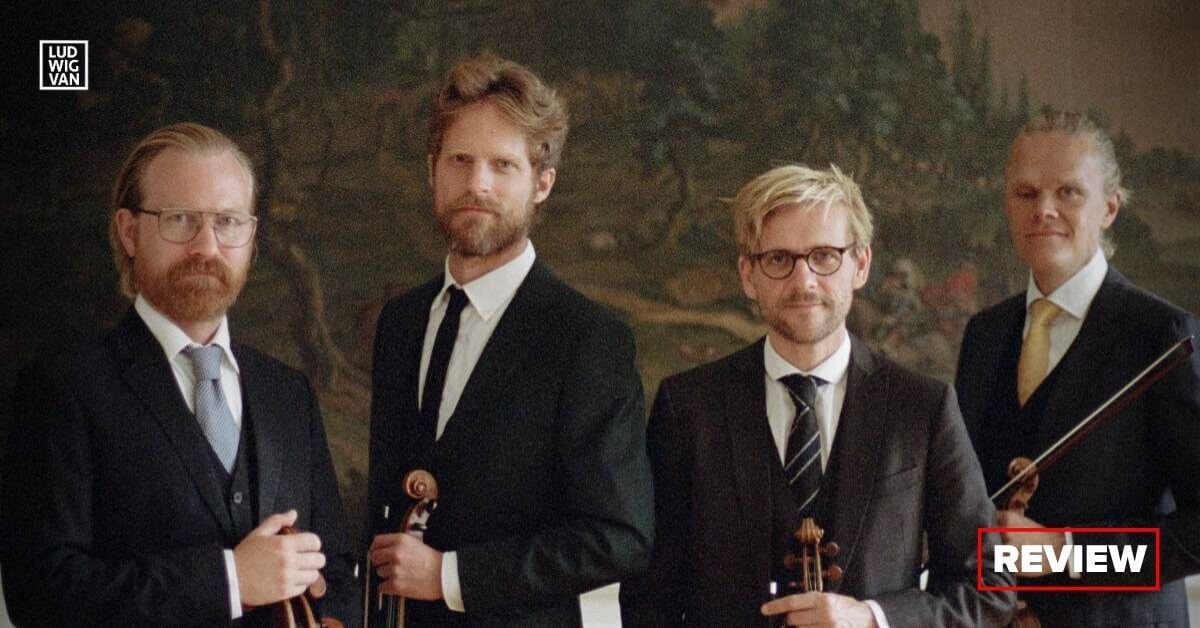
Royal Conservatory of Music: The Danish Quartet. Alfred Schnittke: String Quartet No. 2; Jonny Greenwood: Suite from There Will Be Blood; Maurice Ravel: String Quartet in F Major. February 28, 2026, Koerner Hall.
For their third performance in Koerner, the Danish Quartet’s gentle hello to start the evening was an honest one: Asbjørn Nørgaard, violist, told us that the first half will be of ‘… good music, but not beautiful music.’
Schnittke: String Quartet No. 2
Opening the evening, the quartet chose Schnittke’s String Quartet No. 2. Schnittke distilled the raw emotion of death, and the irreversible loss of close friend Larissa Shepitko, into an extreme lamentation.
Alternating between the ghostly remains of reality that breaks apart — an old chant, shadows and fragments of familiar melodies, in what felt like static contemplation — and incredible outbursts of anguish in angular, jagged, furious notes, the work requires true virtuosity and musical mastery.
Schnittke does not linger between these extremes of emotion; his quicksilver mercurial changes between sections require careful pacing and physical, technical dedication. The Danish Quartet traded fragments of melodies between one another with precision, and flipped from one emotion to another with a true sense of subito.
The beginning of the second movement, agitato, was technically brilliant; each of the four musicians start a rhythmic ostinato unique to them — in groups of 8s, 7s, 6s and 5s. The quartet’s meticulousness created a true explosiveness from these rhythmic juxtapositions.
For the rest of the movement, the cacophony of outbursts continued, never in unison, but in true synchronicity. The emotions are amplified through extreme dynamic contrast; the Danish Quartet’s specialty — incredible control and intensity in the piano dynamics — set the hall at its furthest edge, where silence and sound still exist, yet with the finest difference. All ears were on that edge of sound and silence, masterfully created by the quartet.
The third movement, starting with apparitions of sounds, bowed sul tasto in triple piano, was the most hauntingly beautiful. In rhythmic unison for the first half of the movement, the quartet members created the palest sound cluster, circling around C and D.
The apparition slowly turned into an all-consuming grief; following the cue of the first violin in sudden double forte, each member unleashed themselves from the lateral rhythmic unison, soaring and crashing through angular emotional eruption, reaching a true triple forte. The tension between such repetition of convergence and divergence creates great emotional impact, and being able to not only hear, but also see and feel the extreme physicality of the Danish Quartet, Schnittke’s score — carefully notated in its mathematical precision — became a real intensity, a living phenomenon.
It is incredible to experience how many shades of anguish and sadness there can be between life and death, just like the infinite number of possibilities between zero and one. Schnittke oscillates between near blinding light and the darkest dark in his music, and the fiendish technical demands of this quartet no. 2 makes it a rare work to hear live. The first 20 or so minutes of the evening with the Danish Quartet affirmed the importance of live performances — it wasn’t just about the sound, but also of the group’s physical presence, resonating in real space and time, creating those chills down the spine.

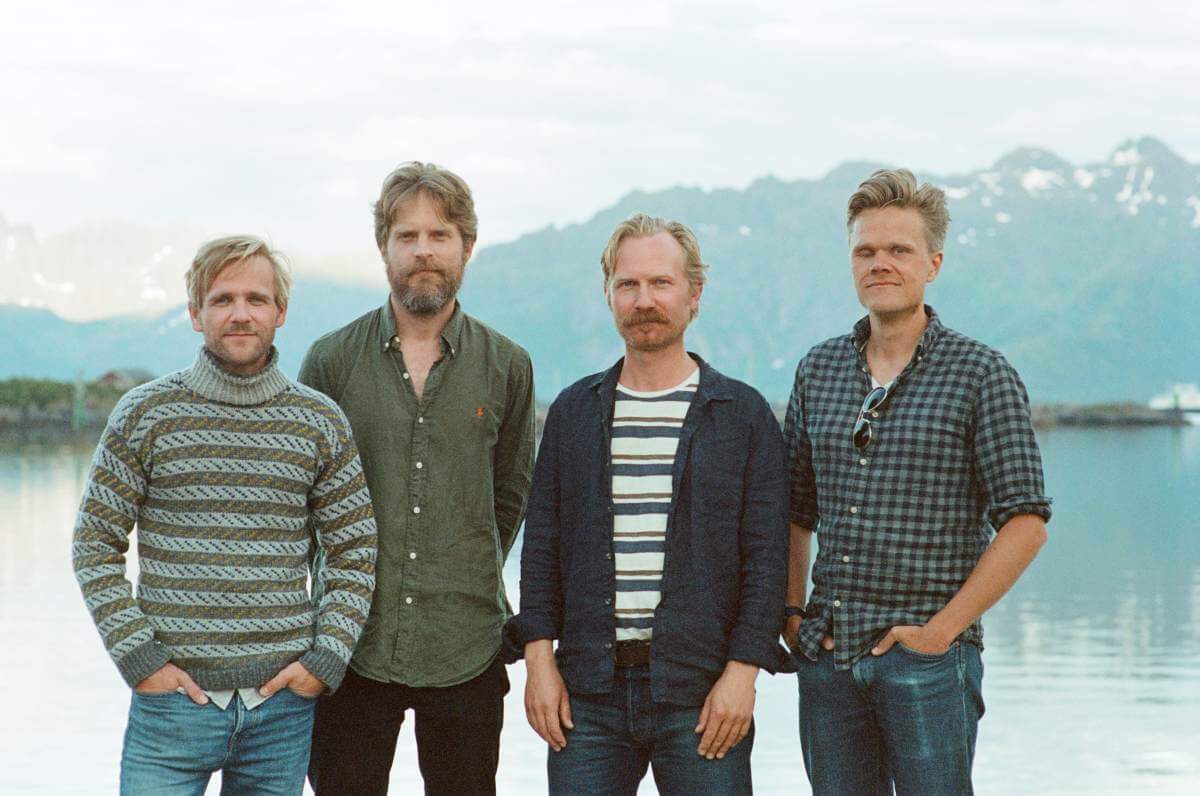
Jonny Greenwood: There Will Be Blood
The movie There Will Be Blood (2007), starring Daniel Day-Lewis, is a masterpiece, earning Day-Lewis an Oscar, and a nomination for Best Picture for director Paul Thomas Anderson. Jonny Greenwood, well-known for his expertise in sound design and composition chops, honed from his involvement with Radiohead and beyond, worked extra closely with Anderson to create music that represents tension, the brooding darkness of capitalism and its human cost, and unstoppable human hope. Opening the suite, Oil soared with wide openness, with its gentle cello melody supported by rhythmic tension from the upper strings.
The open resonance of HW/Hope of New Field, resonant of Copland, was played with perfect intonation and generous phrasing. The Prospectors Quartet was especially poignant, with judicious use of vibrato and soaring straight tones, supported by quiet, yet richly resonant supporting lines.
Similar to the Schnittke, many harmonic tensions emerge and diverge from a singular centric note, spreading wide, then converging again into a singular point, which the Danish Quartet executed with ease and grace.
Ravel: String Quartet in F Major
The second half, Ravel’s String Quartet in F major, was presented in hyper-real colour, with a time flow that was flexible and breathing, contrasting muted, nearly-monochromatic stillness with explosions of tightly controlled angularity.
Most notable was the quartet’s organic flex of time; never rushing ahead, the opening gesture was lush, at ease, and generous in its unsentimental beauty. The second movement’s vitality, in little fireworks of pizzicatos and fibrillating trills, not only soared upward, but resonated the hall in the widest sense — every inch of the space was filled with sound, and its consequent silences.
So much spaciousness and sense of calm beauty in this movement is rare, and when it happens, it is truly magical. Nørgaard’s viola solo opening of the third movement was tender, gliding through time as the quartet kept it flowing, never stopping to drench it in sentimentality.
The fourth movement’s forward driving momentum, reserved till now, was a lovely surprise. As the quartet carefully managed their momentum to create ample space for bloom and decay, this first real moment of brightly spirited abandonment and anticipation created a real brilliance to the end of the program.
The evening concluded with a gentle goodbye from the quartet, a Faroe Island song sung at the end of the dances. Well-known for their folksong arrangements, the encore was crystalline in intonation and unified colour changes, bringing out the melancholic, yet sincere farewell filled with good wishes, till the next time.

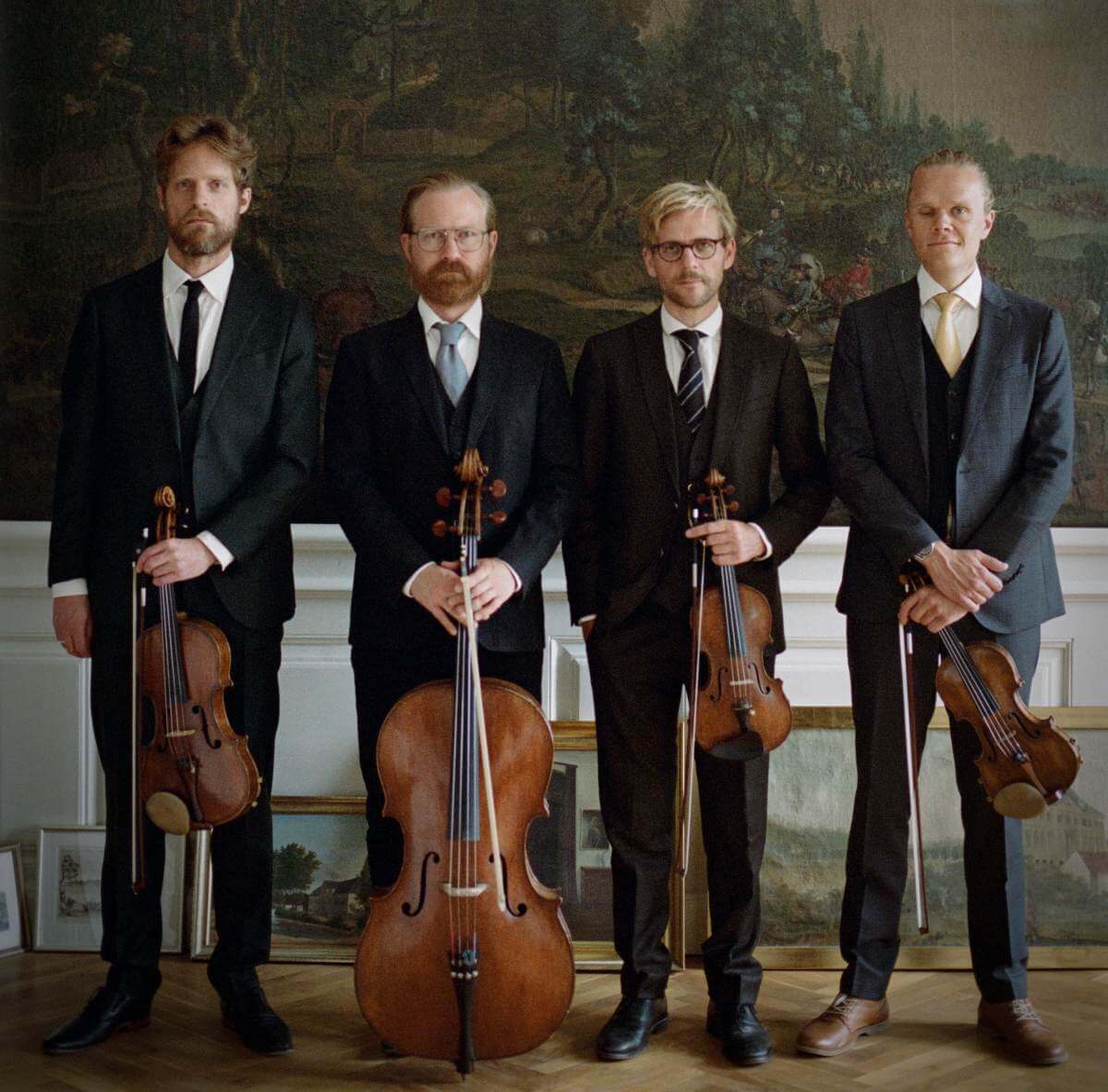
Final Thoughts
The Danish Quartet excels in creating extreme dynamics and ranges, especially at the low end. Similar to the event horizon, where time, from our own perspective, is no longer relevant at the edge of a black hole, this quartet is able to create that same magical near-stillness.
The judicious use of vibrato and straight tones, laser-sharp accurate harmonics and articulations, gives their performances a clarity that is so difficult to achieve. The pacing, never rushed, always centred and generous, is a welcome trait in today’s world where everyone is madly dashing ahead in singular, linear fashion.
However, the true abandonment, wild, ugly, is absent. It nearly gets there, but it never crosses into a true madness. No, it isn’t a requirement, and perhaps that’s a quality that the current rendition of classical music does not appreciate. After all, each ensemble has their own signature sound; and precision, and an extreme range of expression without vulgarity, are the qualities that distinguish the Danish Quartet from others — one cannot be all things to all people.
The fact they are willing to bring less-familiar repertoire to the masses, including fiendishly difficult works by Schnittke, Per Nørgård, and Hans Abrahamsen, along with new folk arrangements, is a huge contribution to the quartet world, where we tend to be happy with the top 100 canonic works. And, the evening was full of beauty, rarely executed with such finesse.
It was a true pleasure, and it leaves curiosity and hope for their next visit — where would they take us?
We would trust them, with zero doubt, to take us wherever they’ve planned. Because the Danish Quartet’s magic is with the expression and exploration of the widest palette of dynamics and emotion.
To go beyond the confines of our daily lives like this, is terrifying and wonderful.
Are you looking to promote an event? Have a news tip? Need to know the best events happening this weekend? Send us a note.
#LUDWIGVAN
Get the daily arts news straight to your inbox.