
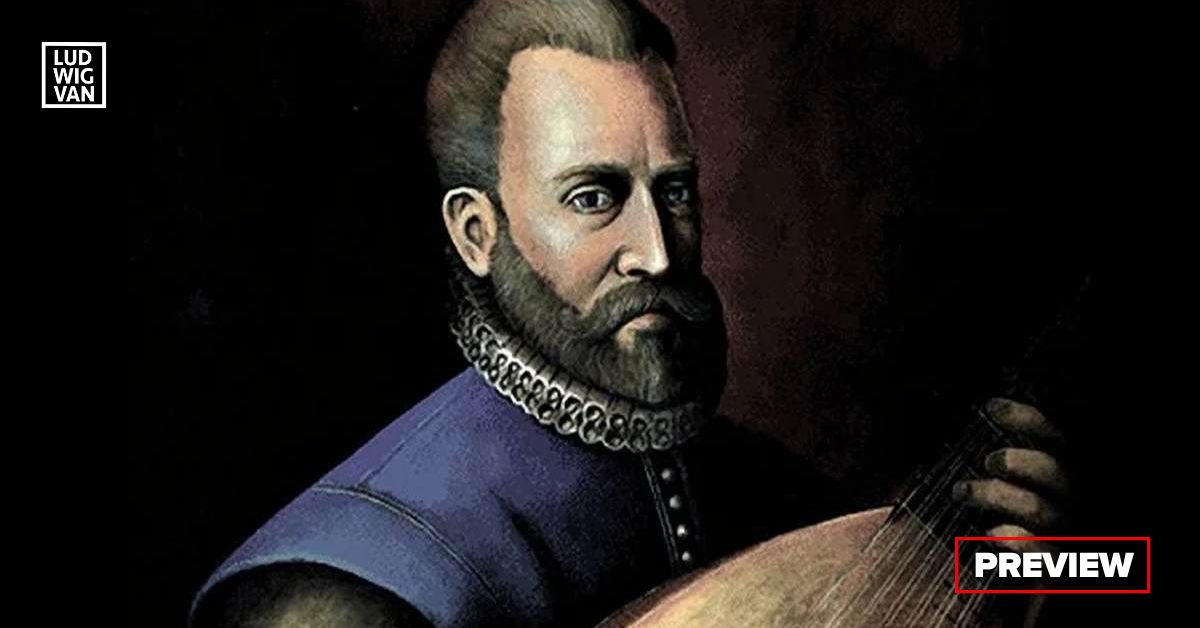
Composer and lutenist John Dowland died in London, and was buried on February 20, 1626. To celebrate his legacy of music, Diapente Renaissance Vocal Quintet and violist Felix Deak present a concert titled Time’s Eldest Son on February 28.
The program presents music that illustrates his life, including travels across Europe. He was a musical celebrity of the Renaissance, and the most popular song writer of his day.
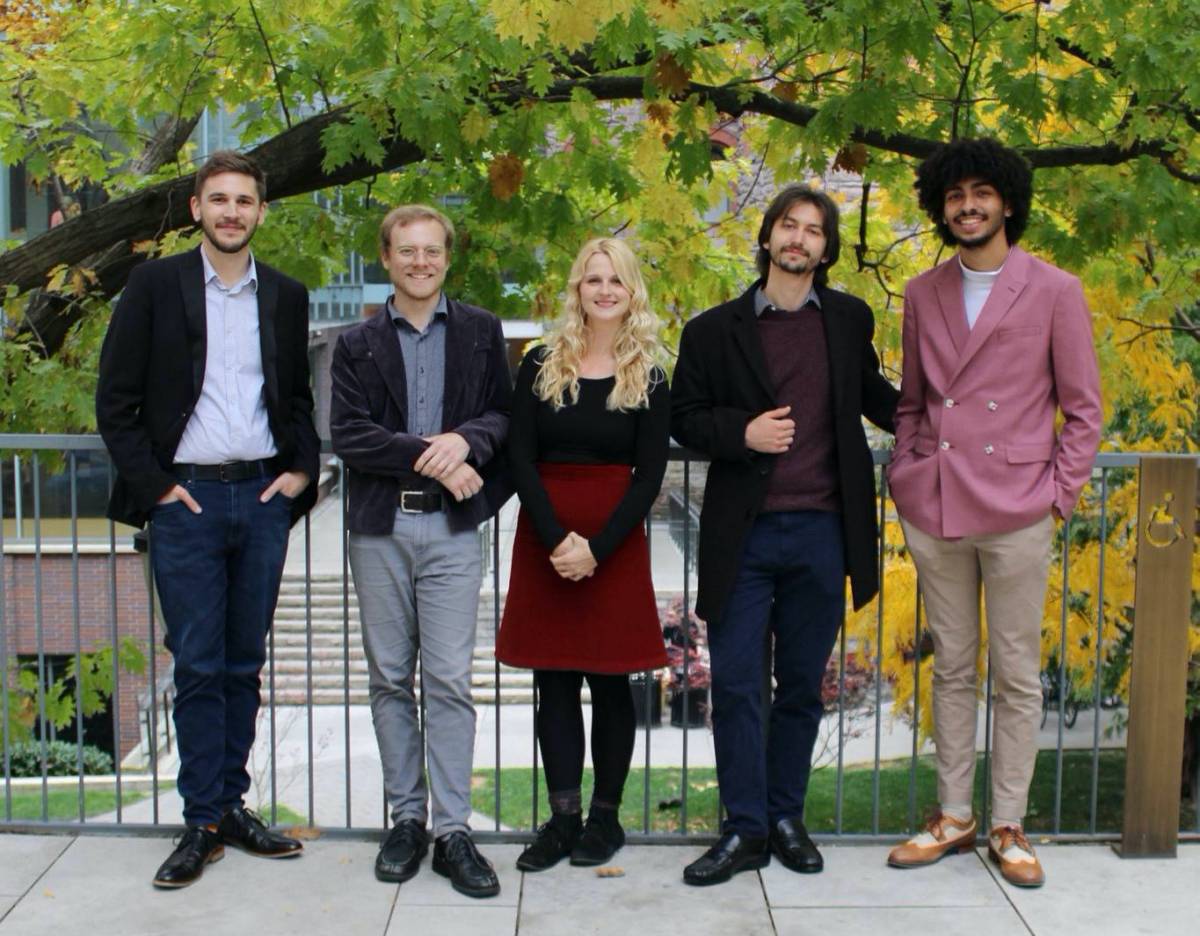
Diapente Renaissance Vocal Quintet is: Jane Fingler, soprano; Peter Koniers, countertenor; Jonathan Stuchbery, tenor and plucked strings; Alexander Cappellazzo, tenor, and Martin Gomes, bass. They’ll perform with guest artist Felix Deak on viol da gamba and treble viol.

John Dowland
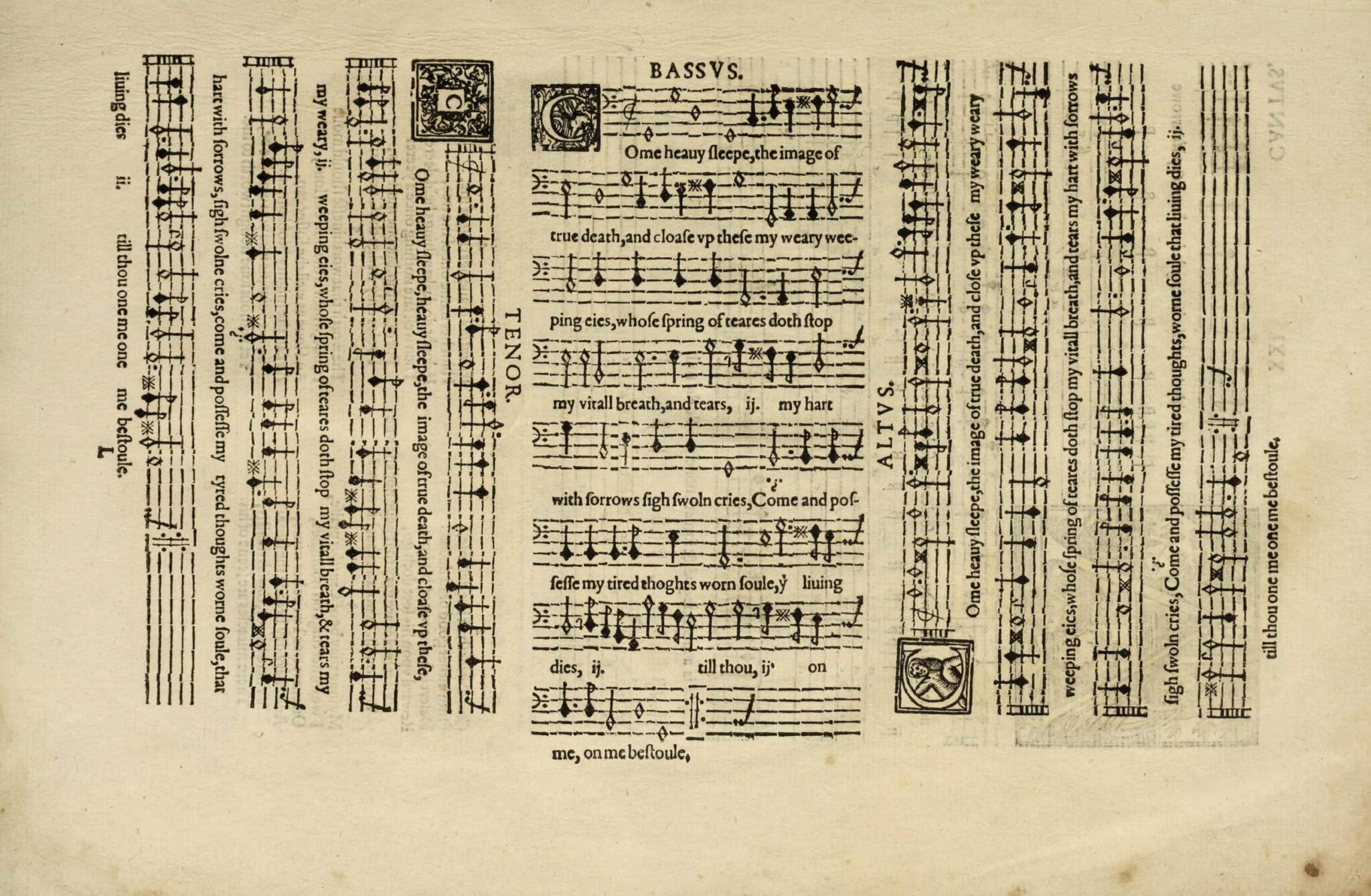
English composer, lutenist, and singer John Dowland (c. 1563 to 1626) had an active career and was the most popular published composer of secular songs of his time. Today, he’s known largely as the composer of melancholic Renaissance songs such as “Come, heavy sleepe”, and “I saw my Lady weepe”, and a favourite of early music ensembles and lutenists in particular.
Not much is known about his early life, although some scholars believe he was born near Dublin. He traveled to Paris and worked in the French court in his late teens, returning to England in 1584 to marry. He applied for the post of lutenist at the court of Queen Elizabeth I, but was unsuccessful, something he attributed to his conversion to Catholicism. From 1594 to 1595, he traveled to Germany, where he found patrons in the Duke of Brunswick and the Landgrave of Hesse, and then went on to Italy.
He published his First Book of Songs in London in 1597, and he’d continue to publish his music in London while working at the court of Christian IV of Denmark (1598 to 1606). He was well paid by the King, but managed to get himself dismissed by 1606 for offences that included frequent and over-long trips back to England. After his dismissal, he got a post in the court of King James I of England as a lutenist in 1612.
His published works include a second and third book of songs (1600 and 1603), and in 1604, perhaps his most famous work today, Lachrimae or Seven Teares. He’d follow with Micrologus (1609), a translation from a German original, a Variety of Lute-Lessons (1610), A Musicall Banquet (1610), and A Pilgrimes Solace (1612). Few pieces remain from his time in the English court.
The sadness he expressed in his songs was rare in his time, and he was noted as a gifted lutenist. While some scholars have suggested it was an attempt to establish his own style, his own writings and letters suggest an underlying bitterness and frustration at what he saw as unrealized ambition, perhaps due to his religion. He also became embroiled in spying and other political intrigues during his time in Europe, which seems to have affected him emotionally.

The Concert
The program for the concert includes songs from his three books of songs as well as from A Pilgrim’s Solace, including “Can she excuse” and “Now, O now I needs must part”, along with lesser known works such as “Thou mightie God” and “It was a time when silly bees could speak”.
The selections from across his career include solo songs, duets, lute solos, a cappella works, and pieces performed with five voices, lute, and voila da gamba, showcasing the talents of each member of Diapente, along with guest viol player Felix Déak.
Music from Dowland’s contemporaries are also included in the program, including those who inspired and/or imitated him, such as Luca Marenzio (1553 or 1554 – 1599), Charles Tessier (c.1550 – 1604), Thomas Morley (1557 – 1602), Thomas Tomkins (1572 – 1656), Claude Le Jeune (1528 – 1600), Guillaume Tessier (1500 – 1582), and Alessandro Orologio (1551 – 1633).
- Find show details and tickets [HERE].
Are you looking to promote an event? Have a news tip? Need to know the best events happening this weekend? Send us a note.
#LUDWIGVAN
Get the daily arts news straight to your inbox.