
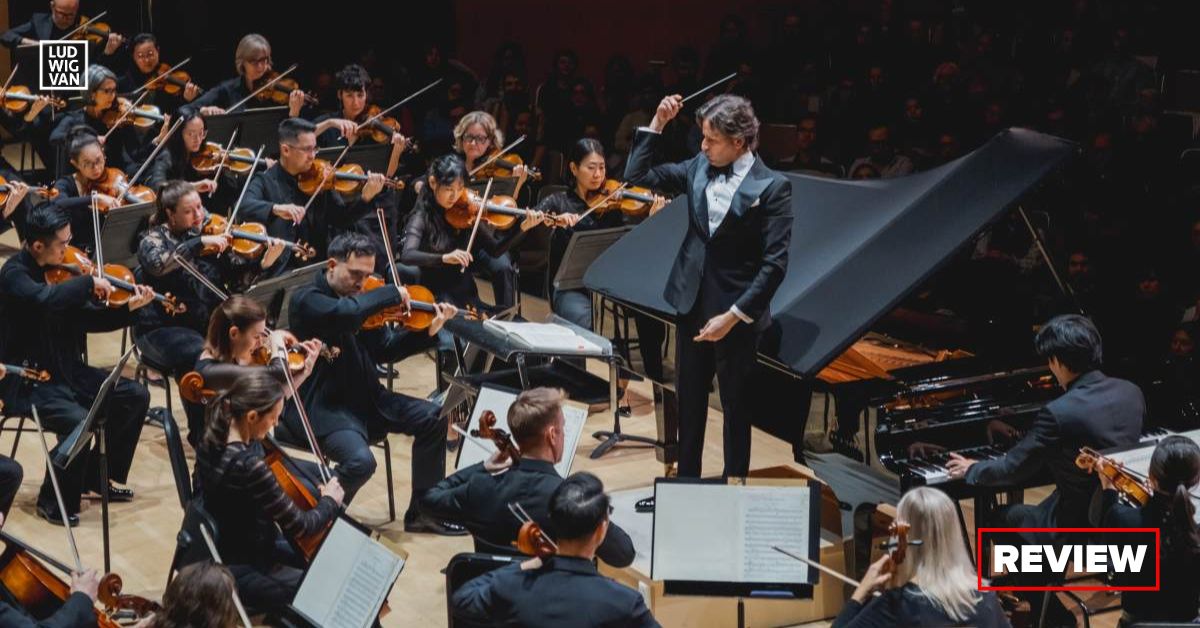
Toronto Symphony Orchestra: Kelly-Marie Murphy, Curiosity, Genius, and the Search for Petula Clark (TSO Commission); Rachmaninoff, Piano Concerto No. 2; Prokofiev, Symphony No. 5. Gustavo Gimeno, conductor; Bruce Liu, piano (2025/26 TSO Spotlight Artist). January 22, 2026, Roy Thomson Hall.
It was a frigid night in Toronto; heavily-bundled patrons trickled into Roy Thomson Hall with warm excitement for the TSO and pianist Bruce Liu performing the same program for the first leg of the TSO’s Europe Tour that starts this week.

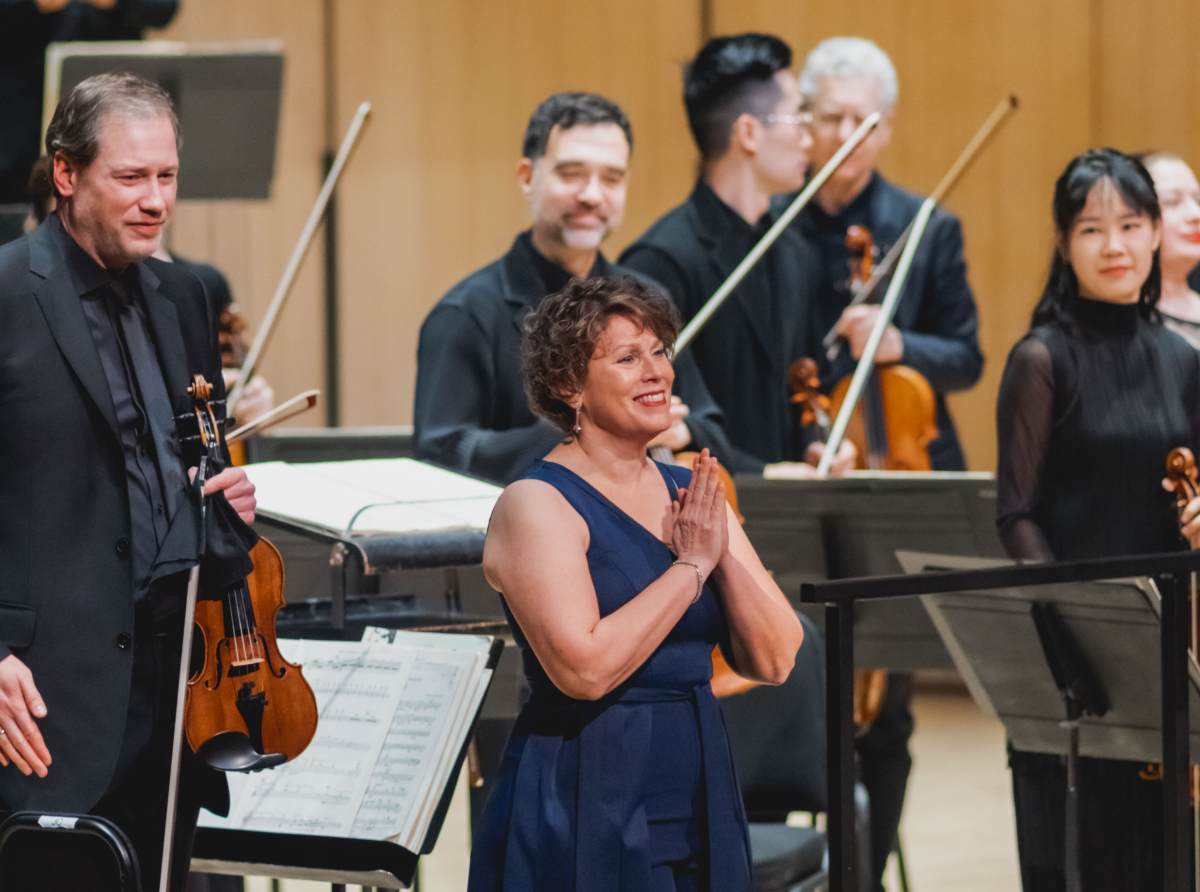
Curiosity, Genius, and the Search for Petula Clark
Opening the evening was “Curiosity, Genuis, and the Search for Petula Clark,” a piece with quintessential Canadian connections. Commissioned by the TSO in 2017 to celebrate Glenn Gould’s 88th birthday and the 70th anniversary of his debut performance with the TSO, this piece was inspired by Glenn Gould’s fascination with chasing radio stations while driving in Northern Ontario and catching snippets of a pop song he was particularly fond of: Petula Clark’s “Who Am I?”
Canadian composer Kelly-Marie Murphy said in the program notes that the elements of energy, curiosity, reflection and satisfaction are woven throughout the piece. The music was chaotic at times, as if to mirror Gould’s mind that is continually turning and seeking without rest.
Music director Gustavo Gimeno drew clarity from each section despite the music’s busy, multi-layered textures. The whimsical strings showed great agility, frequently interlocking with the woodwinds to create intricate patterns. The brass provided occasional humorous accents to wink at Gould’s quirkiness. The star of the piece was the percussion, played with rhythmic energy and sparkled with vibrant colours.
The orchestra aptly captured the spirit of Glenn Gould’s eccentric brilliance, intellectual energy and playful curiosity. It was an especially nice touch to have Murphy on stage at the end for a well-deserved standing ovation.

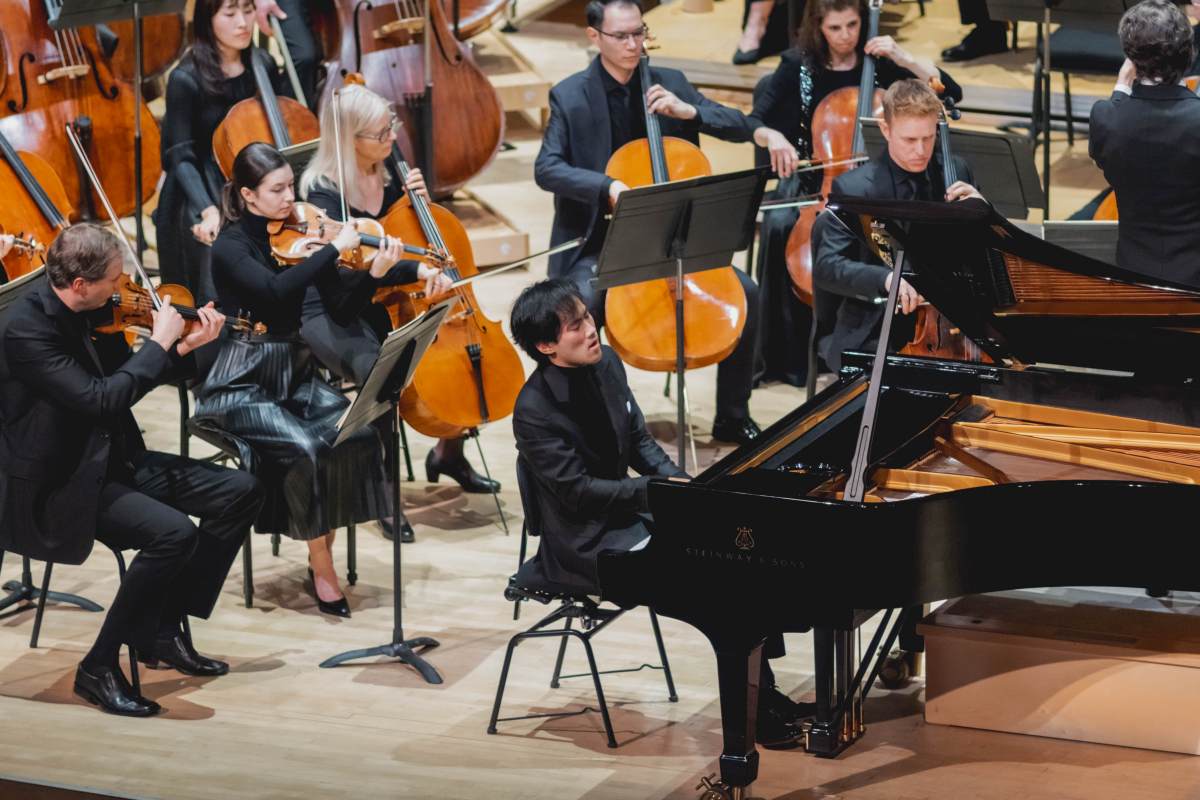
Bruce Liu and Rachmaninoff Piano Concerto No. 2 in C minor
The evening’s highlight was no doubt Sergei Rachmaninoff’s Piano Concerto No. 2 in C minor. Since its premiere in 1901 with the composer himself as the soloist, it has become one of his most beloved and performed works, and widely used in popular culture. Certainly a personal favourite of mine, to me this work is a catch 22 — its popularity means audiences may already have a preconceived idea of how it should sound, leaving little latitude for appreciation of the pianist’s individual touches; on the other hand, the pianist could almost do no wrong, as one would succumb to Rachmaninoff’s immensely sensuous and romantic score no matter who plays it.
This TSO performance featured one of the best pianists Canada has produced. By now, Bruce Liu needs no introduction. The career of our country’s pride and joy has been on a meteoric rise since winning First Prize at the 2021 Chopin International Competition in Warsaw. He is the TSO Spotlight Artist this season, and Torontonians are fortunate to hear him for the second time, after his brilliant performance back in October.
Liu has obviously grown as a musician since his TSO debut in 2022. Back then, he played with mature restraint and a light touch. This performance of the Rach Two was much more expressive and emotionally-charged. From the opening tolling piano chords, he kept us on our seats. The orchestra provided good accompaniment to Liu’s introspective playing, although at times the piano voice seemed drowned among the stormy orchestral score of the first movement.
For the second movement, Gimeno took a slightly more relaxed tempo, and gave the piano a distinct voice. This movement, famous for inspiring the song “All by myself” by Eric Carmen and later covered by Celine Dion, was full of sweeping Romantic lyricism. Liu’s every phrase was polished and refined.
In an earlier interview with LV, Liu said that the Rach Two is a very special concerto for him because it is one that he used to play a lot in his teenage years. But, after so many years, the meaning and the music have grown and matured inside of him in a very different way.
His performance on Thursday night felt intensely emotional and personal, as if he was discovering deeper meaning in every phrase. He appeared to be in full spiritual communion with the music, only interrupted by the need to wipe away sweat in between solo sections.
The third movement burst with rhythmic vitality, and Liu’s virtuosity was most prominent among the rapid passages and leaping motifs. The emotional catharsis he brought to the gripping finale left us breathless.
After rounds of standing ovation, the encore may have been a bit of a let-down, as Liu did not perform another piano solo. Instead, he yielded the spotlight to concertmaster Jonathan Crow, accompanying him in a touching violin solo of Rachmaninoff’s 12 Romances, Op. 21: No. 7 “How Fair this Spot.”
While the concert started with a full house, there was a glaring number of empty seats after the intermission. Those who did not stay for the second half missed out on the other Russian piece of the program. Despite being contemporaries, the musical styles of the two Sergeis — Prokofiev and Rachmaninoff– could not be more different.
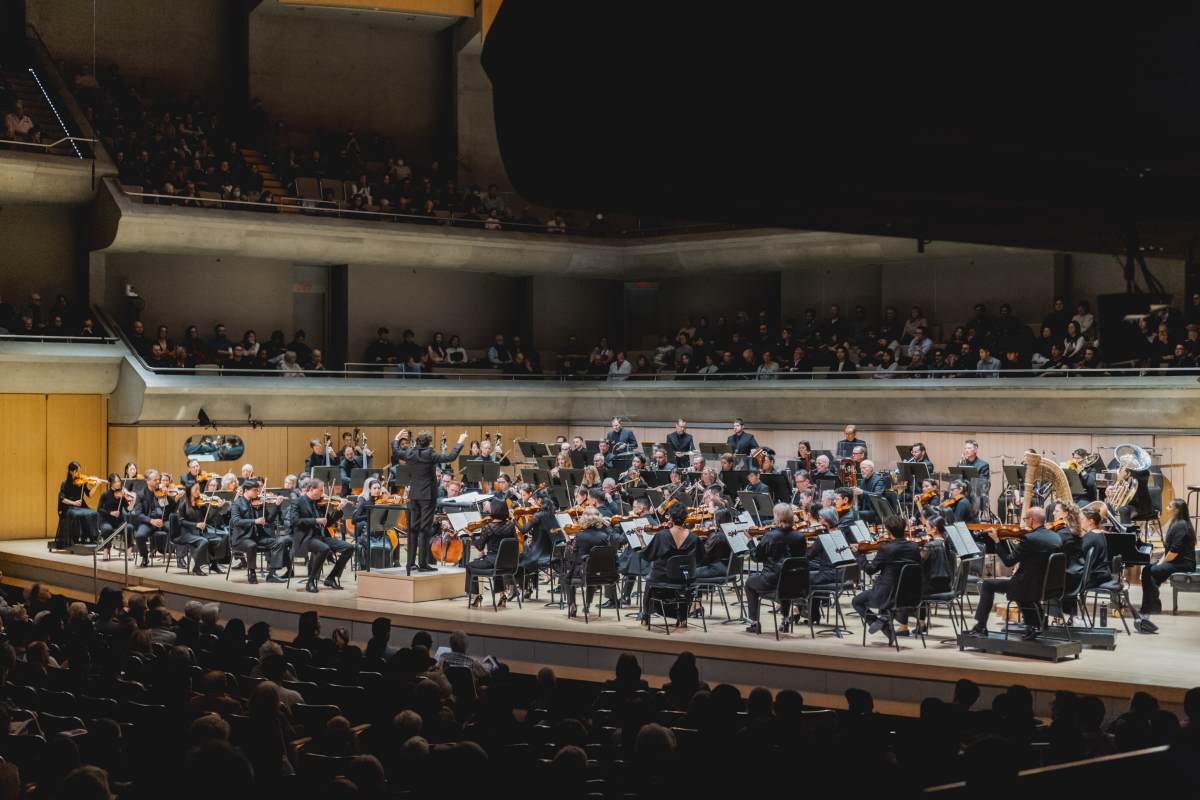
Prokofiev Symphony No. 5 in B-flat major
Prokofiev wrote his Symphony No. 5 in B-flat major during World War II, conducting its premiere himself in 1945, which was reportedly interrupted by celebratory artillery fire marking Soviet advances in the war. Prokofiev himself described his Fifth Symphony as a work intended “to sing the praises of the free and happy man,” and considered it his finest work.
The first movement was surprisingly lush, even romantic, with little hint of wartime chaos. There was colourful playing by the wind and brass, accompanied by tremolo strings. The scherzo-like second movement had moments of whimsy, and featured fine playing from the percussions. This movement had the unmistakable character of Prokofiev’s ballet Romeo and Juliet. One could sense looming tragedy among the dissonance in the more serious and sombre third movement.
The final movement began with serene cellos that gradually shifted into a celebratory mood, with brass fanfare and powerful percussion. The piece’s jubilant conclusion brought a sense of hope, and was an affirmation that despite the struggles of war, victory prevailed.
Gimeno had tight control of the orchestra, ensuring seamless passing of the themes from one section to another, while maintaining a delicate orchestral balance.
Final Thoughts
It was a rare gesture for the orchestra to do two encores, but Gimeno wanted Torontonians to be the first to experience the program they would be doing in Europe. Both by Prokofiev, the Gavotte from his Symphony No. 1 and March in B-flat Op. 99 were delightfully cheerful and uplifting, and a good showcase of the orchestra.
Go TSO, show the world what you’ve got. Europe, you’re in for a treat!
Are you looking to promote an event? Have a news tip? Need to know the best events happening this weekend? Send us a note.
#LUDWIGVAN
Get the daily arts news straight to your inbox.