
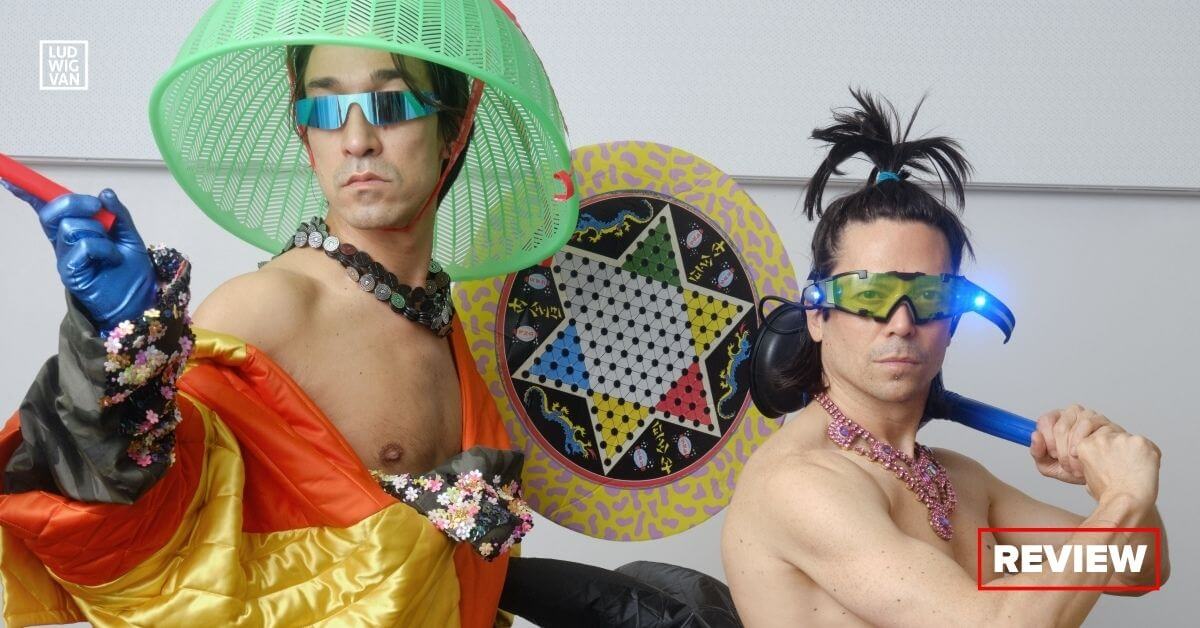
Toronto Dance Theatre in partnership with Buddies In Bad Times Theatre: Make Banana Cry; Andrew Tay & Stephen Thompson, choreographers; Cynthia Koppe, Francesca Chudnoff, Hanako Hoshimi-Caines, Sehyoung Lee, Winnie Ho, Stephen Thompson, performers, with visual installation by Dominique Pétrin, and lighting design by Öykü Önder (also tour technician). January 14, 2026, Buddies In Bad Times Theatre. Continues until January 17; tickets here.
Banana, for those unfamiliar with the term, is slang for East Asians in North American, in particular those who seem to have been mainstreamed into Western culture, and who no longer lead a traditional Asian lifestyle. As a designation, it’s a double-edged sword — belonging to neither community, they occupy a space as a perpetual other to both.
Make Banana Cry by choreographers Andrew Tay and Stephen Thompson is a kind of mashup of fashion runway aesthetics, contemporary performance, and dance. The performance is both critique and parody of the ways that East Asians are represented and fetishized in Western society.
Developed first in Montréal at the Festival TransAmériques, the production has toured to Impulstanz (Vienna), and the Portland Institute of Contemporary Art. This is the first Toronto production.

The Set Up
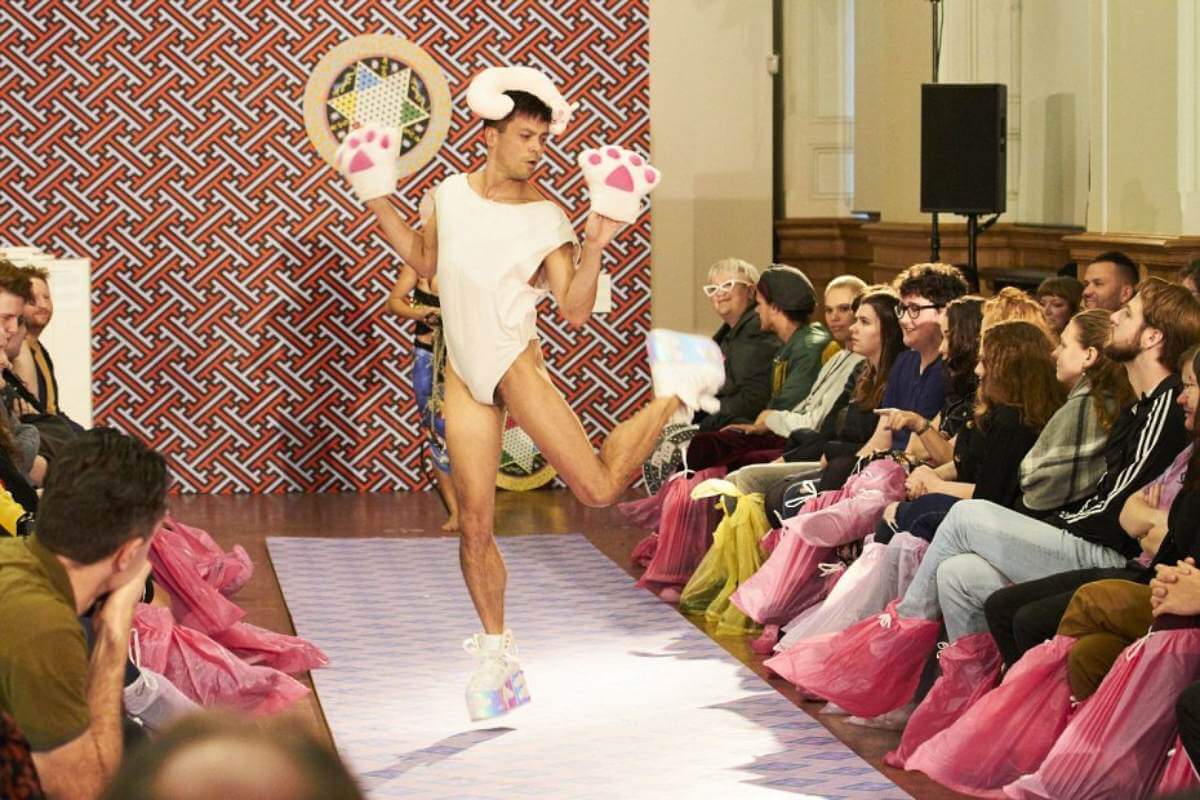
Instead of a conventional stage, the audience is seated in rows in a kind of horseshoe shape, with one row in the middle, allowing for a runway where the performers walk, dance, and move around. As an audience member, because of the wintry season, and to preserve the performance surface, you’re required to cover your boots and shoes with pink plastic bags, the rows of rosy plastic adding to the overall aesthetic.
The floor is covered with a surface also adorned in pink, set with a pattern of blue swatiskas — which, as the program reminds us, originated as a symbol of luck and good fortune in ancient times in Asia, long before its abominable appropriation by Nazi Germany.
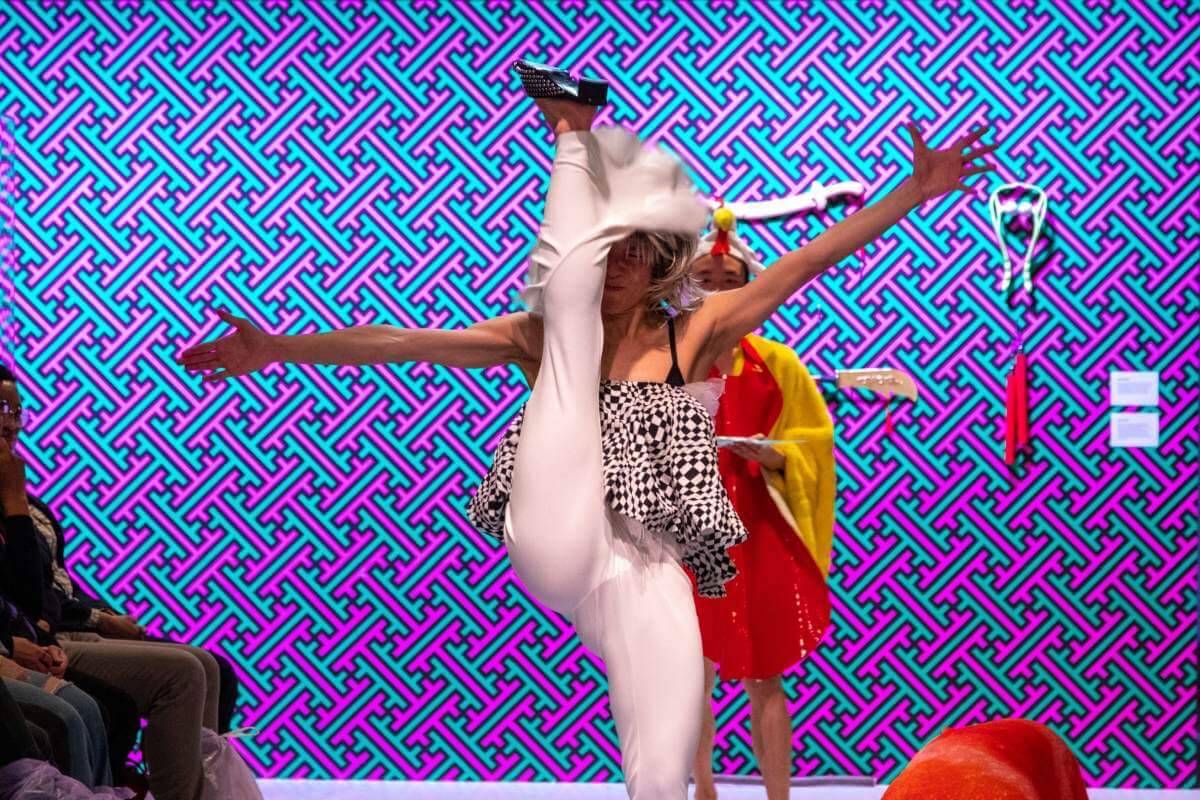
At one end of the runway circuit is a backdrop wall decorated with a mesmerizing pink and green geometric pattern, and from which hang curved swords and other flotsam and jetsam related to Asian iconography as the West understands it. At the other is a small display case likewise containing statues and other items associated with Asian culture.

The Performance
The 60-minute performance begins in total darkness, broken by the sound of helicopters. Then, isolated spotlights illuminate the display case and its statuary, along with a few other points in the room.
The six performers begin to walk around the runway as it’s set up. At first, only their eyes are visible under layers that include pants, t-shirts, jackets, hats, and scarves. They begin by simply walking, circling the runway, and over the space of a few minutes, add hand movements and other subtle changes.
Music begins to overtake the helicopters, and it’s one of the revelations of the performance to anyone outside the Asian community. Along with a couple of initial snippets of what sounds like genuine Asian music, there is a constant stream of excerpts from David Bowie’s China Girl, Murray Head’s One Night In Bangkok, I Think I’m Turning Japanese by The Vapors, excerpts from Miss Saigon, the Siamese Cat Song from Lady and the Tramp, Everybody Was Kung Fu Fighting by Carl Douglas, even bits of Madama Butterfly, and on, and on, and on, along with a couple of Asian-language versions of Western hits like The Village People’s YMCA, and the iconic “wax on, wax off” dialogue from The Karate Kid — the sheer number of ridiculous ways that Western voices have talked about Asians in silly pop songs and culture overall overwhelms. It’s just one of the absurdities revealed by Make Banana Cry.
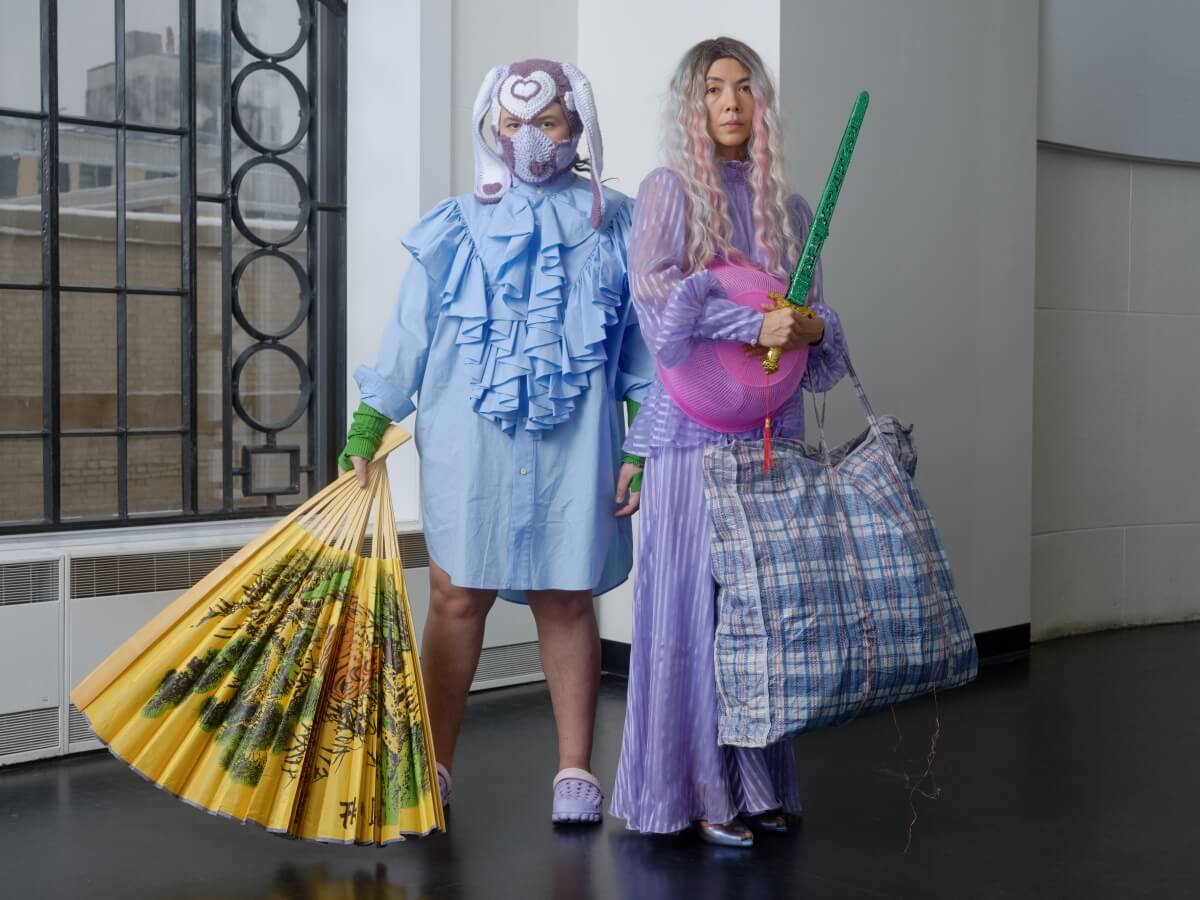
As the performers continue their relentless parade around the runway area, they eventually begin to shed layers, and finally, to perform an amazing number of costume changes (using more than 100 different bits and pieces overall), and their movements become more and more elaborate along with the visual changes. Sometimes they dance, sometimes they strut, embodying a series of stereotypes that read as different characters, from the strutting tough guy with a cigarette to the bowing quasi-traditional character to a floor cleaner and more.
The costumes range from what Westerners see as traditional Asian elements to the outright absurd, like poo-shaped slippers or a battered metal bowl, with a kind of thrown together aesthetic that underscores the message — here, is this what you want? Is this what you’re expecting to see?
It creates genuinely funny moments, in particular, when the performers interact briefly with various audience members along the way, or drop their various props.
Final Thoughts
The audience reactions were another big reveal, beginning with the semi-impatient, semi-baffled looks of many during the slow paced opening sequences. As the action and costumes became more frenetic, there was laughter and engagement.
When the performance ends quietly, the performers literally stripped of their gaudy finery and simply lying exhausted on the ground, the audience becomes completely silent. Once the fun part is over, are you truly ready to confront the reality of how tiring it is to live in a state of perpetual performance, the subject of a prevailing Western gaze that fetishizes and never actually tries to understand or connect?
The sold out house applauded wildly.
After the show, as part of the show’s mandate, local Asian performers are given a chance to talk about their works in the lounge. Supporting the work of Asian creators is one way of bridging that gap imposed by Western xenophobia.
An illuminating experience as a whole.
Are you looking to promote an event? Have a news tip? Need to know the best events happening this weekend? Send us a note.
#LUDWIGVAN
Get the daily arts news straight to your inbox.