
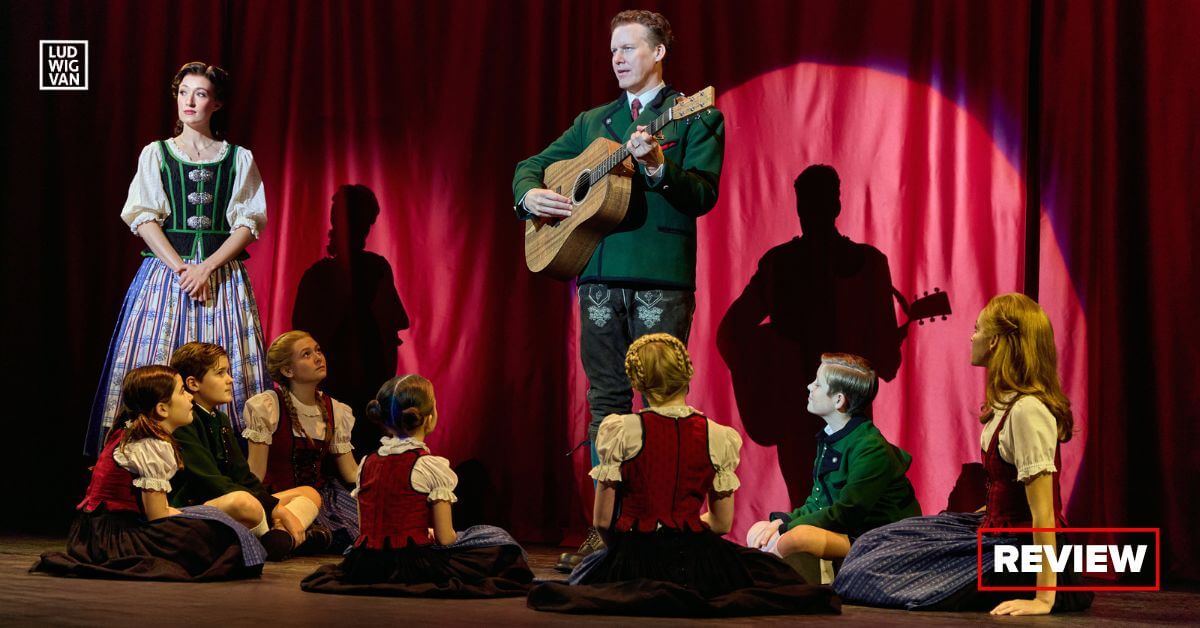
Concord Theatricals and Network Presentations/The Sound of Music, music by Richard Rodgers, lyrics by Oscar Hammerstein 11, book by Howard Lindsay and Russell Crouse, suggested by The Trapp Family Singers by Maria Augusta Trapp, choreographed by Danny Mefford, directed by Jack O’Brien, Princess of Wales Theatre, closes Jan. 4. Tickets here.
Watching the new touring production of The Sound of Music at the Princess of Wales Theatre, I felt as though I had been transported back to 1959 for the original Broadway production with Mary Martin and Theodore Bikel.
Purism
This staging, directed by 86 year old Jack O’Brien, strips away the decorative layers that decades of overblown sentiment have added to the musical, and reveals the essential structure that Rodgers and Hammerstein wrote. It felt like returning to the origin point, before the years had encrusted the piece with nostalgia and kitsch.
Part of that authenticity lies in the sheer simplicity of the physical production.
Only five creatives are credited — Douglas W. Schmidt for scenic design, Jane Greenwood for costumes, Natasha Katz for lighting, Kai Harada for sound, and Tom Watson for hair. That is it. No technical wizards, no projections, no digital illusions.
When the curtain rose on the painted mountain backdrop, the flatness of it was almost startling. It recalled the Oliver Smith aesthetic of the original staging, where theatre was theatre, not spectacle. The plainness works. It restores the musical to a world where storytelling lives in character, music, and emotion, not in tricks.

Elsa and Max
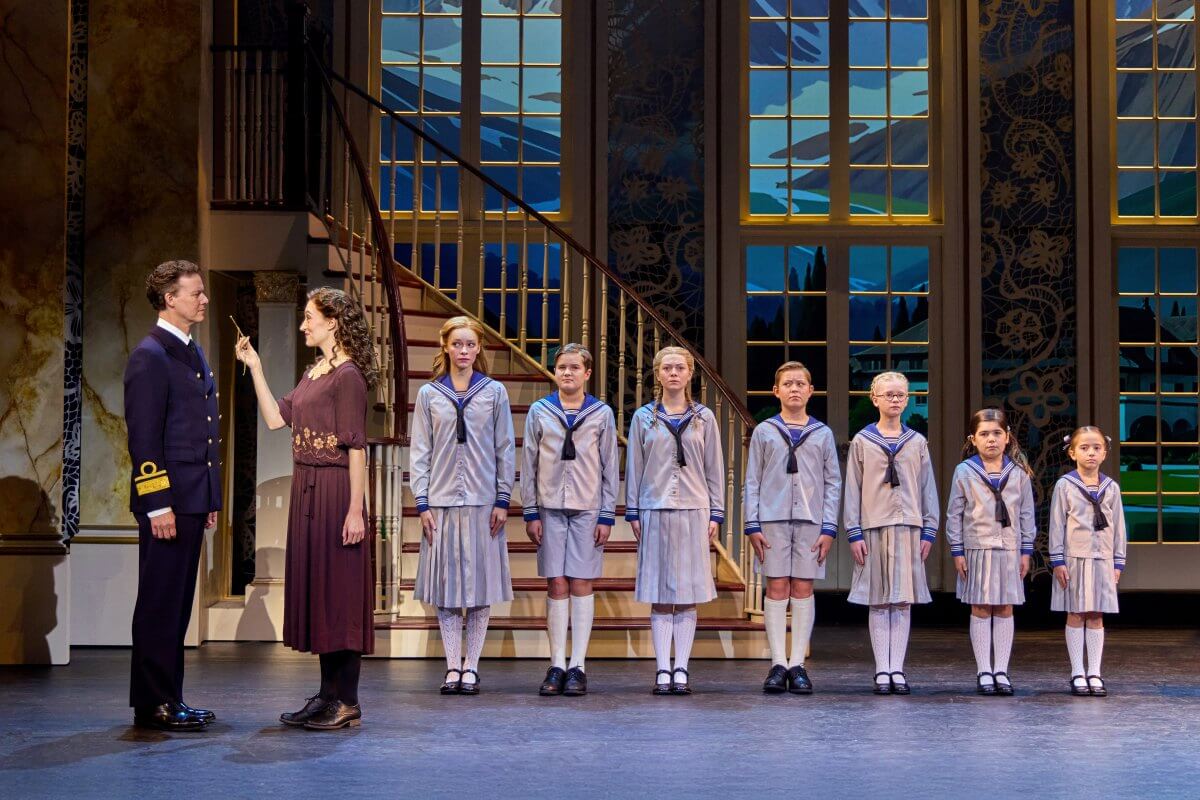
Equally integral to the integrity of this touring production is the inclusion of the two numbers for Elsa Schraeder, Max Detweiler, and the Captain (“How Can Love Survive?” and “No Way To Stop It”) — songs cut in the film adaptation because of their dry cynicism.
Their presence is crucial.
They slice through sentiment with a sharp edge, grounding the piece in the social realities of the Anschluss, and preventing the show from drifting into saccharine territory.
Their cynicism balances the joy.
O’Brien’s Direction
What O’Brien brings is a surprising lack of melodrama.
The show is emotional, certainly, and I found myself with tears in my eyes by the end, but the emotions are earned. There is nothing syrupy, nothing softened or sentimentalised. The choices are dramatic, humorous, and heartfelt all at once, which is precisely how the musical was intended to work.
O’Brien, who has just received the Lifetime Achievement Award from the Tony Awards and has three Tony wins of his own, directs with clarity and simplicity. He trusts the material. As a result, the production feels truthful rather than manufactured.
The Actors
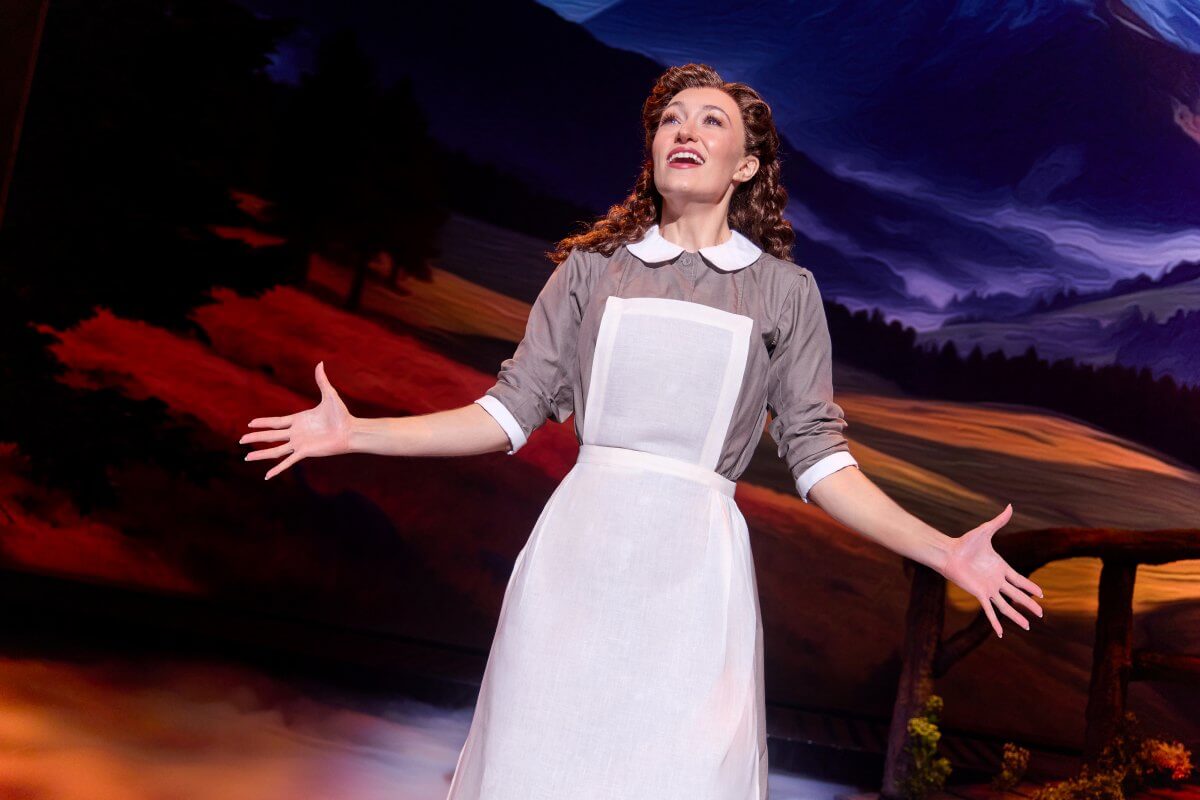
Much of the production’s success rests on Cayleigh Capaldi as Maria Rainer.
She is raw, earthy, ungainly, sprightly, unglamorous, and blessed with a voice that soars. She is cheeky, awkward, girlish, fun filled, and entirely unpolished. She embodies exactly what the nuns describe. She is a flibberty gibbet.
She is barely older than the children she is sent to shepherd, and that youthful energy makes her irresistible. She grounds the role in humanity rather than myth. It is perfect casting.
Kevin Earley is equally compelling as Captain Georg von Trapp.
With his resonant baritone and clipped authority, he begins as a rigid martinet but reveals a surprising sense of self awareness. He can see the humour in his own severity, and that recognition softens him long before Maria does.
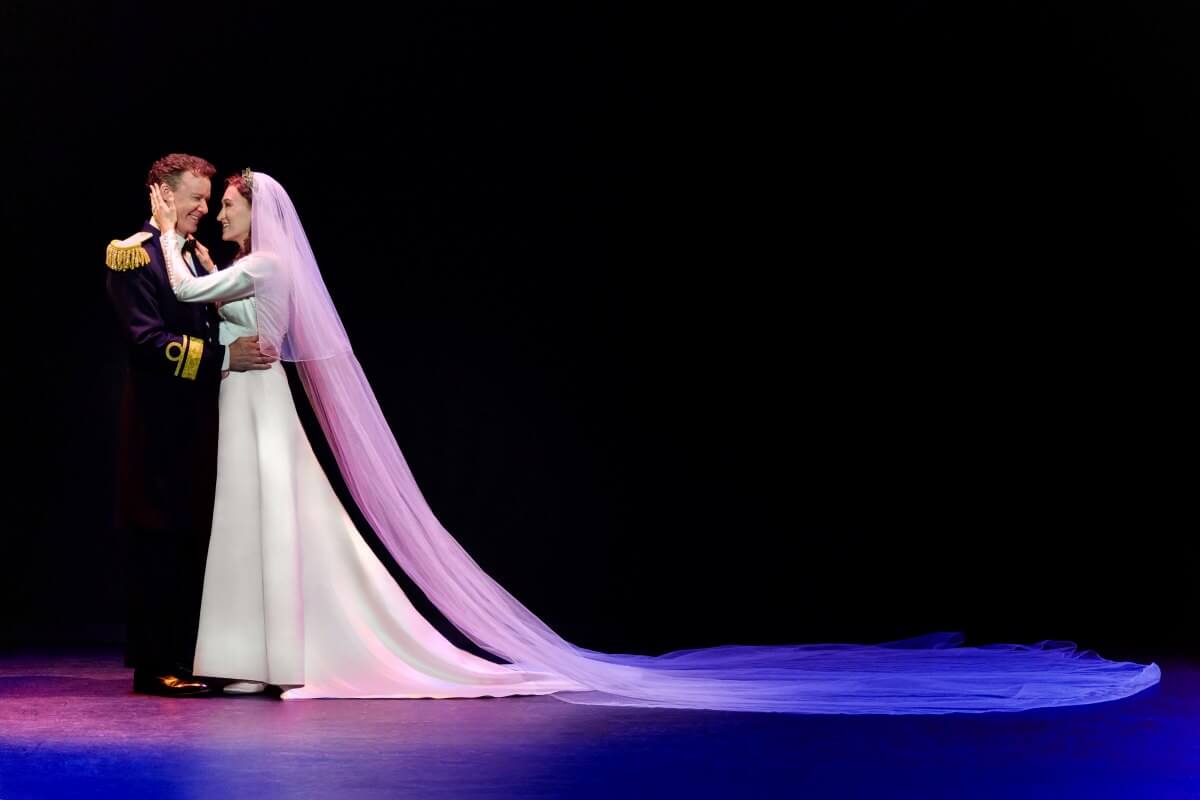
Their chemistry is honest, not forced.
Elsewhere, the show is filled with sharply etched character work.
Kate Loprest makes Elsa Schrader abrasive, pushy, and unmistakably nouveau riche. She lacks class, which is precisely the point.
Nicholas Rodriguez as Max Detweiler slides comfortably toward whichever direction the political winds blow. He is charming, oily, and opportunistic.
Ian Coursey gives Rolf Gruber enough nervous youthfulness to make his final act of mercy believable. Arianna Furch as Liesl is strong willed, not sugary, and all the children have backbone. They are not coy or cloying. They have presence.
Christiane Noll is a firm, authoritative Mother Abbess, supported confidently by Jade Litaker, Tess Primack, and Meredith Lustig as the sister nuns. The ensemble feels grounded and genuine.
Final Words
What emerges is a production that is old fashioned in the best sense. With its phony flat sets and direct emotional core, it feels close to what audiences would have seen in 1959. Without melodrama. Without gooey sentiment. Without the over decoration of later decades.
It is dramatic and emotional rather than sentimental and melodramatic, and that difference matters. It refreshes the musical rather than reviving it.
For me, it was unexpectedly moving. The Sound of Music can easily become a warm bath of nostalgia, but here it felt newly alive.
This touring production is not a recreation. It is a reminder. It reveals the musical’s original spirit, and in doing so, it got to me in ways I had not anticipated.
Are you looking to promote an event? Have a news tip? Need to know the best events happening this weekend? Send us a note.
#LUDWIGVAN
Get the daily arts news straight to your inbox.