
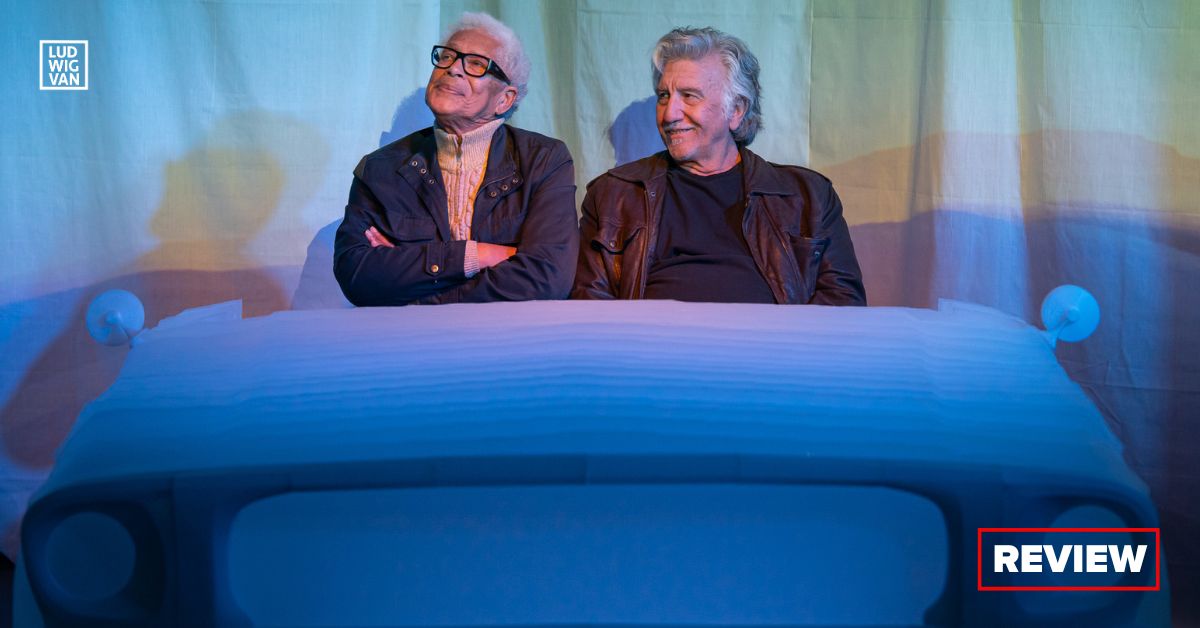
Dandelion Theatre: An Orchid and Other Such Lilies and Lies, by D. Halpern. Starring Walter Borden and Scott Wentworth. Max Ackerman, director. Red Sandcastle Theatre. Continues until November 23, 2025; tickets here.
In a small, unassuming theatre, on a small, unassuming stage, two giant talents spin a story of loss, love, life, death, youth, old age, and a lot that comes in between.
It helps that both actors are long time veterans of stage and screen. A native of Nova Scotia, Walter Borden’s CV includes long term stints at Halifax’s Neptune Theatre Company, and the Stratford Theatre Festival, along with roles in Lexx TV series, and films The Hexecutioners and Gerontophilia, among others. A multi-award winner, Borden is also an Order of Canada recipient. Scott Wentworth is another Stratford Festival alumnus, with 28 seasons and many starring roles under his belt. The Tony and Laurence Olivier award nominated actor also played roles in TV series like Orphan Black, The Murdoch Mysteries, and many others.
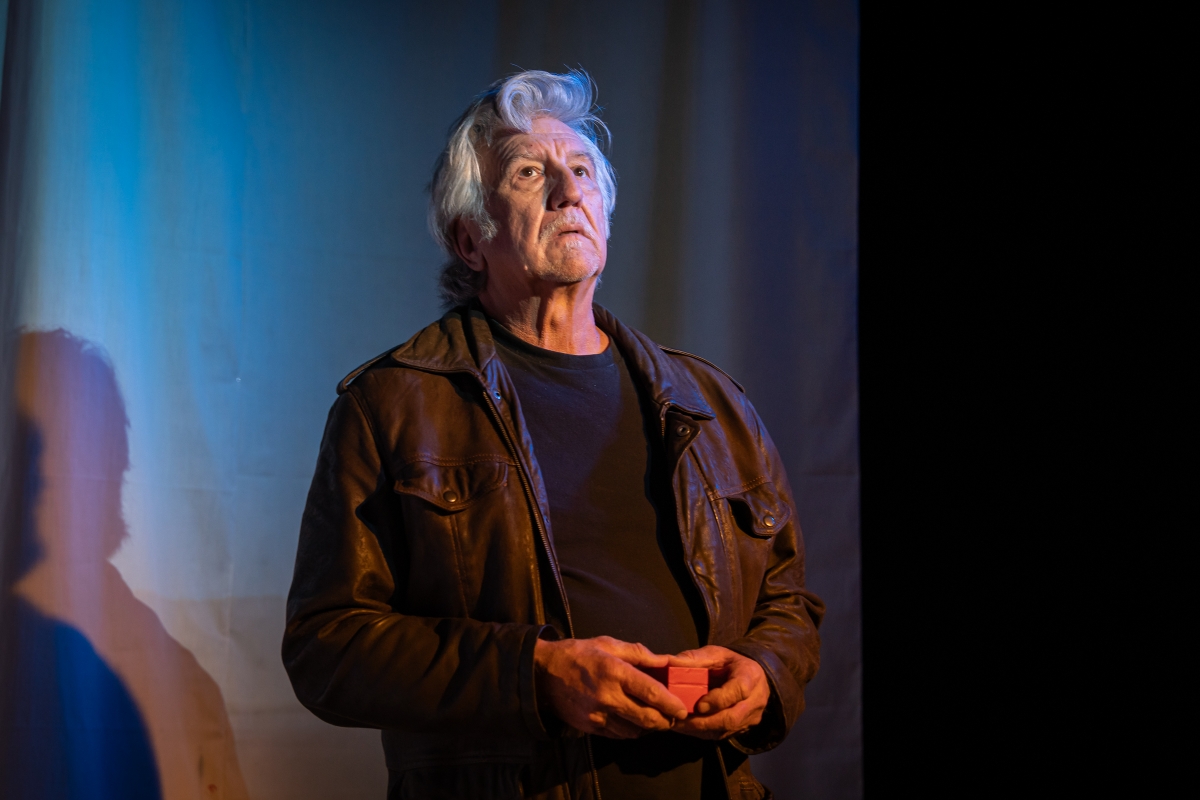
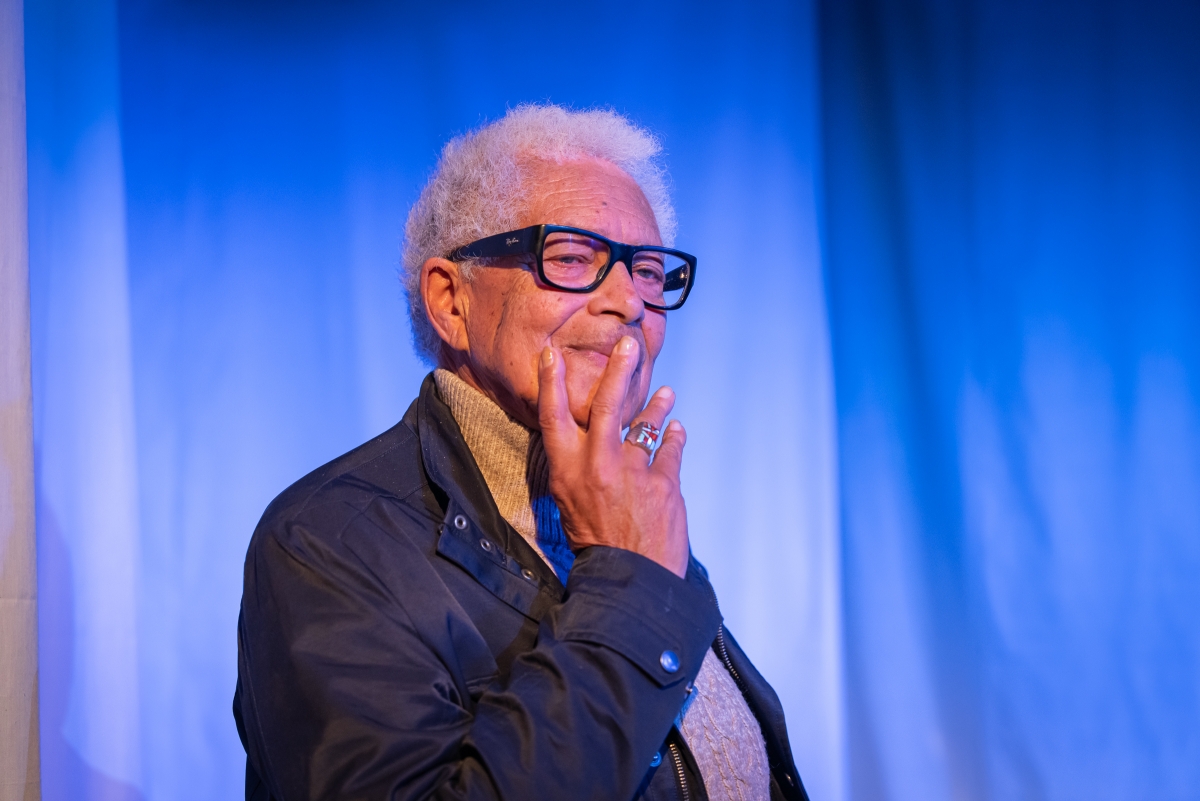
They are identified only as Number One (Wentworth) and Number Two (Borden) in the script, because why would you need to say the name of an old friend out loud?

The Story
The premise is simple. Two old friends, both 83 (Borden’s real life age; Wentworth is 70), are driving in the desert. They talk, and the conversation begins with reminiscing about people they knew in high school, where the two met at age 13.
From remembrances and banalities, there is the inevitable moment when the truth begins to spill out, including recriminations, bickering, confessions, and secrets. A bag of drugs that includes prescription pills for their various ailments, weed, edibles, cocaine and psychedelics fuels the discussion.
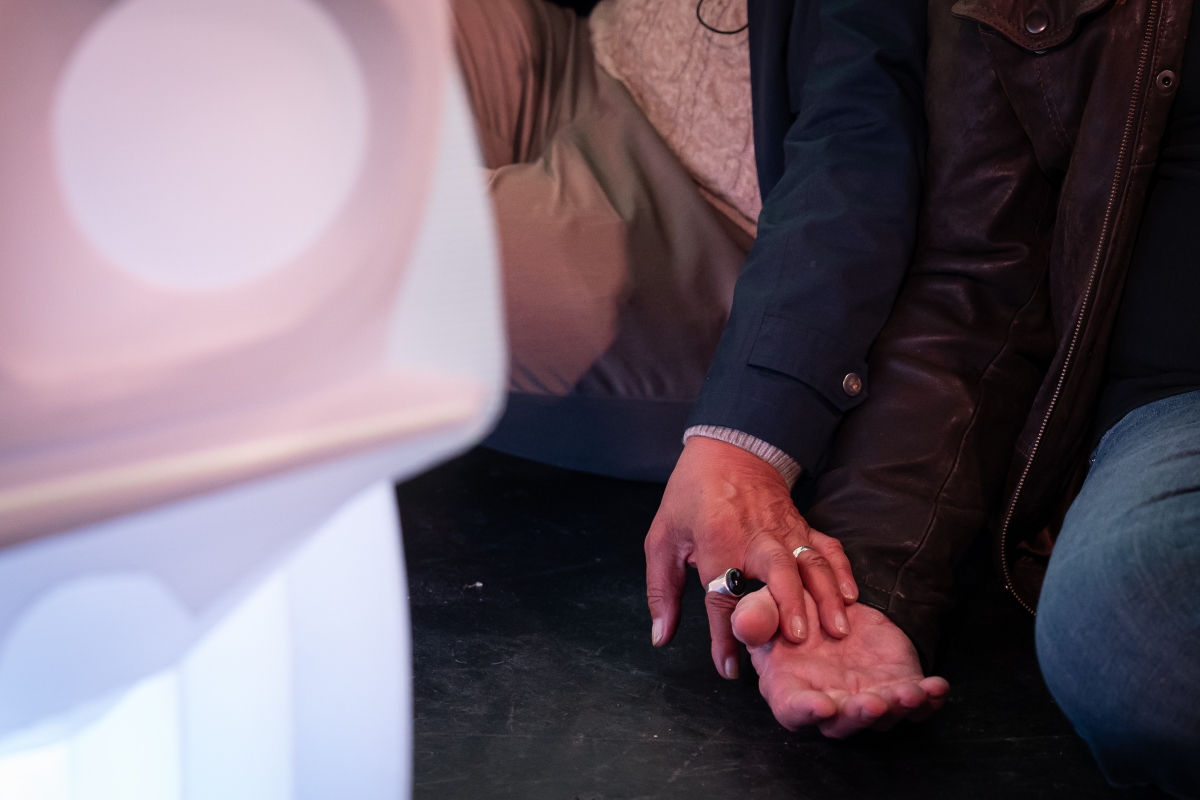
Number Two’s obsessed with talking about his late wife Rose, who died years before, and was the love of his life… or was she? Number One is given to philosophical speeches, and lamenting his fate as someone who’s never known true love… but is that really true?
Just when you’re wondering how two octogenarians would have such detailed recall of events that happened back in high school, or care so much about the fates of their former classmates, the script flips expectations around, and more truths come out.
Over the course of their conversation, it becomes more and more clear that this is a road trip neither has any intention of returning from.
Remarkably, playwright D. Halpern wrote the first version of the work at the age of 17, inspired by a conversation with a friend about how they’d like to go when they died. The play was first mounted in 2019 at the Toronto and Atlantic Fringe Festivals.

Performances
The performances are clearly key to the play’s success, and both are devoid of a false note. Both the humour and the poignant moments hit the mark with an audience that seemed equally comprised of 20-somethings and those of us much closer to the characters in age.
As Number One, Wentworth is the one seemingly more wracked with doubts and regrets, given to his long speeches and dramatic confessions. He plays him as a convincing late life loser — but one with one last bid for emotional relevance up his sleeve, his vulnerability alternating with bluster and sincerity.
As Number Two, Borden is less loquacious, but says volumes in his stiff demeanour during Number One’s monologues, his skeptical looks, and a few choice words.
“Sometimes, I think I am angrier now than I was when I was 13,” he acknowledges. He has his moment where the veneer cracks and the emotions come out. But, is it too late?
Together, they’re a convincing portrait of old friends trying to make sense of their lives and loves at the very end of the line. You sympathize, even though it’s clear they are the authors of their own fates, because of their only too human frailties.
Stagecraft
The simple staging (by Shana Dharmaraj and Kevan Cress) includes a white cloth backdrop to the small stage, where the front end of a car (ingeniously fashioned from thin sheets of foam and various plastic accoutrements), takes up most of the space. They sit in clear lucite chairs that serve as the car seats. Together with lighting effects (designed by Lidia Foote), it’s a surprisingly effective evocation of a car in the wide open spaces of the desert.
Projections by Kevan Cress on the backdrop begin the performance, depicting what we come to realize through the course of the story was the night the two met some seven decades earlier. The young group of friends go skinny dipping with the notable exception of Number Two, who is there to comfort Number One later when he’s left shivering and alone, after an encounter with the cops has sent the rest of the crowd scurrying away.
The projections return at various points in the story to depict scenes from memory, and the desert sky, both day and night. It adds a larger dimension to the story as it unfolds, broadening the spatial perspective.
Music also flows in and out of the story, including songs that speak to the emotions on stage, and instrumental bits that add atmosphere.
It’s an object lesson in squeezing the most out of minimal space and resources.
Final Thoughts
“Nobody sees a flower — really — it is so small it takes time — we haven’t time — and to see takes time, like to have a friend takes time.”
The play is framed by quotes from artist Georgia O’Keeffe, like the one above that appears in a projection at the end. It handily sums up the journey of the two characters and the audience, who come along as spectators to their final reckoning with the truth.
What is it all about, at the very end? We can only hope there is someone we can call a real friend.
Are you looking to promote an event? Have a news tip? Need to know the best events happening this weekend? Send us a note.
#LUDWIGVAN
Get the daily arts news straight to your inbox.