
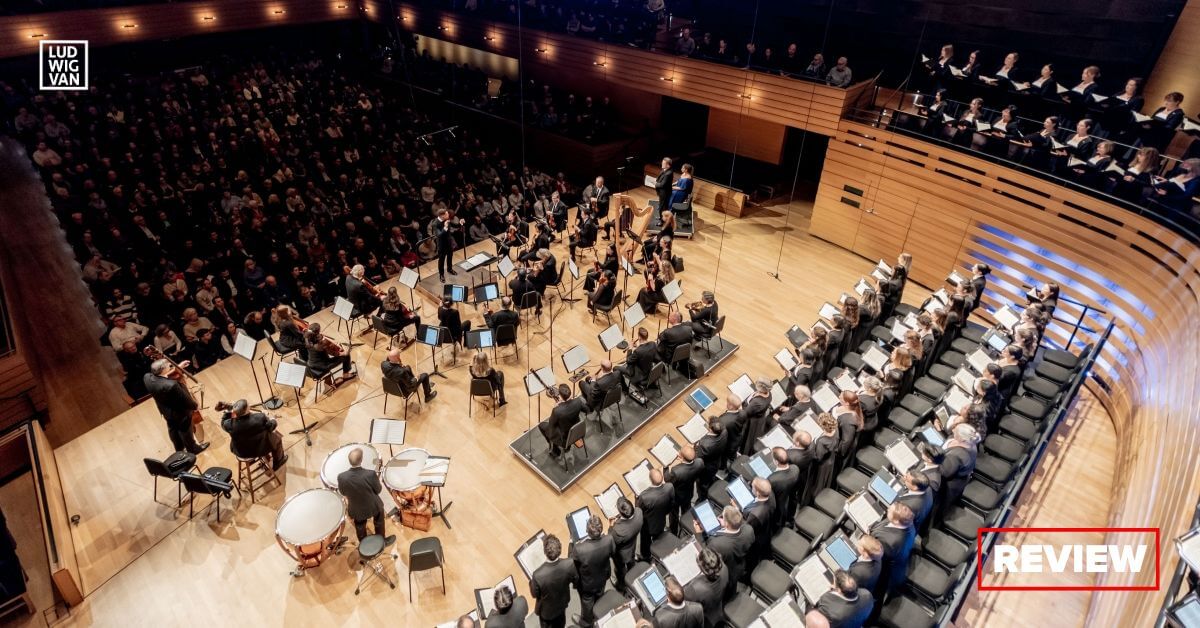
Toronto Mendelssohn Choir; Russell Braun, baritone; Charlotte Siegal, soprano; Musicians of the Kitchener-Waterloo Symphony; Jean-Sébastien Vallée, conductor. Koerner Hall, November 7, 2025.
It has been a long four years, almost to the day.
I am referring to the interval since the Toronto Mendelssohn Choir last performed Brahms’ German Requiem, on November 2, 2021. It took place in the huge Yorkminster Park Baptist Church in midtown Toronto. It was during COVID times, with understandably a very small audience and mandatory social distancing. Given that humanity was afflicted by the scourge of the Pandemic then, Brahms’ intensely spiritual work about death, faith, comfort and hope had a special resonance.
Now four years later, TMC is once again presenting Ein Deutsches Requiem, this time not in the venerable old church but at Koerner Hall. It was completely sold-out, and the knowledgeable audience was super-attentive.
If I may permit myself a bit of personal reflection on oratorios — in my younger days, I was more drawn to the Verdi Requiem with its operatic, fire-and-brimstone sensibilities. But with age, I have come to appreciate the Brahms masterpiece, a more inward and spiritual work. It focuses not so much on death, wrath and punishment, but on the living, and with it comfort, faith and hope.

Prelude
The concert opened with the premiere of ECHO, a TMC-commissioned work by its Composer-in-Residence Stephanie Martin. Often when new music is juxtaposed with something old such as the Brahms’ Requiem (1865), it can be a bit jarring. I needn’t have worried. Stylistically ECHO complements the Brahms work beautifully. The warm and mellow TMC sound, which I liken to a balm for the soul, is perfect for this new work. I look forward to hearing it again.
Brahms’ Requiem
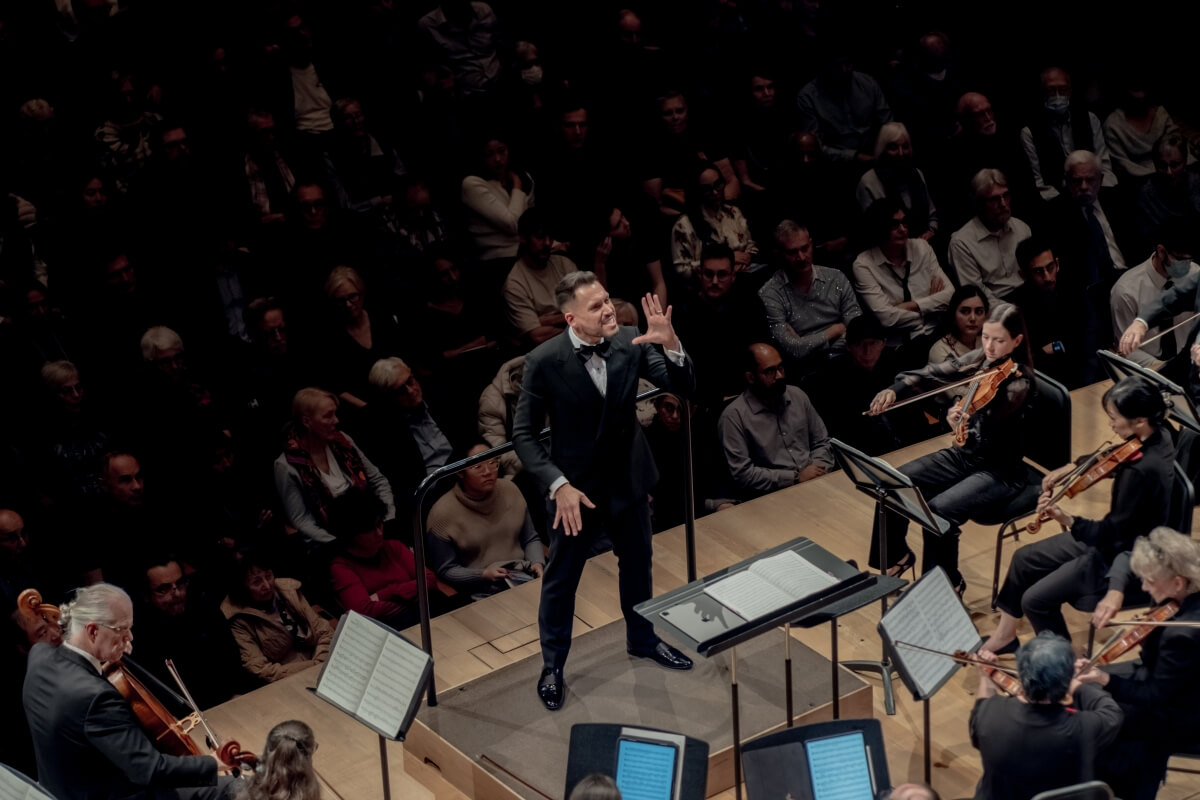
This short piece set the tone for what’s to come. Conductor Jean-Sébastien Vallée spoke at length about the Requiem, how it was the work of a young Brahms, who was only in his early 30s when he composed this. Perhaps some audience members might find that an introduction of such a well-known work should not be necessary — I was astounded when I overheard a hushed voice muttering, “do your homework people…” Well, if an introduction can benefit even one person in the audience, allowing for a deeper understanding, I am for it.
The seven-movement work lasts less than 80 minutes, but it packs an emotional wallop. It opens with the divine “Selig sind, die da Leid tragen.” Every time I hear it, I am immediately transported by its ethereal sound, and this time was no exception. The second movement, which happens to be my favourite, is “Denn alles Fleisch, es ist wie Gras,” a very powerful moment. The fortissimo moments, plus the striking use of percussions, is enough to put the fear of God in every heart, and I am only half joking!
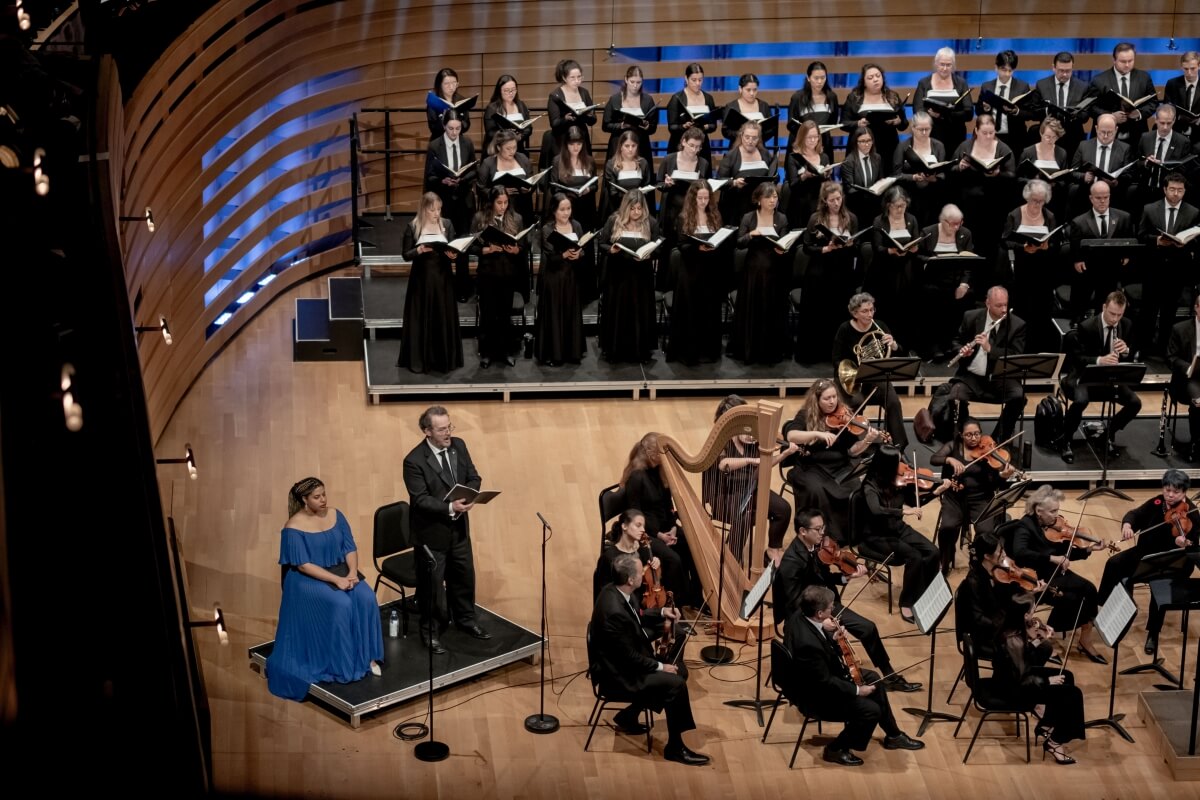
The third and sixth movements feature the baritone soloist, and it was great to hear the Canadian veteran, Russell Braun in this work once again. Now at 60 and still going strong after a 33-year career, Braun’s lyric timbre has gained in dramatic gravitas while retaining its warmth and beauty of tone. His attention to textual nuance is exemplary and there’s a heartfelt sincerity in his delivery. Perhaps on this occasion, there was a bit more effort required to reach the higher notes, but that’s part of the vocal journey of a long career, isn’t it?
The relatively short but beautiful fifth movement was not in the original version of the work — Brahms added it later. It features a lyric soprano, and on this occasion, we had Canadian soprano Charlotte Siegel. I have heard her on many occasions during her time as a member of the COC Ensemble Studio. Her instrument is impressively big and rich, with plenty of dramatic potential. But to my ears, it’s not the typical voice one encounters in “Ihr hab nun Traurigkeit,” which is often sung by a lighter, floatier soprano. Siegel’s mezza voce was lovely, but her forte didn’t have the ideally floating timbre and tonal focus on this occasion.
Final Thoughts
The orchestra was made up of musicians from the Kitchener-Waterloo Symphony, and they played wonderfully under conductor Jean-Sébastien Vallée. Instead of a full-size orchestra, TMC uses a reduced orchestra of under 30 musicians, in a version adapted by Joachim Linckelmann back in 2010, the same version as four years ago in the Yorkminster performance.
Ultimately, the star of this work is the choir, and as expected, the full-sized TMC made it totally memorable. From ethereally quiet moments to strikingly dramatic climaxes, the TMC met all the challenges of this work masterfully.
Hearing the TMC in this work once again whet my appetite for more. Festival of Carols? Messiah? Bring it on!
Are you looking to promote an event? Have a news tip? Need to know the best events happening this weekend? Send us a note.
#LUDWIGVAN
Get the daily arts news straight to your inbox.