
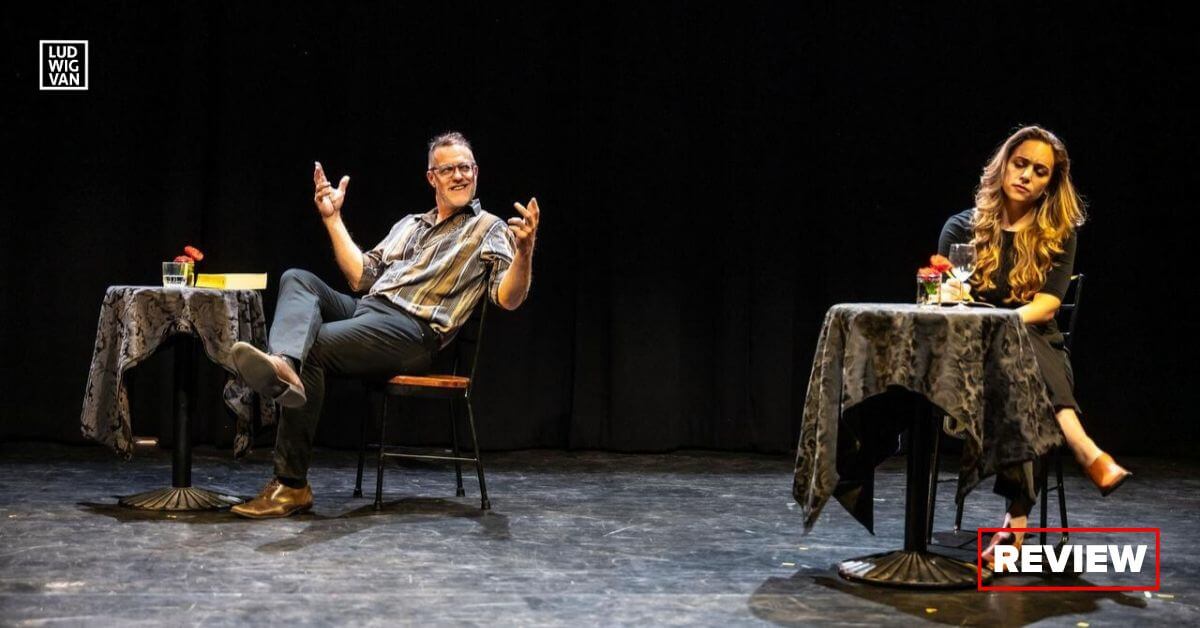
Tapestry Opera: Tapestry Briefs: Under Where? With composers Rebecca Gray, Prokhor Protasoff, Saman Shahi and Roydon Tse, librettists Rachel Gray, Christine Adina Browne, Sarah Henstra, Keith Klassen. Keith Klassen (tenor), Adanya Dunn (mezzo-soprano), Reilly Nelson (soprano), and Jorell Williams (baritone). Directed by Michael Mori and Mabel Wonnacott, musical direction by Hyejin Kwon and Gregory Oh. October 16, 2025, Nancy & Ed Jackman Performance Centre. Continues until October 19; tickets here.
What happens when you put four composers and four librettists together and mix things up? Eleven short operas, as it happens, which premiered at the Tapestry Opera’s Nancy & Ed Jackman Performance Centre on October 16.
Tapestry’s LIBLAB is an intensive program which took place this year from July 15 to 25, was guided by composer James Rolfe, and director Michael Hidetoshi Mori. LIBLAB has been running since 1995, and Tapestry likens it to speed dating. The composers and librettists get together, throw around ideas, and start creating on the spot. The fact is that several of Tapestry’s mainstage productions over the years have stemmed from the ideas and creative partnerships spawned by the program.
As Executive Director Jaime Martino remarked at the opening of the event, Tapestry Opera is the largest producer of new opera in Canada, and LIBLAB is its flagship initiative.
The composers in this case were Rebecca Gray, Prokhor Protasoff, Saman Shahi and Roydon Tse, with librettists Rachel Gray, Christine Adina Browne, and Sarah Henstra. Keith Klassen did triple duty as singer (tenor), composer, and librettist. Singers Adanya Dunn (mezzo-soprano), Reilly Nelson (soprano), Keith Klassen (tenor), and Jorell Williams (baritone) brought their ideas to life on stage. The segments were directed by Michael Mori and Mabel Wonnacott, with musical direction by Hyejin Kwon and Gregory Oh.
Together, they wrote and performed 11 short operas that covered everything from grief to apartment hygiene, the plight of a refugee with regrets to what’s actually going on in your nose — and (seemingly) everything in between.
When required, pianists Hyejin Kwon and Gregory Oh held up signs that prefaced some segments with context, like, “In a single turn of a ferris wheel, three couples come undone…” The Ferris Wheel, by composer Shani and librettist Henstra kicked off the night as Reilly Nelson and Jorell Williams portrayed the three couples via snippets of conversation, a hat, a scarf and a few other simple props, and body language.
It was funny, unexpected, and a sign of things to come.

The Operas
Creativity was the watchword when it came to the themes of the opera shorts, and the creators often packed a lot of ideas into the short formats.
In MUNCH, one spider wasp (Reilly Nelson) stings and paralyzes another spider wasp (Keith Klassen), and then proceeds to eat him while he insults her and complains. The music by Saman Shahi ranges from playful to dramatic and highly rhythmic to mirror the philosophical libretto that touches on the divide between young and old, the juxtaposition of pleasure and pain, and other weighty existential ideas.
Others were played for laughs.
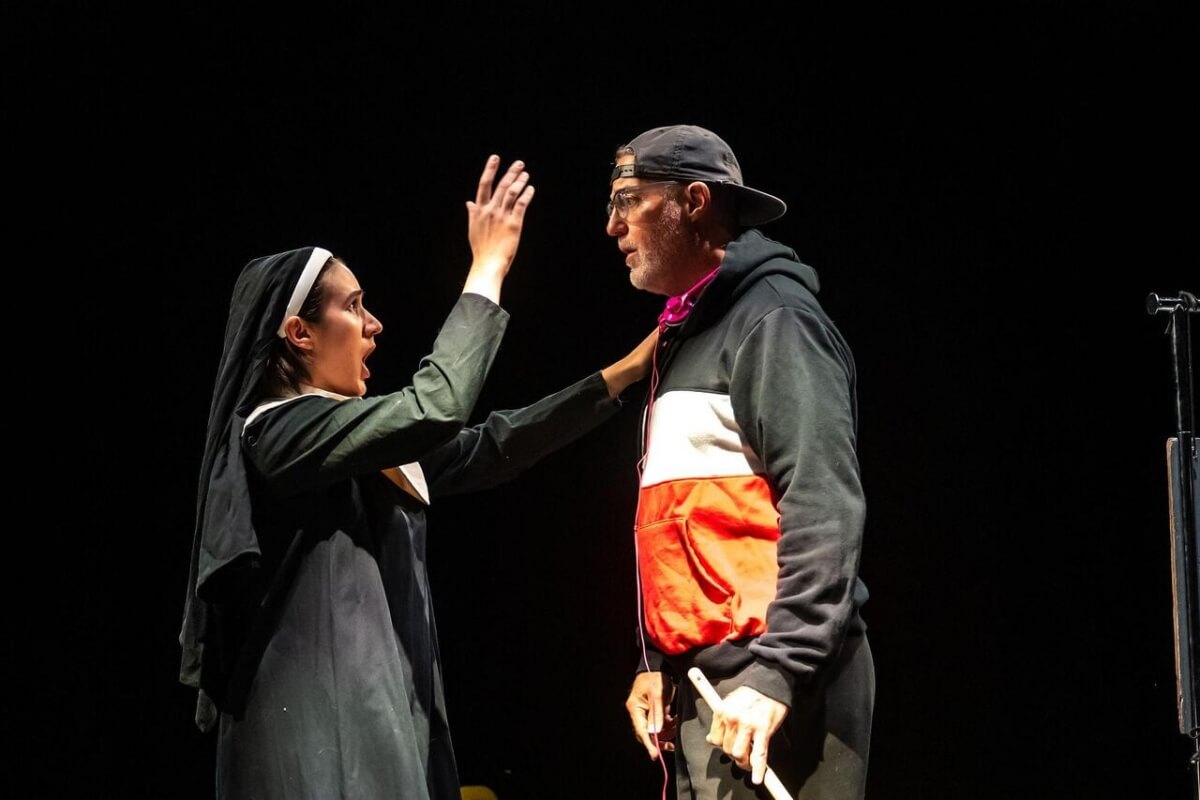
A priest and a nun walk into the bathroom. The nun is Hildegard von Bingen. The phrases set off Sordes, a meditation on toilet humour with Jorell Williams as an inconsiderate monk, Adanya Dunn as the outraged nun, and Keith Klassen as the janitor who’s seen it all.
The contemporary music by the four composers offered a nice variety from one piece to the next, ably performed by Hyejin Kwon and Gregory Oh. Of special note is Prokhor Protasoff’s gorgeous music in Mother, a bittersweet examination of a son’s grief at losing his mother, and Saman Shahi’s inventive score for MUNCH.
The two pianists were sometimes called upon for more than music, adding comedic bits to the scenes.
I’ll just mention that I’ve seen the very busy Gregory Oh performing on many stages, but it was the first time I’ve witnessed his rather impressive gargling skills.
The Performances
What impressed the most was the sheer variety of roles and characters that each performer had to get in and out of in sometimes rapid fire fashion, flexing both comedic and dramatic acting chops. There were no weak links among the four singers.
In The Ferris Wheel, Williams and Nelson had seconds to make the change in attitude and appearance, and flesh out the essence of a relationship in a few lines and a couple of minutes. In the very next scene, Jorell and Adanya explore the grief of a son for his mother, and of the mother’s spirit who can no longer comfort her beloved.
Reilly Nelson shone as a woman contemplating her paralyzing sadness in Grief House with powerful singing and convincing emotion. In another scene, she embodies the plight of a refugee in Beautiful Stranger, reduced to begging on the streets and living in a spartan room in a strong and emotional performance. The opera begins in the hallway, which served as the street, moving into a smaller studio to depict her room. It was just one example of the flexible and ingenious sense of direction that took a mere handful of simple props to frame the diverse set of scenes.
Keith Klassen specialized in comedy in roles, ranging from the obnoxious man bothering Nelson in a restaurant in Tony the Tenor, yogurt mould (you read that right) in Messy, and a faux psychic in In Knew You’d Say That. He’s got an impeccable sense of timing and physicality that pulls off the humour.
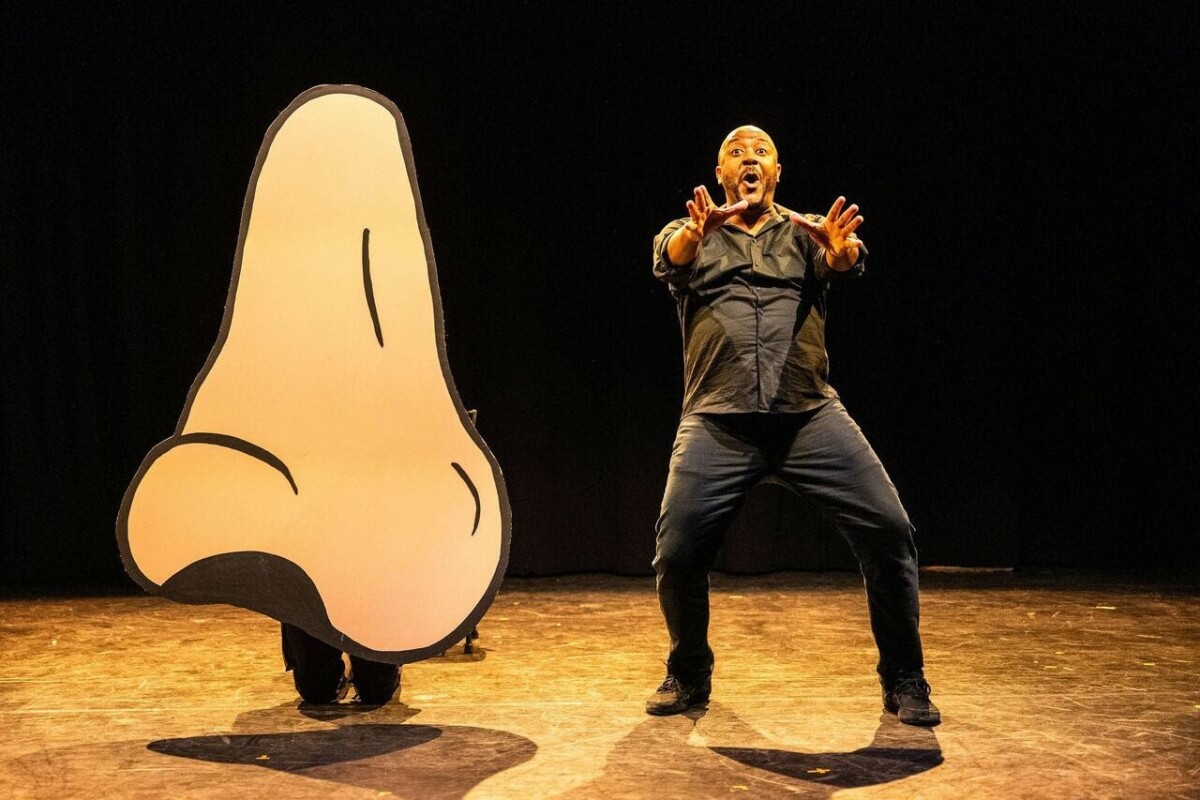
It was in the more esoteric roles that the performers displayed their considerable talents for characterization. Jorell Williams sang with passion about his life as a tiny man who lives in a nose (No Nose Knows); in Messy, he and Klassen also added a touch of comedic menace to the story of two roommates as the germs and mould that take over when you don’t clean up.
The four singers delivered committed performances in what must have been a fun, if challenging, assignment.
Final Thoughts
It’s also an audience participation event in several ways. From the outset, the audience is divided in half, and twice during the event, one half leaves their seats to experience an opera short in another part of the facility. When it’s over, the halves switch places. It’s an effective way to accommodate the necessary staging for such a variety of situations and scenes depicted.
As an audience member, you may also be asked to sing along to a Michael Mori diss anthem, or supply nose-related sound effects. In each program, there is a questionnaire that asks which scene should be developed into a full length piece.
There is one quibble. Two of the short scenes used recorded music, and the volume made it difficult to hear the singers. For this performance, the words matter, and need to be heard.
Fun, dramatic, emotional, quirky — Tapestry Briefs is a showcase of what contemporary opera can be.
Are you looking to promote an event? Have a news tip? Need to know the best events happening this weekend? Send us a note.
#LUDWIGVAN
Get the daily arts news straight to your inbox.