
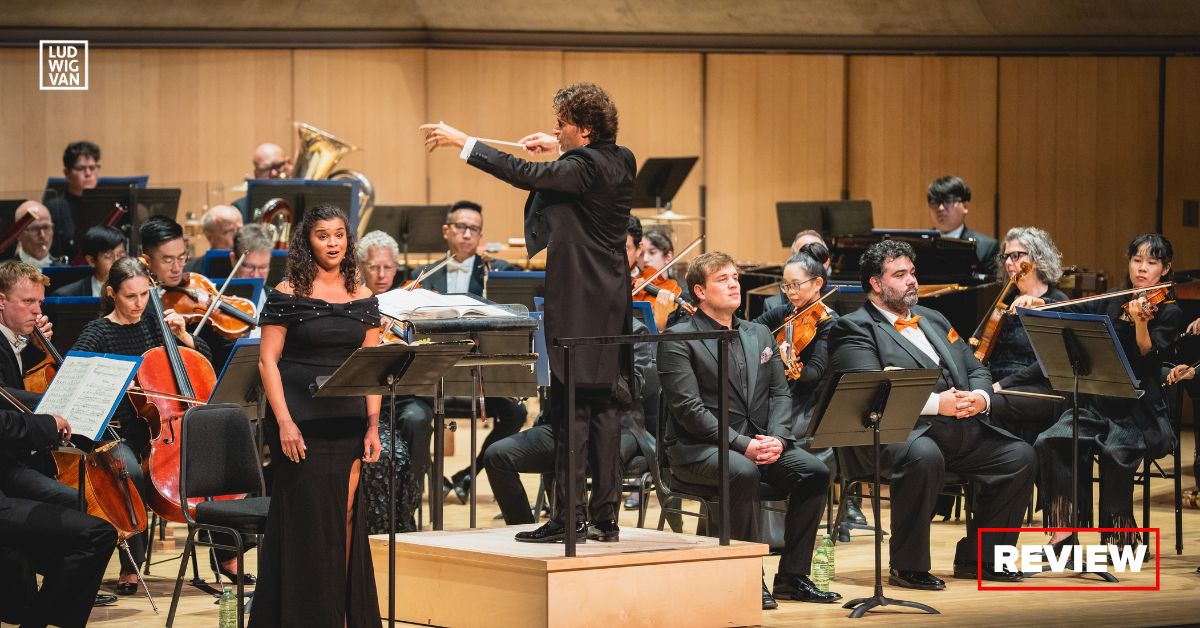
Toronto Symphony Orchestra | Marsalis: Concerto for Orchestra. Orff: Carmina Burana. Julie Roset, soprano; Andrew Haji, tenor; Sean Michael Plumb, baritone. Toronto Mendelssohn Choir (Jean-Sébastien Vallée), Toronto Children’s Chorus (Zimfira Poloz, director). Gustavo Gimeno, conductor. Roy Thomson Hall on Sept. 18, 2025. Repeats Sept. 20 and 21; tickets here.
Gustavo Gimeno and the Toronto Symphony Orchestra opened their season Thursday in Roy Thomson Hall with a Canadian premiere — not of Carmina Burana, heaven only knows, but of the 2024 Concerto for Orchestra by Wynton Marsalis.
The repeat performances Saturday and Sunday might well be your last chances to hear it in the GTA.
Four orchestras — the TSO, the Los Angeles Philharmonic, the WDR Sinfonieorchester of Cologne and the BBC Symphony Orchestra — jointly summoned up this garrulous extravaganza in six movements. We cannot know the terms of reference, but it seems unlikely that the commissioners requested 40 minutes of gratuitous orchestral effects drawn from a panoply of 20th-century sources.
Marsalis, 63, is famous as a jazz trumpeter and there are indeed several passages of syncopated rhythm with a downtown, big-band sound. There are also quotations from classics, including relatively frank evocations of Bartók (whose Concerto for Orchestra of 1943 is the best known piece with this title) from the lower strings and solo trombone.
A few of these winks and nudges would have been fine, had they emerged from something like a sustained and original fabric. Instead we found ourselves in the midst of a name-that-style exercise that bopped around from Bernstein to Stravinsky to Paul Hindemith (in a sequence of brassy counterpoint that was one of the few memorable parts of the score).
There were many confident wind solos and Gimeno managed to shift the spotlight according to need. He was less successful in evoking a cohesive sound from the strings. Not that there is much a conductor can do with this material. When the rhetoric of a piece leads a listener constantly to wonder what comes next, the temptation, after a dozen minutes or so, is to stop caring.

Carmina Burana
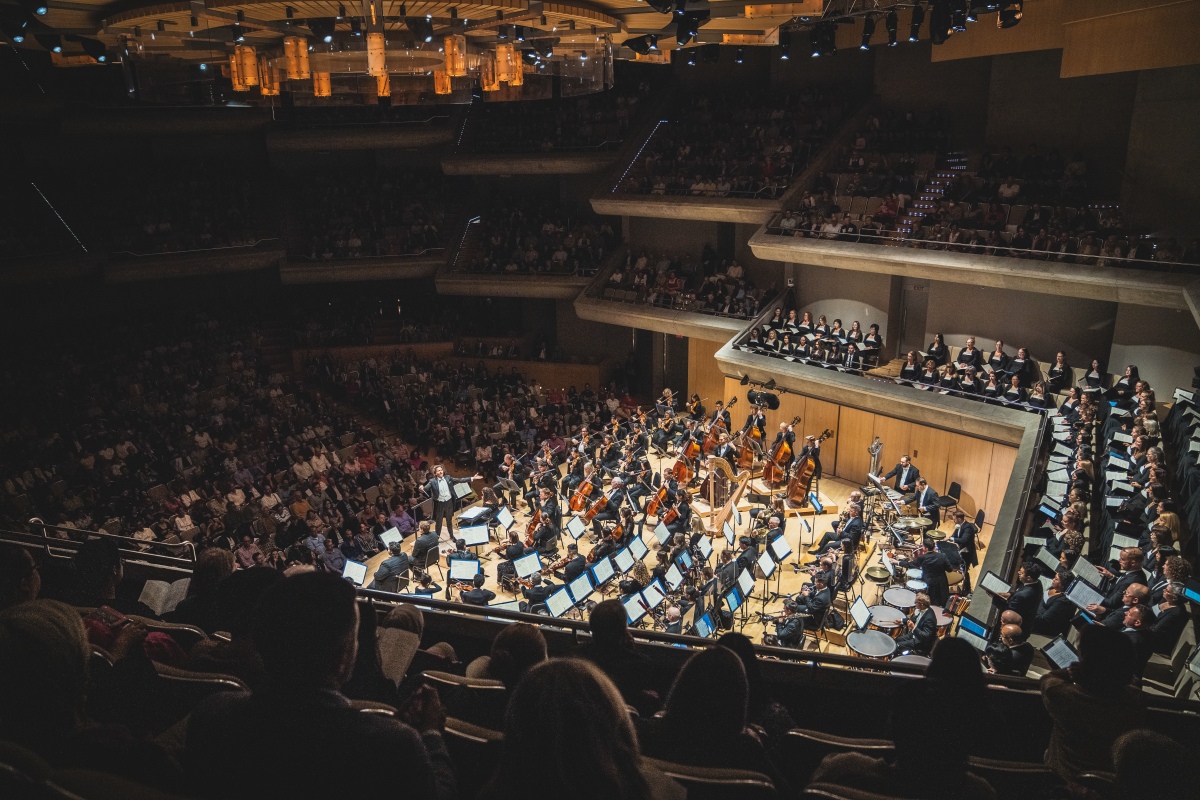
In Carmina Burana the question of what comes next is easily answered: usually what has just been heard. Few works of pre-minimalist vintage deploy repetition as flagrantly and effectively as Carl Orff’s immensely popular cantata of 1936.
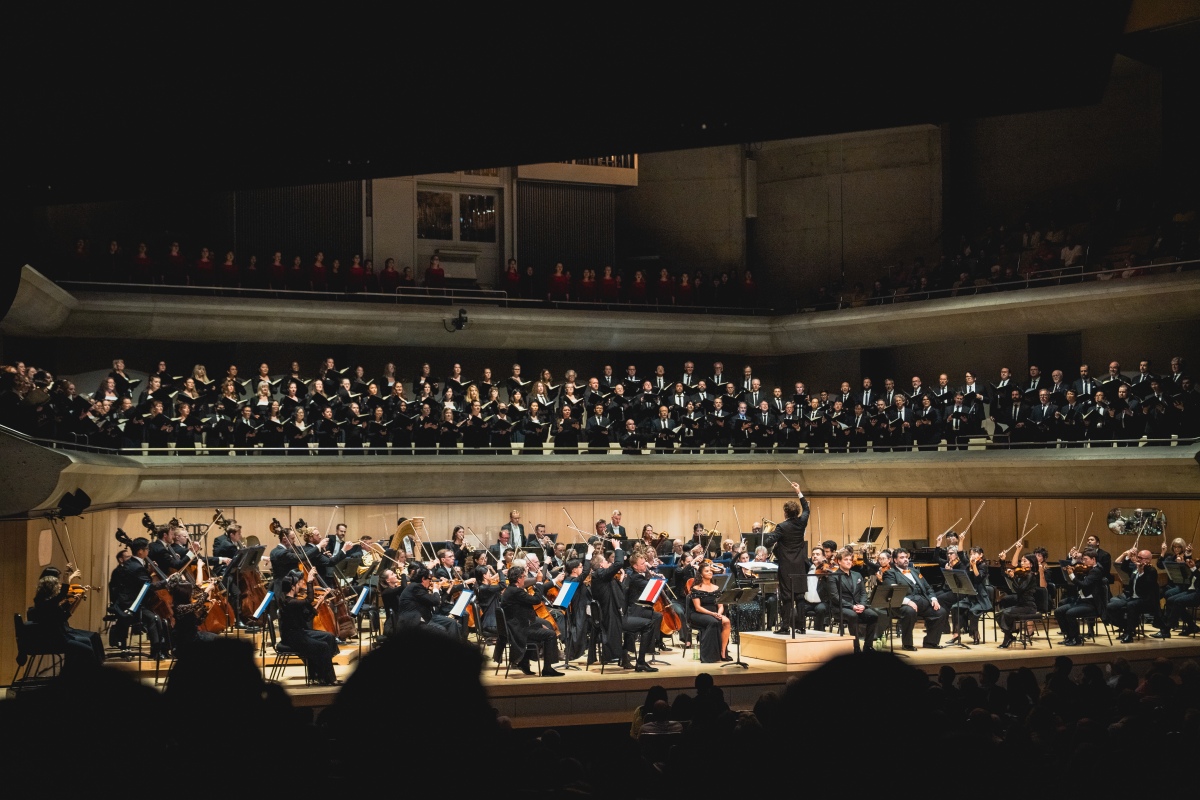
Gimeno kept the phrases orderly and easy to follow. The 231 singers of the Toronto Mendelssohn Choir and the Toronto Children’s Chorus (the latter in the organ loft) were nicely focused, though not always as grand-sounding as that number might imply.
Instrumental elements were fine. Flutist Kelly Zimba Lukić and timpanist David Kent merit mention.
Baritone Sean Michael Plumb, soprano Julie Roset and tenor Andrew Haji all had suitably lucid voices. Haji, a Canadian, added a much-appreciated touch of operatic stage business to his roasted-swan number.
Final Thoughts
Carmina Burana never fails. There was robust applause from the substantial crowd, sometimes between movements. Goodness, there were even some hoots for the Marsalis. The TSO certainly has a following.
Appreciation of the Orff, however, was necessarily incomplete, because the evocative mostly-Latin texts were rendered invisible by a combination of small print and low lighting.
Would projected surtitles be possible? The status quo will not do.
The evening began with O Canada. No texts necessary!
Are you looking to promote an event? Have a news tip? Need to know the best events happening this weekend? Send us a note.
#LUDWIGVAN
Get the daily arts news straight to your inbox.