
Primavera is the kind of film that makes attending festivals truly enjoyable.
It’s a terrific piece that is unlikely to win awards or a mainstream crowd and, yet the film is a deft, pleasurable experience that will appeal to the kind of audience that attends TIFF.
That audience consists of the readers of Ludwig Van: people who love classical music and are open to viewing a film that looks at the circumscribed lives of women two centuries ago — and, one understands, more recently, too.
The Story
The film is set in the 1720s in Venice, when Antonio Vivaldi returned to his hometown to take up a position he had held before, concert master and composer for the Ospedale della Pieti, an orphanage for women run by the Catholic Church.
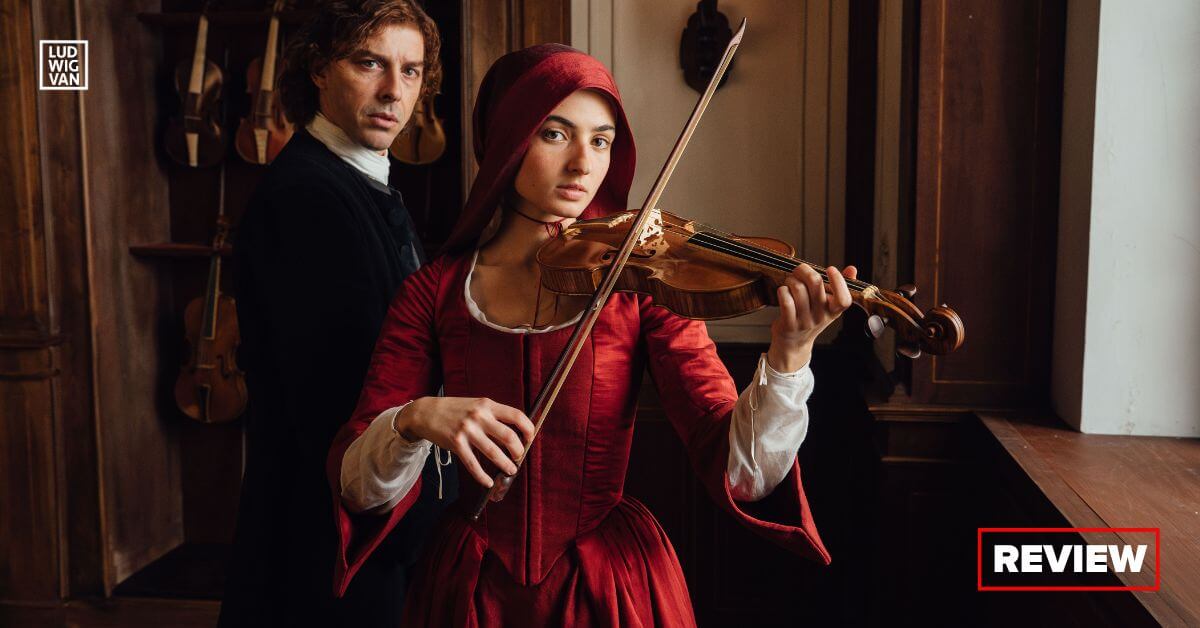
The script, which expands on the novel Stabat Mater by Tiziano Scarpa, plays on the true life and artistry of Vivaldi by creating a tale of an attractive orphan, Cecilia, who becomes the composer’s first violinist in the school orchestra.
Cecilia shares Vivaldi’s passion for music, but only the composer, who is also a priest, can make it his life’s pursuit.
The film’s drama is based on Cecilia being pledged to marry a nobleman who is fighting in a major war against the Turks. Though she absolutely loves being a violinist for Vivaldi, Cecilia’s destiny is sealed — and the point is made that she’s actually lucky to be engaged to a wealthy man who can take her away from an impoverished existence.
When she attempts to fight, demanding to stay in the orphanage as a violinist, it’s inevitable that Cecilia will encounter a difficult fate.

The Setting
The film beautifully evokes 18th century Venice — its churches and markets and gondolas — but quietly critiques the conservative forces that dominated its society.
The Church and the nobility rule Venice, only allowing limited freedoms to the people who make it a great city. As women and orphans, the Cecilias in the metropolis have no rights at all; their existence is based on the willingness of the powerful and wealthy to offer them a life of genteel poverty under the watchful eye of the Church.
Final Thoughts
Primavera’s director Damiano Michiletto may be a first-time filmmaker, but he’s an award-winning opera director, most notably of Rossini, and clearly knows how to assemble a great technical team.
The production design crew under the leadership of Gaspare De Pascali has done a terrific job of recreating the Venice of three centuries ago. All the details — the costuming, the look of the orphans’ huge bedroom, the concert halls with the women discreetly hidden in an enclosed area above the listeners — are handled with aplomb.
The music of Vivaldi is played throughout the film and it’s magnificent. Michiletto was born in Venice and brings a sure handedness to the scenes in the ancient city.
Primavera is the kind of film that one hopes will be made available in North America. After its initial screening at TIFF, other countries such as New Zealand, Australia, the Baltics and South Korea have picked up the rights for their territories.
Surely a Canadian streamer or distributor will acquire this lovely film for our country.
By Marc Glassman for Ludwig-Van.
Are you looking to promote an event? Have a news tip? Need to know the best events happening this weekend? Send us a note.
#LUDWIGVAN
Get the daily arts news straight to your inbox.