
Very little is known about the personal life of William Shakespeare, other than a few basic details. In particular, the years between the birth of his twins Judith and Hamnet in 1585 in Stratford, and his emergence in London as a known actor and playwright in 1592 have left few historical clues.
Oscar-winning director Chloé Zhao fills in the large gap with a story about love, family (traumatic and otherwise), and the relationship between the life lived by the artist, and the art they produce.
The film is based on Maggie O’Farrell’s 2020 novel of the same name. While it examines the same events, the movie shifts the focus to Agnes, and ends, rather than with the beginnings of writing Hamlet in the book, to a full presentation of the play.
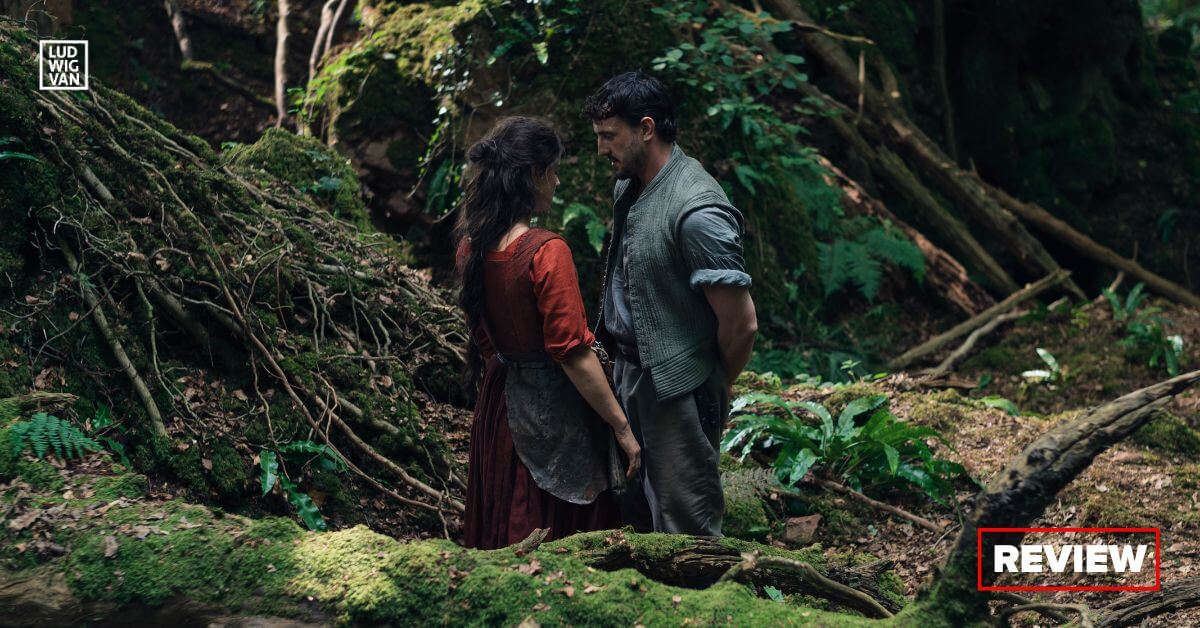
The story is largely seen through the eyes of Shakespeare’s wife, Agnes Hathaway (an Elizabethan era variant of Anne, also used in the book), who stays in Stratford as he travels back and forth to London for months at a time. She’s played by Jessie Buckley as the emotional centre of the story.
Buckley gives a luminous performance in the role of a woman who sees her husband juggling his work on and behind the stage in London and his family life as equally important elements of his life. Some scholars have speculated that there was a rift in their relationship, and the movie portrays a strained marriage.
That’s brought to a head by the death of their son, Hamnet, in 1596 at age 11. To Agnes’ dismay, William returns to London to bury himself in work, leaving her to grieve with her surviving daughters.
Hamnet is a variant of Hamlet that was considered the equivalent in the 16th century. Towards the end, the film changes course to veer from a familial drama to a vivid illustration of the intersections between life and art. Set in an entirely different story, the dialogue in Hamlet can certainly be construed as embodying the range of emotions the playwright must have felt.
It’s what writers do, after all.
Historically speaking, we’ll never know.


The Realities of 16th Century England
Director Zhao doesn’t shy away from the harsh realities of life in Elizabethan England. It was a time of the plague; in fact, many scholars speculate that Shakespeare eventually retired from London’s theatre scene back to Stratford in 1613 due to the rampant epidemic in the city.
It was a factor that shaped their lives at every turn. In the film, Agnes states that she doesn’t want to move the children to London because of “the air”. Even outside the plague itself, it wasn’t uncommon for a family to experience the deaths of three or more children from various illnesses.
Notions of hygiene were centuries away. The movie shows us the stained clothes, the dirty hands and fingernails.
Final Thoughts
Paul Mescal is strong as Shakespeare, a role that has less screen time than Buckley’s Agnes. He embodies the combination of family man and ambitious artist convincingly, and conveys an impressive depth of emotions.
The film ends on a high note of realization — how art can give voice to our stories in many different ways, and in doing so, help us to heal.
It’s a moving drama, and one that offers a glimpse into the links between the artist and their art, as seen from someone close to them rather than the artist themselves. The offside perspective is both surprising, and surprisingly effective in drawing the audience into the story.
My only quibble would be to include a little more of the artistic voice through the film. It illuminates the story in a striking way.
- There’s one more TIFF screening on September 11; information [HERE].
Focus Features announced that Hamlet will go into a limited theatrical release on November 27, 2025 in North America, followed by general release on December 12.
Are you looking to promote an event? Have a news tip? Need to know the best events happening this weekend? Send us a note.
#LUDWIGVAN
Get the daily arts news straight to your inbox.