
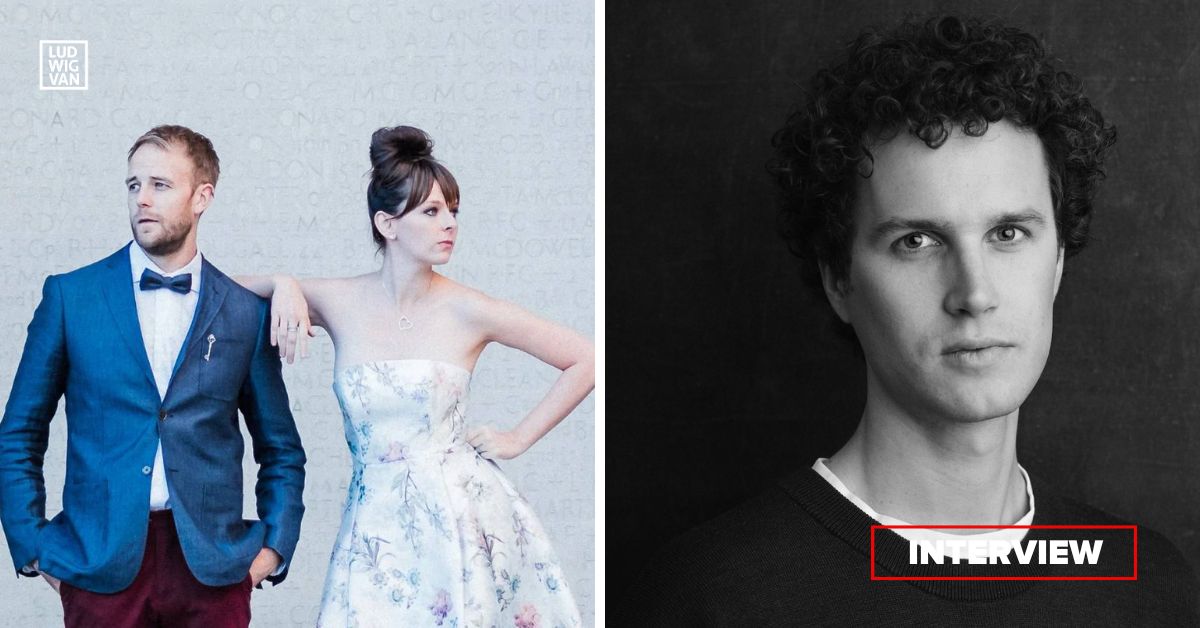
Outside the March and The National Ballet of Canada present the world premiere of Rainbow on Mars, a multidisciplinary co-production between the NBC and Peripheral Theatre. Rainbow on Mars is co-directed by award-winning visually impaired stage combat director Nate Bitton, together with Outside the March Artistic Director Mitchell Cushman.
The work is the brainchild of artist and academic Devon Healey, founder of Peripheral Theatre, and it’s described as part Pan’s Labyrinth, part Matrix — a journey into her own loss of vision, and the resulting shift in perception.
A young woman is thrust into a fantastical world of fabricators and fabulists, where she discovers that her sense of sight is not the only thing that leaves her guessing. It’s the first play by the award-winning theatre artist, and the experience is designed for both Blind and sighted audiences.
Along with Healey, the cast includes 19 performers with various expressions of Blindness and sight, featuring Healey and Bitton alongside Amy Keating, Sofía Rodríguez, Vanessa Smythe, Jeff Yung, and Elliot Gibson in their professional debut, with dancers of The National Ballet of Canada RBC Apprentice Programme, choreographed by Robert Binet.
The production marks the theatrical debut of Immersive Descriptive Audio or IDA, an accessible stagecraft practice created by Healey that embeds rich audio description and sound design as a character within the story.
We spoke to creator Devon Healey and choreographer Robert Binet about the innovative project.
The Interview: Devon Healey & Robert Binet
Devon Healey is an Assistant Professor of Disability Studies at the Ontario Institute for Studies in Education at the University of Toronto. Her focus, as both an academic and artist, is on changing our understanding of Blindness and disability from a negative to an alternative way of perceiving and living in the world. Devon has published several papers in academic journals, and a book on related topics. She is the co-founder of Peripheral Theatre, and an award-winning actor.
Choreographer Robert Binet is a Toronto native, and a graduate of the National Ballet School. Robert was the inaugural Choreographic Apprentice of The Royal Ballet, mentored by Resident Choreographer Wayne McGregor. He was appointed the Choreographic Associate of The National Ballet of Canada in 2013. He’s created several works for the NBC, including The Dreamers Ever Leave You, which made its premiere as part of an exhibition of paintings by Lawren Harris at the Art Gallery of Ontario, and went on to tour in Canada and the UK. His work has also been performed by companies across the dance world, including the New York City Ballet, Ballet Black, and the Estonian National Ballet, among others.
He has been the Creative Producer of CreativAction, a program that sees NBC resources shared among the dance community, since 2019, and was appointed Curator and Producer, CreativAction and Special Initiatives in 2021. Robert also serves as Artistic Director and Co-CEO of Fall for Dance North.

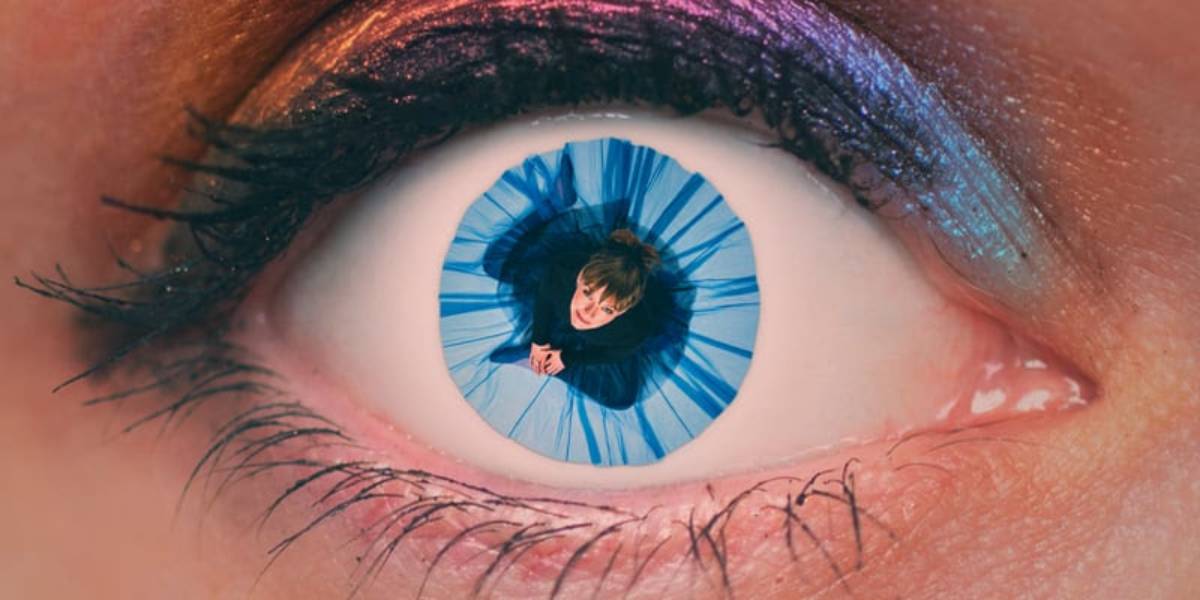
Devon Healey (creator and lead performance) and Robert Binet (choreographer)
The project has been in the works for a few years.
“Outside the March, about five years ago, they invited artists to submit ideas for their Forward March campaign,” Devon explains.
The idea was to nurture brand new shows that had never been workshopped, or otherwise seen the light of day previously.
“At the time, I was thinking of how to explore the story that has been with me for quite some time,” Healey explains.
The work takes its inspiration from her own story and journey to Blindness.
“Theatre has always been a part of my life,” she explains. However, as her sight deteriorated, it became less and less a space where she felt like she could exist. “Blindness had entered my life.” Casting directors and agents just didn’t see her as a performer anymore.
“I was met with quite a large barrier. I stepped away from theatre.”
But, her love of the stage never left her, and the idea of sharing her story in a theatrical format became something she wanted to explore.
For Binet, it began with the basics — telling a story through theatre and dance. He was contacted by
Mitchell Cushman, founding Artistic Director of Outside the March. “We’ve got this incredible script,” he was told.
As he read it, he agreed. “It’s screaming out for movement. It’s screaming out for dance,” he says. “There’s a huge choreographic element to Blindness.”
As he points out, Blind people understand movement with a very specific intent. “There are four things that put us in touch with our body: birth and death, Blindness and dance.“
Those early conversations led to a workshop back in 2021. “We were just playing with what is now the first scene of the show,” Binet says. “There was a sort of choreography scripted into the text.”
Different Approaches to Access: Immersive Descriptive Audio or IDA
“Typically when we think of access in theatre or dance, we imagine an audience member,” Healey says, “blind audience members, who need to be filled in on the visual feast on stage.”
As she points out, conventional descriptive audio is usually presented from the perspective of a sighted person who describes what catches their eye in the scene in question.
“When I left the theatre from this experience,” Devon says, “I was unsatisfied. There was a restlessness within me.”
As she points out, it privileges sightedness as the only way of perceiving the world
“I started thinking about my Blindness, and how I move through the world,” she says. If sightedness is not only the baseline, but the only acknowledged way of describing the world, it leaves everything else out of the equation.
“This show, I wanted to flip that,” she says. “Instead of merely describing what can be seen, Blindness becomes the lead storyteller.”
That storyteller puts the listener in touch with their own bodies, and fosters an internal rhythm that connects with other people.
“It’s that spark we get from other people,” Healey explains. “Through Immersive Descriptive Audio, instead of describing what we look like, IDA would really describe that spark,” she adds.
“Of course, Sight is a company member. Blindness is going to take us through a journey through our bodies.”
It’s an experience that is not often articulated in our visually oriented society.
“It must come from a Blind person,” Devon says. “It is in and of itself a performance, a story. We’ve woven the IDA into the story. What we’re hearing is through a fully formed character.”
As she describes it, Blind and sighted audience members will experience “a return to collective sensorium in a way that doesn’t privilege sight.”
Choreography
“In dance, in ballet, we think so much about how we look. There’s mirrors everywhere!” laughs Binet.
Putting the emphasis on feeling and sound was his starting point. He built the choreography directly from Healey’s script.
“Devon also asks the dancers what they’re feeling in their body,” Binet says. Those impressions are added to the text. “It’s like text and dance, but also Blindness and sight dancing together,” he says.
“Devon teases new movement out of me,” Binet says. “We make something that neither of us could do on our own.”
“The Blindness, and the Blind artist, is at the centre of the show,” Healey adds.
Text & Dance
“Devon has an extraordinary ability to translate movement into poetry,” Binet comments. He calls them poems of the body. “I never found text that so closely sits together with dance.”
He cites its sense of rhythm, texture, and movement. “It’s really fascinating.” The creative process involved going scene by scene to figure out how the pieces fit together.
“Every scene is a discovery process,” Binet says. He enjoyed tackling the complex choreographic puzzles that Healey created. “I find that so satisfying.”
He says he left any preconceived notions of style and aesthetic behind, and instead approached the project with questions. What is the world we’re living in? What are we trying to achieve? How can we do that in movement? — all the while, without prioritizing how it looks. It was an ongoing process.
“It doesn’t feel like we ever get out of the discovery stage,” he says, noting the five years of development.
Healey mentions that each individual dancer’s encounter with the combination of dance and text has influenced the show.
“The show is really an engagement with every heartbeat on stage,” she says. “Hopefully, one day, if this show continues [there will be] new heartbeats and new encounters,” she adds. “The text will also change a little bit.”
“I know immersive means so many thins in this context, but for me, there’s also this immersion into the dancers,” Robert says, “a deeper sense of what a dancer is feeling in their body.”
Final Thoughts
“I think the important thing about this show is that […] Rainbow on Mars is not going to educate anyone on Blindness. The hope is not that people leave thinking, okay, now I know what Blindness is,” Devon explains.
“My hope is that when people come to the show and experience Rob’s choreography and the story that’s happening, that they leave a little unsure about how we’ve come to be sure that sightedness is the only pathway,” she says. “It’s putting so much trust in our eyes,” she adds.
“Perhaps Blindness — whether you identify as Blind or not — is part of our collective sensorium,” Healey says. “It’s part of all of us.”
To be Blind is to experience the world with a different premise from the start.
“One of the beautiful invitations that Blindness offers me,” Devon says, “and I think that Rob and I continue to accept is […] if you identify as sighted, the world is brought to you,” she continues.
“Blindness pushes me and demands that I bring myself to the world, that I explore the world — that I touch and engage and connect.”
Dance and movement become a uniquely engaging way to connect those thoughts with an audience. “It’s almost a way to explore the ineffable — the journey that we are all in the midst of ,” she says.
For her, it represents a renewed connection to the stage.
“Dance was waiting with open arms.”
“It’s this open creative sensitivity,” Binet adds. “Dance provokes and suggests more than it defines.” It’s a matter of experiencing it, and interpreting that experience on your own terms. “I think we found some beautiful creative common ground there.”
“There’s a lot more than meets the eye,” Devon laughs.
Performance Details
Previews begin on August 9 at the Ada Slaight Hall, Daniel’s Spectrum, (585 Dundas St. E.), with opening night on August 13. Performances continue until August 20.
- Find an audio version of the performance details [HERE].
- Find a venue access guide [HERE].
- Find tickets and other information [HERE].
Are you looking to promote an event? Have a news tip? Need to know the best events happening this weekend? Send us a note.
#LUDWIGVAN
Get the daily arts news straight to your inbox.