
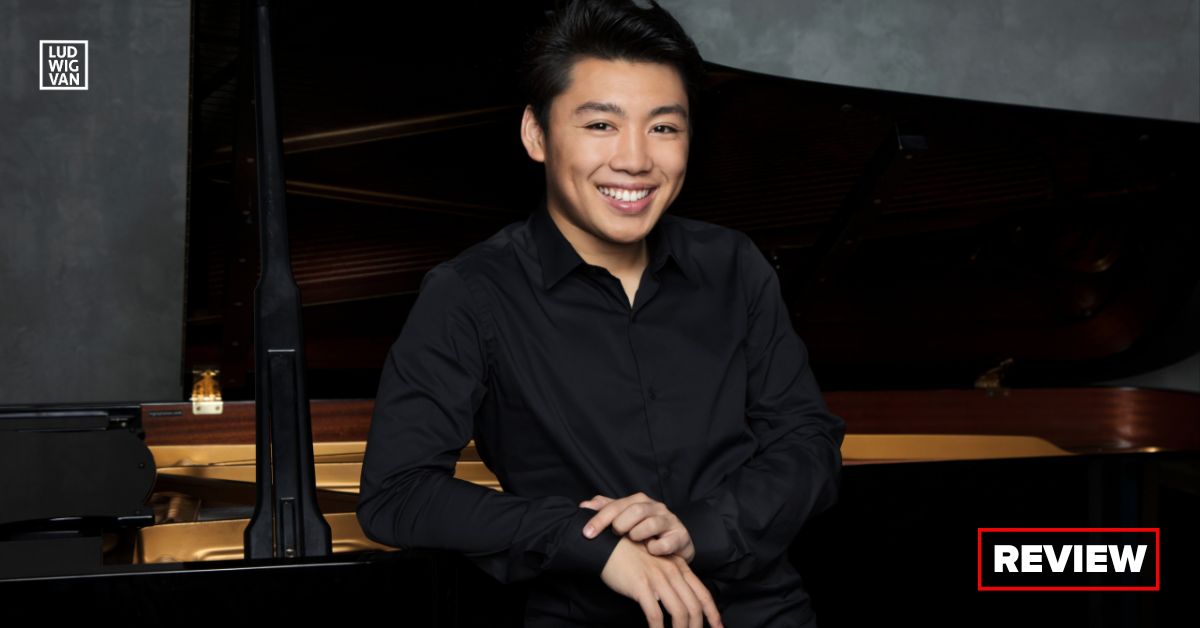
Toronto Summer Music: George Li, piano — Beethoven: Piano Sonata No. 14 in C-sharp minor, Op. 27, No. 2, “Moonlight”; Beethoven: Piano Sonata No. 17 in D minor, Op. 31, No. 2, “Tempest”; Debussy: Images, série I; Mussorgsky: Pictures at an Exhibition. July 17, 2025, Koerner Hall.
It’s never easy to dominate an audience, especially when playing beloved pieces of music. That’s what the charismatic George Li did on Thursday night, easily winning over a near capacity crowd at Koerner Hall with a program of pianistic classics including Mussorgsky’s Pictures at an Exhibition, Beethoven’s immortal Moonlight Sonata (Piano Sonata No. 14), Debussy’s Images, serie une and Beethoven’s Tempest (Sonata No. 17). Knowledgeable concert goers have heard these pieces many times before, which places a challenge to any solo performer: make the works impressive again or risk losing your audience.
The youthful Li, only 29 but already a seasoned performer, entered the stage with an air of confidence and immediately set himself the task of entrancing the assemblage. His only concession to the crowd’s expectations was reversing the order of the opening Beethoven sonatas, playing the slightly less familiar Tempest first, followed by Moonlight.
Performance
A dynamic, technically impressive performer, Li conquered any reluctant listeners with a dazzling first movement of Tempest, which exploited the different emotional moods of tranquility and fear that must have dominated Beethoven’s thoughts when composing the piece during the time when he was going deaf.
Unfortunately, a neophyte audience member applauded at its end, forcing Li to hold on for several additional bars before entering the second part of the piece. By the beginning of the third movement, Li was back in charge, creating a powerful allegretto, which produced a stunning set.
Li handled the famous opening movement of Sonata no 14 with aplomb, capturing its melodic beauty by playing with the solemnity that it requires. In the first two movements, the young pianist — the same age as Beethoven was when he wrote the piece — showed his command of his left hand while controlling the work’s contemplative tempo. In the tempestuous final movement, Li’s ability to play with extraordinary rapidity burst forth, with absolute command of the keyboard as the piece reached its emotional climax.

Second Half
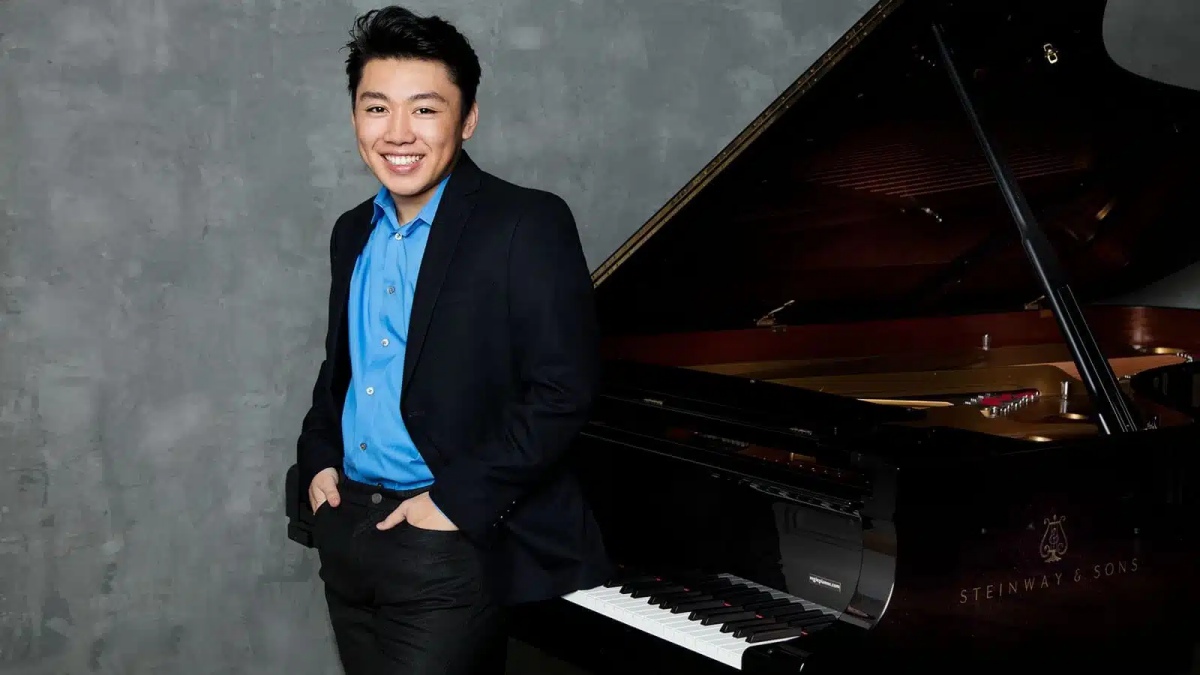
After the intermission, Li returned with two pieces, which encapsulated the performer’s ability to create musical pictures. While it’s debatable whether Beethoven had any pictorial or even narrative intentions with his compositions — both Moonlight and Tempest being imposed as names by others — there is no doubt that Debussy and Mussorgsky did write their pieces with artistic figures in mind. It certainly makes sense to pair Debussy’s Images, serie une and Mussorgksy’s Pictures at an Exhibition as works that were inspired by visuals and which encourages the listener to dream imagistically while hearing the music.
Li approached the Debussy with a quiet reverence, which could be seen by watching his face looking abstractly skyward as he played the piece. The pianist whose command can shift from the lightest of trills to a profoundly forceful exploitation of the keys — when necessary — was at his most lyrical in Reflets dans l’eau, which mirrored the movement of water as it reflects shimmering light.
With his astonishing touch on arpeggios and glissandos, Li was able to replicate the poetic impulse that inspired Debussy to create the work. Hommage à Rameau is a lovely backward look to one of France’s finest composers but it’s in Mouvement that Debussy created a truly visionary work.
The piece offers an exceptional set of notes — often quite melodic — that must be played with dexterity and a lightness of touch. Li seems to relish in conquering technical challenges; he was at his best almost racing through parts of the piece, before moving to a more poetic conclusion.
Pictures at an Exhibition begins, like Moonlight, with an opening that is iconic. Li approached the famous “Promenade” with a thundering treatment that matched the expectation of the composer, but may have startled some audience members who are more used to Ravel’s lyrical orchestration of the piece.
He is the right sort of pianist for the piece — showy, powerful, intensely dramatic. As Mussorgsky intended, we walk through a showing of works by the composer’s late friend Viktor Hartmann, which range from representations of many things including an ancient castle, through a garden to — in the grand finale — the Great Gate of Kiev. (If there is a political intent to playing the piece now, it isn’t stated).
As Mussorgsky wanted, the conclusion of this masterwork is dynamic with powerful chords hammering out the composer’s love of his late artistic friend. Li was more than capable of reaching the work’s emotional apex — to the relish of the audience.
Final Thoughts
George Li was feted by the crowd, which rose in thunderous applause. The American pianist of Chinese descent made the Toronto audience his own with two encores, the second of which was one of his favourites, Liszt’s La Campanella. It is, of course, a tour de force written by a virtuoso for others who can match its pyrotechnics. Li’s delivery was impeccable.
George Li was a child prodigy, mentored by Lang Lang among others. He is a recipient of an Avery Fisher Career Grant and a silver medalist at the International Tchaikovsky Competition.
After his success as part of the Toronto Summer Festival, we are likely to see more of this gifted pianist in the future.
By: Marc Glassman for Ludwig-Van
Are you looking to promote an event? Have a news tip? Need to know the best events happening this weekend? Send us a note.
#LUDWIGVAN
Get the daily arts news straight to your inbox.