

The 42nd second of Canadian Stage’s Dream in High Park features the perennial favourite, Romeo & Juliet. Performances begin Tuesday to Sunday evenings weekly from July 13 to August 31 in the city’s west end High Park.
Romeo & Juliet is directed by Marie Farsi, and stars Praneet Akilla and Lili Beaudoin in the title roles.
LvT spoke to Farsi and Akilla about the production.
Marie Farsi
Toronto audiences probably know Farsi best for her highly acclaimed production of Fifteen Dogs at Crow’s Theatre in 2023, along with her Dora Award winning turn directing Ghost Quartet, also at Crow’s (2019).
Farsi has also served as a dramaturge, performer, playwright (Fifteen Dogs), and as Associate Artistic Director (Crow’s Theatre). Along with Crow’s, she has directed for and collaborated with The Musical Stage Company, the Banff Centre for the Arts, Tarragon Theatre, Here For Now, Hip.Bang!, Rumble Theatre, Aux Écuries and Théâtre La Seizième, along with institutions such as the Stratford Festival and the Arts Club. Her work includes a wide range of theatre and performance from working with classical texts to sketch comedy to contemporary puppetry to musicals to performance installations.
Praneet Akilla
Award winning Indian-Canadian Actor & Producer Praneet Akilla has a wide ranging CV that includes leading roles on high profile series such as The CW’s Nancy Drew, Disney Freeform’s Motherland Fort Salem, and Netflix’s October Faction, and a recurring role on on CBC’s hit series Allegiance. He currently plays the role of Chopper, a series lead on the medical drama Skymed, broadcast on CBC Gem and Paramount Plus. He’s set to star in the upcoming film Jersey Boy. His production company Akilla Express Ltd. has produced a series of short films and web-series. Praneet is also in the midst of developing a TV adaptation of the Canadian novel Junie, and a new comedy/musical series about a young South Asian demon hunter.
He also has extensive stage experience, including Shakespearean works with BC’s Bard on the Beach.

Marie Farsi and Praneet Akilla: The Interview
Farsi has set the story in Italy circa 1930s and 1940s, a turbulent era of fascism and war, and rigid societal roles.
“This is a time in Italy where the was a big economic divide; I think there were a lot of social tensions,” Farsi explains.
As she points out, it was a deeply patriarchal society where fascism was on the rise, but, other than the name of Mussolini’s political party, the philosophy wasn’t called out as such at the time. It was a time of rigid gender roles. “It’s an Italy of vendetta,” she says. “Cycles of death and vengeance being inherited. I thought as a setting, it was quite suited for the play.”
Placing it in a historical period closer to our own could reveal much about the backstory without necessarily modernizing it. The setting sharpens the story’s relevance to modern audiences. But, she doesn’t want to recreate the period in any kind of historic authenticity.
“I kept it loose because I didn’t want the historical setting to become too much of a concept,” she explains. “I wanted to preserve some room for the poetry of the language of course.”
The characters and their stories are in the foreground; the setting is a kind of lived in and tactile world where that poetry can be featured.
As an experienced actor, Praneet wanted to bring his own stamp to the iconic character of Romeo. He didn’t want to dwell on the idea that so many other actors had performed the role.
“I didn’t really think too much, too hard about it,” he said. “I looked at certain inspirations.”
Marie suggested reading Elena Ferrante’s novel My Brilliant Friend, set in the post-war aftermath in Italy, as background reading.
“I think the character, his impulsiveness, his passion, his deep capacity for love — his love sickness — are in a sense timeless,” Akilla says.
“My focus has been on trying to tap into those qualities of his,” he adds. “It’s challenging because I’m honestly in real life a bit more grown up than Romeo.”
The challenge lies in tapping into that first flush of not just passion, but the wonder and euphoria of first-time love.
“And then not to mention the physical challenge of it being in the park,” he says. “I’ve done a lot of outdoor Shakespeare, but very different characters.”
Even when Romeo is just standing in place, in contemplation, he leads with his heart first. Akilla needed to channel his physicality. How to bring those emotions across physically on stage?

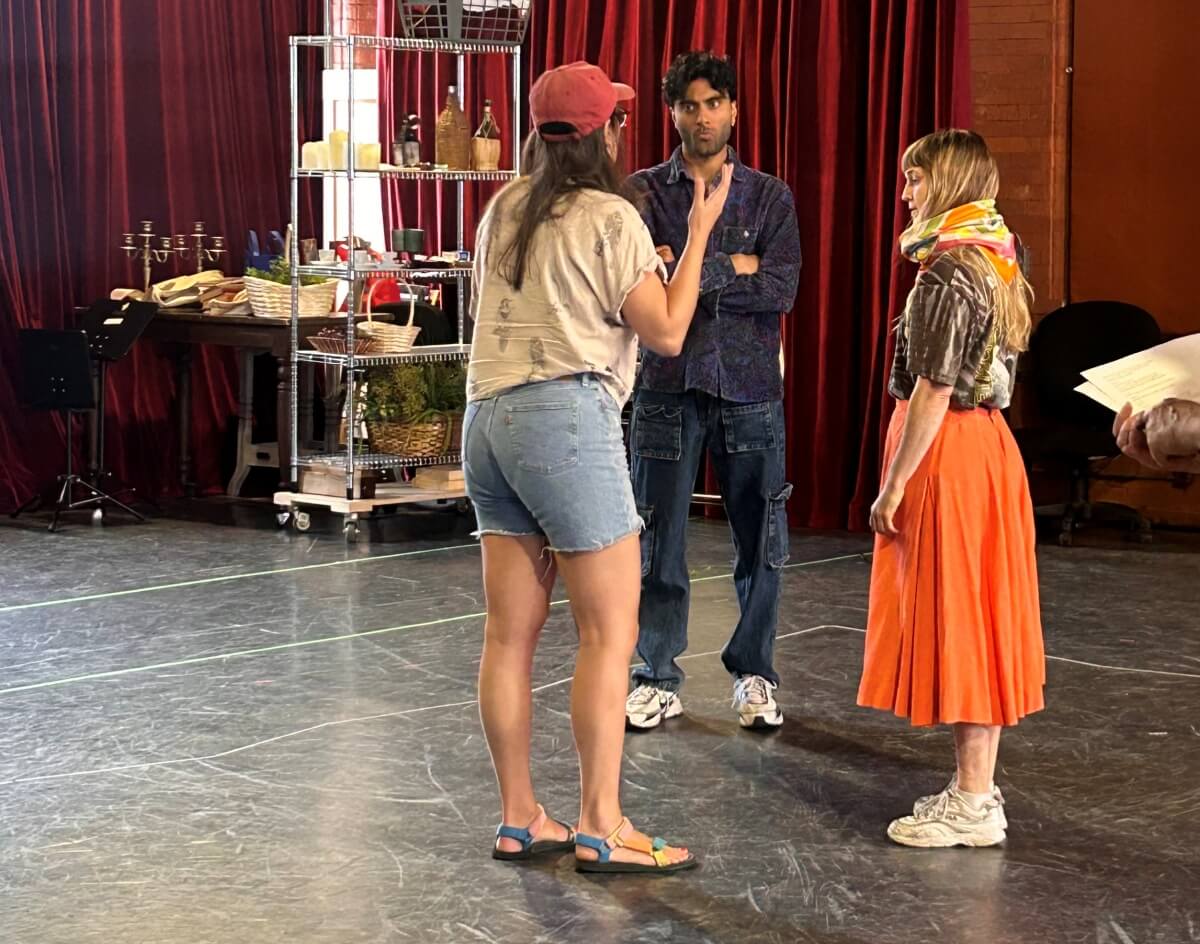
Setting: An Italy of the Imagination
“I think there’s a reason that Shakespeare picked Italy as the home for this play,” Farsi says.
As she points out, Shakespeare never attempted what would now be called strict geographic accuracy. He was interested primarily in the dramatic and emotional possibilities that a specific cultural landscape afforded him.
“I wanted to be authentic and respectful, but in the same spirit, it’s an imagined Italy of the time,” Farsi explains. “For me, the space should feel like an old sepia photo.”
Like the play’s originator, she is concerned primarily with the emotions of the play.
“I wanted the actors to really have absolute permission to think in terms of high emotions and passion, and extremes,” she says. “It is a tragedy, and the setting not only invites the actors, but the audience as well to access those characters with excessiveness.”
While rooted in emotional truths, the setting and the language heighten the effect.
“It’s a less repressed culture, and there’s a directness that exists in the story, in the characters, that I wanted to honour,” she says.
Taking On Romeo
Praneet talks about preparing for the role.
“I get too anxious and nervous if I look at other people,” he says. “I think in doing things like this, I just have to really remind myself, I just have to make him me.”
Too much study into the many versions that have been portrayed of Romeo can cloud the waters. “It’s been done millions of times before me,” he acknowledges. “Instead of trying to make it new, I’m trying to make it me.”
Working with Elizabethan English adds its own set of challenges to a true interpretation of character. Text coaches help with sorting out the dialogue.
“I think I just really lean in on script, and having lots of talks about the character,” he says.

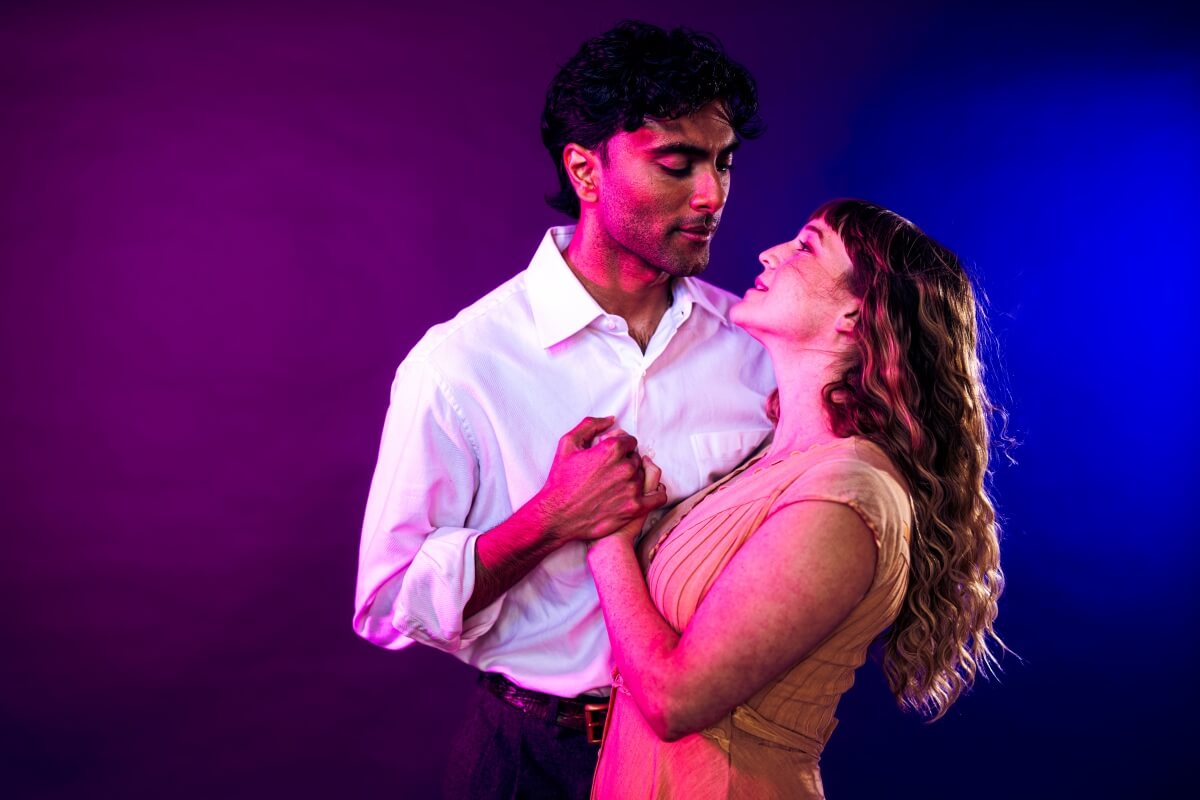
Dream in High Park
“It’s a 90-minute version of the play,” Marie notes. “It’s worth mentioning that it’s very accessible version of this story.”
The conventional version of the play can typically take between two and three hours to perform in full.
“I’ve distilled the story to its bare bones, but I think I really capture the world and the characters quite effectively,” she says. “I think it’s going to be a fresh take on the show.”
Not coming from a background steeped in Shakespeare and his plays is more of an advantage.
“I come from a different culture. Shakespeare is something I know, but I don’t think I have as many preconceived ideas,” she explains. “Whether you are first time theatre goer or a long time Shakespeare lover, you’ll find something new in this version of Romeo and Juliet.”
Praneet also finds parallels in South Asian culture. “I will also say that — somebody brought this up the other day — in my culture, there is no nuance in our culture,” he says. Bollywood movies are known for their extravagant take on love and emotions.
“It’s all heart,” he says, “really extreme declarations of love.” He drew on that in his portrayal of Romeo, the iconic romantic hero.
Marie points out another feature of the production. “There is music in the show,” she says. That includes singing and dancing.
In the end, it comes back to the play and its themes: young love and tragedy.
- Find details and tickets for Canadian Stage’s Dream in High Park: Romeo & Juliet [HERE].
Are you looking to promote an event? Have a news tip? Need to know the best events happening this weekend? Send us a note.
#LUDWIGVAN
Get the daily arts news straight to your inbox.