
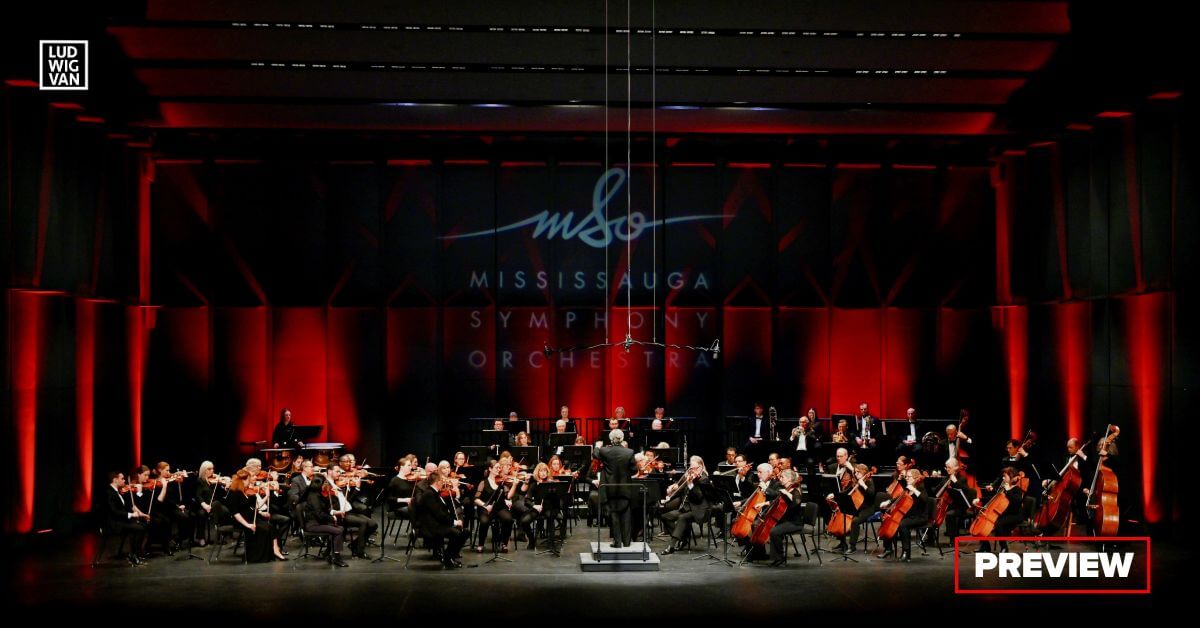
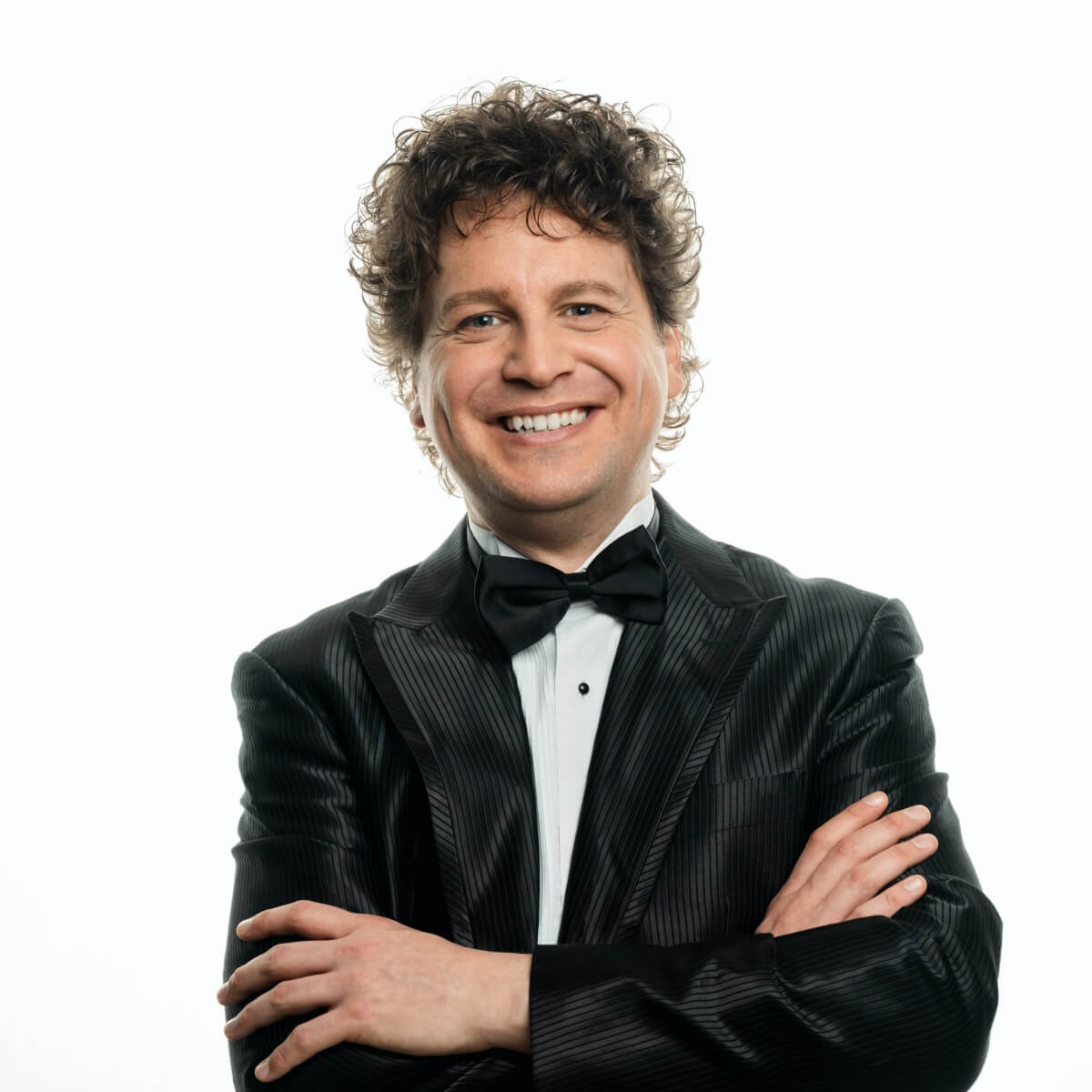
Pianist Daniel Vnukowski joins the Mississauga Symphony Orchestra for their next concert Beethoven & Schumann. The program pairs Beethoven’s first piano concerto with Schumann’s fourth symphony.
“I’m thrilled to present a concert of classical masterworks featuring one of Canada’s finest musicians.
These masterpieces showcase the depth and brilliance of classical music, promising an unforgettable
experience for our audience,” says Maestro Denis Mastromonaco, Music Director & Conductor in a statement.
Daniel Vnukowski, piano
A native of Windsor, Ontario, Vnukowski became fascinated by a grand piano he saw in a showroom at the tender age of three, and began to beg his parents for lessons. Daniel made his orchestral debut at the age of 12 with the Windsor Symphony Orchestra playing his own composition.
Vnuknowski studied music in Warsaw, Poland, where he moved a the age of 15. He would go on to study at the Lake Como International Piano Academy in Italy, at the Peabody Institute of Baltimore, and at the Guildhall School of Music and Drama in London.
As a performer, he’s taken to the stage across North and South America, in Europe and Asia. Alongside his international performing career, he’s brought music to remote communities in Canada through an outreach program.
Vnuknowski also founded the Collingwood Summer Music Festival in 2019, and works as a radio host on the New Classical FM in Toronto.

The Music
Schumann was, of course, an admirer of Beethoven’s work, which he sometimes quoted in his own (see Symphony No. 2), as well as wrote around (see WoO 31).
Ludwig van Beethoven (1770-1827): Piano Concerto No. 1 in C Major, Op. 15
I. Allegro con brio II. Largo III. Rondo: Allegro
Beethoven first went to Vienna in 1787 to study with Mozart. He’d return in 1792 to study again, this time with Haydn, and remained there for about 35 years until his death (1827). It was there that he’d become an integral part of the city’s coffee houses as well as its music scene. He performed in a variety of venues, including theatres, concert halls, and ducal palaces, throughout the city. He’d also move about 67 times during his often tumultuous life.
Beethoven began writing the concerto about two years after he moved to the city. What we now know as his Piano Concerto No. 1 in C major, Op. 15 was actually the second concerto for piano that Beethoven composed. He published it first, however, simply because he liked it better.
He sketched it out over the next two years, (during which time he also completed what would become Piano Concerto No. 2) and finally completed in 1798. It is believed he premiered it in Prague the same year.
Beethoven wrote both concertos to showcase his own piano playing in live performance, and added three different cadenzas for the first movement some time after 1804.
Robert Schumann (1810-1856): Symphony No. 4 in D Minor, Op. 120
I. Ziemlich langsam – Lebhaft II. Romanze: Ziemlich langsam III. Scherzo: Lebhaft IV. Langsam – Lebhaft
Schumann was on a career upswing in the early 1840s, after premiering his first symphony, the composer had also recently married virtuoso pianist Clara Wieck after a long legal battle against her disapproving father.
A few months after the premiere of Symphony No. 1, in June 1841, he began work on what would become Symphony No. 4. His First Symphony, Symphony No. 1 in B♭ major, Op. 38, while successful, was also quite conventional in terms of its musical structure and harmonies.
After composing his iconic song cycles (Liederkreis, Frauenliebe und –leben and Dichterliebe), he turned once again to the symphony, and he had something different in mind.
In her diary, dated May 31, Clara Schumann wrote, “Robert’s mind is very creative now, and he began a symphony yesterday which is to consist of one movement, but with an Adagio and finale. I have heard nothing of it as yet, but from seeing Robert’s doings, and from hearing a D minor echoing wildly in the distance, I know in advance that this will be another work that is emerging from the depths of his soul.”
He wanted, among other things, to deconstruct the traditional four movement format of the symphony, with breaks between the movements. In its original form, Symphony No. 4 premiered with Franz Liszt and Clara Schumann at the piano in December 1841, and while the reviews were generally positive, his publisher failed to pick it up.
Schumann shelved the work for a decade. He’d go on to compose two more symphonies. By 1851, he was installed as the music director of the Dusseldorf orchestra in Germany. There, he dusted off the old manuscript and rehabilitated the D minor. It finally premiered in May 1853 to much acclaim.
- Find more details on the performance, and tickets, [HERE].
Are you looking to promote an event? Have a news tip? Need to know the best events happening this weekend? Send us a note.
#LUDWIGVAN
Get the daily arts news straight to your inbox.