

Canadian audiences will get the opportunity to hear Samuel Coleridge-Taylor’s oratorio The Atonement for the first time in more than a century courtesy of the Orpheus Choir of Toronto, and The Nathaniel Dett Chorale.
The concert takes place on March 22, and celebrates the 60th anniversary of the Orpheus Choir, founded in 1964 by organist John Sidgwick. The Orpheus Choir was created to offer Toronto music lovers a richer palette of choral music than other, more traditionally minded choirs of the day.
Samuel Coleridge-Taylor’s oratorio will be performed with the choirs at Yorkminster Park Baptist Church, and a Chamber Orchestra conducted by Burton.

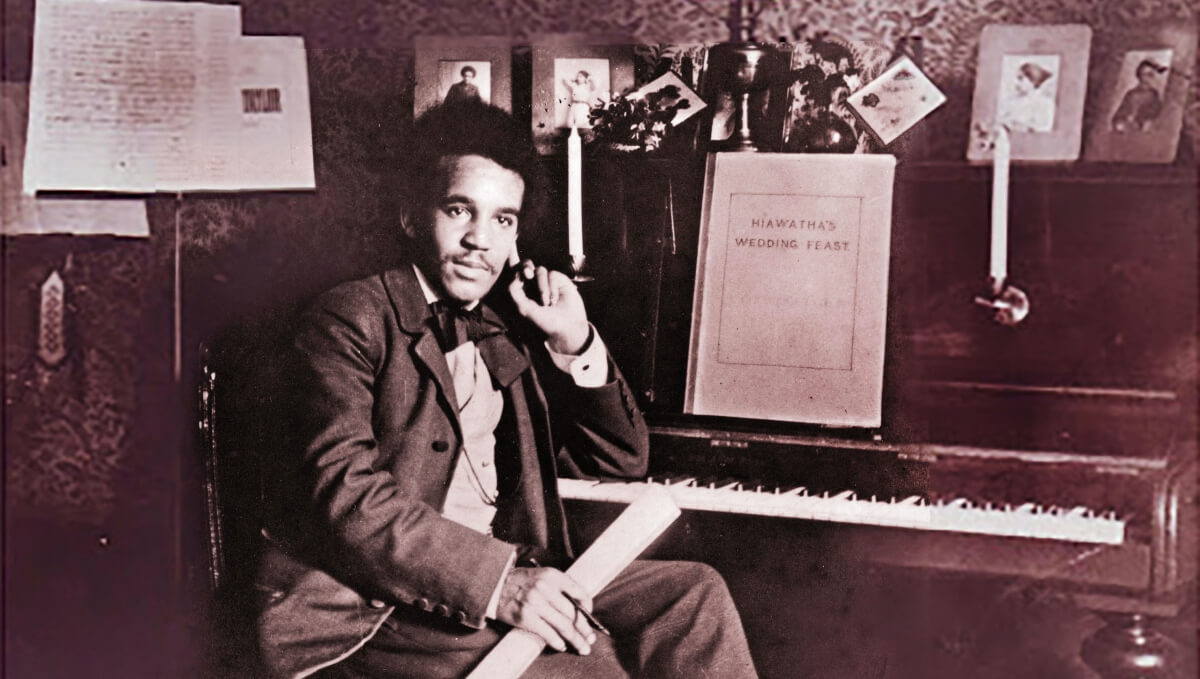
Samuel Coleridge-Taylor (1875 to 1912)
Composer Samuel Coleridge-Taylor grew up in Croydon, UK, and was of Sierra Leonean and English descent. He became a celebrated musician in the UK and the United States. Coleridge-Taylor, aside from his notable contributions to the classical music repertoire, was a strong advocate for racial equality. Probably his most famous work is The Song of Hiawatha, which premiered in 1898 at the Royal College of Music, and was based on a poem by American poet Henry Wadsworth Longfellow.
One of the issues involving Coleridge-Taylor’s work is that much of it exists in museum and library archives, and not as currently published work. Publishing his own large scale works at the turn of the 20th century, during the composer’s era, was prohibitively expensive. While many of his works were enormously popular during his lifetime, they fell out of the usual performance repertoire a few decades after his death.
Famously, Coleridge-Taylor’s only opera, Thelma, op. 72, was also thought to be lost altogether until it was rediscovered in 2003 by a PhD researcher in a boxed of uncatalogued manuscripts. It was finally performed for the very first time in 2012, and is now available in a published form.
Even the manuscripts that remain preserved are often piano sketches without orchestral arrangements, which means that many will never be heard as originally intended.
Coleridge-Taylor wrote his The Atonement: A Sacred Cantata for Soli, Chorus and Orchestra in 1903 to a libretto by Alice Parsons. The work delves into themes of spirituality and redemption.
Bryan Ijames, a Doctor of Musical Arts candidate at the Rackham School of Music, Theatre, and Dance of the University of Michigan, turned detective in order to properly breathe new life into Coleridge-Taylor’s Opus 53.
The vocal score for the work existed, but no orchestral score was ever published. After many hours of reading and reaching out to other Black music scholars, he eventually contacted places like the United States Library of Congress, and the Royal Albert Hall to no avail. It struck Ijames, however, that Coleridge-Taylor had been a student at the Royal College of Music in London.
Sure enough, when he contacted them, they located an autographed manuscript in their archival library. The library scanned the work to send to Ijames, who used it to create his orchestral arrangement, which premiered at Easter 2023.

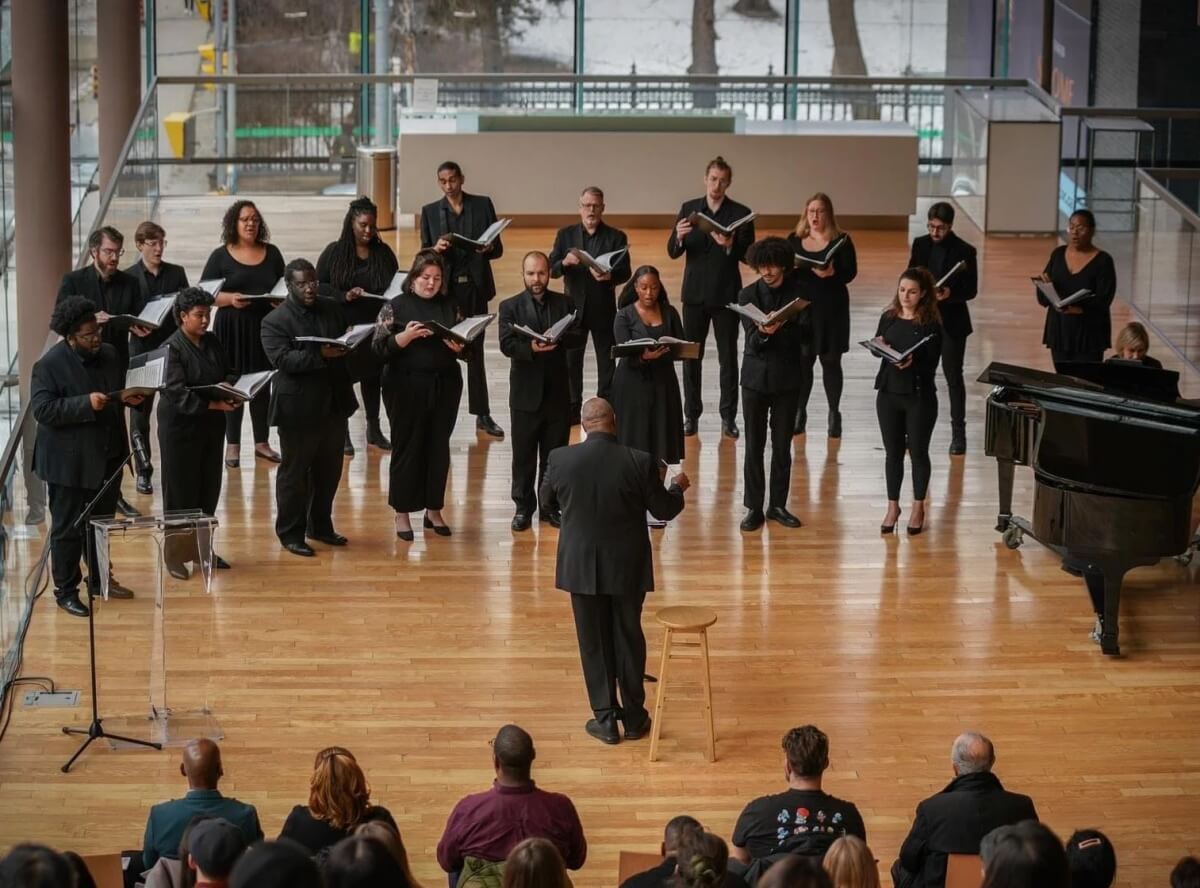
Orpheus Choir of Toronto Artistic Director Thomas Burton: The Interview
“I’m very excited. The music is so gorgeous,” says Burton of the unique and historic concert. He likens the music to the sweeping drama and emotions of other composers such as Strauss, Mahler and Mendelssohn.
Soloists
“Our soloists are part of our Orpheus emerging artist program,” explains Burton. As he points out, the program was started by former Artistic Director Brainerd Blyden-Taylor during his tenure. “It’s comprised of preprofessional artists.” The program, as he explains, is designed to give emerging artists performance experience.
“It’s such a rare opportunity to get to sing with an orchestra with a choir as a backup on a prominent platform.”
Those soloists include:
- Ian Gillis (Jesus): Bass-baritone in his final year at U of T, with notable roles in Il cappello di paglia di Firenze and Cendrillon.
- William Salinas-Crosby (Pilate): Tenor with recent performances at the HarbourVOICES Festival and Toronto Summer Music.
- Rayna Crandlemire (Mary, Mother of Christ): Soprano based in Toronto, an honours graduate from U of T, and frequent collaborator with the Toronto Mendelssohn Choir and others.
- Anika Venkatesh (Mary Magdalene): Vocalist and recent U of T graduate, blending contemporary performance art with classical work.
- Sarah Mole (Mary, Wife of Cleophas): Alto soloist with the Toronto Symphony Orchestra, known for her angelic voice and choral community involvement.
The Atonement
How Burton came to connect with the work was fortuitous. “Brian Ijames, we’re graduates of the same program at the University of Michigan,” he says. Ijames had been tasked with researching a piece by a Black composer that was non-idiomatic, i.e. not folk or pop music, leading to his resurrection of The Atonement.
“It’s the first Canadian orchestral performance since 1904,” Thomas says. That original performance took place in Calgary.
Burton had been in discussions with Blyden-Taylor about collaborations, and The Nathaniel Dett Chorale had performed the work to piano accompaniment at one point. “That’s why we wanted to invite them to perform at this orchestral performance.”
Despite the intriguing story of its origins and rediscovery, Burton would like the main focus to remain on the music. “The quality of this music is what is most exciting to me,” he says. “In my opinion, this work stands at the same level as all the choral works that are performed during the year.” He cites the usual Requiems by Brahms, Bach, and others.
What’s important is to establish Coleridge-Taylor’s work as part of the usual repertoire. That means repeated performances, and good quality recordings.
“It’s lush, evocative and wonderful,” Burton says. “Coleridge-Taylor’s style is highly chromatic,” he describes, emphasizing that the composer put his own distinctive stamp on the music. “There are several sections that highlight the choir in particular.” Burton mentions the close harmonies and wide range of vocal colours employed by the composer.
“What’s exciting about the pieces is the text,” he adds. Alice Parsons was a feminist poet. “She’s created this poetic retelling of the Passion story, and she’s added the perspective of many women in the story.”
For example, she includes the story of Pilate’s wife, who is not a liturgical figure, and the three Mary figures of the story. Parson’s and Coleridge-Taylor’s goal was to create a different kind of Easter celebration.
“That’s a part of this piece that sets it apart from the other Passion stories.”
As he points out, Coleridge-Taylor was both a vocal and violin prodigy himself from a very young age, so his understanding of the music and writing for voice was not only academic, but practical as well.
“Hopefully we’ll hear [it] many more times in the future.”
The Concert
Following the March 22 concert at Yorkminster Park Baptist Church, there will be a reception to celebrate the choir’s anniversary, with remarks from Thomas Burton and past Artistic Directors Brainerd Blyden-Taylor (currently A.D. of The Nathaniel Dett Chorale), and Robert Cooper.
- Find tickets and event details [HERE].
Are you looking to promote an event? Have a news tip? Need to know the best events happening this weekend? Send us a note.
#LUDWIGVAN
Get the daily arts news straight to your inbox.