

Celebração: Discover The Sounds of Portugal showcases the work of 10 diverse acts from the pop, folk, crossover and indie music worlds. The goal is to offer a true cross section of the Portuguese soundscape, from Fado to rock and innovative new music.
Lighthouse ArtSpace Toronto is the venue for the immersive concert series, supported by Small World Music, that takes place from February 14 to 26. Along with music, it also includes the Canadian premiere of a documentary film.
We caught up with guitarist and composer João Diogo Leitão to talk about his work, which takes the traditions of the Portuguese instrument called the viola braguesa, combined with classical music idioms, to create his unique sound.

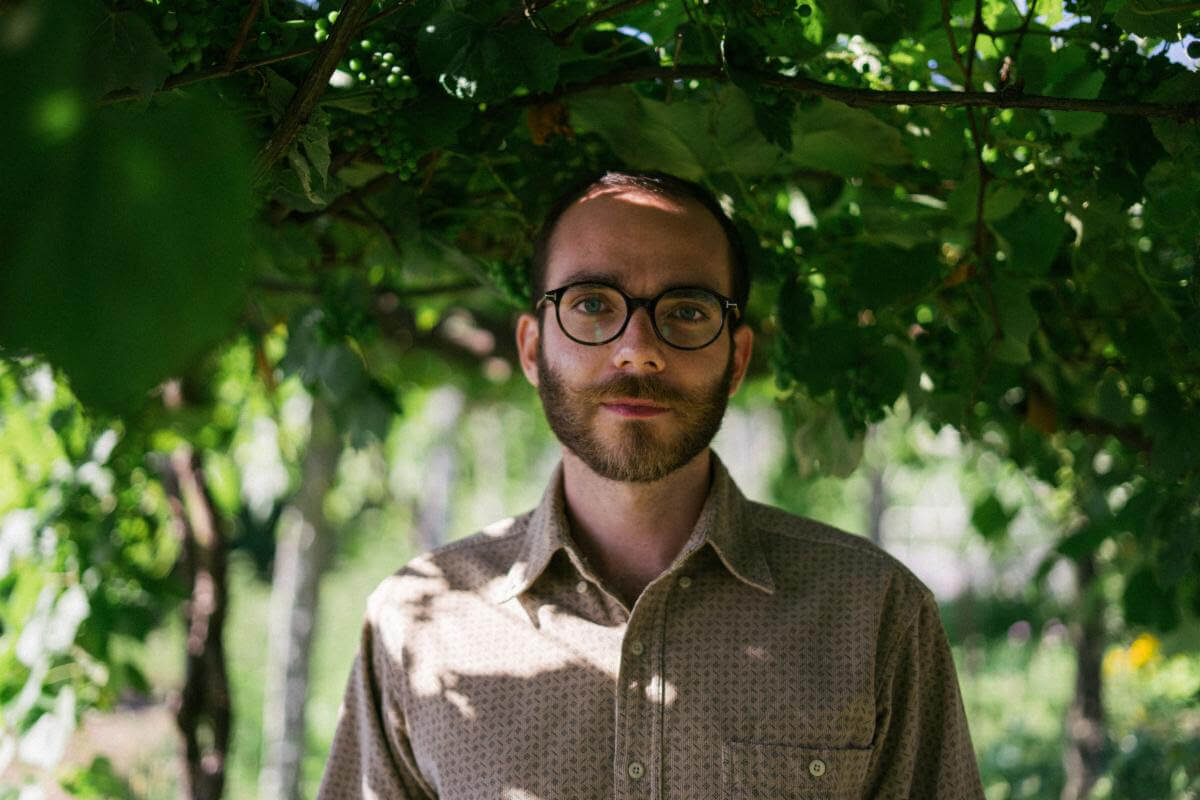
João Diogo Leitão: The Interview
The viola braguesa is a stringed instrument that comes from the Braga region in the northwest of Portugal. It has 10 strings — five pairs — made of steel. The string pairs are tuned to the same note, or an octave apart.
“We don’t have much evidence, but we suspect that it (comes from) the baroque guitar,” says João Leitão. “It survived in a more folk music context,” he explains.
It’s mostly likely dervied from one of several porto-guitars that existed during the baroque era (roughly 1600 to 1750). “There’s a really big family of similar traditional acoustic guitars like this spread all over the coutnry,” he adds. They all come from the same root, as he points out.
“The main difference is the string material,” he says. With its steel strings, the viola braguesa has a brighter, lighter timbre than most contemporary acoustic guitars.
Doubling the strings creates unique harmonics, and requires a very specific technique. “It makes it very particular.” As he explains it, multiple strings can vibrate at the same time, creating a kind of cluster of notes within the range of a scale. Size is another difference.
“They are usually smaller than a classical or acoustic guitar.”
The instrument is built with relatively flat design requiring different playing techniques. “A bit like flamenco,” he explains. With the strings close to the guitar body, it allows for percussive effects. “This combination of characteristics makes it different.”
João began by studying classical guitar. “I was deep inside this niche of classical music for a long time,” he says. Several years ago, he decided to take a break from pursuing music and the classical guitar to travel.
“I already knew about these traditional guitars, but I’d never played one before.”
He found a shop in his travels that sold many different types of traditional Portuguese guitars, and bought a viola braguesa on impulse with the intention of busking in the streets. “I don’t know exactly why,” he recalls. “I think it was the visuals, the look of it, but I chose the braguesa guitar.”
He had no intentions originally of delving into it seriously. That changed, though, the more he played it. The one problem was the lack of anything other than traditional folk music as repertoire.
“I decided to create my own music, because there is no repertoire.”
It wasn’t only the music, he found himself adapting his technique, and bringing the instrument into a completely different context than its usually heard. “That’s what I’ve been doing for the last few years,” he says. “What places can I take this instrument?”
For the Toronto show, he’ll be performing music from Por onde fica a primaver, his album for the solo viola braguesa, along with a few surprises. “I think I will be adding some recent music,” he says. Some of that includes an homage to other Portuguese musicians like the late guitar virtuoso Carlos Paredes.
“This year, we are celebrating one century of his birth,” he says. “It’s like a big inspiration for me.”

Celebração: Discover The Sounds of Portugal At A Glance
The festival includes multiple performances on each of the six days. Here’s a look at the offerings at a glance.
Bicho Carpinteiro (February 14 at 7 p.m.)
Bicho Carpinteiro is a duo consisting of veteran folk musicians Vasco Ribeiro Casais. They explore various Portuguese musical traditions from fados, chulas, viras, to lenga-lengas and more, using electronics.
João Diogo Leitão (February 14 at 8:15 p.m.)
He’ll perform his original compositions for the viola braguesa (see above!)
Lusitanian Ghosts — Documentary Film Screening (February 14 at 9:30 p.m.)
The film follows Lusitanian Ghosts, a Canadian Portuguese Swedish neo-folk collective. Their music uses historic stringed instruments such as the Beiroa, Campaniça, Braguesa, Terceirense and Amarantina, coupled with lyrics that tackle contemporary socio-political issues.
Retimbrar (February 17 at 7 p.m.)
This eight-piece orchestra is renowned for their live shows. Their music emphasizes the use of Portuguese drums and rhythms, which become the starting point for original music they’ve dubbed TugaBeat.
Joana Alegre (February 17 at 8:15 p.m.)
Joane Alegre studied classical music and jazz in Portugal, the United States, and Italy, and has gone on to become a semi-finalist status in the International Song Contest. Her music blends baroque pop and electronic sound with her Portuguese roots.
OMIRI (February 22 at 7 p.m.)
Using samples of traditional songs and original video footage, OMIRI mixed the sound and video in performance, revealing half-forgotten music and musical practices in a fusion with contemporary urban culture.
RAIA (February 25 at 7 p.m.)
RAIA: Planeta campaniça is a solo project by Portuguese musician Tó-Zé Bexiga, exploring the viola campaniça, one of the traditional violas that comes from the Campaniça region (Baixo Alentejo). Raia refers to the borderline between Portugal and Spain, and a sound that falls somewhere between. He is also a member of the Lusitanian Ghosts chordophone collective.
O Gajo (February 25 at 8:15 p.m.)
João Morais is a veteran of the Portuguese punk and rock circuit. O Gajo (meaning The Dude) is a solo project where he focuses on the viola campaniça.
Lusitanian Ghosts (February 25 at 9:30 p.m.)
The ensemble was founded by Canadian Neil Leyton and Micke Ghost (a.k.a. Mikael Lundin) as a way of revitalizing forgotten musical instruments — the Lusitanian Ghosts. The Lusitania were an ancient Celtic tribe who lived in the central area of Portugal. The occasion marks the band’s new Canada / US digital compilation titled Chordophone Rock n Roll.
P.S. Lucas (February 26 at 7 p.m.)
P.S. Lucas is singer, a member of the Wanderer Songs collective. He released his solo debut album Villains & Chieftans in 2024, blending pop, folk, soul and jazz elements into his music.
- Find out more about Celebração: Discover The Sounds of Portugal, which runs from February 14 to 26, [HERE].
Are you looking to promote an event? Have a news tip? Need to know the best events happening this weekend? Send us a note.
#LUDWIGVAN
Get the daily arts news straight to your inbox.