
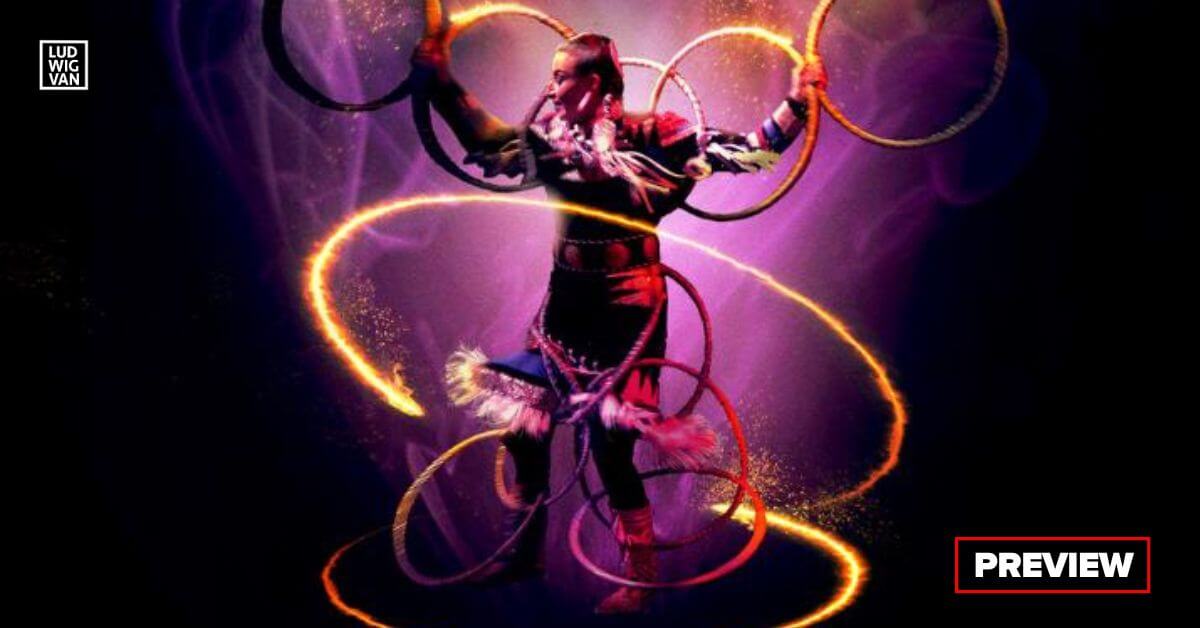
A conversation leads to an album, which leads to a tour, which leads to a film premiere — that’s the story behind Sultans of String and their Walking Through The Fire — Indigenous Collaborations. On November 1, the film version will premiere in Toronto.
According to Chris McKhool of Sultans of String, the visual album is the end result of a much longer process. “It was many years in the making, many conversations over many years,” he says.
Walking Through the Fire
The Walking Through the Fire project really began when he started to work with Dr. Duke Redbird, an Elder from the Saugeen Ojibway Nation, scholar, poet and filmmaker on their Refuge / Sanctuary Project project a few years ago. As the project was wrapping up, Chris recalls that Redbird asked him, so what are you going to do about bringing awareness to Indigenous stories?
“It was a direct call to action,” he says. “I really respect Duke.” Together, they’d begin to put together what would amount to an advisory panel on how to proceed.
Along with Redbird, Chris started talking to frequent collaborator Shannon Thunderbird, a Coast Tsimshian First Nations singer-songwriter, and reached out to Indigenous musicians he’d met over the years, like singer-songwriter Marc Meriläinen, among others. Slowly, the committee came together, “to keep me on track,” Chris says, as he put together an album that attempted to give voice to the diversity of Indigenous music in Canada.
Specifically, the idea that emerged was to represent contemporary Indigenous culture literally from coast to coast. They began to choose artists from each area, adding the NWT and all the way east to Prince Edward Island to complete the list. Their art director comes from the Yukon.
“There was a lot of great recommendations from some of the artists that I already knew,” Chris says. He researched others, looking at JUNO nominees and winners, among other things.
“It was two years in the making, and out came the album that I’m super duper proud of,” he says.
The album represents a broad range of musical genres. Along with Thunderbird, other artists on the album include the Métis Fiddler Quartet, The North Sound from the Prairies, Blues singer Crystal Shawanda, Heavy-Wood guitarist Don Ross, Northern Cree pow wow group, Dene singer-songwriter Leela Gilday, Inuit Throat Singers and others. The tracks includes Métis fiddling, an East Coast Kitchen Party, rumba, rock, the drumming of the Pacific Northwest, and more.
All of the lyrics were written by the Indigenous artists; Chris’ contribution was to collaborate at the musical end of things.

Album / Tour / Film
Chris and members of his committee with then-Justice, and now senator, Murray Sinclair, Chair of the Truth and Reconciliation Commission. Sinclair underscored how important it would be to such a project to include lyrics in the various Indigenous languages.
Reconciliation can’t begin until all the truths have been told. That’s one of the central premises of the concept and the 94 Calls to Action of the final Truth and Reconciliation Report.
“The very fact that you’re doing this tells me that you believe in the validity of our language, you believe in the validity of our art and our music and that you want to help to bring it out. And that’s really what’s important, is for people to have faith that we can do this,” says the Honourable Murray Sinclair, Ojibwe Elder and former chair of the Truth & Reconciliation Commission in a statement.
The album was released on September 15, 2023, and at first the project, involving artists from all over Canada, wasn’t really intended for live performance. However, a casual conversation led to the initial live show, held at Markham Flato theatre, which in turn led to 50 more concerts across Ontario, appearances at the Edmonton Folk Festival, opening up for Robert Plant, performing with the Cathedral Bluffs and Winnipeg Symphony Orchestras, and more.
As the tour progressed, they would interview each artist on camera about the project and what it meant, and that in turn became the heart of a documentary film.
“Our big debut is November 1,” Chris says. The film will premiere in Toronto, then screen in Hamilton, Kitchener, and St. Catherines, with other dates and locations to be confirmed.
“[It’s] a project that gave a sense of how deep and wide Indigenous culture is,” Chris says, noting there are more than 600 different Indigenous nations. “We can only just touch upon these cultures, but it’s a very broad perspective. There’s a hope with this project that people will be interested to pick up a CD by this artist.”

Shannon Thunderbird
The film includes both interviews and MTV style music videos, a couple of which were shot live, including Shannon’s Lost and Found.
“Lost and Found came out of the finding of the bones of 250 Indigenous children who were found in a mass grave in a closed residential school in Kamloops,” says Thunderbird. “It was the first time that Canadians saw actual, tangible […] evidence of the residential school systems.”
Shannon is an intergenerational residential school survivor. The song came to her at 4 a.m. after she’d heard the news. “To tell the truth — my truth — about the residential school system,” she says. “It’s received a tremendous amount of response.” She reports that, in particular, there has been a great response from Irish fans who can relate to the story of intergenerational abuse.
“It’s sad, but it’s powerful, and it’s truth,” she says. Working on the album helped in her healing journey, and beyond that, its message went out to listeners. She says that feedback from Indigenous audience members was equally positive. “It was healing,” she says. “They felt better that the truth was out there.”
Chris contributed the arrangement for the song, which was recorded with the Prague Symphony Orchestra, who appear on a lot of the backing tracks of the album.
“I’d like to go there now and meet them,” she laughs. “That’s the great thing about this album, because it’s the truth. That’s what makes this album unbelievably unique. And fun.”
The lively performances were well received. “We got a little spoilt with standing ovations,” Shannon says. “It grabs people. Because it’s all Indigenous, you had to wonder whether or not we’d have an audience. But, we played to packed houses.” After the shows, meet and greets allowed the artists to meet audience members up close.
“It is a really fantastic experience,” she says. “It’s just amazing how this happened,” she adds, crediting Chris’ initiative. “[He] is my little brother – I am the matriarch. He has been relentless in his pursuit of getting this right.”
As she comments, it’s a project that has snowballed.
Film Screenings
Christopher adds that many of the screenings will be available in surround sound. “One of the fun things is that we did the sound in full digital Dolby Atmos. It’s really fund to mix the audio that way.” Legendary JUNO and Grammy award winning Canadian engineer John Beetle Bailey mixed and engineered the album.
The Toronto screening on November 1 takes place at the Cecil Community Centre, and 100% of the ticket price will be donated to the Native Women’s Resource Centre. Find out more [HERE].
Are you looking to promote an event? Have a news tip? Need to know the best events happening this weekend? Send us a note.
#LUDWIGVAN
Get the daily arts news straight to your inbox.