
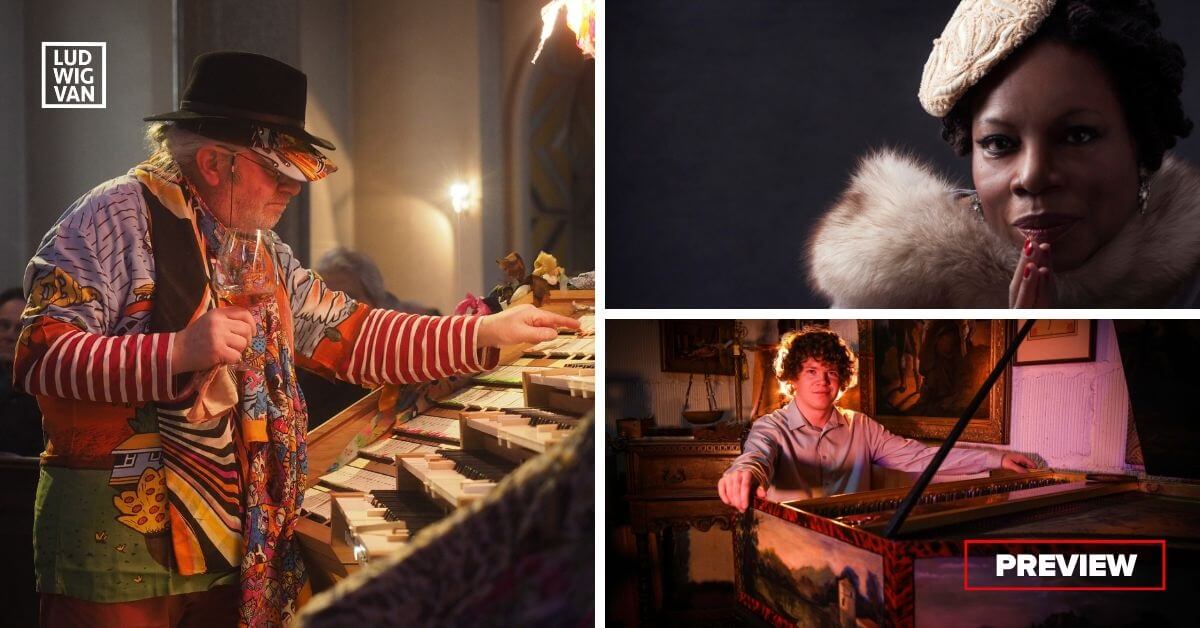
The FutureStops Festival of the Organ, which takes place in Toronto from September 29 to October 1, is a music festival with a mission.
FutureStops, an organization dedicated to bringing the pipe organ and its enormous possibilities to the 21st century zeitgeist, began with a podcast. Artist and musician Blake Hargreaves initiated the FutureStops podcast to introduce a wider public to the instrument.
The podcast incorporates interviews with artists and innovators, including performers, composers, and instrument builders, among others. The ongoing project is heading into its third year. But, that’s only the beginning, according to Hargreaves, who is also acting as curator for the festival.
“This festival is our big announcement party for two of the three prongs of FutureStops,” he says. “With this event, we are launching the other two.”
That includes essentially updating the public on the current status of a venerable instrument, as well as developing a community that can add momentum to collective efforts to bring new works for the instrument to a wider public.
“So many people who work with the pipe organ nowadays find themselves in a kind of silo,” he notes. He hopes the festival will be a meeting point for the artists as well as audiences to discover the instrument in its complexity.
“In our current age, where technology is such a big part of everyday discourse, this instrument was the most complex machine ever built by human beings at the time it was made. A hundred years ago, organs like the one at the Metropolitan might have had an appeal to them as a technological marvel,” he points out. The complexity of the instrument adds to its potential. “There is a huge depth of ways to be interested in it.”
Modern day keyboard players on synthesizers can appreciate the origins of that sound in the pipe organ, as well as its sheer sonic power. “The fact that the organ can amplify the efforts of the musician [is important],” he says. “In our ear bud and technology age, that’s a phenomenon that’s unparalleled.”
For most people, the pipe organ and any music written for it are tightly associated with sacred music as well as classical music of specific eras. “That’s what we’re aiming to correct.”
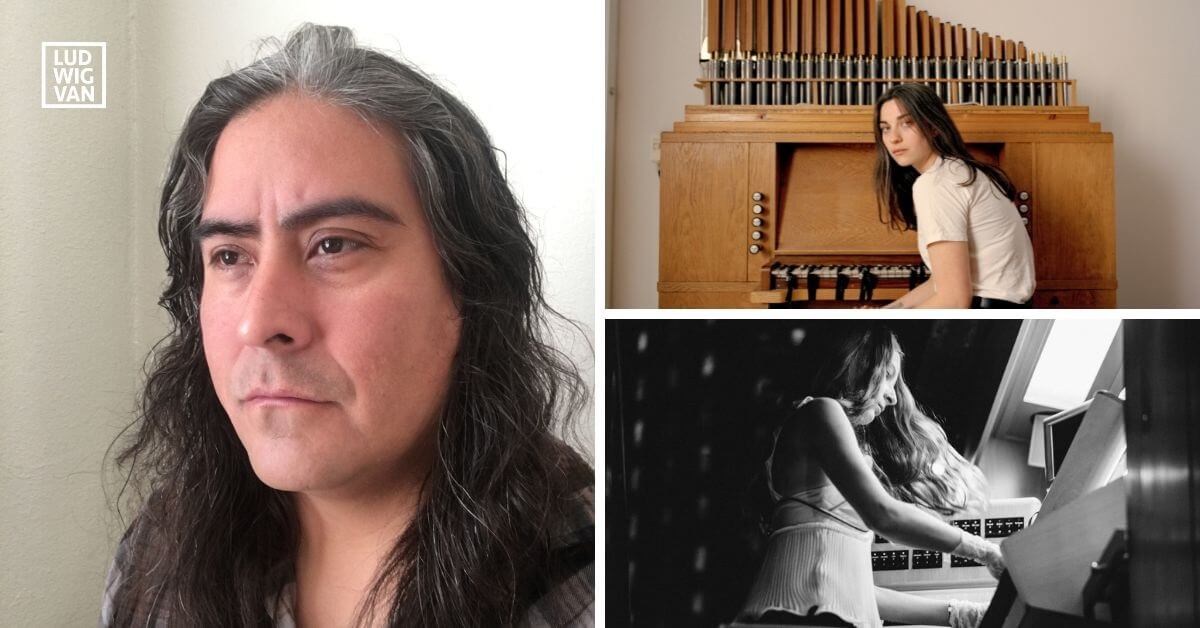
The FutureStops Festival
The festival will unfold over three days, and three physical locations as well as online: Roy Thomson Hall, Cathedral of St James, Metropolitan United Church and online at www.futurestops.org. The Metropolitan United Church houses Canada’s largest pipe organ.
“The organ is the main character of this festival,” Hargreaves explains. “We wanted to offer people the invitation to experience the organ in many different contexts.”
Each concert has something different on offer, including exciting new Canadian composers and venerated international artists.
Thursday’s concert at the Cathedral Church of St. James is titled Dark Matter, and the program offers distinctive new voices in the world of contemporary classical music.
- Kara-Lis Coverdale: a young composer noted for works that combine ambient elegance with digital noise;
- Thomas Mellan: a virtuosic pipe organ devotee from Boston who creates and performs incredibly challenging adaptations from the classical canon alongside heavy metal — according to Hargreaves, “He’s going to bring us into his world” (including two Canadian premieres);
- Kali Malone: an emerging composer noted for austere and trance-like compositions that invite real contemplation.
Friday’s centrepiece concert takes place at Roy Thomson Hall, and is titled Gravity. It includes several Canadian premieres along with distinguished visiting artists from the US. The concert takes place on the second National Reconciliation Day.
- Raven Chacon: winner of the 2022 Pulitzer Prize for Music and long-time Composer-in-Residence with the Native American Composers Apprenticeship Project, teaching Native American young people to compose string quartets — audiences will hear his Voiceless Mass for large organ ensemble performed by Arraymusic;
- Amina Claudine Myers: a member of the groundbreaking AACM in Chicago, she presents her Improvisational Suite, blending free jazz, spiritual and other influences;
- Rashaan Rori Allwood: an emerging composer who has performed with the Orchestre Symphonique de Montreal and Houston Civic Symphony, and was first prize winner of the Concours d’orgue de Québec in 2017;
- Sara Svendsen: a member of the Organized Crime duo, the innovative arranger and virtuosic performer premieres a new work by Neil Weisensel.
After Friday’s concert, there will be a gala reception in the Roy Thomson Hall lobby where you can rub shoulders with the artists, drink and dance to the Jeff McLeod Organ Trio.
Raven Chacon talks about Voiceless Mass in the FutureStops podcast:

On Saturday afternoon, the Roy Thomson Hall lobby becomes the place to experience Hacking The Organ. Each performer will build their own instrument to perform on, demonstrating an organ that can be activated anywhere.
- Sandra Boss: a Danish composer and sound artist, her work blurs the line between machine and instrument, and she’ll construct a midi-controlled instrument for a new work;
- FUJI|||||||||||TA: the Japanese sound artist also known as Yosuke Fujita will build and play a handmade pipe organ device and perform a new work.
Saturday’s evening concert winds up the festival at the Metropolitan United Church with music that explores passion, spirituality and aesthetics in a program titled Forces of Nature.
- Sarah Davachi: as the Stingray Classical Artist in Residence, the young composer experimented with instruments at the National Music Centre, focusing on the pipe organ’s integrative possibilities, among others;
- Matthew Larkin: one of Canada’s preeminent concert organists and recording artists on the Naxos label, he’ll play two Canadian compositions;
- Charlemagne Palestine: the American artist and musician began training as a cantor, with a 60-year career as a sound artist; he creates continuum music (essentially, the same piece throughout time) as a contemporary of Philip Glass and Terry Riley.
“He represents, in the purist form, the adaptation of the organ to a contemporary art experience,” Hargreaves says of Charlemagne.
The message overall is clear: the pipe organ can exist within the world of contemporary music. Some of the artists, like Sarah Davachi, integrate the organ with synthesizers and electronics. “They’ll be coming into the spaces and tweaking everything they know on the organ to fit the environment,” Hargreaves explains. With the pipe organ’s power, it’s possible to sculpt unique sonic environments.
Find out more about the FutureStops Festival, and get tickets to the concerts, here.
#LUDWIGVAN
Get the daily arts news straight to your inbox.