
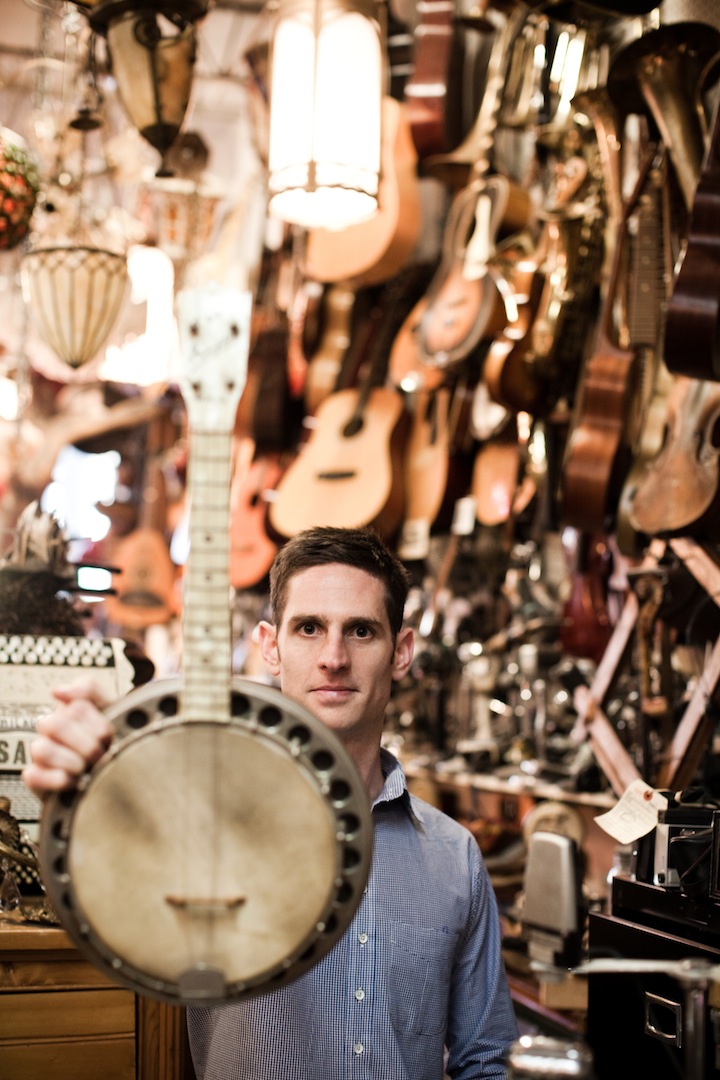
Just as I’ve been working on a banjo collaboration for “Jesu, Joy of Man’s Desiring” for church this coming Sunday, I ran across a video of Toronto-native banjo player Jayme Stone and bandmates playing a section of J.S. Bach’s Art of the Fugue. It reminded me for the umpteenth time how adaptable Bach’s musical language is.
This comes on the heels of reading an recent essay by a prominent, veteran period-performance musician who railed against arrangements of Bach’s music. He cited a string-trio arrangement of the Goldberg Variations as a case in point, referring to it as “a modern horror.”
Is it a horror to bring Bach to life for different audiences in different contexts?
Since Bach didn’t actually specify instrumentation in the Art of the Fugue, I thought I’d share the Stone’s video with the banjo of “Contrapuntus IX,” a four-part double-fugue, and include a few other versions so we can compare attributes:

Now, the Canadian Brass:

The Emerson Quartet:

Glenn Gould:
Winston Choi:

Matteo Messori:

And beatboxer Jack Stratton:

Because I work as a critic, I feel I need to tell you my favourite from this set: It’s Messori’s beautifully paced interpretation, which uses time to define what would otherwise be undefinable on a harpsichord. Stone & co. also manage to walk the fine line between music and mathematics. There is poetry here that is lacking in most of the other interpretations.
Which is your favourite? Do you think any of the interpretations is “a modern horror”?
John Terauds