
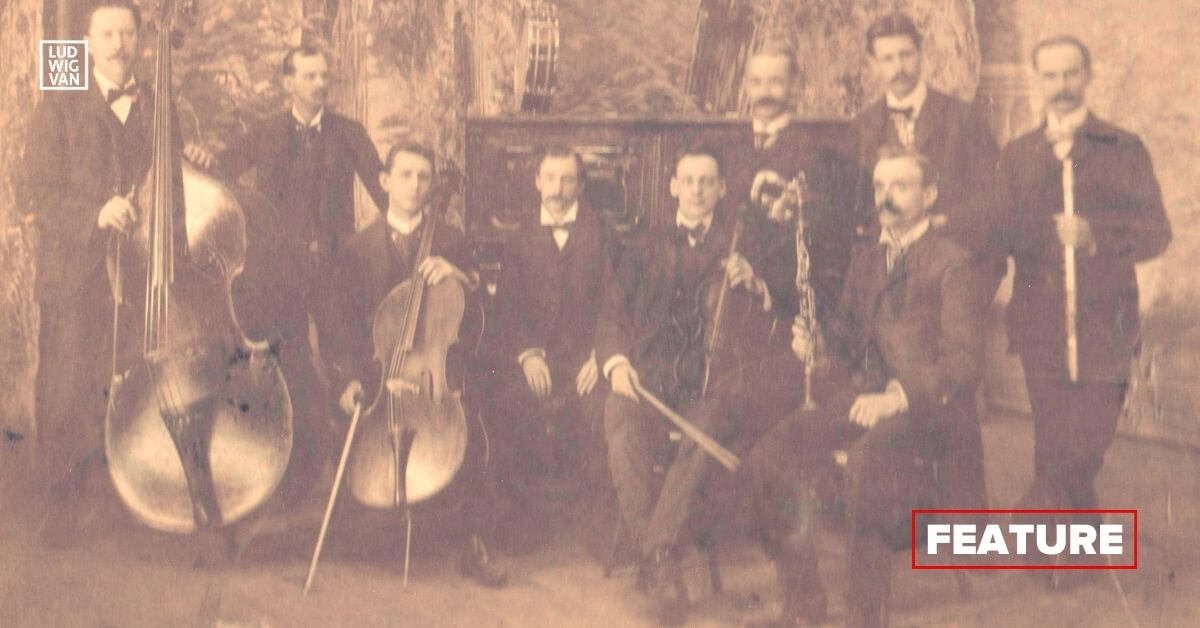
Teck Culley (1863 – 1948) was a hard working musician in Toronto. He was a prominent flutist and educator, and co-founded the musician’s union in the city. It’s a history that his family, even to subsequent generations, was well aware of.
What they didn’t realize until recently, however, was that he was a composer too.
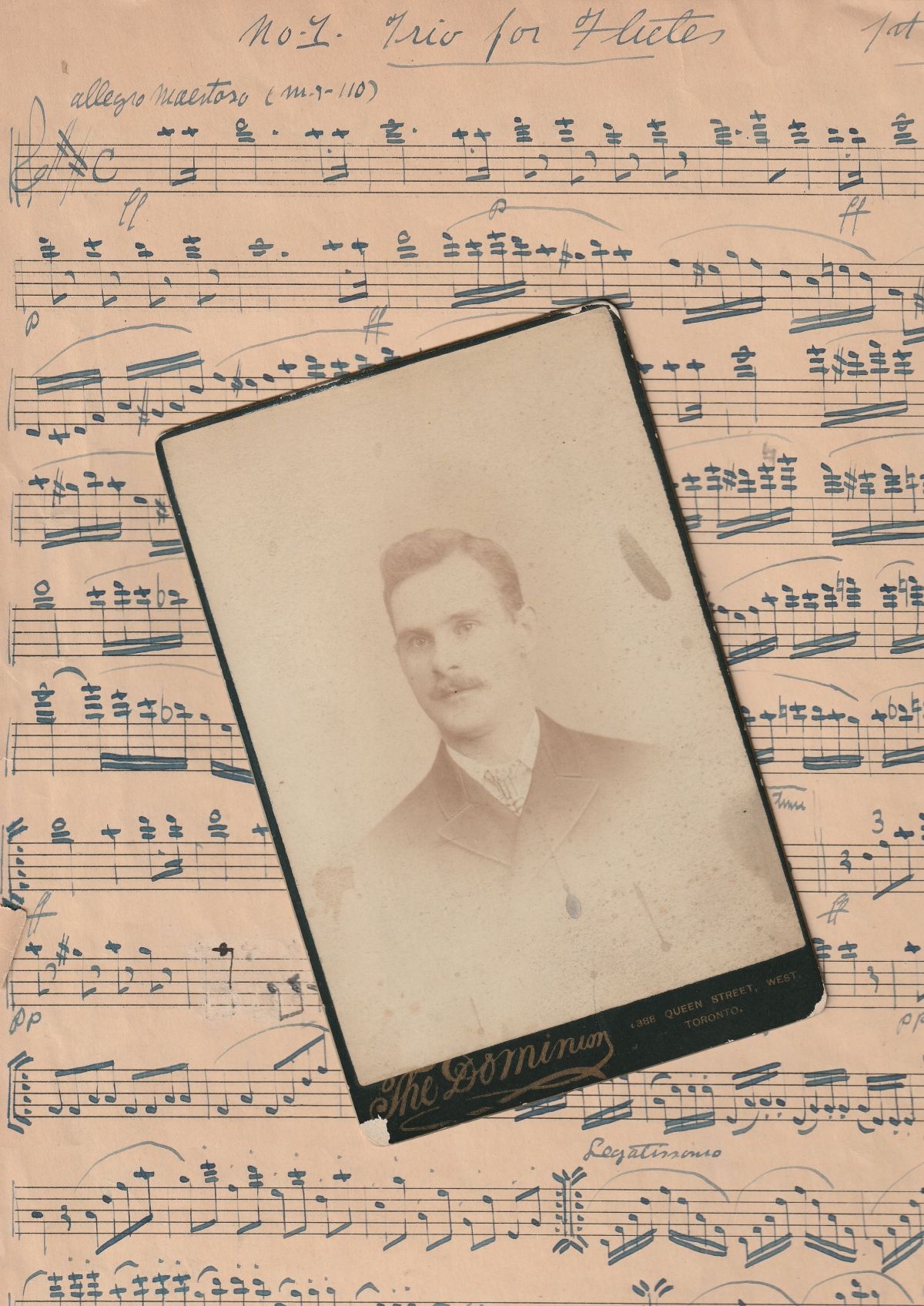
That revelation came up recently when great-granddaughter Joanne Culley found nine handwritten musical scores at the bottom of a box in her father’s basement. The handwritten and signed pieces include three flute trios, “Introduction and Gavotte for Orchestra,” a “Mazurka,” a French dance, music for flute and piano, as well as for solo flute.
On June 18, 2026, Joanne donated the compositions to the University of Toronto Faculty of Music Library, and his flutes, including a rare Rudall Carte of London wooden flute and a piccolo, to the City of Toronto Museums.
“I am happy that Teck’s musical scores and his instruments will be preserved into the future in these respected institutions,” says Joanne Culley in a statement. “I hope that students from the University of Toronto’s Faculty of Music and students from the Royal Conservatory of Music will continue to bring this century-old music to life.”
The Culley family is a musical one, a tradition that has persisted through generations. Joanne’s great-great-great uncle was Frederick Bevan, a British singer and songwriter who left his mark in southern Australia as a voice teacher.
The Allegria Trio play Frederick Bevan’s “The Flight of Ages”, arranged by Ben Jackson:

Teck Culley
Henry Teck Culley’s father had come to Canada from London, UK in 1867 to find a better life for his family. Culley senior was a shoemaker, and Teck, the youngest of six children, grew up in a household where money was tight. While he began his working life as a shoemaker like his father James, however, Teck had a gift for music, however, that would fulfill his father’s dreams.
Records suggest that Teck became part of the Royal Dragoons, which later became the Royal Regiment of Canada, and it’s likely in the military band that he learned how to play flute and piccolo. In 8886, in the notes for the first Toronto Musical Festival, Teck Culley is listed as an orchestra member playing the piccolo.
Teck Culley pursued a broad career in Toronto’s music industry. He served as music director of the Grand Opera House for 30 years, and also performed at the Royal Alexandra, Sheas, and Princess theatres. As a flutist, he performed with the Grand Opera House orchestra and the Toronto Conservatory Symphony Orchestra, which eventually became the Toronto Symphony Orchestra, between 1890 and 1935.
At his death, The Globe and Mail obituary called him an “Outstanding Artist” and “one of Canada’s most distinguished flautists.” (Globe and Mail, January 13, 1948.)
Culley taught at the Toronto Conservatory of Music, precursor of the Royal Conservatory of Music for three decades until his retirement.
Trade Unionist
In 1872, the Trade Union Act made union activities legal in Canada. During Teck’s time, music was a completely unregulated field. There were no standards when it came to hours worked, or even the length of performances. Each theatre owner set up their own terms of employment.
Moreover, musicians weren’t universally considered to be artists. Many people thought of them as a kind of labourer.
In response, many working musicians also had day jobs.
In 1887, Teck and a group of fellow musicians got together to create what was then called the Toronto Orchestral Association. A few years later, the name was changed to broaden the scope of membership, becoming the Toronto Musical Protective Association.
One of the organization’s early successes was to negotiate a $12 per week wage for the summer opera season on Toronto Island in 1888.
Teck became president of the organization in 1895. In his position, he fought for issues like fair pay for rehearsals and performances, and established a benevolent fund for members who became injured or sick. Teck was inspired by the plight of his older brother James, a violinist who lost a hand when he was run over by one of the city’s newly electrified streetcars.
Teck brought the Toronto Musical Protective Organization into the umbrella of the American Federation of Musicians. It officially became Local 149 of the AFM in 1901.
The Family Legacy
Teck’s sons followed in his musical footsteps. Fred was music director of the Fred Waring Orchestra, George played trumpet with the same ensemble. Edward was a saxophone player who worked all over the city. Teck’s son Harry was a pianist, and became music director of the Royal Alexandra Theatre. He was a writer and arranger who conducted the Royal Alex’s orchestra on tour. Harry also played the organ during intermission during radio broadcasts of hockey games at Maple Leaf Gardens. His wife Ida was a pianist, often performing in duos with husband Harry.
Their son (Joanne’s father), also called Harry, played saxophone, clarinet and flute in Norm Harris’ big band at the King Edward Hotel. His brother Ross was a trombonist with the Jack Kane Orchestra.
LV talked to Teck’s great-granddaughter Joanne Culley about his life and legacy.
The Allegria Trio plays the Andante Pastorale from Teck Culley’s Flute Trio No. 1:

Joanne Culley: The Interview
“I was clearing out my father’s house, and we came upon his music at the bottom of a box in his basement,” Joanne recalls.
The manuscripts were handwritten, and crumbling at the edges. Teck’s abilities as a composer came as a surprise even to his family.
“To our knowledge they hadn’t been played publicly before,” she says.
Culley commissioned three flutists from the Peterborough Symphony, known as the Allegria Trio, to play one of his flute trios. The ensemble gave the premiere of the Andante Pastorale movement from his Flute Trio no. 1 in October 2025. The occasion was the launch of Joanne’s book Kate and the Composers, a work of fiction based in part on her family history.
“It’s just beautiful music. I can’t believe it’s been hidden for so long. He died in 1948. It’s sad that it hasn’t been heard or acknowledged,” she says.
“He came to Toronto with his family when he was four,” she adds. “They were escaping poverty.”
Although Teck’s father was a shoemaker by trade, it is believed that he played the violin. Teck took his inspiration and turned it into a career, landing a job playing in an opera house at the foot of Adelaide Street.
“At the time of his death, he was declared an outstanding artist and one of Canada’s [most prominent] flutists,” Joanne says.
The family has always been proud of his work in co-founding the musician’s union. “He banded together with several other musicians to fight for musician’s rights. In 1901, he helped to bring the union into the umbrella of the American Federation of Musicians.”
According to Joanne, Teck’s interest in unionism had a practical basis. “He wanted to be a full-time musician, and he wanted to be able to support his family.” That included his wife and seven children. “He was going day and night. He just wanted to be fairly compensated. He thought it was unfair that they weren’t paid for rehearsals.”

Donating A Discovered Legacy
“I think we knew all about his union involvement,” Joanne says. She notes that her father and grandfather were also trade unionists. “I think what surprised us was the compositions. That was kind of surprising, and a nice legacy to leave behind.”
Some work was involved in first taking the handwritten manuscripts and creating readable scores. “The Flute Trio No. 1 has been transcribed,” Culley says.
She’s hoping that students at the UofT and the Royal Conservatory will take an interest in them, and perform them. “I’m hoping that will perhaps happen,” she says. “The second movement of his Flute Trio No. 1. the Andante Pastorale, is quite beautiful.”
She believes that he wrote the music to perform with his colleagues. It was somewhat anachronistic for its time.
“Someone commented that he’s writing in a classical style in the 20th century,” Joanne says. “It wasn’t as in vogue as other music — he wasn’t like Stravinsky,” she adds.
Along with the compositions, the flutes will become part of the collection of the City of Toronto Museum and Heritage Services. The rare wooden flute hasn’t been played since 1948. Culley reports that a fund will be established in order to be able to access the instruments, and his scores for student research purposes.
“I think he contributed quite a bit to the growth of the city’s music scene.”
A Story
You can find Joanne’s book Kate the Composers, in which an Irish girl, loosely based on her great-granddaughter Kate Bourque, comes to Canada with her family and marries a man who is a flutist, composer, and union organizer, [HERE].
Are you looking to promote an event? Have a news tip? Need to know the best events happening this weekend? Send us a note.
#LUDWIGVAN
Get the daily arts news straight to your inbox.