
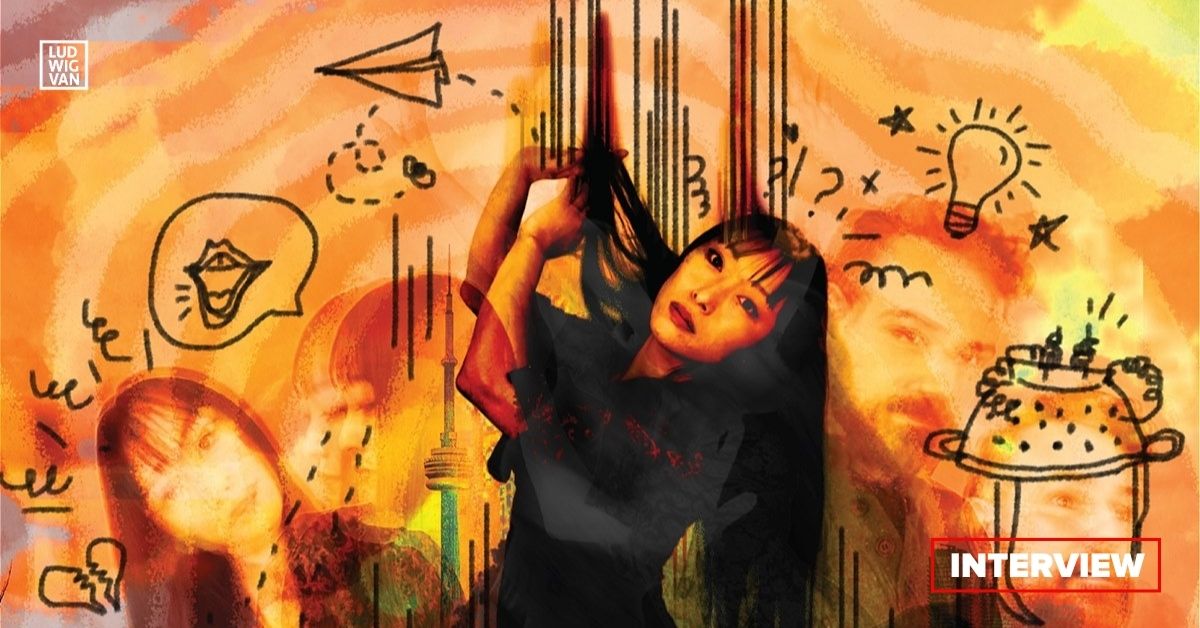
The Improper Identity is a new comedy by actor and playwright Miho Suzuki. It makes its premiere at the 2026 Toronto Fringe Festival from July 2 to July 12, with performances at Native Earth’s Minogitoon Workspace Giizis Studio.
The story revolves around a Japanese immigrant actress, Ai, who is trying to work and live in Canada. After struggling for acceptance, she agrees to test a new (and fictional) device called a “Pronunciationizer”. It’s designed to eradicate her Japanese accent, and make her English speech sound more “standard”. But — it may just be erasing a lot more than her accent.
As Ai uses the device, she is gradually disconnected from everything familiar, including personal relationships, and her own identity, revealing the true emotional and cultural cost of conformity.
The Improper Identity uses comedy, fantasy, and theatrical absurdity to explore the phenomenon of accent discrimination, immigrant identity, and the pressure to sound “acceptable” in Canada.
In Canada, we pride ourselves on multiculturalism, but accent discrimination and linguistic bias is something many immigrants face on a daily basis. It’s one of the more invisible and insidious,= forms of discrimination, and plays a role in who gets hired, who is heard, and whose voice is considered to be credible.
“In Canada we often celebrate multiculturalism, yet many immigrants still feel pressure to sound a certain way in order to be accepted, trusted or successful,” says creator Miho Suzuki in a statement.
“This show comes from my own experiences and observations navigating language, belonging and identity. While The Improper Identity is comedic and absurd, underneath it asks a serious question: what happens when we try to change ourselves to fit systems that were never designed to fully embrace us?”
LV caught up with actor and playwright Miho Suzuki to talk about the work, which she based on her personal experiences.
Miho Suzuki as the villain Sadako Teramoto in Warigami:

Miho Suzuki
Miho Suzuki is a multidisciplinary artist and performer. Among a long list of film and TV credits, her resume includes everything from a major role on the CBC show Warigami (2019) to roles in the TV series Chucky (2021) and the movie Colossal (2016), to voicing a character in the video game Assassin’s Creed Shadows.
Miho is a graduate of Tama Art University in Japan, and Second City in Toronto. Suzuki began her career in Japan, where she performed in numerous theatrical productions.
She’s won awards that include the Patrons’ Pick Award at the Toronto Fringe Festival 2025, the Spirit of the Fringe Award at the Vancouver Fringe Festival 2016, and the Grand Prize at the Japan Young Theatre Directors Competition 2014. She placed 5th in the World’s Biggest Improv Tournament 2025.
Miho is also a former competitive rhythmic gymnast.
Miho Suzuki: The Interview
The show came from the realities she faced in her own professional life, and has been developing for some time.
“I’ve been thinking about this for a long time,” Suzuki says. “This story is based on my real experience. I think I thought this experience, feeling this accent bias in life, is not just me. So many people are going through this. I think that many people would like this story to be told.”
A comedic approach to telling the story stems from recent work.
“I’ve been doing a lot of improvs and sketch comedy in Toronto,” Miho explains. “Sometimes 15 shows a month. That’s a lot,” she adds. “I really love people laughing.”
Comedy is a good way to get bigger ideas across in a way that an audience can immediately understand.
“I think this topic is kind of heavy — bias, discrimination. A lot of struggles in it. But I wanted people to laugh,” she says. “My message is more like love. I wanted everyone to feel love.”
Other elements of the show stretch back to her early acting career in Japan. “I did lots of theatre in Tokyo,” Miho explains. “We do lots of experimental things on stage.” That can include using metaphors for specific ideas, such as translating words to dance, or pictures and paintings. It’s about finding creative ways to express an idea.
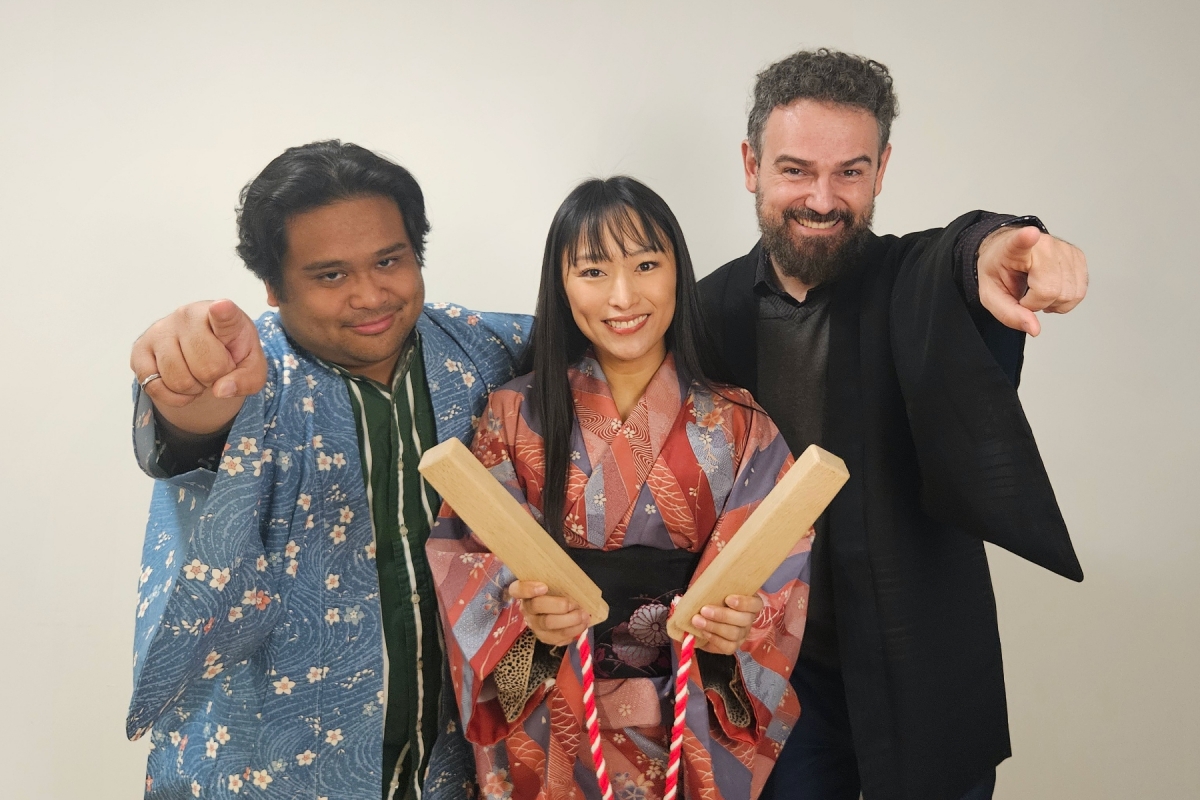
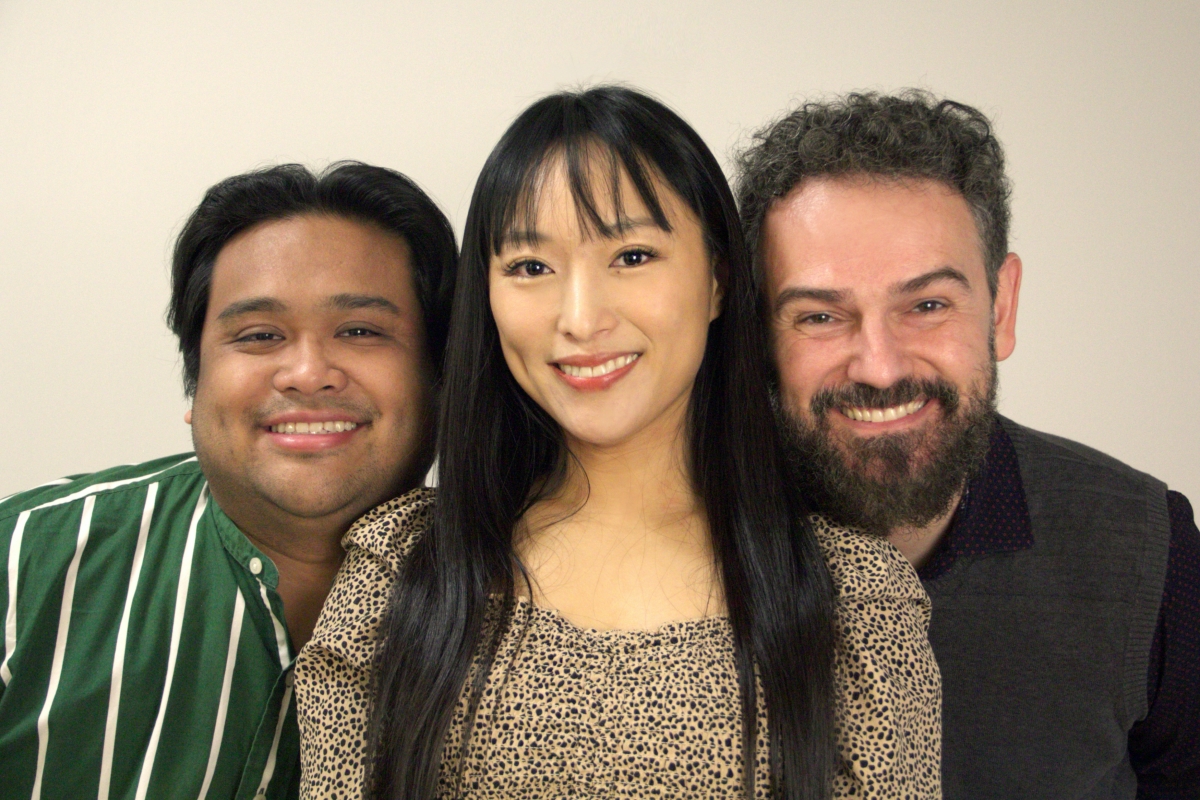
The show will include three actors on stage, including Suzuki, along with video projections on a screen.
In addition to writing and performing in The Improper Identity, Suzuki directs and choreographs, along with creating the music, paintings, and costumes for the show.

From Drama to Comedy
“I came here to Canada, I moved here officially in 2018 as a Permanent Resident,” she recalls. “In 2015, I came for the first time.”
Suzuki had been working steadily in Japan, but some aspects of the business made her look for new horizons. “But the industry is not well structured,” she said. She’d experienced incidents of harassment.
Miho was introduced to the Canadian side of the business when she worked on three different Canadian productions in Japan. She appreciated the different emphasis.
“You can just be creative,” she says. Suzuki found the acting industry much more business oriented in her native Japan. “It’s not art,” she says. “With Canadian productions, we made art, and it was so much fun.”
Miho got involved with multiple projects after making the move to Toronto. That included two previous Toronto Fringe shows. “I didn’t do any other theatre. I was doing lots of film and TV,” she says.
“I did lots of killers.” That includes her role as Sadako Teramoto in Warigami. “I’m the bad person. I killed so many people.” Warigami was an action-drama produced in partnership with CBC, The CW (via CW Seed), Toronto-based production company First Love Films, and New Form.
“I stabbed people. I was scary person in so many films,” she says. “Most of the time I was not comedy person. But, I could be fun as well.”
Hence her deliberate switch to comedy and improv. She’s performed with a number of shows and indi companies, including the popular TIK TOK BOOM.
Writing The Improper Identity came along the way. “I’ve been writing about this idea for a long time, many years,” she says. “But, I actually started [The Improper Identity] last July.”
Speaking English With An Accent
“In the acting industry, having different accent is a bad thing. If you have a British accent, or a famous accent, it’s okay. But my weird accent — oh you have to lose that,” she says. “I also wonder, half of the population in Toronto is born outside the country. And so many people are not represented,” Suzuki adds.
“If we hear so many accents every day, we will build that ability to listen — and understand,” she says. TV, film, and other media can either uphold those prejudices, or represent the population it serves. “I think we really should include different accents as long as its clear to understand,” she continues.
“I have to improve my accent in order to be clear. But also, we have to find the middle ground to make the world better.”
Accent bias is not only real, it often borders on the absurd.
“I was rejected many times for Japanese roles because I have a Japanese accent,” she reports.
That includes Warigami, initially, where she played a character who wore a kimono, and who, in the opening of the series, flew to America from Japan.
“They didn’t want my Japanese accent,” she says. “But, the director liked my accent. My director fought for me.” They went the extra mile to convince the casting and production team that Miho was the right choice.
“I don’t want an actor who cannot act — that’s what he said,” Miho relates. “This kind of thing happens so many times,” she adds. “It’s better to change.”
The perception partly revolves around trust. “People automatically trust a Canadian accent,” she says. “I understand the feeling.” But, she feels that it’s important to push things farther than that initial comfort level of the familiar, especially when someone with a genuine accent is rejected in favour of an English speaker who fakes it.
“Why [do] we feel comfortable with that, even when they fake a strange sounding Japanese accent?” she wonders. “This awareness might change people’s point of view.”
The Takeaway
She’s hoping the audience might leave the show with an increased awareness of their own biases.
“If people realize, this is an automatic thing, to find a different accent as an uncomfortable thing,” she says.
“Last year I was in the Galen’s Grocer team as an actor,” Suzuki says. She helped to develop her character with the writer, and, in the show, told a story about an accent. “The audience reacted pretty well,” she recalls. After the show, audience members with accents of their own thanked her. “But also, people who grew up here, and didn’t think about the bias.”
It made her realize her own show could send a strong message.
“I thought about the necessity to tell this story,” she says.
The Improper Identity: Details
Japanese-Canadian performing arts company @mihyonvision will present The Improper Identity, created by actor and playwright Miho Suzuki making its 2026 Toronto Fringe Festival debut. It takes the stage from July 2 to July 12 at Native Earth’s Minogitoon Workspace Giizis Studio.
Credits
- Dramaturg: Carly Heffernan
- Cast: Miho Suzuki, Mladen Obradović, Kent Penaranda, (Video Cast) Mihály Szabados, Kyohei Irie, Yayoi Hirano
- Director: Miho Suzuki
- Designers: Victoria Schupp
- Digital Design/Photographer/Program: (BTS)Hanano Ishida, (Props)Sayuri Yamamoto, (Poster photo)Yuna
- Producer: Bon Dos
Find additional show details and tickets [HERE].
Are you looking to promote an event? Have a news tip? Need to know the best events happening this weekend? Send us a note.
#LUDWIGVAN
Get the daily arts news straight to your inbox.