
While he’s studied and wandered across the globe, composer and musician Nathan Henninger spent his early years in Toronto, where his father was a professor at the University of Toronto.
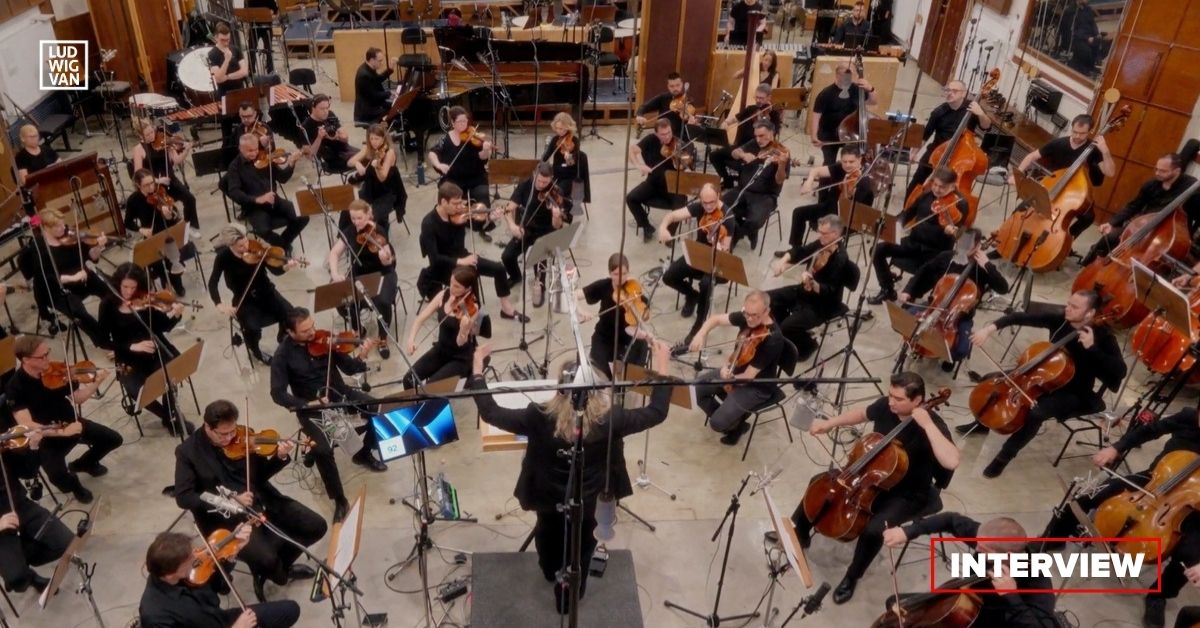
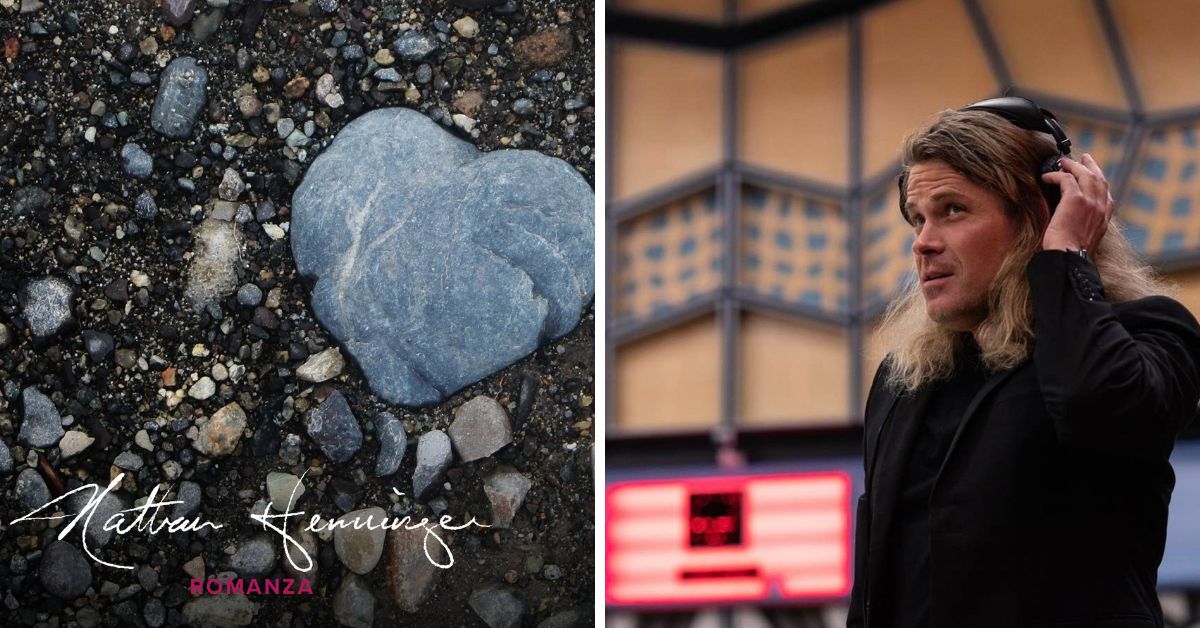
His latest album, Romanza, was recorded in Budapest with the Budapest Scoring Orchestra, and will be released on May 22, 2026. The work is a 20 minute tone poem for string orchestra, percussion, and piano, and unfolds as an emotional as well a musical journey.
Five Scenes for Orchestra, Henninger’s debut album, received international broadcast on BBC Radio 3 and WDR, was featured in IDAGIO’s Editor’s Weekly Picks.
LV talked to the composer about the process, and the music.

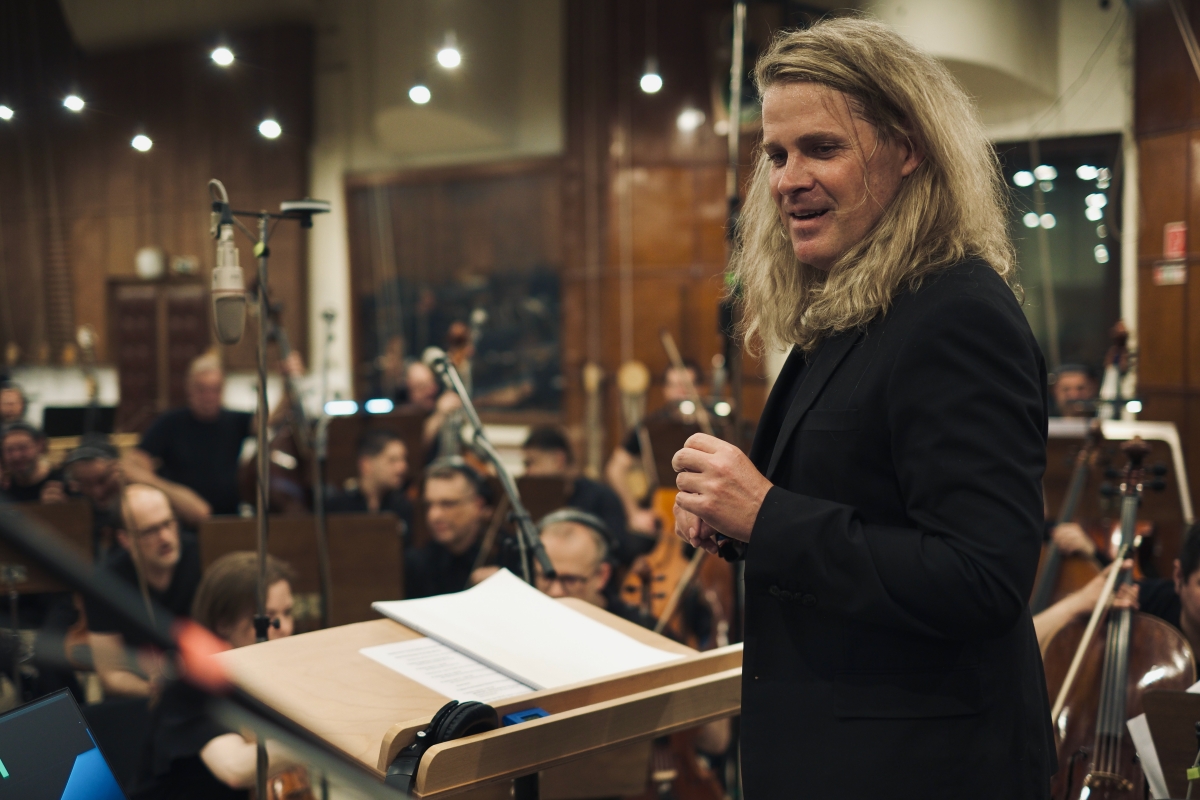
Composer Nathan Henninger: The Interview
Henninger found a more than willing collaborator in the Budapest Scoring Orchestra.
“I was looking for an orchestra in central Europe,” Henninger explains. For his last album, Five Scenes for Orchestra, he’d used an ensemble based in Berlin. “In between I did a single recording in Prague.
It’s called Removing the Mask, and it’s for string orchestra. I just thought they did a phenomenal job with strings,” he recalls.
He looked at different ensembles, but kept coming back to BSO. “Everything kind of aligned in Budapest.” Nathan listened in on a few of their recording sessions. “Their string playing was really, really beautiful.” In addition the ensemble records in a gorgeous hall with lots of woods. It was a change from the usual recording scenario, where sections are separated and recorded from different rooms.
“I felt more excited and grounded doing it there. [It’s a] wood based resonant hall, and the string players are world class.”
A lush string sound with piano was exactly what he was looking for. “They had great string players, they had a great set up for doing a traditional recording.” The venue had been used for live broadcasts in the 1950s.
The Budapest Scoring Orchestra has a strong reputation and history, particularly with film and TV scores. They’ve worked on films like the Oscar-winning Parasite, and Jordan Peele’s Get Out, among many others, including several Netflix productions.
“They’re really top tier as far as film scoring goes,” he says. “They’re also highly competitive with the quality they consistently produce.”
When it came to the pianist, Henninger initially intended on working with a cousin who is a concert pianist. “But the logistics were difficult,” he says.
As such, Nathan went with Marouan Benabdallah, a renowned Morrocan-Hungarian pianist who works with BSO often. It proved to be an inspired choice.
“He was such a prince.” During the week before the recording date, Henninger went with him to the Liszt Academy of Music, where Benabdallah is a professor. “It’s your dream of what a music academy would be. It feels very timeless.”
He met with Benabdallah three times before the recording date to go over the nuances of the composition.
“It really ended up adding another dimension to it. He was very receptive.” Benabdallah was on board with the album’s theatrical concept. “It was almost like preparing an actor, and he was so receptive to that,” Henninger says. “His personality, his openness, his imagination. I feel like it played a critical role.”
He points out that, in most situations where you hire an orchestra and pianist, three prior rehearsals aren’t necessarily a given.
“He did it with heart and soul, and with sincerity.”
That cooperative spirit echoed throughout the orchestra. He says the percussion section was ironing out last minute issues an hour before recording. “The percussion squad was so awesome.
It was very agreeable, almost an improvisatory spirit.”
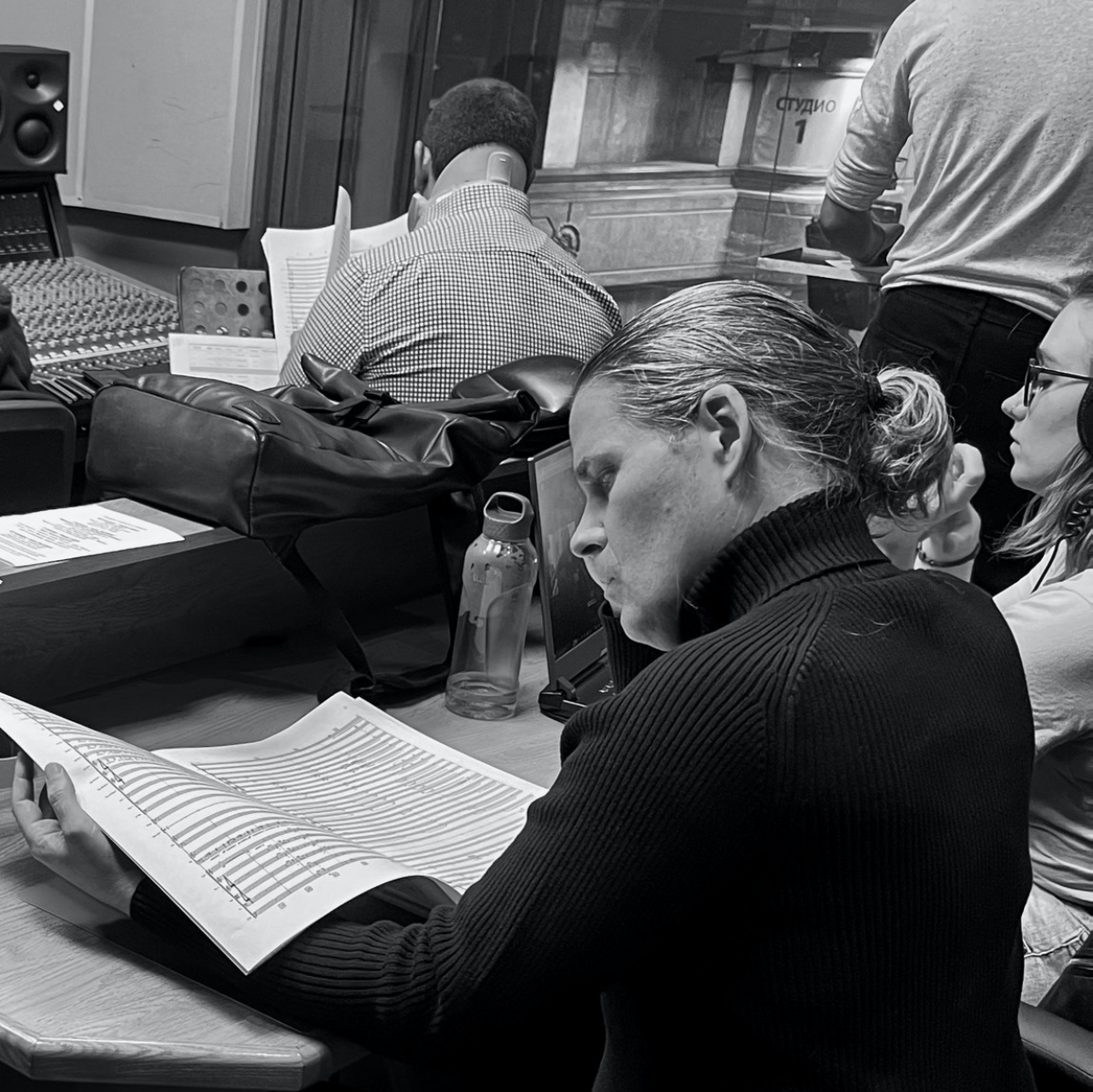
He also credits the recording engineer for his contributions. “He is just my favourite guy. He’s such a wonderful collaborator,” Henninger says. “He’s really a huge, huge partner.”

The Music
Romanza, as Henninger describes it, is a 20-minute tone poem for strings, percussion, and piano that unfolds as a continuous emotional journey.
“It’s storytelling. I think a lot of my music, it’s narrative, and it’s storytelling.”
He likens composing the music to writing lines for an actor. “You really hear the difference when somebody really shows up.”
Henninger credits Hungary’s music culture for a big part of the recording’s success. “Their whole attitude was open. They weren’t snobs.”
The recording session, created in Dolby Atmos, required several takes. “Some of the music was quite difficult,” he says. “It was quite challenging.”
He says the pianist described the music as very personal, and it’s an apt description of Henninger’s approach. “Absolutely. For me, it really had to do with a gestural thing,” he says.
The opening begins, then makes a leap up on high. “You drop from up high, but you’re going to be caught,” he says. “[It’s about] love, genuine love. I was thinking about my dad, thinking about my mom,” Nathan adds, “a pure and absolute assurance and support. I kind of wanted to give a shape like that.”
The comes from a challenging period in his life. “You’re going to fall,” he says. “There’s death, and there’s nothing we can do to escape that. I’d lost my cat. I lost my mom,” Henninger explains.
“Even if you do everything right, and you’ve had the most beautiful love ever, it’s going to end. How do you go on?”
He mentions the sentiments that come at the end of Antoine de Saint-Exupéry’s The Little Prince, and putting those thoughts into the music.
“How, in the music, can you have a moment towards the end [where you express the idea] you’ve been ruminating in the end about all this stuff, but I’m still here. I’m in the stars, but I’m still here.”

Naturally, in music, it’s up to the listener to make the interpretation. “I don’t know if it’s completely perceived,” he says. “The great enemy isn’t another person, it’s time. In the end, time takes everything away.”
It’s the emotions that endure. “Because it’s in your heart, it’s still there.” Music, Henninger believes, can serve that purpose admirably. “Maybe in music, it does — unlike words, where it doesn’t comfort just to say it,” he says.
Music adds the emotion where words alone fail. “That’s what I was trying to do.”
That’s why he was meticulous in his approach, over each note as it was played. “The rhetoric of the musical idea is that I’m jumping, but am I going to be caught?” The opening melody is based on that gesture.
The middle section of the work expresses the idea that, once you’ve fallen, but found the support you needed, you can once again bloom emotionally. “Almost like remembering a thawing of your own heart,” he says. “I’m open now to learning something new,” he adds.
“It is personal, but I feel like it’s relatable,” Nathan says. “I was hoping that maybe the music can be a good friend, or somebody you can turn to when you have your doubts, or when you feel like you need to be picked up a bit.”
The piece ends with a quiet and intimate mood that emphasizes the crotales, tuned brass cymbals.

Final Thoughts
The overall mood is a sentimental one. “You want it to be a little cheesy,” he laughs. “I think the music is accessible. It has a little Puccini, a little Gershwin.”
He calls Romanza dramatic, but also romantic in scope. “It’s about putting our hearts on ice vs opening up,” Nathan says. “I’m not trying to preach to any audience, but more trying to express what I believe,” he adds.
“We need something. It’s not romantic love — it’s any kind of love.”
The Album
Romanza will be available on CD, digital platforms, and in Dolby Atmos, distributed by Integral.
Are you looking to promote an event? Have a news tip? Need to know the best events happening this weekend? Send us a note.
#LUDWIGVAN
Get the daily arts news straight to your inbox.