

Soulpepper Theatre, Obsidian Theatre, and Nightwood Theatre present How to Catch Creation in its Canadian premiere, a play about creativity and finding your purpose — and how are legacies remembered? The play is written by Christina Anderson, and the Toronto production is directed by Mumbi Tindyebwa Otu.
It takes the stage at Soulpepper Theatre from April 23 to May 17, featuring Amanda Cordner (Sort Of/CBC), Shakura Dickson (da Kink in My Hair/Soulpepper), Daren A. Herbert (The Brothers Size/Soulpepper), Germaine Konji (Dixon Road/Obsidian Theatre), Danté Prince (The Christmas Market/Crow’s Theatre), and Khadijah Roberts-Abdullah (Something Rotten!/Stratford Festival).
Anderson’s play saw its world premiere at Chicago’s Goodman Theater in 2019.
The Play
“This play makes my heart feel full” says Nightwood Theatre Artistic Director Andrea Donaldson in a statement. “The story is a tender gift of lightness, of intimate relationships, compelling humans I’d like to meet and just the right amount of connective magic. It is inspiring and life affirming and has kept me grinning all year as we’ve prepared to share it with audiences.”
The story revolves around four artists and intellectuals in San Francisco dealing with issues around creativity and legacy, in the context of love and family. Griffin has been out of prison for a little more than a year after a decade of incarceration for a crime he didn’t commit, and he’s determined to become a parent, a creative act, in the eyes of playwright Christina Anderson. Tami is the director of the painting program at a conservatory — but she hasn’t lifted her own brush since her last relationship ended. Riley is a successful tech employee, but she hasn’t produced anything fresh in a long time. Her partner, Stokes, has been rejected from 13 art schools. But maybe, he’s really a writer…
The words written by a Black queer feminist writer of the 1960s affect each of them, bringing them together in unexpected ways.
“Christina Anderson has written a profound and beautiful celebration of the queer voice. Queerness isn’t in the margins here, it’s visionary. It underscores how we can more fully see ourselves, cutting through convention and bringing us closer to beauty, complexity, and truth” said Soulpepper Artistic Director Paolo Santalucia in a statement.
“In Mumbi’s hands, with this extraordinary cast, the production feels poised to reveal something essential about what it means to live openly, feel deeply, and leave a lasting mark on the world.”
LV caught up with director Mumbi Tindyebwa Otu to ask her about the production.
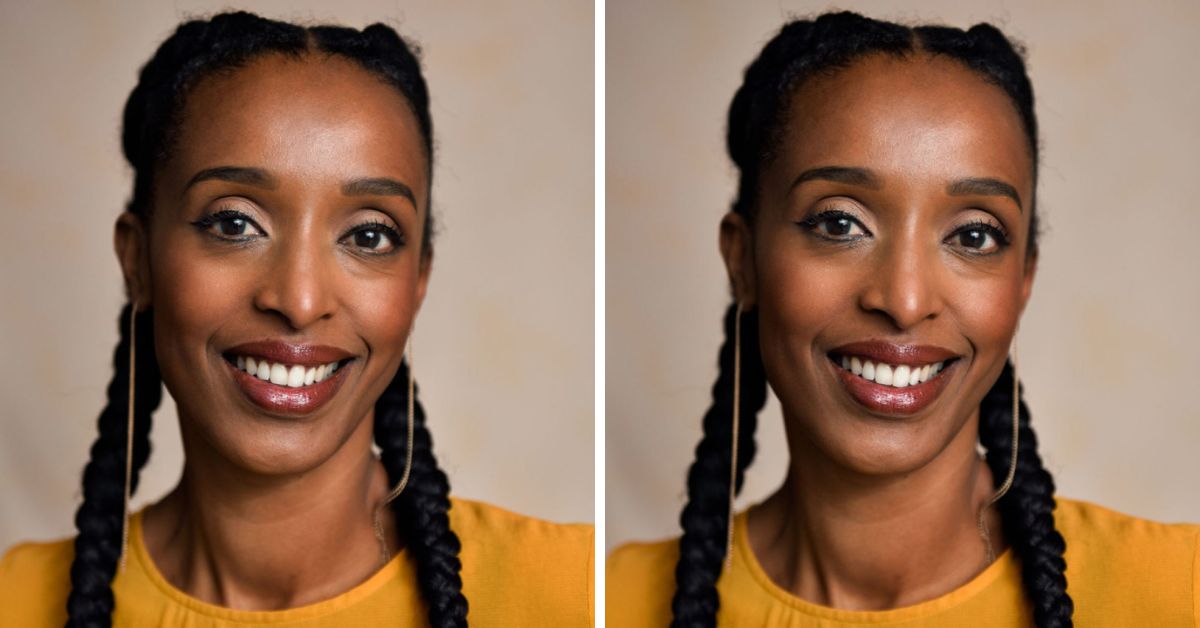
Mumbi Tindyebwa Otu
Acclaimed theatre creator and director Mumbi Tindyebwa Otu grew up in Kenya and Victoria, BC. Today, she’s based in Toronto. She is the Artistic Director of Obsidian Theatre, Canada’s leading creator for Black Art, and Founder/Artistic Director for the experimental theatre company IFT (It’s A Freedom Thing Theatre) Theatre.
Among her many theatrical credits: Three Sisters (Obsidian/Soulpepper), Is God Is (Obsidian/Canadian Stage/Necessary Angel), Trout Stanley (Factory Theatre), Sizwe Banzi is Dead, The Brothers Size, Ma Rainey’s Black Bottom (Soulpepper Theatre), Post Democracy (Tarragon Theatre), and Oraltorio: A Theatrical Mixtape for (Obsidian Theatre/Soulpepper).
Her work has been recognized by multiple awards, including a Canadian Screen Award, a Dora Award, a Toronto Theatre Critics Award, a Pauline McGibbon Award, and a Mallory Gilbert Protege Award.
Mumbi Tindyebwa Otu: The Interview
The play revolves around four characters whose creative spark, for various reasons, has been stymied. It’s a situation that many people will find relatable.
“Absolutely. I really feel like I chose the play because I could really relate to these creatives,” Tindyebwa Otu says. As she points out, many Torontonians, after the pandemic, and what she calls the subsequent “shifting landscape in our city economically and socially”, found themselves similarly struggling to keep that spark alive. Part of the goal, what she’d like audiences to get out of the production, is a feeling of encouragement and possibility.
“The characters themselves are so driven with that desire to create and to continue to create,” Mumbi says. “That desire is so alive, and their pursuit of it is so alive. They’re hungry for it.”
A Black Queer Feminist Writer: Uncovering Black Cultural History
The four characters, a would-be father, a conservatory director, a successful tech worker, and an artist/novelist, find inspiration in the work of a Black queer feminist writer of the 1960s — someone they’d never heard of before.
“That lens is so refreshing, and one that I hadn’t seen before,” Mumbi says. “It’s from the discovery of these Black queer feminist books.”
In the play, it’s a male identifying painter who first comes across the books, which are being given away for free. He picks them up, and becomes engrossed and intrigued by her writings.
“It changes his life, and intersects with the other people in the story,” Tindyebwa Otu explains. “There’s a lot of mystery in terms of who this writer is, and how their lives may or may not intersect.”
While the character might be fictional, it’s certainly true that many writers, artists, and other creative people and their works are forgotten and fade into obscurity for a variety of reasons. For those who are Black queer women, the odds tend to weigh heavily against their favour.
“That is really the core of the play — whose voices do we remember? Who does history prioritize? What voices are passed down to us from generation to generation?”
It’s important to unearth and uncover those that we still may not know about even in an age where sharing information has become so easy, but who, at the same time, contributed so much to our culture.
“How do we keep their legacies alive?” she asks. “The Black perspective is so important.” She wonders about her own identity, in turn, and what will be remembered in 50 years. It’s something the characters in the play consider too.
“These characters are so relatable and contemporary and easy to relate to.” For Black people, women, and/or queer creatives, the act of creation itself is a bid against erasure. “What we’re doing should be remembered.”
It’s not a hypothetical situation. North American pop culture is full of examples where pioneering Black voices and artists have been gradually usurped over time, forgotten while their white mainstream counterparts take a lion’s share of the credit and acclaim. Over time, we forget where the impetus came from.
“That happens over and over again, especially with women, and Black women, and Black creatives,” Tindyebwa Otu says. “What they’re doing is taken and made into the mainstream. Cultural theft and appropriation — it happens so easily.”

Remembering The Originals
Mumbi relates that when she was delving into San Fransisco history in preparation for the production, she was struck by the parallels to Toronto, and how much she herself doesn’t know about the history of her own city.
The Black population of SF, once more than 13% in the 1970s, was reduced to about 5% by 2020 through a process that was dubbed “urban renewal”. Once thriving Black communities like the Fillmore District, and today, Bayview-Hunters Point, have been drasticallyreduced and even eliminated. Along with it went cultural institutions like the oldest Black bookstore in the US, which shut down its original location in 2014. Tindyebwa Otu likens its importance to Toronto’s A Different Booklist.
“How those institutions can disappear [so easily],” she says. “Our generation, we don’t even know who was before us.”
The cast and creative team got a shot of real world inspiration in the form of a former board member of Obsidian theatre, a woman who was an active community organizer, and was invited to take in the play’s first rehearsals.
“She was sitting in, and she was in her 80s now. She sat in on the first rehearsals — and she’d never been invited into that process.” Her reaction to the play was emotional. “She was so moved that we have the opportunity to tell those stories now.”
The woman shared some of her own knowledge of the city’s past, and Black institutions that have faded with time.
“It was so powerful and humbling. It was a really powerful moment to start our process.”
Performances
Joining Tindyebwa Otu on the creative team are Set Designer Teresa Przybylski, Costume Designer Ming Wong, Lighting Designer Andre Du Toit, and Sound Designer Heidi Chan.
Previews for How to Catch Creation begin April 23, with opening night on April 30. Performances continue until May 17.
- Find show details and tickets [HERE].
Are you looking to promote an event? Have a news tip? Need to know the best events happening this weekend? Send us a note.
#LUDWIGVAN
Get the daily arts news straight to your inbox.