
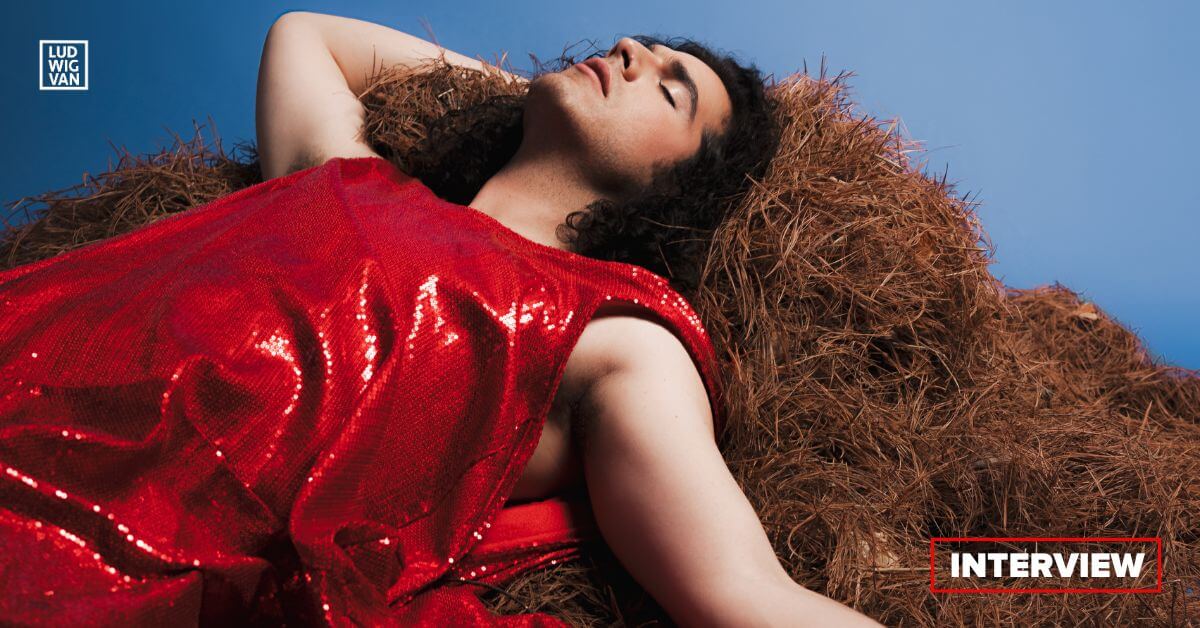
Canadian director Bretten Hannam’s film Sk+te’kmujue’katik (At the Place of Ghosts) saw its world premiere at the Toronto International Film Festival in 2025, and is set for a theatrical release on May 8, 2026. The horror/drama hybrid takes an imaginative approach to telling the story of two Nova Scotia Mi’kmaq brothers who confront an old evil.
The haunting score was composed by JUNO and Polaris Music Prize winning musician and composer Jeremy Dutcher.
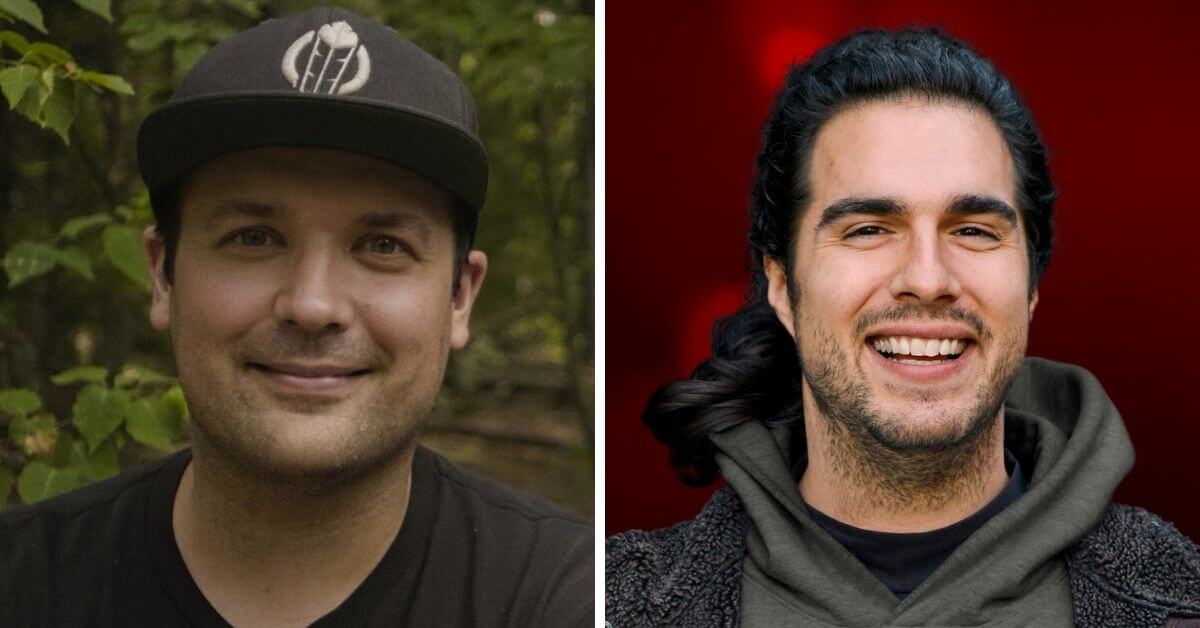
Ludwig-Van spoke to Dutcher about the project.
The Film: The Story
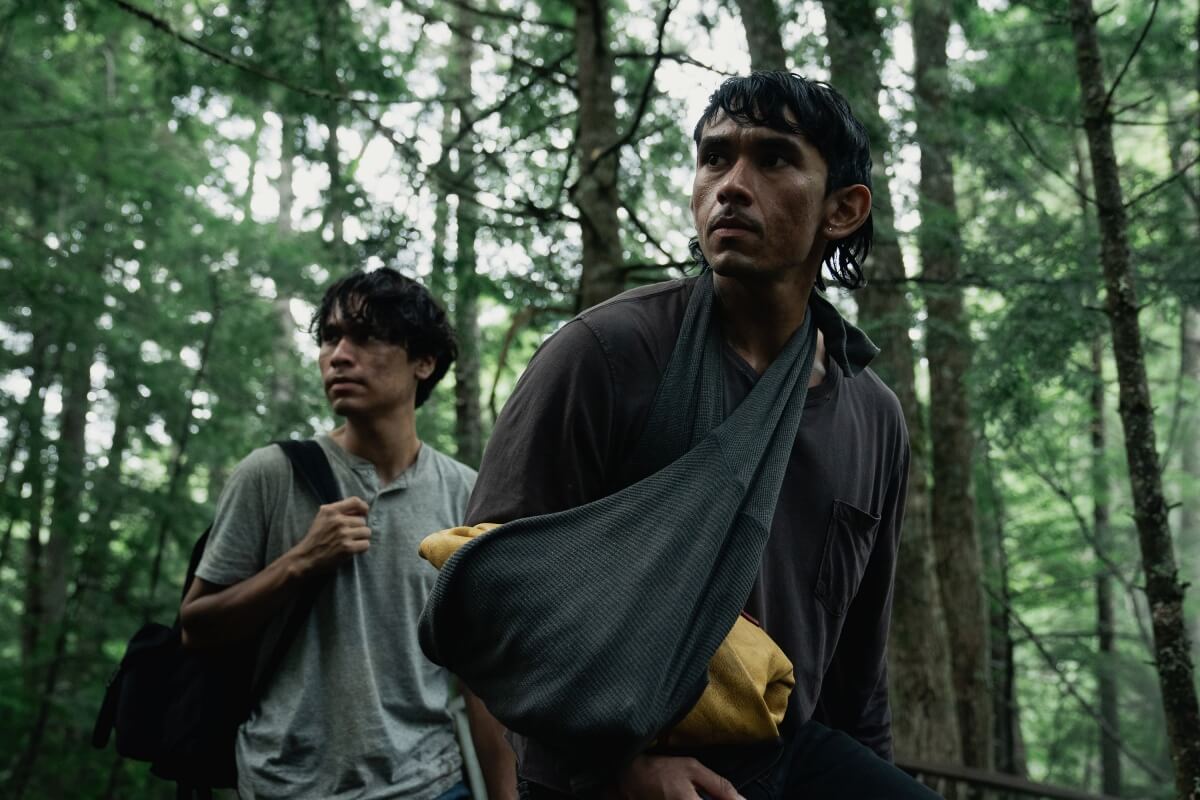
Mi’kmaq siblings Mise’l (Blake Alec Miranda) and Antle (Forrest Goodluck) were close as children, but a horrific incident in their childhood has seen them drift away from each other as adults. One day Mise’l, who’s left his community to live as an openly gay man in the city, sees a rotting, evil spirit, and he knows he must leave the life he’s carved out for himself to finally deal with his past.
But, not alone. It’s part of the dark secret that still binds the two brothers, no matter how far they’ve drifted apart.
To finally face and deal with the resurfacing past, they must enter Sk+te’kmujue’katik, a forest where time collapses on itself, and they encounter the real and sometimes dangerous ghosts, including their ancestors, their enemies, and future generations they will be the ancestors to.
Glen Gould plays the Father, with Orin Dash in the role of the Wujj Dark Spirit.
Jeremy Dutcher: Film Composer
In the film, the music isn’t omnipresent, but becomes a key driver of mood, and suspense. There are several sections where the soundtrack begins unobtrusively, then builds to a tense climax correlated to the action on screen. Each offers a different mood and tone in a contemporary classical mode.
“I was jumping at the opportunity,” Jeremy Dutcher says. “I’m from a neighbouring nation.”
Dutcher is a Wolastoqiyik (Maliseet) member of the Tobique First Nation in North-West New Brunswick, near the region of the Mi’kmaq, whose traditional lands stretch across much of the Canadian Maritimes, and into the state of Maine. Based in Montréal these days, Dutcher says he loved the idea of getting in touch with his East Coast roots.
“It’s my first time doing a film score,” he says. “We’ve been working together on this project — I was kind of brought in two years ago or so,” he explains. The process began with the basics. “We were thinking — what is the sound of this film?”
Many of the musical sequences are timed quite precisely to fit the action. It’s something that came with a lot of work, he relates. He began by working with various elements of the story. “You have some themes and character voices,” he says, “but you really can’t time things out precisely and get to it until the picture is locked.”
Being able to see the scenes as they were filmed added to his own process. “You have something to respond to,” he says. “What builds tension in that film is those tight sound cuts.”
He credits having a great team to work with that included frequent collaborator and music producer Devon Bate. “We kind of created this score together,” Dutcher says. The film is a Canada-Belgium co-production, with Paul Heymans working remotely from Belgium. “He was doing the sound design,” Jeremy says. “It’s kind of cool that we live in this era where technology allows us to work on these projects across the globe,” he adds.
“Inviting allies and non-Indigenous people into our storytelling in my sense has been a really positive experience,” he says.
Heymans and Dutcher finally met in person at the TIFF world premiere of the film. The audience reaction added to the experience.
“The reception was so warm. It was palpable,” he says.

Scoring The Film
Filmed in Nova Scotia, the movie is also a kind of love letter to the landscape, and the magical nature of the wood, as captured by cinematographer Guy Godfree.
“The land was a character,” Dutcher says. “It was all shot […] in the East Coast. The land was a prominent voice in this.”
The story does not adhere to Hollywood storytelling tropes, and instead evolves in a kind of circular fashion as the time periods and characters interact with the brothers. It also crosses genres bounds between horror and a drama about confronting familial trauma. It required several short passages, and a few longer, in varied moods.
“I’m not going to say it was no work, because it was a lot, but it was a pleasure,” Jeremy says. “It was a challenge.” The alternative mode of storytelling adds a few complications. “The process of composing a score for a film is […] different than putting together an album,” he adds.
“There’s so much tension in that film. There’s a darkness to this film that’s building the whole time.”
As the siblings travel towards an inevitable confrontation with the truth of their history, there are periods of building tension with intervals of slow release.
It’s not the kind of story Dutcher anticipated working on as a first film score project. “I didn’t think it would be a spooky one. I come from the bel canto, Italian opera background!” he laughs.
For many of the shorter musical passages, he looked to strings. “Letting the tension of a string be the tension in that character’s face,” he describes. He’s written evocative music before, but scoring a film has a distinct advantage. “You get to see the image as a composer.”
Jeremy says he built the score bit by bit with a network of improvisational musicians in Montréal. “It’s 100% a collaborative project.”
Dutcher worked with Bate in Montréal, and the process was quite simple. They’d show the musicians they’d assembled images from the film, and the musicians would respond. Dutcher and Bate then worked with their impressions as raw material.
He also worked with Toronto-based Naomi McCarroll-Butler, a saxophonist, clarinetist, and instrument maker. She created flutes that are used to create drones in some of the creepier musical passages. “She made her own drone flutes and connected them to a bass clarinet,” he says. “You’re actually hearing four tones at one time.”
He avoided using electronic elements. “We really tried to do everything as organic as possible, I think because of the land imagery,” he says. “At the end of the day, you can do so much with natural, organic instruments.”
In one scene, where Mise’l and Antle cross a river to enter ancestral lands, there is a shimmering sound Dutcher says he produced with a cymbal that’s dipped in and out of water, struck as it hits the water.
“It’s done in a super organic way.”
As a healer leads the brothers up the ancestors’ mountain, accompanied by generations of family, it’s a moment of peace in the story. Musically, Dutcher chose a vocal work to accompany the scene.
“That’s the first time that we hear the voice itself,” he says. It’s a song from his first album, Wolastoqiyik Lintuwakonawa, put into a different key, and reharmonized. “There were some songs that were from my old catalogue that [director Bretten Hannam] really wanted to put in there,” he explains. The soundtrack includes both new music and older music reinterpreted.

More Film?
Will there be more film soundtracks in his future?
“It’s about trying to tell a story with somebody,” Dutcher says. “I kind of got the bug,” he adds. “It was an honour to be asked to be part of this — and to be asked to do something new.”
Hannam let him experiment and find the right sounds. “It was such a gift, and I’m really eager to do it again.”
Although, perhaps not another horror film, not right away. “Not so heavy,” he laughs.
The film, along with its story, is also a document of the Mi’kmaq language and culture. It’s very close to his own native tongue linguistically. “When I hear them, I hear me,” he says.
“I just have to give it up to those actors, and that cast,” he says. The actors worked with language experts to be coached on the correct pronunciation and usage.
“So many of our Indigenous languages are living on the edge,” Dutcher adds. Representation in film is an important step to preservation.
Final Thoughts
“Time is an unfixed circle.”
That’s the underlying premise of the movie, and the way the story is told. It looks forward, but also behind in a circular way of thinking.
“It’s a really beautiful way to think about it — there are many ways to tell a story,” Dutcher says. “I cried twice during the premiere. And not because of the music!”
The film screened in a number of other film festivals across Canada and internationally. It is slated for theatrical release on May 8, 2026.
- Check for screenings at Cineplex Theatres [HERE].
Are you looking to promote an event? Have a news tip? Need to know the best events happening this weekend? Send us a note.
#LUDWIGVAN
Get the daily arts news straight to your inbox.