
The Glenn Gould School Spring Opera is an annual treat for Toronto audiences where they can feast on fresh young voices in fully staged productions, and catch the stars to be of the opera world. Performances take place March 18 and 20 in Koerner Hall.
This year, GGS is presenting a program titled Serenata Italiana. It features two Italian comedies: Puccini’s Gianni Schicchi, and the rarely performed La cambiale di matrimonio by Rossini. The production is directed by Stephen Carr, and conducted by Gordon Gerrard.
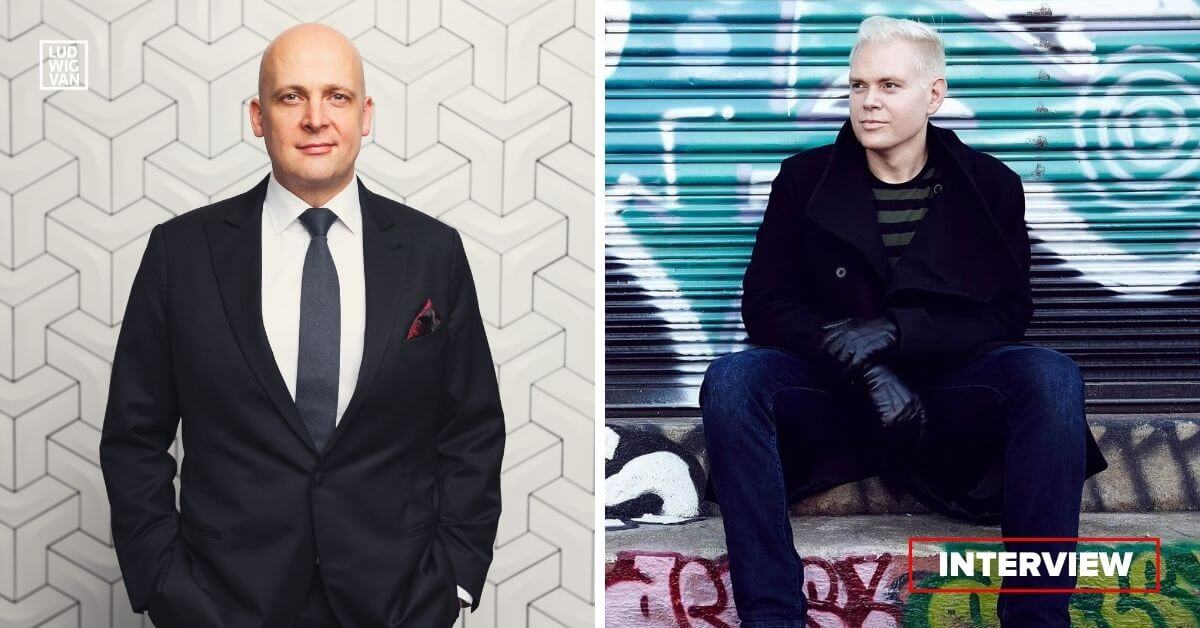
LV talked to Carr and Gerrard about the production.
Rossini’s La cambiale di matrimonio
Rossini’s La cambiale di matrimonio, or The Marriage Contract, is a comedy in one act. He wrote it in just a few days at the age of 18 as a student at the Liceo Musicale in Bologna, and it represents his first professional opera.
Rossini worked with libretto by Gaetano Rossi that is based on a play by Camillo Federici, written in 1791, along with an existing libretto by Giuseppe Checcherini written for the 1807 opera Il matrimonio per lettera di cambio by Carlo Coccia. Rossini’s opera made its premiere in November 1810 in Venice.
While the opera is rarely performed today, listeners will recognize the duet “Dunque io son”, which he later reused in The Barber of Seville (Act I).
The story takes place in 18th century London, and interestingly, concerns a marriage contract that has been received by Tobias Mill, an Englishman, and Slook, a Canadian businessman. Slook arrives in London, and Mill intends to marry him to his daughter Fanny. Fanny and her lover Eduardo Milfort, however, have other ideas, and comedic mayhem ensues.
Puccini’s Gianni Schicchi
Puccini’s comic one-act opera Gianna Schicchi was written between 1917 and 1918, and premiered at New York’s Metropolitan Opera in 1918. The composer wrote the opera to the libretto by Giovaccino Forzano, based on a brief incident that is mentioned in Dante’s monumental work Divine Comedy.
The opera is the third and final part of Puccini’s Il trittico, or The Triptych, a set of one-act operas with diverse themes that he intended were to be presented together. Today, Gianna Schicchi is typically performed on its own, and is the most popular of Puccini’s Il trittico.
The story concerns Gianni Schicchi de’ Cavalcanti, a Florentine knight who lived in the 13th century. He is one of the real historical figures mentioned in Dante, and his story takes place in the Inferno, Canto XXX. There, Dante visits the Circle of Impersonators. He witnesses an attack on a man, and he is told that the attacker is Gianni Schicchi, who was condemned to Hell due to his impersonation of Buoso Donati, a wealthy patriarch, and another real historical figure. Donati’s death ignites a search for his will by greedy relatives.
Puccini’s opera uses a version of The Divine Comedy that includes an appendix with a commentary by an anonymous Florentine source. It involves Schiacchi in the writing of Donati’s will, and the ensuing machinations. Dante, who was a Florentine, and who traced the lineage of his wife Gemma to the Donati family, turned Sciacchi into a villain of the story.
The opera features one of the best known arias in the opera world, “O mio bambino caro”.
Julia Kennific, Soprano, and Gennady Grebenchuk, Baritone, perform in Mozart’s Die Zauberflöte at the 2025 Glenn Gould School Spring Opera 2025:

Stephen Carr
Stephen Carr has an extensive background in opera and education. He is a former Director of Development and Engagement for Toronto City Opera, and he teaches at the University of Toronto’s School of Music and the Royal Conservatory of Music in downtown Toronto.
Stephen was an Associate Professor of Opera and Musical Theatre Studies at the Eastman School of Music for eight years, and was Associate Artistic Director of Eastman Opera Theatre. He has also taught as a member of the faculty of the Interlochen Summer Arts Institute, and he is a Visiting Professor of Musical Theatre at the Senzoku Gakuen Conservatory of Music in Tokyo.
The stage director and professor is currently a PhD candidate at York University.
Stephen Carr: The Interview
Stephen Carr is no stranger to GGS productions. He directed the Glenn Gould School Opera two years ago as well.
“It is still some of the same students,” he says, “working with these incredibly talented students.”
That’s part of the appeal of the gig. “I love working with students,” he adds. “It’s always fun to discover the pieces along with students at this age. You’re not only discovering the pieces with them, but hopefully creating an experience as a template [for] how they’ll approach opera in the future.”
Often, as a stage director, he works with veteran opera singers who’ve performed any given work several times over. Working with students offers a fresh perspective.
Even so, as an experienced opera professional, like many, he wasn’t familiar with the Rossini work before this show.
“This Rossini is a new piece for me. It’s been kind fo journey to discovery for all of us,” Carr says.
Comedic Opera
While people outside the performing arts may assume that comedy is somehow easier to tackle than heavy drama, the opposite can also be true.
“Absolutely,” Stephen says. “These are two genuinely funny operatic comedies. It’s been such a great escape to lean into these comedic operas,” he adds.
“I think comedy is difficult. Comedy is so much about timing,” he explains. “It’s about timing. And in in opera, everything about the timing is dictated by the music.”
It offers a distinct challenge. “In opera, you’re often extending a joke, or you’re waiting for a joke to happen in the music.” It may not feel entirely natural. In a play without music, those moments can be tweaked to the individual performance.
“The Rossini is also recidiva,” he points out. It includes sections of recitative, or a singing-speech technique. The challenge is to make those lines feel as conversational as possible, while also conforming to the timing of the music. It’s an excellent learning opportunity for the GGS vocalists.
Working With GGS Students
“We’ve had so much fun in in the rehearsal room,” he says. “They’re going great.”
Staging was the most intense portion of rehearsals. “We had to stage basically both of these pieces in one week,” he says. “Now we’re able to go back and explore the characters. Now we can breathe.”
He’s enjoying the process, and working with the Glenn Gould School vocalists.
“They’re so extraordinarily talented. It’s fun to meet them at this point, knowing that they have this whole career ahead of them,” Carr says. “They’re just about to take off. It’s extraordinary to me that they can put on operas at GGS.”
He credits the school’s staff for finding titles that are well suited to the specific cohort of students each year. Adrianne Pieczonka is Vocal Chair and Head of the Vocal Department. As such, she is responsible for casting the Spring Operas each year (among other things).
“I don’t know how she does it,” Carr says. “Not only [are the works] just appropriate, but they’re perfect for them.”
Working with students poses its own set of criteria. “With students, you’re very much aware that it’s as much about the process. For me, it means not about compromising anything,” he says. “Never compromising the quality of what they do, but what’s really important is what they’ve learned.”
Working with conductor Gordon Gerrard is part of the fun. “He’s great. It’s fun to work with him,” Stephen says. He was looking forward to the opportunity after seeing other GGS productions Gerrard was involved with. “I was really excited to work with him.”
Gordon Gerrard
Canadian conductor Gordon Gerrard grew up on a farm near Brandon, MB into a family where his mother played piano, his father was a country music lover, and his grandmother led the local church choir. He began studying piano at age seven, and learned repertoire by listening to cassette tapes. By high school, he had made the decision to pursue music professionally.
He has worked with orchestras across Canada, including in Vancouver, Quebec, Toronto, Victoria, London, Kitchener-Waterloo as well as opera companies in Calgary, Hamilton, and Edmonton.
Gerrard is particularly passionate about working with emerging artists, and has done so at Calgary Opera, the Atelier Lyrique de l’Opéra de Montréal, the Banff Centre, Opera Nuova (Edmonton), UBC Opera (Vancouver), Opera McGill (Montréal) and the Glenn Gould School (Toronto).
Since 2016, he’s served as Music Director of the Regina Symphony Orchestra, where he’s worked with both traditional and contemporary repertoire, including works that explore social issues and community engagement.
Gordon Gerrard: The Interview
Gerrard is also familiar with some of the current cohort of Glenn Gould School vocalists. He mentions baritone Gabriel Klassen, (who performs in Rossini’s La cambiale di matrimonio), and soprano Charlotte Anderson, who will be taking on the role of La Ciesca in Gianni Schicchi.
“It’s a wonderful group,” he says “One of the things I love about coming to the GGS, is that it gives me a chance to meet the next cohort of wonderful young artists.”
Working with them, he comes to know more than their vocal abilities, including their background and more. “It’s really great to get a chance to work with them.”
The Operas
“It’s really great to get to work on these pieces,” Gerrard says.
It’s his first time working on the Rossini, just as it is for the students. “I don’t think anyone is [familiar with it,]” he laughs. “It’s the first time for them getting to know Italian recidiva,” Gerrard adds. “It has it’s own challenges. It’s the first time tackling these first styles and types of pieces,” he notes.
“Gianni Schicchi is a really great piece. It’s a complicated piece,” Gordon explains. “The thing about Gianni Schicchi is that it’s rhythmically complex. There’s about a million words.” The lightning speed of the Italian libretto, and learning how to function in these other languages is a big take away for the student vocalists.
“To put it into practice in a piece like this — it’s got a lot more words than La Bohème.”
The Glenn Gould School
Like Stephen Carr, Gordon credits Adrianne Pieczonka for inspired programming and casting choices.
“When I’ve talked to Adrianne in the past, she’s always looking for pieces that suit these particular students,” Gerrard says.
This year, she’s chosen works that showcase the talents of all the artists involved.
“It’s less of a star vehicle than other pieces,” he notes of Gianni Schicchi. “It’s a piece where the ensemble can shine.”
Working together is part of what the GGS vocalists are learning.
“The other day in rehearsal we were talking about, of course you need to know your part, rhythmically, and the pitches, but a lot of the time you’re doing it with six other people.”
It’s about how your performance fits into the group, as opposed to the context of a solo aria.
The Operas
Comedy is approached differently in the two operas.
“I would say one of the things about Gianni Schicchi it’s — and this I think applies to a lot of Puccini — is that he leaves very little to chance,” Gerrard explains.
The Rossini is quite different. “Finding the comedy, especially in the recitatifs, finding the comedy is more precise,” he says.
It involves a particular awareness of timing, and of the other people on stage. “I think actually it’s a monumental challenge,” Gordon says. “You’re given much more freedom by the score itself, but it means you have to find it for yourself.”
He talks about the musical highlights of the works. “Of course, everybody, when we get to the part that Gianni Schicchi, everyone will recognize “O mio bambino caro”,” he says.
“There are these incredible ensembles in Gianni Schicchi that people might not know as well as they do with La Bohème, it’s just incredibly sophisticated, but it all makes so much sense,” he says. “Gianni Schiacchi isn’t done nearly as often as the other Puccini operas,” he adds.
“The Rossini is a piece that was brand new to me as well. I’m discovering it along with them.”
Its rarity means there are only a handful of existing recordings to work with, for example. “It’s not like there is an accepted library of recordings that you listen to for reference,” Gerrard notes.
As the rehearsals progress, the focus changes.
“Now, it’s the process of refining. We don’t spend the same concentrated time now after we got that first intense week out of the way.”
Performances
The Glenn Gould School Spring Opera: Serenata Italiana, featuring Rossini’s La cambiale di matrimonio and Puccini’s Gianni Schicchi, opens March 18, with a second performance on March 20.
- Find tickets and information about the Glenn Gould School Spring Opera on March 18 [HERE].
- And for the March 20 performance [HERE].
Are you looking to promote an event? Have a news tip? Need to know the best events happening this weekend? Send us a note.
#LUDWIGVAN
Get the daily arts news straight to your inbox.