
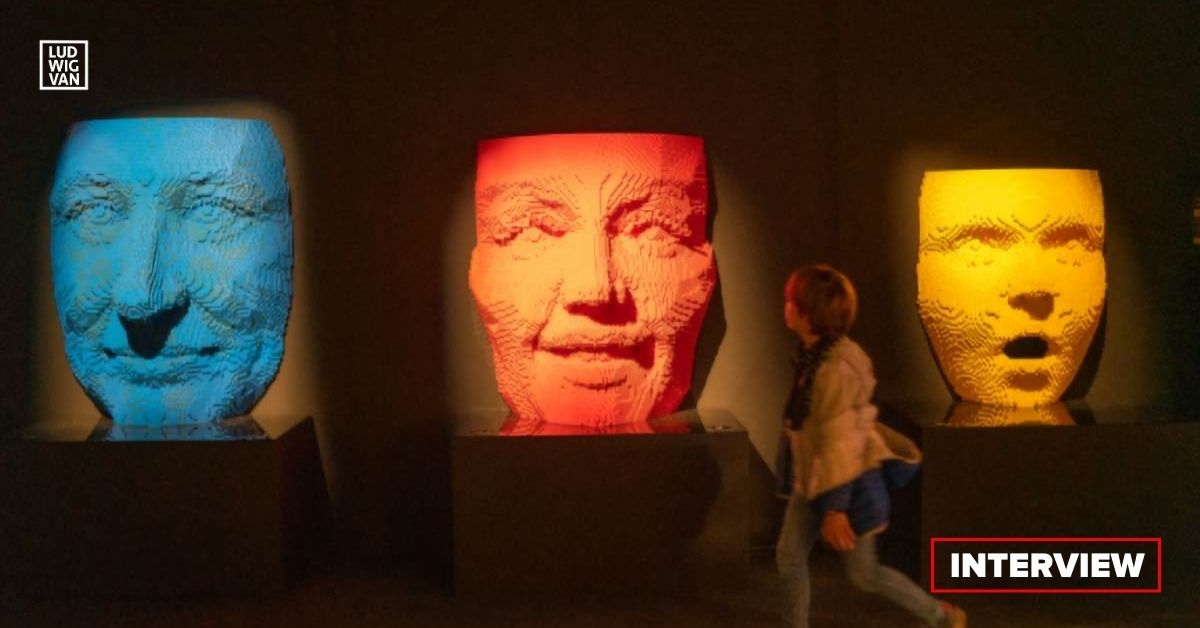
The internationally acclaimed exhibition Art of the Brick comes to Toronto with an opening date of March 5. The show, composed entirely of sculptures made with more than 1 million LEGO® pieces, is the brainchild of artist Nathan Sawaya.
The limited engagement show, covering more than 1,800 square feet and including more than 130 pieces, (one created specially for the Toronto exhibition), is presented by global curator, producer and distributor Exhibition Hub in partnership with tech discovery platform, Fever. It takes place at YZD in North York.
Sawaya’s unique artwork first gained international attention in 2007, and shows of his work have since toured around the globe. Art of the Brick on tour has been viewed by over 10 million people worldwide.
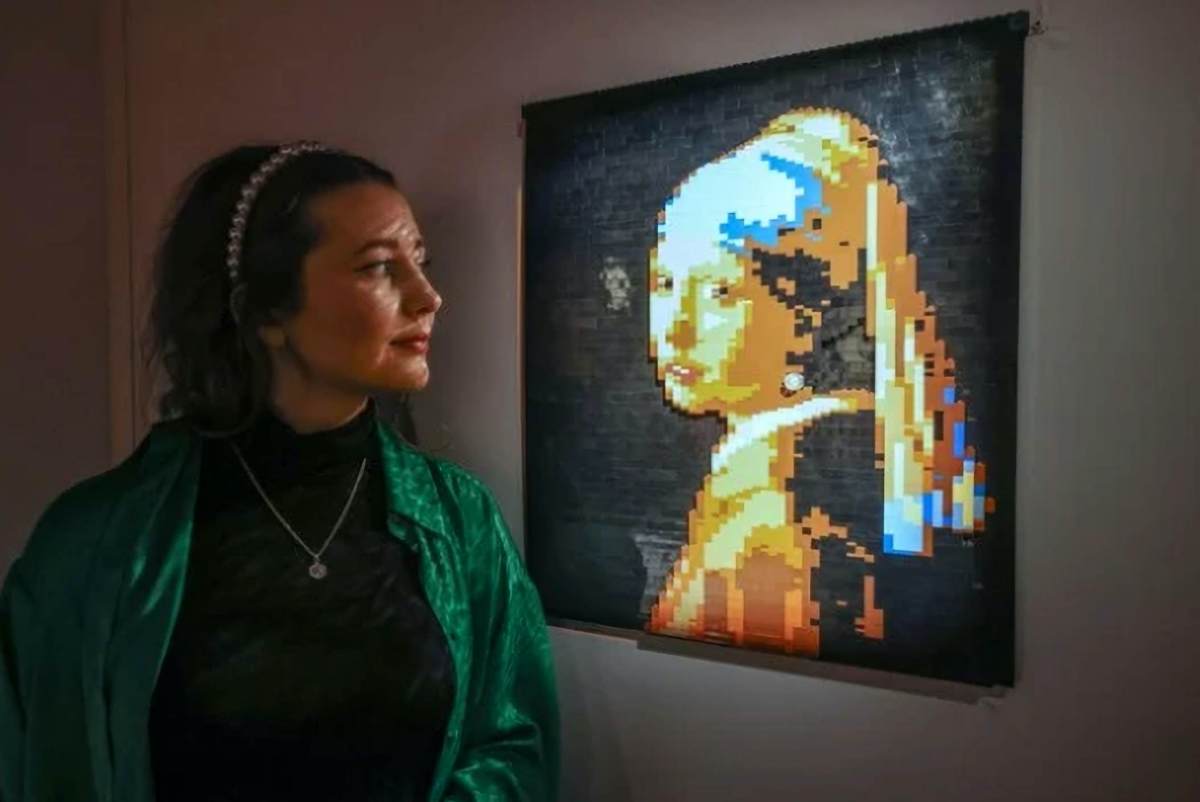
His works include both large-scale and smaller pieces, and include reproductions of famous works of art like Michelangelo’s David, Van Gogh’s Starry Night and Da Vinci’s Mona Lisa, portraits, whimsical pieces like his enormous Tyrannosaurus Rex, and more.
His sculptures are both beautiful and playful, and his show includes an interactive station that lets the audience get in on the fun as well.
LV caught up with Nathan to ask him about his work.

Artist Nathan Sawaya: The Interview
Nathan Sawaya was born in Colville, Washington, and grew up in Veneta Oregon. He attention New York University, where he earned Bachelor’s and law degrees. He began his professional career as a practicing lawyer in Hollywood.
In 2004, he left the legal world behind to become a full-time LEGO artist, the first to take it on as his sole artistic medium. After a short stint working with the LEGO Group, he struck out on his own, opening an art studio in New York City. He is not an employee of the toy company, but it recognized by The LEGO Group as a LEGO Certified Professional.
Today, his art is shown in prominent art institutions, and held in major public and private collections.
How did he come to make the switch from law to LEGO art?
“I took some art classes, but in the end I got a poli-sci major,” he recalls. “I was coming out of college and I didn’t know what to do, and went to law school.”
After a couple of years working as a lawyer, he began to feel the pull of art again.
“I wanted a creative endeavour, especially after work,” he says. He’d sculpt, paint, and draw in his free time. Eventually, that led to… LEGO.
“I thought of this toy from my childhood,” he says. He began to experiment with making various types of sculptures with it.
He enjoyed working for the LEGO company. “It was a great learning experience,” he says. But, Sawaya wanted to choose his own topics and themes. He left the company after six months to focus on making his art, and the occasional commissioned work.
“I get to pick and choose,” he says. “I put a little website together to showcase my projects.”
He never thought it would lead to a full-time career in a completely different direction. “It is the dream,” he says. “For sure. I never really expected it to become what it’s become.”
Eventually, his reputation grew to the point that he was invited to show his work.
“When I had my first solo show I thought, this is amazing, but it’s probably the only solo show that I’ll ever do.”

Popularity
That first solo show was only the beginning, however. What he’d underestimated was its appeal to the public in general.
“I think it’s a kind of art that really connects with people,” he says. “It’s absolutely about democratizing the art, in the sense that everyone has played with the brick. They’re familiar with it as a toy.”
As time went on, his popularity grew exponentially. It not only strikes a chord with so many people, it’s inspiring.
“People write me, the art really inspired me to go home and become really creative,” he says. LEGO, as he points out, is a medium that’s pretty much universally available, unlike many traditional materials, particularly when it comes to sculpture.
“People don’t have marble at home.”
Responding to the feedback, he began to incorporate interactive stations in his shows.
“I think when you have a medium like LEGO bricks, there’s almost an expectation that people will want to get their hands on it.”
It’s a very tactile medium, as he points out, and there will be two stations at the Toronto show where participants can play and experiment with LEGO bricks.
His Art
As he relates, his own LEGO sculptures began quite simply.
“I would look around my apartment and say, oh there’s an apple — can I build an apple out of LEGO bricks?”
Through trial and experimentation, he learned how to create curved forms. The next step was scaling up objects around him, such as creating a LEGO apple the size of a basketball. His experiments became more and more complex over time.
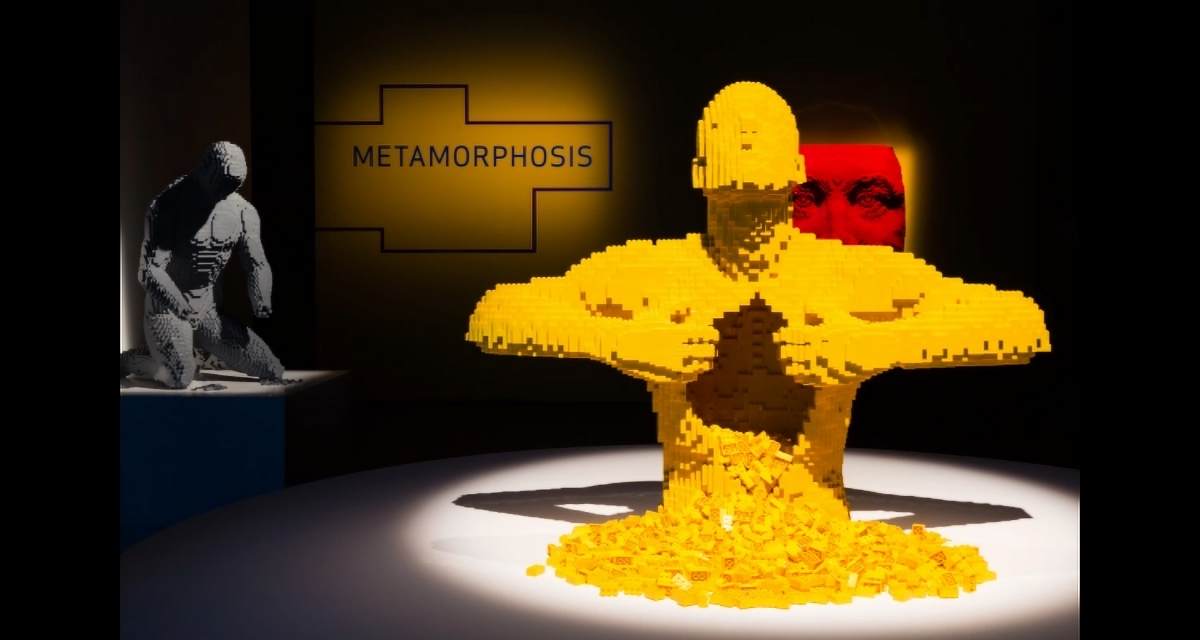
“How can I take something as complex at the human body and recreate it with LEGO art?” he wondered. It added to the level of expression in his works as time went on.
“When I can evoke emotion with the viewer, then it becomes something more than just a toy you play with,” Sawaya says.
The Toronto Show
The show in Toronto includes works from various points in his artistic career.
“There are several works that are very near and dear to me,” Nathan says.
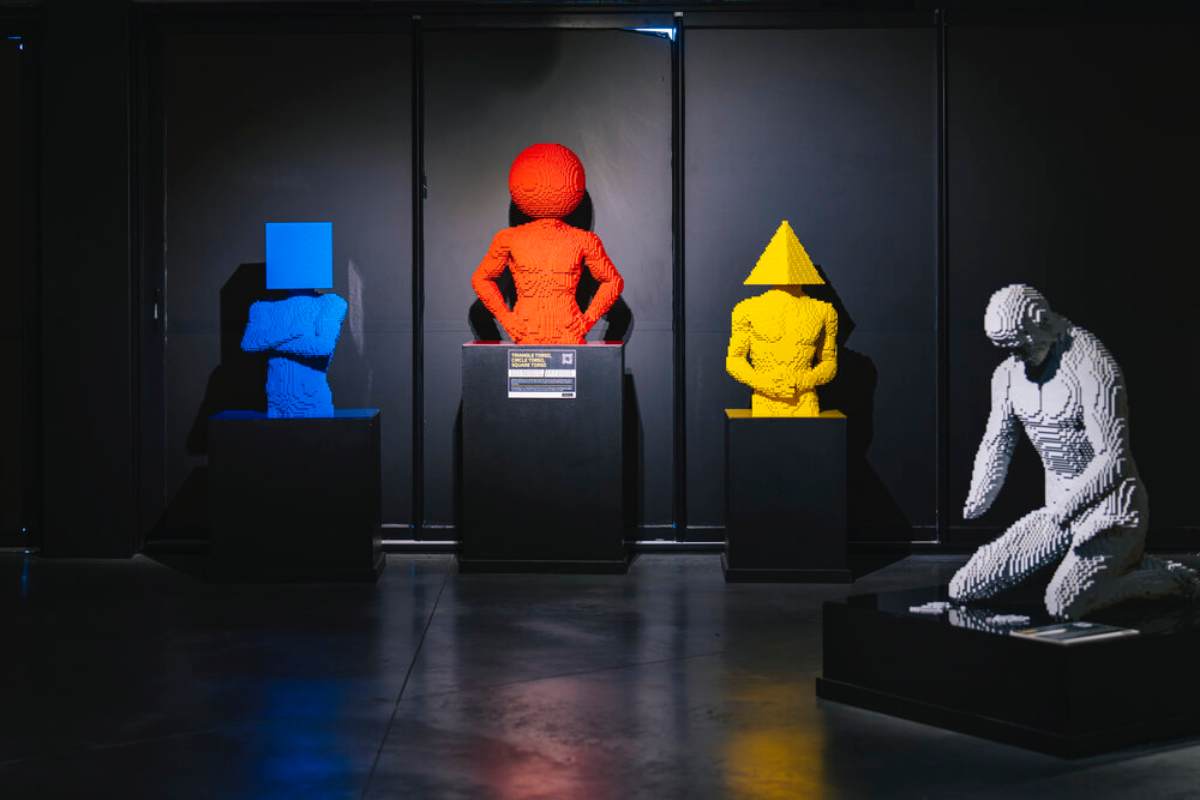
Some are inspired by emotions rather than physical objects, such as depression or happiness. Then, there is a much more playful side.
“I understand my audience,” he says. “I understand that there’s going to be kids.”
Hence, the Tyrannosaurus Rex and other kid-friendly themes. The show also includes a couple of galleries related to art history, including the replicated Van Goghs and others.
“I took on some of art history and tried to replicate it with LEGO,” he says. To do so, he took the 2-dimensional subject matter and made it 3D. In his take on Grant Wood’s iconic American Gothic, for example, he created 2D figures that emerge from the background.

Future Plans
“There’s a long list of ideas that have percolated over the years,” he says. “I’m always trying to push the envelope.”
In the past, he’s experimented in various ways, like his project with working with Miami-based photographer Dean West. The duo collaborated to incorporate Sawaya’s LEGO works into West’s hyper-realistic photos.
“I love taking on projects like that, where I’m using LEGO in a new way.”
Feedback from the many emails he receives also tells him what his public is looking for next. “I take on commissions every now and then,” he notes.
“There’s no limit to what can be done.”
One of the real-life constraints is time. A life-sized human form, for example, requires about two to three weeks of work.
“I usually have multiple projects going in he studio.
Another limitation is palette. “As this type of artist, I am subject to a colour palette that is defined by a company in Denmark,” he laughs. There is no mixing of colours, in other words.
The limitations become part of the work.
“It’s just a part of the challenge of using LEGO.”
- Find tickets and show information for Nathan Sawaya’s The Art of the Brick in Toronto [HERE].
Are you looking to promote an event? Have a news tip? Need to know the best events happening this weekend? Send us a note.
#LUDWIGVAN
Get the daily arts news straight to your inbox.