
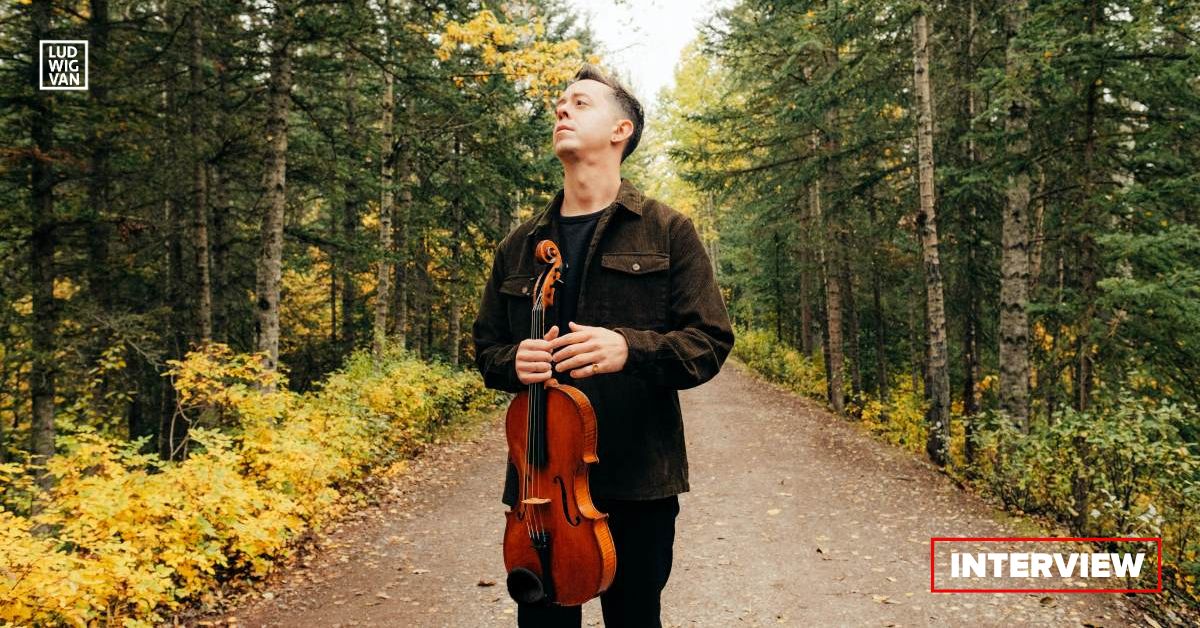
Violist Jesse Morrison’s debut solo album Transitions will be released on February 27. Morrison is a Toronto native, currently based in Calgary, where he’s performed with the Calgary Philharmonic Orchestra for seven seasons.
The album includes the work of four composers, three of them living, including an American, Hungarian, and Australian.
In the album materials, Morrison says that he sees the viola as a storyteller, and on the album, he takes his listeners through a journey of what the instrument is capable of, and draws connections between Baroque and contemporary music.
LV caught up with Jesse to talk about the release.
Jesse Morrison plays György Kurtág’s In Nomine all’ongherese:

Jesse Morrison, viola
Violist Jesse Morrison performs as a soloist, chamber musician, and orchestral player. He graduated from Toronto’s Glenn Gould School with an Artist’s Diploma, and from the University of Toronto with a BMus degree. His quartet won the Felix Galimir Award from the University of Toronto with recitals in both Walter Hall and The Four Seasons Centre for the Performing Arts.
He followed with a MMus from the New England Conservatory as a recipient of the Sylva Gelber Foundation Award. While he was in Boston, he served as the Teaching Assistant for the studio of Kim Kashkashian, and made his debut at NEC’s Jordan Hall in a solo performance of the Ligeti Sonata. He was awarded First Prize for both NEC Concerto Competitions, performing the Bartók Viola Concerto and Britten’s Lachrymae. He was also he was awarded the Borromeo String Quartet Guest Artist Award and the Honors Award with his quartet.
Jesse is an alumnus of the Hindemith Foundation led by Tabea Zimmermann, Yellow Barn Music
Festival, Kneisel Hall, the New York String Seminar, Domaine Forget, the Banff Centre and Scotia
Festival of Music.
He has performed as artist in residence at the Capital City Concerts, Chamberfest West, Chamber Music at New Park, Classical Music Institute, Concerts in the Barn, Continuum Concerts, Festival Mozaic, Flatirons Chamber Music Festival, Ottawa Chamberfest, NEXUS Chamber Music, Sound Atlas Festival and Sunset Chamberfest.
In his seventh season as a member of the Calgary Philharmonic Orchestra, Jesse has also performed with the Toronto Symphony and St. Paul Chamber Orchestras. He is also a dedicated chamber musician, and has collaborated with artists such as Donald Weilerstein, Kim Kashkashian, Joel Krosnick, Pekka Kuusisto, the Amici Ensemble, and the Boston Trio, among others. Jesse was the founding violist of the Neruda Quartet in Boston and Arkadas Quartet in Toronto.
As a music educator, Jesse has served on faculty at theAmici String Program and Mount Royal University as both a Chamber Music Professor and Viola Professor.
Jesse currently plays on a 1971 Otto Erdesz Viola and a modern bow by Kaspar Pankow.
Transitions
Transitions includes four tracks, and begins with a work he commissioned from composer Derek David titled Partita for Solo Viola. It’s followed by the debut recording of Brett Dean’s Skizzen für Siegbert (2011), which premiered in Berlin in 2012 as the compulsory piece for the Max Rostal Viola Competition.
Selections from György Kurtág’s Signs, Games and Messages follows. It’s a work of delightful miniatures in the composer’s distinctive style. The album closes with a viola transcription of
Georg Philipp Telemann’s Fantasia No. 1 in E flat.
Throughout, Morrison draws connections between Baroque and contemporary music through their shared language of rhythm, form, and gesture.
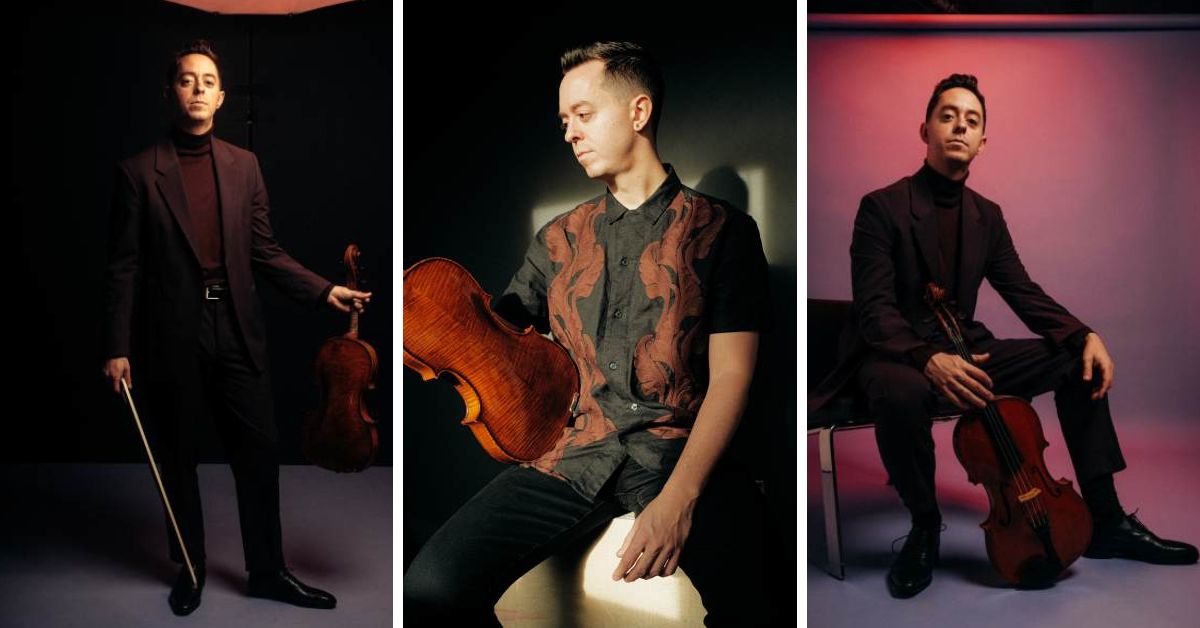
Jesse Morrison: The Interview
How did he come to choose the viola as an instrument?
“When I was a kid, I started playing violin when I was really young. I started playing violin when I was three,” Morrison says.
His father had played violin in his 30s, and showed Jesse the instrument many times as a child. Jesse became intrigued, and began to play himself. The viola, he says, came into his life through high school.
“There was never enough violas in the class,” he recalls. His music teacher persuaded him to try, and he was instantly entranced. “I knew that that instrument was something that felt different.”
It presented a different sound world to him than that of the violin. “I was really hooked into it then.”
He came to a new understanding of music through the instrument.
Jesse recalls playing the slow movement of Ravel’s string quartet as a teenager. “For violists it’s one of the best things you can play in terms of slow movements,” he says. He mentions the warmth of the sound, and the closeness to a human voice. “I almost felt like I was talking,” he adds.
“I felt like I was able to convey more than just playing the instrument.”
He felt the immediacy of the sound, and noticed how audience members were drawn to it. A friend’s father, who played in the Toronto Symphony Orchestra, heard him, and advised him to make the switch. Jesse was about 17 at the time, and it happened at just the right time. “Right before going away for college.”
He was accepted into the University of Toronto based on the strength of his audition on the viola.
The Viola As A Shapeshifter
The viola, as he points out, performs in both orchestras and string quartets in the middle range, sometimes along with second violins or perhaps oboes, but sometimes in the higher, mezzo soprano range.
“There’s a sense of the instrument that plays different roles,” he says. “You’re constantly finding different ways of blending with instruments in an orchestral setting.”
Like all the instruments in a string quartet, it plays a unique role, but also one that is changeable. “You’re sometimes under the radar., but you’re creating something different.”
As a listener, you’re sometimes quite aware of its role, but other times that’s not the case. It can play harmonies or melodies. “It has a way of surprising people,” he says. “People are mesmerized by the nature and the functionality of the viola.”

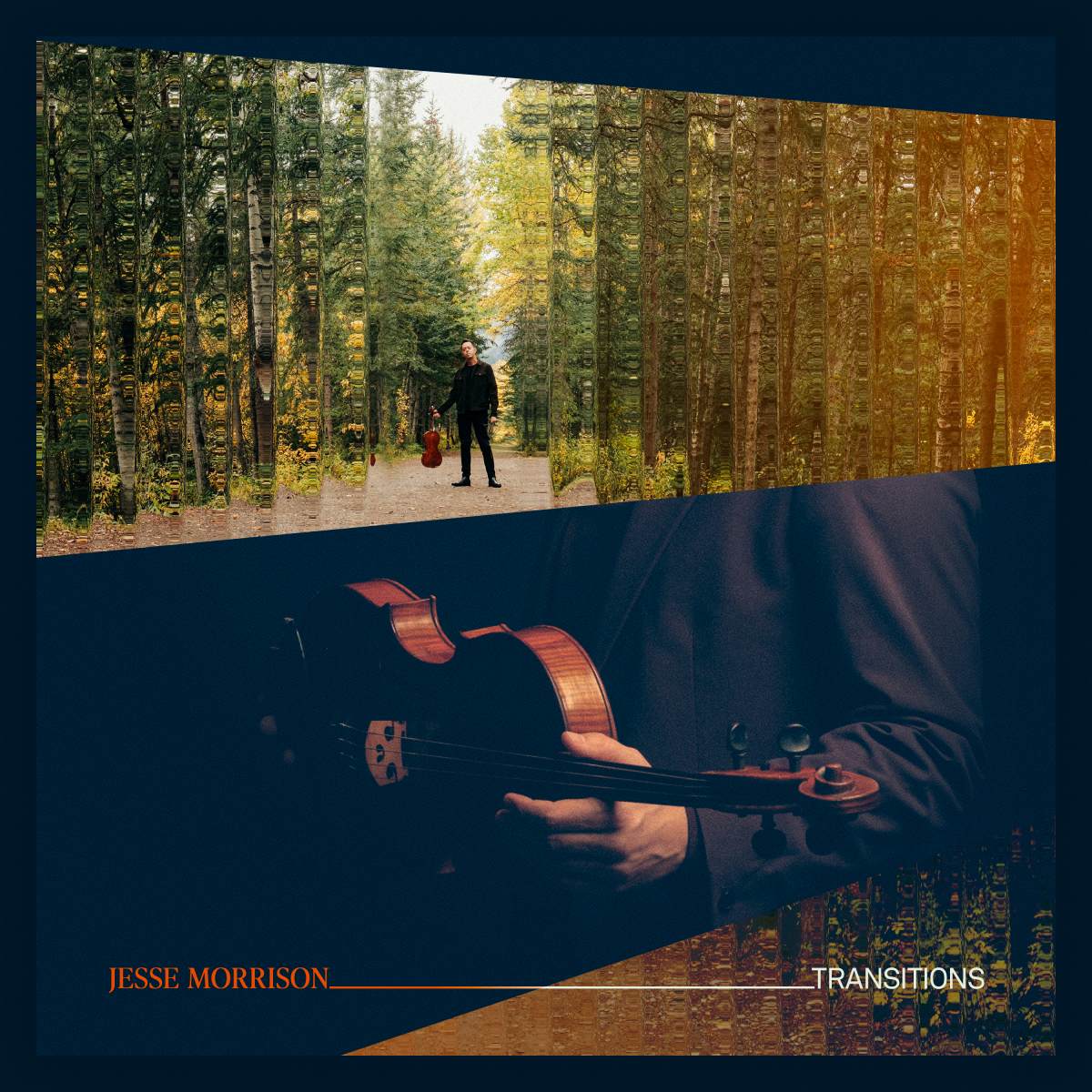
The Album: Transitions
He wanted to showcase the viola’s versatility in his first solo debut release, among other reasons.
“It stemmed from different things,” he says. “One was that I wanted to have something that was written for me.”
Derek David’s Partita became a kind of lynch pin of the project. David is a personal friend of Morrison’s. The work honours Bach’s tradition and the structure of his famous Partitas for solo violin with a fresh, contemporary musical language.
During the lockdown, Morrison reached out to various composers. He’d met Brett Dean at summer festivals, and publisher Boosey and Hawkes sent him a bunch of material.
“Because I didn’t have my friend’s piece yet, that was just an idea.”
Derek David had also worked with Brett Dean. In his discussions with Dean about repertoire, the composer mentioned working with Kurtág, and premiering one of his pieces. “They worked together. He got feedback from Kurtág, who was someone he really looked up to.”
Dean’s piece actually quotes from Kurtág’s work, and so excerpts from Kurtág’s Signs, Games and Message seemed a natural addition to the album as well.
“I chose five of them. Ones that I felt pertained to Brett Dean’s music.”
He closes the album with one of Telemann’s Fantasias, originally written for the violin. Morrison points out that violas typically choose to perform from Telemann’s repertoire for solo cello.
“I end the album with something that has some familiarity,” he says. “When you get to the Telemann, it feels like you’ve arrived home.”
Telemann’s warmth bridges the gap between all the contemporary music. The Baroque era is also echoed in David’s opening piece.
“He, I think, is brilliant with honouring early music practice,” he says. “I wanted to tie that into the album by having something that really was Baroque.”
It’s a thoughtful selection of pieces designed to take the listener into its exploration of styles and periods.
“I think that, as time goes on, you see less and less of a reaction to the standard and basic programs,” he says. “They’re not as unique.” Combining traditional and new music is becoming more and more common. “Nowadays, with all the new music, and all the composers who are living how, I feel like it’s a waste [not to tie them into a whole program],” he adds.
After the release?
“I’ve already performed this program a few times,” he says. The program has been performed in Calgary through the Instrumental Society of Calgary at the Lougheed House, and at the Massachusetts Institute of Technology in Killian Hall.
“I’d really love to come and play this in Toronto.”
A First Solo Release
“Originally I wasn’t really thinking of it as being anything,” Jesse says of his release. “I think that for me, what I want it to be is sort of segueing into a different part or stage of my career.”
He wants to create music he truly believes in, and construct programs with intention. “I want for people to have an experience, or a trip, how one sound world goes into another,” he says. That can involve both connections and disconnections. “Not just to come out as a solo artist, but also to showcase pieces that people don’t really know about it. And also to showcase the viola,” he says.
“[It’s] an opportunity for me to highlight and celebrate that,” he adds. “It’s sort of coming out of my shell a little bit.”
Emerging as a solo artist puts you in a vulnerable position. “I was sort of excited by it, but also terrified by it,” he says.
“I was very lucky to have exceptional teachers. They’re all musicians who really excel, especially with solo repertoire,” he says. “I was always so amazed and impressed by that — to have the opportunity to see how amazing a single musician can be on stage, and command the audience.”
It’s a chance to transport your audience beyond the walls of the concert hall.
“They’re somewhere else, and I think that is more the leading force of what I’m trying to do rather than being an egotistical thing,” he says.
“It’s really not the point of doing what I do.”
- Find Jesse Morrison’s Transitions to stream or buy [HERE].
Are you looking to promote an event? Have a news tip? Need to know the best events happening this weekend? Send us a note.
#LUDWIGVAN
Get the daily arts news straight to your inbox.