
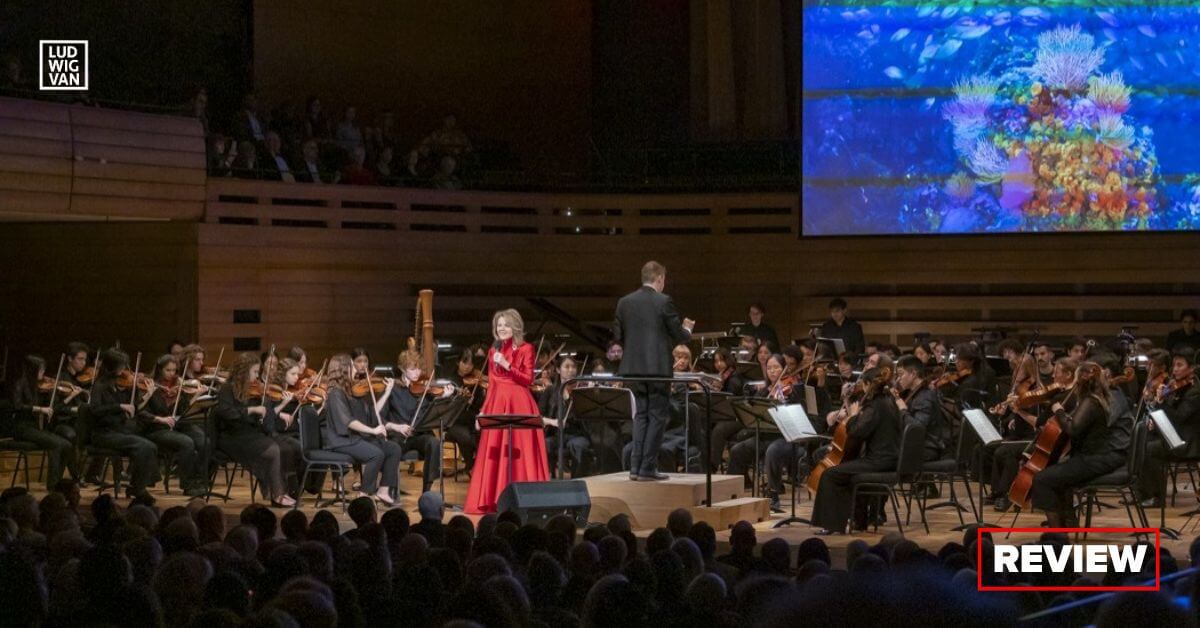
Royal Conservatory of Music: An Intimate Evening with Renée Fleming. November 1, 2025, Koerner Hall.
“I didn’t think anyone would be here tonight,” quipped a typically glamorous Renée Fleming, alluding to the Blue Jays’ nail-biter 15 minutes down the road.
Prior to the concert, the Royal Conservatory’s marketing team had reassured ticketholders at the Fundraising Gala that the game would be viewable during the intermission and at the post-concert champagne reception — an inspired bit of audience management aspiring to turn the evening into a double celebration.
Alas, the hoped-for victory was not to be. But, those who chose to be at Koerner Hall could take solace in what proved a genuinely special occasion, even if not always a musically consistent one.

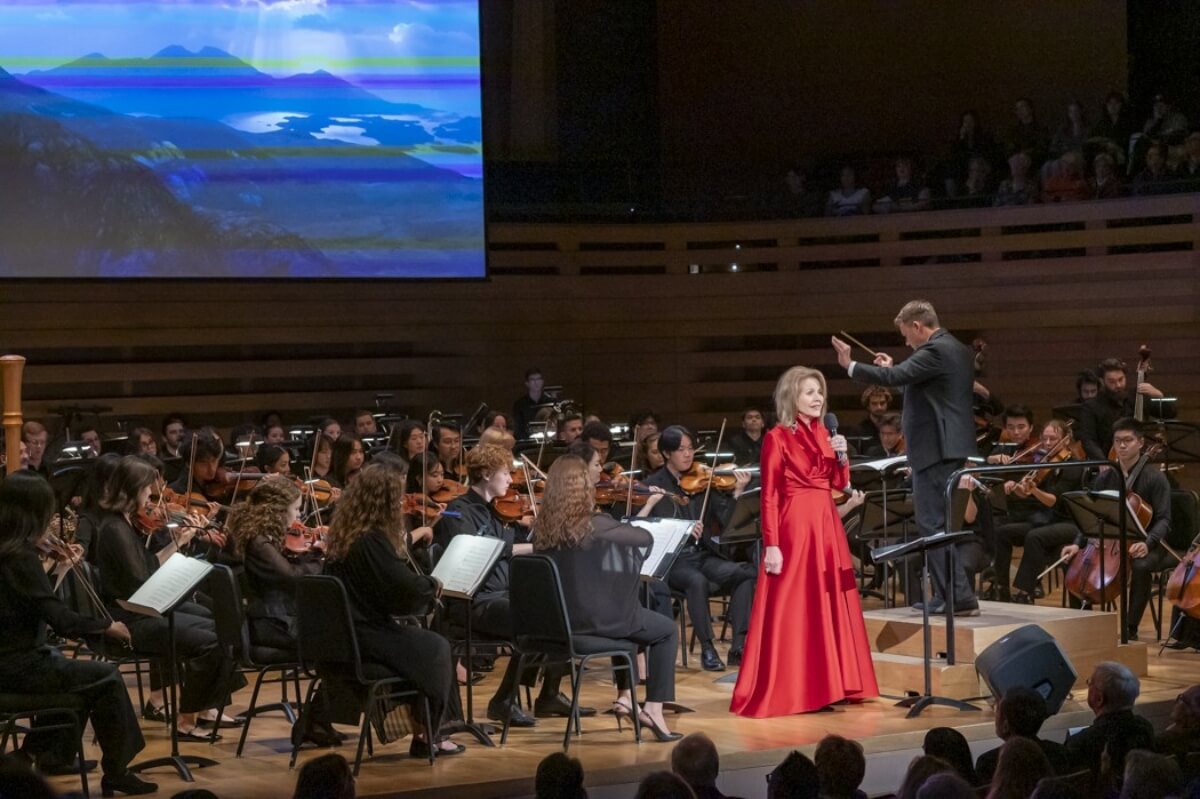
Voice of Nature: The Anthropocene
The program was billed as Voice of Nature: The Anthropocene, the title of Fleming and Yannick Nézet-Séguin’s Grammy-winning album — an awareness raising collage of new and not-so-new music inspired by the natural world and the climate crisis.
“Anthropocene,” of course, denotes the current geological era shaped by humanity’s indelible mark on the planet. Yet for a project conceived as an urgent call to action, the selections heard here were curiously serene, even detached.
Stripped of most of the album’s art song repertoire, the concert offered instead a sequence of pop-inflected songs, accompanied by a stream of National Geographic-curated videos, à la David Attenborough.
Unfortunately, the images, the lyrics, and the music never fully aligned to create the intended impact. Footage scrolled through every eco-cliché in the book, from collapsing icebergs and sped-up Northern lights to adorable baby animals, often with little connection to the words being sung. The music ranged from a souped-up version of Björk’s All Is Full of Love to Burt Bacharach’s What the World Needs Now, served up with generous helpings of schmaltz and kitsch.
There was certainly nothing to fault in Fleming’s intentions or presence. Moving seamlessly between operatic projection and a more intimate, microphone-assisted pop tone, she remained far more compelling to watch than the nature montages behind her.
The overall atmosphere was lush, immersive, and carefully curated — a multimedia meditation rather than a call to arms, bathed in gentle light and well-meant optimism. This was all very much in the spirit of a fundraiser — on message, polished, and occasionally overproduced.
The Royal Conservatory Orchestra
The inclusion of the Royal Conservatory Orchestra, led by the Robert Moody, gave the evening an extra sense of purpose and community, the students representing the potential beneficiaries as well as potential sufferers from the climate crisis.
Moody brought infectious energy and rapport to the proceedings, allowing the players not only to deliver the goods but to enjoy themselves in the process. Yet in the first half especially, exuberance came at the expense of balance; even with amplification, Fleming’s voice was more than occasionally submerged, like an endangered Indian Ocean archipelago.
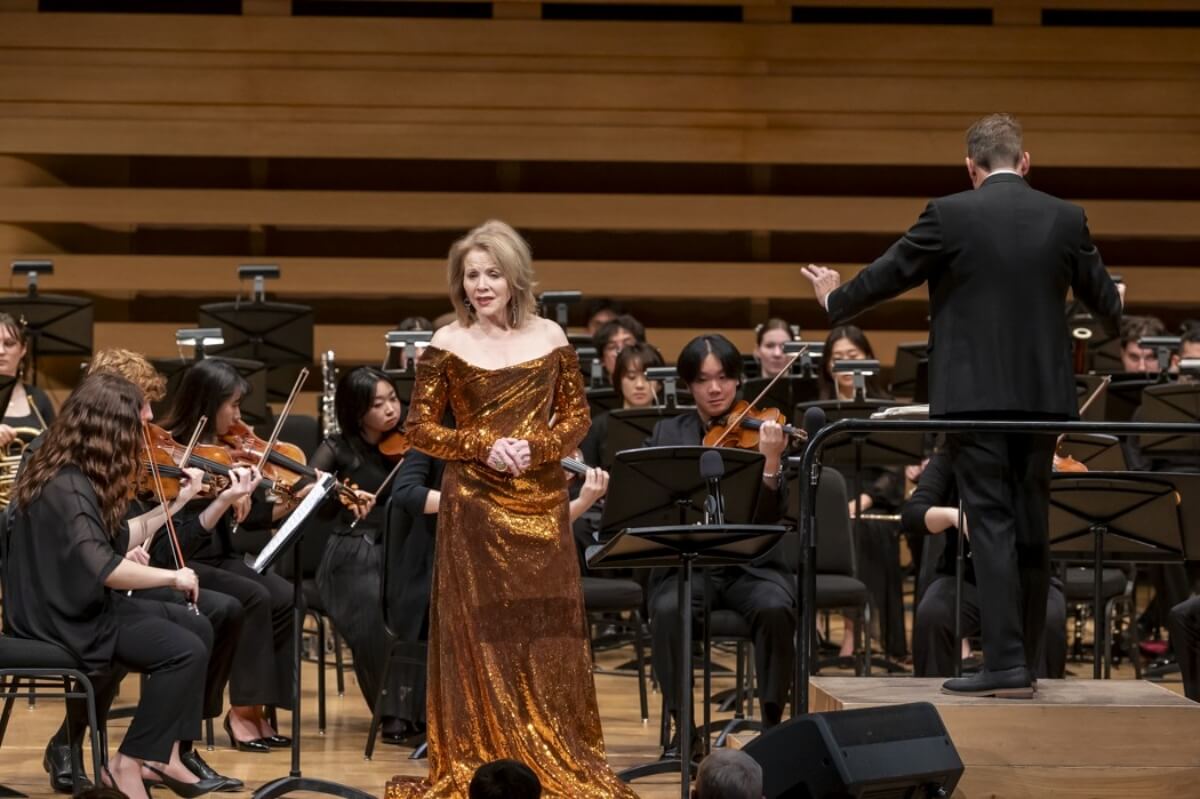
Second Half
By the start of the second half, the Jays game was in full swing, and a few audience members could not resist the occasional glance at their phones for score updates. But, there was every reason to stay focused on the stage.
This part of the program was what most had surely come to hear: that gorgeous, honey-toned voice, in a modest but varied selection of arias drawn from across her multi-decade career.
Though her voice seems miraculously untouched by time — especially in its luminous upper reaches — she now deploys it with judicious care, favouring expressive nuance over power.
The Handel selections revealed her sense of line and gravitas, while the shorter, character-driven pieces showcased her flair for theatricality and detail. She brought effortless wit and self-awareness to Strauss’s miniature Muttertändelei from the Drei Gesänge aus älteren deutscher Dichter, its maternal sarcasm accompanied by an elegant sparkle. Puccini’s O mio babbino caro unfurled with radiant warmth and arching lyricism, perfectly poised between sentiment and restraint.
Two orchestral overtures provided lively interludes: Beethoven’s Fidelio, played with heroism and taut drama, and Rossini’s Barber of Seville, full of verve, wit, and sparkle.
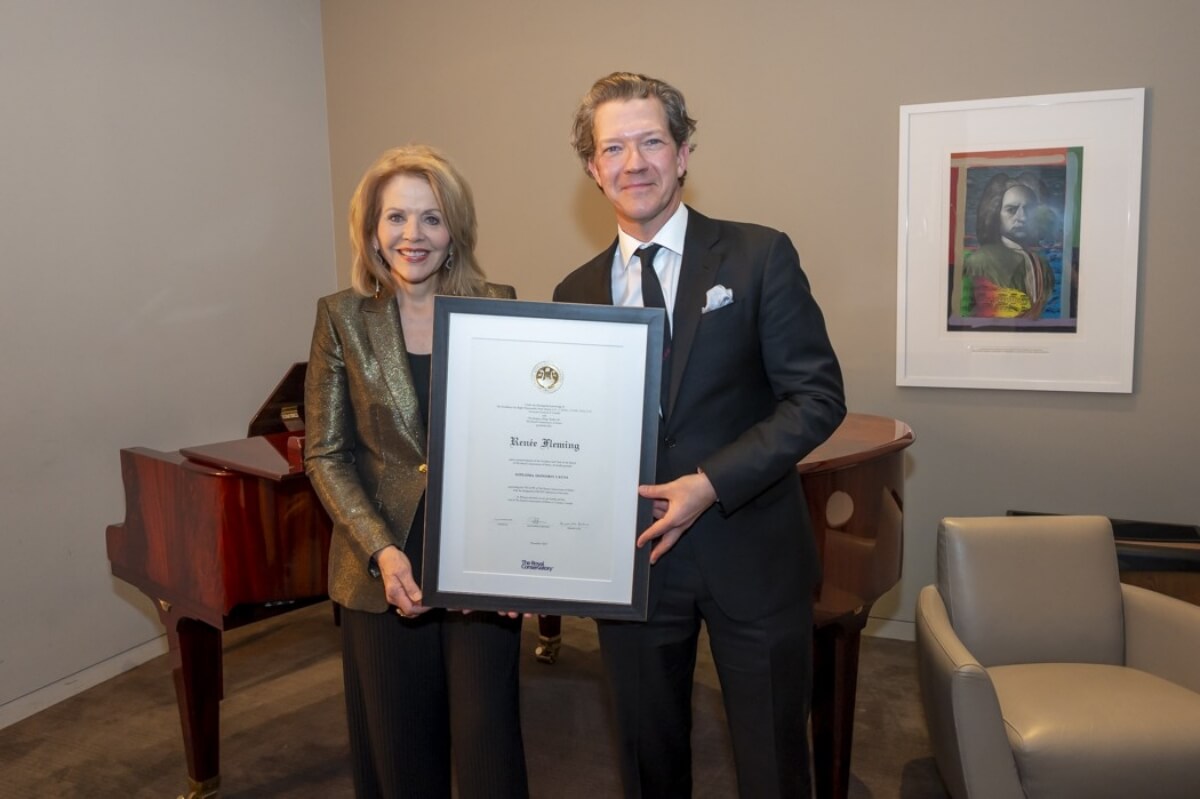
Encores
Fleming’s encores once again displayed the range of her communicative gifts. A charming, audience-participation I Could Have Danced All Night brought the evening to an easy, festive glow, followed by an exquisite, weightless account of Strauss’s Morgen, timeless in its stillness and purity.
In recognition of her artistry and her longstanding advocacy, Fleming was presented with an honorary fellowship from the Royal Conservatory — and, to general amusement, a Blue Jays cap.
It was a fitting symbol for an artist who, in the later chapters of her career, has sought to use her voice in more ways than one — raising awareness for causes from mental health to the environment, and continuing to embody music’s power to console, illuminate, and connect.
Are you looking to promote an event? Have a news tip? Need to know the best events happening this weekend? Send us a note.
#LUDWIGVAN
Get the daily arts news straight to your inbox.